Computation in a typical Transformer-based large language model (LLM) can be characterized by batch size, hidden dimension, number of layers, and sequence length. Until now, system works for accelerating LLM training have focused on the first three dimensions: data parallelism for batch size, tensor parallelism for hidden size and pipeline parallelism for model depth or layers. These widely studied forms of parallelism are not targeted or optimized for long sequence Transformer models. Given practical application needs for long sequence LLM, renewed attentions are being drawn to sequence parallelism. However, existing works in sequence parallelism are constrained by memory-communication inefficiency, limiting their scalability to long sequence large models. In this work, we introduce DeepSpeed-Ulysses, a novel, portable and effective methodology for enabling highly efficient and scalable LLM training with extremely long sequence length. DeepSpeed-Ulysses at its core partitions input data along the sequence dimension and employs an efficient all-to-all collective communication for attention computation. Theoretical communication analysis shows that whereas other methods incur communication overhead as sequence length increases, DeepSpeed-Ulysses maintains constant communication volume when sequence length and compute devices are increased proportionally. Furthermore, experimental evaluations show that DeepSpeed-Ulysses trains 2.5x faster with 4x longer sequence length than the existing method SOTA baseline.
The deployment and scaling of large language models (LLMs) have become critical as they permeate various applications, demanding high-throughput and low-latency serving systems. Existing frameworks struggle to balance these requirements, especially for workloads with long prompts. This paper introduces DeepSpeed-FastGen, a system that employs Dynamic SplitFuse, a novel prompt and generation composition strategy, to deliver up to 2.3x higher effective throughput, 2x lower latency on average, and up to 3.7x lower (token-level) tail latency, compared to state-of-the-art systems like vLLM. We leverage a synergistic combination of DeepSpeed-MII and DeepSpeed-Inference to provide an efficient and easy-to-use serving system for LLMs. DeepSpeed-FastGen's advanced implementation supports a range of models and offers both non-persistent and persistent deployment options, catering to diverse user scenarios from interactive sessions to long-running applications. We present a detailed benchmarking methodology, analyze the performance through latency-throughput curves, and investigate scalability via load balancing. Our evaluations demonstrate substantial improvements in throughput and latency across various models and hardware configurations. We discuss our roadmap for future enhancements, including broader model support and new hardware backends. The DeepSpeed-FastGen code is readily available for community engagement and contribution.
Improving the deployment efficiency of transformer-based language models has been challenging given their high computation and memory cost. While INT8 quantization has recently been shown to be effective in reducing both the memory cost and latency while preserving model accuracy, it remains unclear whether we can leverage INT4 (which doubles peak hardware throughput) to achieve further latency improvement. In this study, we explore the feasibility of employing INT4 weight and activation (W4A4) quantization for language models. Our findings indicate that W4A4 quantization introduces no to negligible accuracy degradation for encoder-only and encoder-decoder models, but causes a significant accuracy drop for decoder-only models. To materialize the performance gain using W4A4, we develop a highly-optimized end-to-end W4A4 encoder inference pipeline supporting different quantization strategies. Our INT4 pipeline is $8.5\times$ faster for latency-oriented scenarios and up to $3\times$ for throughput-oriented scenarios compared to the inference of FP16, and improves the SOTA BERT INT8 performance from FasterTransformer by up to $1.7\times$. We provide insights into the failure cases when applying W4A4 to decoder-only models, and further explore the compatibility of INT4 quantization with other compression methods, like pruning and layer reduction.
The effectiveness of Recurrent Neural Networks (RNNs) for tasks such as Automatic Speech Recognition has fostered interest in RNN inference acceleration. Due to the recurrent nature and data dependencies of RNN computations, prior work has designed customized architectures specifically tailored to the computation pattern of RNN, getting high computation efficiency for certain chosen model sizes. However, given that the dimensionality of RNNs varies a lot for different tasks, it is crucial to generalize this efficiency to diverse configurations. In this work, we identify adaptiveness as a key feature that is missing from today’s RNN accelerators. In particular, we first show the problem of low resource utilization and low adaptiveness for the state-of-the-art RNN implementations on GPU, FPGA, and ASIC architectures. To solve these issues, we propose an intelligent tiled-based dispatching mechanism for increasing the adaptiveness of RNN computation, in order to efficiently handle the data dependencies. To do so, we propose Sharp as a hardware accelerator, which pipelines RNN computation using an effective scheduling scheme to hide most of the dependent serialization. Furthermore, Sharp employs dynamic reconfigurable architecture to adapt to the model’s characteristics. Sharp achieves 2×, 2.8×, and 82× speedups on average, considering different RNN models and resource budgets, compared to the state-of-the-art ASIC, FPGA, and GPU implementations, respectively. Furthermore, we provide significant energy reduction with respect to the previous solutions, due to the low power dissipation of Sharp (321 GFLOPS/Watt).
Quantization techniques are pivotal in reducing the memory and computational demands of deep neural network inference. Existing solutions, such as ZeroQuant, offer dynamic quantization for models like BERT and GPT but overlook crucial memory-bounded operators and the complexities of per-token quantization. Addressing these gaps, we present a novel, fully hardware-enhanced robust optimized post-training W8A8 quantization framework, ZeroQuant-HERO. This framework uniquely integrates both memory bandwidth and compute-intensive operators, aiming for optimal hardware performance. Additionally, it offers flexibility by allowing specific INT8 modules to switch to FP16/BF16 mode, enhancing accuracy.
ChatGPT-like models have revolutionized various applications in artificial intelligence, from summarization and coding to translation, matching or even surpassing human performance. However, the current landscape lacks an accessible, efficient, and cost-effective end-to-end RLHF (Reinforcement Learning with Human Feedback) training pipeline for these powerful models, particularly when training at the scale of billions of parameters. This paper introduces DeepSpeed-Chat, a novel system that democratizes RLHF training, making it accessible to the AI community. DeepSpeed-Chat offers three key capabilities: an easy-to-use training and inference experience for ChatGPT-like models, a DeepSpeed-RLHF pipeline that replicates the training pipeline from InstructGPT, and a robust DeepSpeed-RLHF system that combines various optimizations for training and inference in a unified way. The system delivers unparalleled efficiency and scalability, enabling training of models with hundreds of billions of parameters in record time and at a fraction of the cost. With this development, DeepSpeed-Chat paves the way for broader access to advanced RLHF training, even for data scientists with limited resources, thereby fostering innovation and further development in the field of AI.
This study examines 4-bit quantization methods like GPTQ in large language models (LLMs), highlighting GPTQ's overfitting and limited enhancement in Zero-Shot tasks. While prior works merely focusing on zero-shot measurement, we extend task scope to more generative categories such as code generation and abstractive summarization, in which we found that INT4 quantization can significantly underperform. However, simply shifting to higher precision formats like FP6 has been particularly challenging, thus overlooked, due to poor performance caused by the lack of sophisticated integration and system acceleration strategies on current AI hardware. Our results show that FP6, even with a coarse-grain quantization scheme, performs robustly across various algorithms and tasks, demonstrating its superiority in accuracy and versatility. Notably, with the FP6 quantization, \codestar-15B model performs comparably to its FP16 counterpart in code generation, and for smaller models like the 406M it closely matches their baselines in summarization. Neither can be achieved by INT4. To better accommodate various AI hardware and achieve the best system performance, we propose a novel 4+2 design for FP6 to achieve similar latency to the state-of-the-art INT4 fine-grain quantization. With our design, FP6 can become a promising solution to the current 4-bit quantization methods used in LLMs.
Pretrained general-purpose language models can achieve state-of-the-art accuracies in various natural language processing domains by adapting to downstream tasks via zero-shot, few-shot and fine-tuning techniques. Because of their success, the size of these models has increased rapidly, requiring high-performance hardware, software, and algorithmic techniques to enable training such large models. As the result of a joint effort between Microsoft and NVIDIA, we present details on the training of the largest monolithic transformer based language model, Megatron-Turing NLG 530B (MT-NLG), with 530 billion parameters. In this paper, we first focus on the infrastructure as well as the 3D parallelism methodology used to train this model using DeepSpeed and Megatron. Next, we detail the training process, the design of our training corpus, and our data curation techniques, which we believe is a key ingredient to the success of the model. Finally, we discuss various evaluation results, as well as other interesting observations and new properties exhibited by MT-NLG. We demonstrate that MT-NLG achieves superior zero-, one-, and few-shot learning accuracies on several NLP benchmarks and establishes new state-of-the-art results. We believe that our contributions will help further the development of large-scale training infrastructures, large-scale language models, and natural language generations.
As the training of giant dense models hits the boundary on the availability and capability of the hardware resources today, Mixture-of-Experts (MoE) models become one of the most promising model architectures due to their significant training cost reduction compared to a quality-equivalent dense model. Its training cost saving is demonstrated from encoder-decoder models (prior works) to a 5x saving for auto-aggressive language models (this work along with parallel explorations). However, due to the much larger model size and unique architecture, how to provide fast MoE model inference remains challenging and unsolved, limiting its practical usage. To tackle this, we present DeepSpeed-MoE, an end-to-end MoE training and inference solution as part of the DeepSpeed library, including novel MoE architecture designs and model compression techniques that reduce MoE model size by up to 3.7x, and a highly optimized inference system that provides 7.3x better latency and cost compared to existing MoE inference solutions. DeepSpeed-MoE offers an unprecedented scale and efficiency to serve massive MoE models with up to 4.5x faster and 9x cheaper inference compared to quality-equivalent dense models. We hope our innovations and systems help open a promising path to new directions in the large model landscape, a shift from dense to sparse MoE models, where training and deploying higher-quality models with fewer resources becomes more widely possible.
The landscape of transformer model inference is increasingly diverse in model size, model characteristics, latency and throughput requirements, hardware requirements, etc. With such diversity, designing a versatile inference system is challenging. DeepSpeed-Inference addresses these challenges by (1) a multi-GPU inference solution to minimize latency while maximizing throughput for both dense and sparse transformers when the model fits in aggregate GPU memory, and (2) a heterogeneous inference solution that leverages CPU/NVMe/GPU memory to enable high-throughput inference for models larger than aggregate GPU memory. DeepSpeed-Inference reduces latency by 6.4× and increases throughput by 1.5 ×over the state-of-the-art. It enables trillion parameter scale inference under real-time latency constraints by leveraging hundreds of GPUs, an unprecedented scale for inference. It can inference 25 ×larger models than with GPU-only solutions, while delivering a high throughput of 84 TFLOPS (over 50% of A6000 peak).
How to efficiently serve ever-larger trained natural language models in practice has become exceptionally challenging even for powerful cloud servers due to their prohibitive memory/computation requirements. In this work, we present an efficient and affordable post-training quantization approach to compress large Transformer-based models, termed as ZeroQuant. ZeroQuant is an end-to-end quantization and inference pipeline with three main components: (1) a fine-grained hardware-friendly quantization scheme for both weight and activations; (2) a novel affordable layer-by-layer knowledge distillation algorithm (LKD) even without the access to the original training data; (3) a highly-optimized quantization system backend support to remove the quantization/dequantization overhead. As such, we are able to show that: (1) ZeroQuant can reduce the precision for weights and activations to INT8 in a cost-free way for both BERT and GPT3-style models with minimal accuracy impact, which leads to up to 5.19x/4.16x speedup on those models compared to FP16 inference; (2) ZeroQuant plus LKD affordably quantize the weights in the fully-connected module to INT4 along with INT8 weights in the attention module and INT8 activations, resulting in 3x memory footprint reduction compared to the FP16 model; (3) ZeroQuant can be directly applied to two of the largest open-sourced language models, including GPT-J6B and GPT-NeoX20, for which our INT8 model achieves similar accuracy as the FP16 model but achieves up to 5.2x better efficiency.
Large-scale model training has been a playing ground for a limited few requiring complex model refactoring and access to prohibitively expensive GPU clusters. ZeRO-Offload changes the large model training landscape by making large model training accessible to nearly everyone. It can train models with over 13 billion parameters on a single GPU, a 10x increase in size compared to popular framework such as PyTorch, and it does so without requiring any model change from the data scientists or sacrificing computational efficiency. ZeRO-Offload enables large model training by offloading data and compute to CPU. To preserve compute efficiency, it is designed to minimize the data movement to/from GPU, and reduce CPU compute time while maximizing memory savings on GPU. As a result, ZeRO-Offload can achieve 40 TFlops/GPU on a single NVIDIA V100 GPU for 10B parameter model compared to 30TF using PyTorch alone for a 1.4B parameter model, the largest that can be trained without running out of memory. ZeRO-Offload is also designed to scale on multiple-GPUs when available, offering near linear speedup on up to 128 GPUs. Additionally, it can work together with model parallelism to train models with over 70 billion parameters on a single DGX-2 box, a 4.5x increase in model size compared to using model parallelism alone. By combining compute and memory efficiency with ease-of-use, ZeRO-Offload democratizes large-scale model training making it accessible to even data scientists with access to just a single GPU.
Automatic Speech Recognition (ASR) systems are changing the way people interact with different applications on mobile devices. Fulfilling such user-interactivity requires not only a highly accurate, large-vocabulary recognition system, but also a real-time, energy-efficient solution. However, these ASR systems need high memory bandwidth and power budget, which may be impractical for most of small form-factor battery-operated devices. In this article, we propose two combined techniques implemented on top of a state-of-the-art ASR accelerator in order to significantly reduce its energy consumption and memory requirements. First, by leveraging the locality among consecutive segments of the speech signal, we develop a Locality-AWare-Scheme (LAWS) which exploits the on-chip recently-explored data while removing most of the off-chip accesses during the ASR's decoding process. As a result, we remove up to 60 percent of ASR's workload. As the second step, we introduce an approach to improve LAWS's effectiveness by selectively adapting the amount of ASR's workload, based on run-time feedback. In particular, we exploit the fact that the confidence of the ASR system varies along the recognition process. When confidence is high, the ASR system can be more restrictive and reduce the amount of work. The end design including both techniques provides a saving of more than 87 percent in the memory requests and 2.3x reduction in energy consumption, and a speedup of 2.1x with respect to a state-of-the-art baseline design.
In this work, we propose Locality-AWare-Scheme (LAWS) for an Automatic Speech Recognition (ASR) accelerator in order to significantly reduce its energy consumption and memory requirements, by leveraging the locality among consecutive segments of the speech signal. LAWS diminishes ASR's workload by up to 60% by removing most of the off-chip accesses during the ASR's decoding process. We furthermore improve LAWS's effectiveness by selectively adapting the amount of ASR's workload, based on run-time feedback. In particular, we exploit the fact that the confidence of the ASR system varies along the recognition process. When confidence is high, the ASR system can be more restrictive and reduce the amount of work. The end design provides a saving of 87% in memory requests, 2.3x reduction in energy consumption, and a speedup of 2.1x with respect to the state-of-the-art ASR accelerator.
Automatic Speech Recognition (ASR) is becoming increasingly ubiquitous, especially in the mobile segment. Fast and accurate ASR comes at high energy cost, not being affordable for the tiny power-budgeted mobile devices. Hardware acceleration reduces energy-consumption of ASR systems, while delivering high-performance. In this paper, we present an accelerator for large-vocabulary, speaker-independent, continuous speech-recognition. It focuses on the Viterbi search algorithm representing the main bottleneck in an ASR system. The proposed design consists of innovative techniques to improve the memory subsystem, since memory is the main bottleneck for performance and power in these accelerators' design. It includes a prefetching scheme tailored to the needs of ASR systems that hides main memory latency for a large fraction of the memory accesses, negligibly impacting area. Additionally, we introduce a novel bandwidth-saving technique that removes off-chip memory accesses by 20 percent. Finally, we present a power saving technique that significantly reduces the leakage power of the accelerators scratchpad memories, providing between 8.5 and 29.2 percent reduction in entire power dissipation. Overall, the proposed design outperforms implementations running on the CPU by orders of magnitude, and achieves speedups between 1.7x and 5.9x for different speech decoders over a highly optimized CUDA implementation running on Geforce-GTX-980 GPU, while reducing the energy by 123-454x.
DNN pruning has been recently proposed as an effective technique to improve the energy-efficiency of DNN-based solutions. It is claimed that by removing unimportant or redundant connections, the pruned DNN delivers higher performance and energy-efficiency with negligible impact on accuracy. However, DNN pruning has an important side effect: it may reduce the confidence of DNN predictions. We show that, although top-1 accuracy may be maintained with DNN pruning, the likelihood of the class in the top-1 is significantly reduced when using the pruned models. For applications such as Automatic Speech Recognition (ASR), where the DNN scores are consumed by a successive stage, the workload of this stage can be dramatically increased due to the loss of confidence in the DNN. An ASR system consists of a DNN for computing acoustic scores, followed by a Viterbi beam search to find the most likely sequence of words. We show that, when pruning the DNN model used for acoustic scoring, the Word Error Rate (WER) is maintained but the execution time of the ASR system is increased by 33%. Although pruning improves the efficiency of the DNN, it results in a huge increase of activity in the Viterbi search since the output scores of the pruned model are less reliable. Based on this observation, we propose a novel hardware-based ASR system that effectively integrates a DNN accelerator for pruned models with a Viterbi accelerator. In order to avoid the aforementioned increase in Viterbi search workload, our system loosely selects the N-best hypotheses at every time step, exploring only the N most likely paths. To avoid an expensive sort of the hypotheses based on their likelihoods, our accelerator employs a set-associative hash table to keep track of the best paths mapped to each set. In practice, this solution approaches the selection of N-best, but it requires much simpler hardware. Our approach manages to efficiently combine both DNN pruning and Viterbi search, and achieves 9x energy savings and 4.2x speedup with respect to the state-of-the-art ASR solutions.
Accurate, real-time Automatic Speech Recognition (ASR) requires huge memory storage and computational power. The main bottleneck in state-of-the-art ASR systems is the Viterbi search on a Weighted Finite State Transducer (WFST). The WFST is a graph-based model created by composing an Acoustic Model (AM) and a Language Model (LM) offline. Offline composition simplifies the implementation of a speech recognizer as only one WFST has to be searched. However, the size of the composed WFST is huge, typically larger than a Gigabyte, resulting in a large memory footprint and memory bandwidth requirements. In this paper, we take a completely different approach and propose a hardware accelerator for speech recognition that composes the AM and LM graphs on-the-fly. In our ASR system, the fully-composed WFST is never generated in main memory. On the contrary, only the subset required for decoding each input speech fragment is dynamically generated from the AM and LM models. In addition to the direct benefits of this on-the-fly composition, the resulting approach is more amenable to further reduction in storage requirements through compression techniques. The resulting accelerator, called UNFOLD, performs the decoding in real-time using the compressed AM and LM models, and reduces the size of the datasets from more than one Gigabyte to less than 40 Megabytes, which can be very important in small form factor mobile and wearable devices. Besides, UNFOLD improves energy-efficiency by orders of magnitude with respect to CPUs and GPUs. Compared to a state-of-the-art Viterbi search accelerators, the proposed ASR system outperforms by providing 31x reduction in memory footprint and 28% energy savings on average.
Automatic speech recognition (ASR) has become a core technology for mobile devices. Delivering real-time and accurate ASR has a huge computational cost, which is challenging to achieve in tightly energy-constrained platforms such as mobile devices. A state-of-the-art ASR pipeline consists of a deep neural network (DNN) that converts the audio signal into phonemes' probabilities, followed by a Viterbi search that uses these probabilities to generate a sequence of words. In this article, the authors propose an ASR system for low-power devices that combines a mobile GPU for the DNN with a dedicated hardware accelerator for the Viterbi search. DNN evaluation is easy to parallelize and, hence, it achieves high energy efficiency on a mobile GPU. On the other hand, the Viterbi search is difficult to parallelize, and it represents the main bottleneck for ASR, so the authors propose a hardware accelerator to dramatically reduce its energy requirements while increasing performance. Their proposal outperforms traditional solutions running on the CPU by orders of magnitude. Compared to a GPU-only system, their hybrid scheme combining the GPU and the accelerator improves performance by 5.25 times, while reducing energy by 2.05 times.
Automatic Speech Recognition (ASR) is becoming increasingly ubiquitous, especially in the mobile segment. Fast and accurate ASR comes at a high energy cost which is not affordable for the tiny power budget of mobile devices. Hardware acceleration can reduce power consumption of ASR systems, while delivering high-performance. In this paper, we present an accelerator for large-vocabulary, speaker-independent, continuous speech recognition. It focuses on the Viterbi search algorithm, that represents the main bottleneck in an ASR system. The proposed design includes innovative techniques to improve the memory subsystem, since memory is identified as the main bottleneck for performance and power in the design of these accelerators. We propose a prefetching scheme tailored to the needs of an ASR system that hides main memory latency for a large fraction of the memory accesses with a negligible impact on area. In addition, we introduce a novel bandwidth saving technique that removes 20% of the off-chip memory accesses issued during the Viterbi search. The proposed design outperforms software implementations running on the CPU by orders of magnitude and achieves 1.7x speedup over a highly optimized CUDA implementation running on a high-end Geforce GTX 980 GPU, while reducing by two orders of magnitude (287x) the energy required to convert the speech into text.
The most important challenge in the emerging 3D integration technology is the higher temperature, particularly in the layers that are more distant from the heat sink, compared to planar 2D chips. High temperature, in turn, increases circuit's susceptibility to permanent and intermittent faults. On the other hand, the fast and high-bandwidth vertical links in the 3D integration technology have opened new horizons for network-on-chip (NoC) design innovations. In this paper, we leverage these ultra-low-latency vertical links to design a fault-tolerant 3D NoC architecture. In this architecture, permanent and intermittent defects on links and crossbars are bypassed by borrowing the idle bandwidth from vertically adjacent links and crossbars. Evaluation results under synthetic and realistic workloads show that the proposed fault-tolerance mechanism offers higher reliability and lower performance loss, when compared with state-of-the-art fault-tolerant 3D NoC designs.
 Yuxiong He合作论文数Snowflake12
 Jose-Maria Arnau合作论文数Tenstorrent8
 Samyam Rajbhandari合作论文数Snowflake7
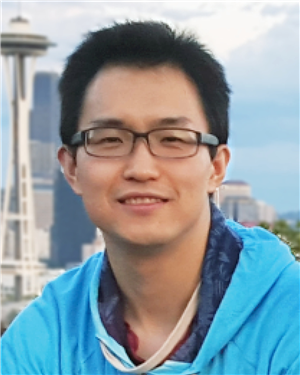 Minjia Zhang合作论文数Department of Computer Science, The Grainger College of Engineering, University of Illinois Urbana-Champaign;Department of Electrical & Computer Engineering, The Grainger College of Engineering, University of Illinois Urbana-Champaign7
 Zhewei Yao合作论文数Snowflake6
 Xiaoxia Wu (吴晓霞)合作论文数Microsoft5
 Olatunji (Tunji) Ruwase合作论文数Snowflake5
 Ammar Ahmad Awan合作论文数Microsoft4
 Jeff Rasley合作论文数Snowflake4
 Michael Wyatt合作论文数3Masahiro Tanaka合作论文数3
 Antonio Gonzalez合作论文数Department of Computer Architecture, Universitat Politecnica De Catalunya3
 Conglong Li合作论文数Microsoft DeepSpeed Team3
 Shuaiwen Leon Song合作论文数Together AI3Lev Kurilenko合作论文数2Arash Bakhtiari合作论文数2Stephen Youn合作论文数2Elton Zheng合作论文数2
 Albert Segura合作论文数Barcelona Supercomputing Center2
 Connor Holmes合作论文数OpenAI2
 Shaden Smith合作论文数Microsoft AI2
 Heyang Qin合作论文数Department of Computer Science and Engineering, University of Nevada, Reno;Microsoft2Shuangyan Yang合作论文数1
 Zhongzhu Zhou合作论文数Together AI1
 Brandon Norick合作论文数NVIDIA1
 Mostafa E. Salehi合作论文数1Elton Zhang合作论文数1
 Seyyed Hossein SeyyedAghaei Rezaei合作论文数Ghent University1
 Justin Zhun Liu合作论文数Microsoft1
 Haojun Xia合作论文数Sch Comp Sci & Technol, Univ Sci & Technol China1Shuai Che合作论文数1Shiyang Chen合作论文数Stevens Inst Technol1
 Marc Riera合作论文数Universitat Politécnica de Catalunya (UPC), Barcelona, Spain1
 Mostofa Patwary合作论文数NVIDIA1
 Mohammad Shoeybi合作论文数NVIDIA1
 Saurabh Tiwary合作论文数Microsoft1
 Shrimai Prabhumoye合作论文数NVIDIA;Department of Computer Science, College of Arts & Sciences, Boston University1
 Chengming Zhang合作论文数Yunnan Academy of Tobacco Science, Yunnan Academy of Tobacco Science1
 Zhen Zheng (郑祯)合作论文数Microsoft AI1
 Jie Ren合作论文数Department of Computer Science, William & Mary1
 Masoud Daneshtalab合作论文数University of Turku1
 Cheng Li (李诚)合作论文数Advanced Data Systems Lab, School of Computer Science and Technology, University of Science and Technology of China1
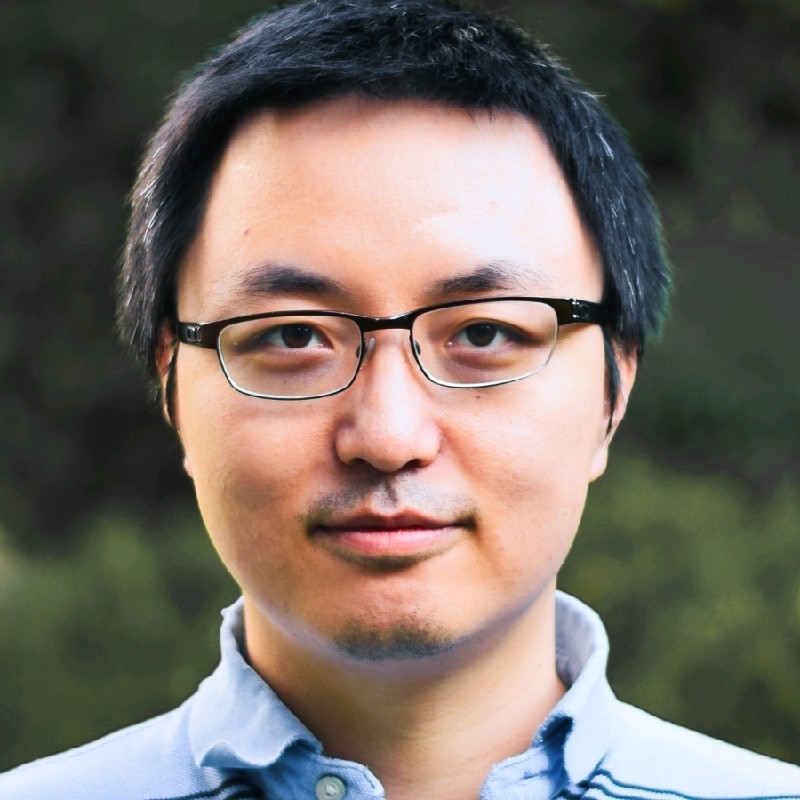 Xia Song合作论文数Microsoft Research1
 Dong Li合作论文数Department of Computer Science and Engineering, School of Engineering, University of California, Merced1
 Bryan Catanzaro合作论文数NVIDIA1
 George Zerveas合作论文数Google1
 Rewon Child (石井興元)合作论文数Project Prometheus1




