Accurate and timely weather forecasts are critical for high-impact decisions in modern society. Machine-learning-based weather prediction is emerging as an alternative for producing initial conditions, forecasts, and even both in end-to-end systems. These methods deliver predictions faster and often with higher skill than traditional numerical weather prediction (NWP). However, even end-to-end models typically rely on NWP-generated reanalyses for supervision, thereby inheriting the biases and resolution limitations of those NWPs, and limiting adaptation to settings where suitable reanalysis products are unavailable, infrequently updated, or expensive to produce. Here we introduce ObsCast, a regional system that generates both analysis and predictions, without using any NWP-derived data in either training or inference, while still achieving state-of-the-art performance in short-term high-resolution regional modeling. Over the contiguous United States and Europe, ObsCast outperforms operational NWP for near-surface variables through 18 h and produces skillful precipitation forecasts. It provides a simpler and more adaptable route to build and refine regional forecasting services directly from local observations, without the need to develop complex and costly traditional forecasting pipelines.
Score-based diffusion models are typically trained by minimizing the L^2 score matching error, and standard theoretical analyses rely on this quantity to bound the sampling discrepancy between the learned and target distributions. We show the L^2 score error is not the right intrinsic measure of marginal distributional quality: a learned diffusion model can incur arbitrarily large L^2 score error while perfectly matching the target distribution. By decomposing score errors into a gradient and a solenoidal component (a Helmholtz-Hodge decomposition), we identify the geometric reason behind this: only the gradient component enters the marginal Fokker-Planck dynamics, while the solenoidal component is structurally invisible. We make this precise in three results. First, building on the corrected geometry, we prove an impossibility result: no monotone function of the L^2 score error can uniformly lower bound any divergence between the learned and target distributions. Second, we derive an upper bound on the Kullback-Leibler divergence that depends only on the observable gradient component of the error, tightening the standard Girsanov bound and identifying its looseness as the cost of operating on path-space rather than marginal-space dynamics. Third, we give a tractable estimator of the gradient component via a dual Sobolev identity, which is shown to empirically correlate substantially better with sample quality than the full L^2 error.
Neural Processes (NPs), and specifically Transformer Neural Processes (TNPs), have demonstrated remarkable performance across tasks ranging from spatiotemporal forecasting to tabular data modelling. However, many of these applications are inherently sequential, involving continuous data streams such as real-time sensor readings or database updates. In such settings, models should support cheap, incremental updates rather than recomputing internal representations from scratch for every new observation – a capability existing TNP variants lack. Drawing inspiration from Large Language Models, we introduce the Incremental TNP (incTNP). By leveraging causal masking, Key-Value (KV) caching, and a data-efficient autoregressive training strategy, incTNP matches the predictive performance of standard TNPs while reducing the computational cost of updates from quadratic to linear time complexity. We empirically evaluate our model on a range of synthetic and real-world tasks, including tabular regression and temperature prediction. Our results show that, surprisingly, incTNP delivers performance comparable to – or better than – non-causal TNPs while unlocking orders-of-magnitude speedups for sequential inference. Finally, we assess the consistency of the model's updates – by adapting a metric of “implicit Bayesianness", we show that incTNP retains a prediction rule as implicitly Bayesian as standard non-causal TNPs, demonstrating that incTNP achieves the computational benefits of causal masking without sacrificing the consistency required for streaming inference.
Machine learning models are increasingly trained or fine-tuned on synthetic data. Recursively training on such data has been observed to significantly degrade performance in a wide range of tasks, often characterized by a progressive drift away from the target distribution. In this work, we theoretically analyze this phenomenon in the setting of score-based diffusion models. For a realistic pipeline where each training round uses a combination of synthetic data and fresh samples from the target distribution, we obtain upper and lower bounds on the accumulated divergence between the generated and target distributions. This allows us to characterize different regimes of drift, depending on the score estimation error and the proportion of fresh data used in each generation. We also provide empirical results on synthetic data and images to illustrate the theory.
Global weather reanalyses and forecasts resolve the evolving atmospheric state on coarse grids, but site-specific applications require predictions at arbitrary locations where near-surface conditions also depend on unresolved terrain and land-surface properties. Existing probabilistic downscalers address this gap using hand-crafted topographic descriptors. We ask instead whether Earth observation foundation models can provide transferable sub-grid surface representations for probabilistic weather downscaling. We augment a convolutional conditional neural process that downscales coarse ERA5 reanalysis fields at 25 km resolution with a learned local surface descriptor, obtained by compressing a patch of TESSERA embeddings at 10 m resolution. Although these embeddings summarise surface conditions over annual timescales, they improve downscaling of instantaneous 2 m temperature and 10 m wind speed by encoding persistent surface properties that capture a location's departure from the coarse-grid atmospheric state. Across five climatically diverse regions, the embedding improves point and probabilistic skill at stations held out in both space and time, overall improving CRPS skill by 11.5 These improvements persist when the coarse input is changed from ERA5 to forecasts from the Aurora AI forecasting model, and when predicting at newly deployed stations with no regional history. To our knowledge, this is the first evidence that long-timescale Earth-observation embeddings can support short-timescale weather downscaling where sub-grid departures are systematically structured by persistent surface properties.
We study the application of graph random features (GRFs) – a recently-introduced stochastic estimator of graph node kernels – to scalable Gaussian processes on discrete input spaces. We prove that (under mild assumptions) Bayesian inference with GRFs enjoys $\mathcal{O}(N^{3/2})$ time complexity with respect to the number of nodes $N$, with probabilistic accuracy guarantees. In contrast, exact kernels generally incur $\mathcal{O}(N^{3})$. Wall-clock speedups and memory savings unlock Bayesian optimisation with over 1M graph nodes on a single computer chip, whilst preserving competitive performance.
AI weather models are in the process of revolutionising weather forecasting. While these models have been shown to achieve superior performance to physics-based NWP in forecasting tropical cyclone (TC) tracks, they dramatically underestimate intensity. Here we present AIFS-TC, a simple correction to the AIFS-Single model that is competitive with the operational state-of-the-art for forecasting maximum wind speed and minimum central pressure at lead times of 12 h to seven days. This performance also holds for rapid intensification events. Notably, the entire system was autonomously designed and built by a large language model (Claude Fable 5) in a few hours, directed through a small number of natural-language prompts by a single domain scientist. That the operational frontier can be reached with an open-source AI forecast model (AIFS-Single) and relatively simple, cheap post-processing is significant for TC science, and points to agentic coding as a route to rapid exploration and progress in life-saving early-warning systems in other domains.
Machine learning models are increasingly trained or fine-tuned on synthetic data. Recursively training on such data has been observed to significantly degrade performance in a wide range of tasks, often characterized by a progressive drift away from the target distribution. In this work, we theoretically analyze this phenomenon in the setting of score-based diffusion models. For a realistic pipeline where each training round uses a combination of synthetic data and fresh samples from the target distribution, we obtain upper and lower bounds on the accumulated divergence between the generated and target distributions. Notably, to the best of our knowledge, this is the first lower bound on the divergence between the learned and target distributions, even for standard diffusion models. Our results allow us to characterize different regimes of drift, depending on the score estimation error and the proportion of fresh data used in each generation. In a certain regime, the accumulated divergence after several retraining rounds can be expressed as a discounted sum of score estimation errors made at each generation. We also provide empirical results on synthetic data and images to illustrate the theory.
We show that language models’ activations linearly encode when information was learned during training. Our setup involves creating a model with a known training order by sequentially fine-tuning Llama-3.2-1B on six disjoint but otherwise similar datasets about named entities. We find that the average activations of test samples corresponding to the six training datasets encode the training order: when projected into a 2D subspace, these centroids are arranged exactly in the order of training and lie on a straight line. Further, we show that linear probes can accurately (∼90%) distinguish “early” vs. “late” entities, generalizing to entities unseen during the probes’ own training. The model can also be fine-tuned to explicitly report an unseen entity’s training stage (∼80% accuracy). Notably, the training-order encoding does not seem attributable to simple differences in activation magnitudes, losses, or model confidence. Our paper demonstrates that models are capable of differentiating information by its acquisition time, and carries significant implications for how they might manage conflicting data and respond to knowledge modifications.
Dominant approaches for modelling Partial Differential Equations (PDEs) rely on deterministic predictions, yet many physical systems of interest are inherently chaotic and uncertain. While training probabilistic models from scratch is possible, it is computationally expensive and fails to leverage the significant resources already invested in high-performing deterministic backbones. In this work, we adopt a training-efficient strategy to transform pre-trained deterministic models into probabilistic ones via retrofitting with a proper scoring rule: the Continuous Ranked Probability Score (CRPS). Crucially, this approach is architecture-agnostic: it applies the same adaptation mechanism across distinct model backbones with minimal code modifications. The method proves highly effective across different scales of pre-training: for models trained on single dynamical systems, we achieve 20-54
State-of-the-art medium-range AI weather models can outperform traditional Numerical Weather Prediction (NWP) but require massive training budgets. This restricts usage for under-resourced groups and severely limits fast model iteration. Here we develop Otter Weather, a highly efficient spatiotemporal forecasting model designed to democratise high-performance weather prediction with AI. Evaluated on ERA5 reanalysis data at 1.5° resolution using standard WeatherBench protocols, the Otter family significantly advances the skill-compute Pareto frontier. The deterministic version outperforms the best NWP baseline by 9.6
We study the extent to which rotary position encodings (RoPE), a recent transformer position encoding algorithm broadly adopted in large language models (LLMs) and vision transformers (ViTs), can be applied to graph-structured data. We find that rotating tokens depending on the spectrum of the graph Laplacian efficiently injects structural information into the attention mechanism, boosting performance in synthetic and real-world graph learning tasks. This approach, coined (WIRE), enjoys intriguing theoretical properties: it recovers regular RoPE on grids, and depends asymptotically on the graph effective resistance. Unlike bias-based relative position encodings, WIRE is compatible with linear attention.
Recursive training of generative models on their own outputs can lead to model collapse, a compounding drift away from the true data distribution. Existing theoretical works bound finite-round error accumulation in the context of diffusion models, but two questions remain open: what distribution does the recursion converge to, and how fast? We answer both, isolating a mechanism distinct from imperfect learning: even with perfect score estimation and exact sampling, the early stopping of the reverse diffusion (required for numerical stability) drives a progressive drift away from the data distribution. We prove that this recursion converges geometrically to a unique limiting distribution, which admits a closed-form characterization as an infinite mixture of increasingly Gaussian-smoothed versions of the data distribution. A Hermite spectral decomposition of this limit reveals that recursive training acts as a low-pass filter: higher-order modes, which encode fine non-Gaussian structure, are attenuated much more strongly than coarse modes. This spectral picture motivates annealed truncation schedules that progressively shrink truncation times across retraining rounds; we prove that any schedule converging to 0 asymptotically eliminates recursive compounding. Finally, we show our idealized characterization is robust: in the presence of discretization and score estimation errors, the learned distribution remains in a Wasserstein-2 ball around the ideal limit, with mode-dependent contraction rates that contract high-order errors faster than low-order ones. We validate the theory on synthetic Gaussian mixtures and CIFAR-10.
Conventional studies of subseasonal-to-seasonal sea ice variability across scales have relied upon computationally expensive physics-based models solving systems of differential equations. IceNet, a deep learning-based sea ice forecasting model under development since 2021, has proven competitive to such state-of-the-art physics-based models, capable of generating daily 25 km resolution forecasts of sea ice concentration across the Arctic and Antarctic at a fraction of the computational cost once trained. Yet, these IceNet forecasts leave room for improvement through three main weaknesses. First, the forecasts exhibit physically unrealistic spatial and temporal blurring characteristic of deep learning methods trained under mean loss objectives. Second, the use of 25 km scale OSISAF data renders local forecasts along coastal regions and in regions surrounding maritime vessels inconclusive. Third, the sole provision of sea ice concentration in forecasts leaves questions about other critical ice properties such as thickness unanswered. We present preliminary results addressing these three challenges, turning to deep generative models to capture forecast uncertainty and improve spatial sharpness; leveraging 3 and 6 km scale AMSR-2 sea ice products to improve spatial resolution; and incorporating auxiliary datasets, chiefly thickness, into the training and inference pipeline to produce multivariate forecasts of sea ice properties beyond simple sea ice concentration. We seek feedback for improvement and hope continued development of IceNet can help answer key scientific questions surrounding the state of sea ice in our changing polar climates.
Causal inference is a key research area in machine learning, yet confusion reigns over the tools needed to tackle it. There are prevalent claims in the machine learning literature that you need a bespoke causal framework or notation to answer causal questions. In this paper, we make it clear that you can answer any causal inference question within the realm of probabilistic modelling and inference, without causal-specific tools or notation. Through concrete examples, we demonstrate how causal questions can be tackled by writing down the probability of everything. We argue for the advantages of the generality of the probabilistic modelling lens, when compared to bespoke causal frameworks. Lastly, we reinterpret causal tools as emerging from standard probabilistic modelling and inference, elucidating their necessity and utility.
The need for regression models to predict circular values arises in many scientific fields. In this work we explore a family of expressive and interpretable distributions over circle-valued random functions related to Gaussian processes targeting two Euclidean dimensions conditioned on the unit circle. The probability model has connections with continuous spin models in statistical physics. Moreover, its density is very simple and has maximum-entropy, unlike previous Gaussian process-based approaches, which use wrapping or radial marginalization. For posterior inference, we introduce a new Stratonovich-like augmentation that lends itself to fast Gibbs sampling. We argue that transductive learning in these models favors a Bayesian approach to the parameters and apply our sampling scheme to the Double Metropolis-Hastings algorithm. We present experiments applying this model to the prediction of (i) wind directions and (ii) the percentage of the running gait cycle as a function of joint angles.
This study introduces a novel approach to post-processing (i.e. downscaling and bias-correcting) reanalysis-driven regional climate model daily precipitation outputs that can be generalised to ungauged mountain locations by leveraging sparse in situ observations and a probabilistic regression framework. We call this post-processing approach generalised probabilistic regression (GPR) and implement it using both generalised linear models and artificial neural networks (i.e. multi-layer perceptrons). By testing the GPR post-processing approach across three Hindu Kush Himalaya (HKH) basins with varying hydro-meteorological characteristics and four experiments, which are representative of real-world scenarios, we find it performs consistently much better than both raw regional climate model output and deterministic bias correction methods for generalising daily precipitation post-processing to ungauged locations. We also find that GPR models are flexible and can be trained using data from a single region or multiple regions combined together, without major impacts on model performance. Additionally, we show that the GPR approach results in superior skill for post-processing entirely ungauged regions, by leveraging data from other regions as well as ungauged high-elevation ranges. This suggests that GPR models have potential for extending post-processing of daily precipitation to ungauged areas of HKH. Whilst multi-layer perceptrons yield marginally improved results overall, generalised linear models are a robust choice, particularly for data-scarce scenarios, i.e. post-processing extreme precipitation events and generalising to completely ungauged regions.
In scientific domains---from biology to the social sciences---many questions boil down to \textit{What effect will we observe if we intervene on a particular variable?} If the causal relationships (e.g.~a causal graph) are known, its possible to estimate the intervention distributions. In the absence of this domain knowledge, the causal structure must be discovered from the available observational data. However, observational data are often compatible with multiple causal graphs, making methods that commit to a single structure prone to overconfidence. A principled way to manage this structural uncertainty is via Bayesian inference, which averages over a posterior distribution on possible causal structures and functional mechanisms. Unfortunately, the number of causal structures grows super-exponentially with the number of nodes in the graph, making computations intractable. We propose to circumvent these challenges by using meta-learning to create an end-to-end model: the Model-Averaged Causal Estimation Transformer Neural Process (MACE-TNP). The model is trained to predict the Bayesian model-averaged interventional posterior distribution, and its end-to-end nature bypasses the need for expensive calculations. Empirically, we demonstrate that MACE-TNP outperforms strong Bayesian baselines. Our work established meta-learning as a flexible and scalable paradigm for approximating complex Bayesian causal inference, that can be scaled to increasingly challenging settings in the future.
Accurate downscaling of daily precipitation is crucial for hydrological and climate modeling, especially in regions with complex terrain and a lack of observational data. In such regions, climate reanalysis are not reliable and thus accurate downscaling is usually limited to those locations captured by a (discrete) network of in-situ measurements instead. For this reason, learning to downscale in ungauged locations, whilst maintaining the spatial structure of precipitation, is crucial to effectively downscale (gridded) climate simulations. This study introduces a Gaussian Process - Multi-Layer Perceptron (GP-MLP) latent variable model tailored for the probabilistic downscaling of daily precipitation in ungauged locations. By generating spatially coherent precipitation fields, this model addresses key challenges in regional climate impact assessments and water resource management.The GP-MLP model consists of an MLP that performs non-linear regression, mapping a set of inputs to distributional parameters of a given probability distribution for each spatio-temporal locations, and we induce spatial correlation between locations with a latent variable modelled by a GP We jointly learn the GP and MLP parameters using variational inference, which critically allows us to model non-Gaussian probability distributions. We test our approach in two geographically and climatologically diverse regions: the Swiss Alps and the Langtang Valley in Nepal. The Swiss Alps, with their complex terrain and relatively dense observational network, serve as an ideal region for the initial training of our model. In the Langtang Valley, a high-mountain region with limited ground-based observations, we employ a transfer learning strategy on the model pre-trained in the Swiss Alps. This process involves fine-tuning the model parameters to the unique climatic and topographical features of the Himalayas, thereby enhancing its performance in predicting daily precipitation in this data-sparse region.Our preliminary findings demonstrate the model's strong capability in producing accurate and spatially coherent predictions of daily precipitation for ungauged locations. The probabilistic nature of the model's outputs is particularly valuable, providing not only predictions of daily precipitation but also quantifying the associated uncertainties - a crucial aspect for risk management in hydrology and agriculture in areas where the paucity of data has traditionally limited detailed climate impact analysis.
We introduce a simple method for probabilistic predictions on tabular data based on Large Language Models (LLMs) called JoLT (Joint LLM Process for Tabular data). JoLT uses the in-context learning capabilities of LLMs to define joint distributions over tabular data conditioned on user-specified side information about the problem, exploiting the vast repository of latent problem-relevant knowledge encoded in LLMs. JoLT defines joint distributions for multiple target variables with potentially heterogeneous data types without any data conversion, data preprocessing, special handling of missing data, or model training, making it accessible and efficient for practitioners. Our experiments show that JoLT outperforms competitive methods on low-shot single-target and multi-target tabular classification and regression tasks. Furthermore, we show that JoLT can automatically handle missing data and perform data imputation by leveraging textual side information. We argue that due to its simplicity and generality, JoLT is an effective approach for a wide variety of real prediction problems.
 Wessel Bruinsma合作论文数Microsoft Research AI4Science22
 James Ryan Requeima合作论文数University of Toronto;Vector Institute22
 José Miguel Hernández-Lobato合作论文数Division of Information Engineering, Department of Engineering, University of Cambridge;Boltzbit Limited;Angstrom AI21
 Yingzhen Li (李映真)合作论文数Department of Computing, Faculty of Engineering, Imperial College London;The Alan Turing Institute19
 Thang D. Bui合作论文数School of Computing, Australian National University18
 John Bronskill合作论文数Univ Cambridge16
 Sebastian Nowozin合作论文数Google DeepMind16
 Siddharth Swaroop合作论文数Data to Actionable Knowledge Lab, School of Engineering and Applied Sciences, Harvard University14
 Adrian Weller合作论文数Department of Engineering, University of Cambridge;The Alan Turing Institute14
 Matthew Ashman合作论文数Citadel Securities12
 Tebbutt Will合作论文数University of Cambridge12
 Scott Hosking合作论文数BAS AI Lab, British Antarctic Survey;The Alan Turing Institute;Cambridge Centre for Climate Science, University of Cambridge12
 Brian C. J. Moore合作论文数Department of Psychology, University of Cambridge11
 Stratis Markou合作论文数10
 Josef Schlittenlacher合作论文数Division of Human Communication, Development and Hearing, School of Health Sciences, Faculty of Biology, Medicine and Health, The University of Manchester10
 Maneesh Sahani合作论文数Gatsby Computational Neuroscience Uni, Faculty of Life Sciences, University College London10
 Zoubin Ghahramani合作论文数Department of Engineering, University of Cambridge;Google DeepMind10
 Andrew Y. K. Foong合作论文数Department of Radiation Oncology, Mayo Clinic10
 Aliaksandra Shysheya合作论文数Department of Engineering, University of Cambridge9
 Bruno Mlodozeniec合作论文数University of Cambridge;Max Planck Institute for Intelligent Systems8
 Tom Andersson合作论文数NERC, UKRI8
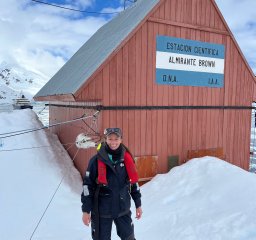 Anna Vaughan合作论文数Dept Engn, Univ Cambridge8
 Shixiang Shane Gu合作论文数Google DeepMind8Pietro Berkes合作论文数Neuroscience Unit8
 Jonathan Gordon合作论文数OpenAI8
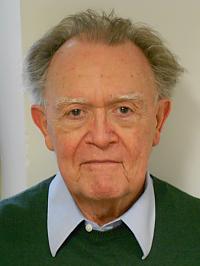 Roy D. Patterson合作论文数Department of Physiology, Development and Neuroscience, University of Cambridge7
 Cheng Zhang合作论文数Microsoft7
 Krzysztof Choromanski合作论文数Google7
 Mark Rowland合作论文数Google DeepMind6Cristiana Diaconu合作论文数5
 Isaac Reid合作论文数Google DeepMind5
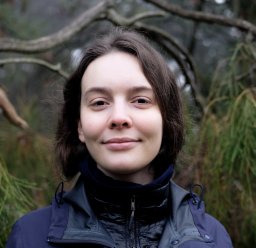 Kenza Tazi合作论文数Imperial College London5Jonathan So合作论文数5
 Sebastian Tschiatschek合作论文数Faculty of Computer Science, University of Vienna5
 Massimiliano (Max) Patacchiola合作论文数Tools for Humanity5
 Katja Hofmann合作论文数Microsoft Research Cambridge5
 Andrew Orr合作论文数British Antarctic Survey5
 Cuong Nguyen合作论文数Texas Medical Center, The University of Texas M.D. Anderson Cancer Center5Matthias Bauer合作论文数4
 Felix Dangel合作论文数Max Planck Society4
 Mateo Rojas Carulla合作论文数institution Department of Empirical Inference Max Planck Institute for Intelligent Systems institution Tübingen 72076 country Germany country4
 Paris Perdikaris合作论文数Department of Mechanical Engineering and Applied Mechanics, School of Engineering and Applied Science, University of Pennsylvania4
 Runa Eschenhagen合作论文数Machine Learning Group, Computational and Biological Learning Lab, University of Cambridge;Department of Engineering, University of Cambridge4
 Rahaf Aljundi合作论文数Toyota Motor Europe4
 Wu Lin合作论文数Vector Institute4
 Antti Honkela合作论文数Neural Networks Research Centre, Helsinki University of Technology4Daniel Olmeda合作论文数Intelligent systems laboratory, universidad carlos iii de madrid4
 Bernhard Schölkopf合作论文数Department of Computer Science, Eidgenössische Technische Hochschule Zürich;Max Planck Institute for Intelligent Systems;ELLIS Institute Tubingen4




