Global weather reanalyses and forecasts resolve the evolving atmospheric state on coarse grids, but site-specific applications require predictions at arbitrary locations where near-surface conditions also depend on unresolved terrain and land-surface properties. Existing probabilistic downscalers address this gap using hand-crafted topographic descriptors. We ask instead whether Earth observation foundation models can provide transferable sub-grid surface representations for probabilistic weather downscaling. We augment a convolutional conditional neural process that downscales coarse ERA5 reanalysis fields at 25 km resolution with a learned local surface descriptor, obtained by compressing a patch of TESSERA embeddings at 10 m resolution. Although these embeddings summarise surface conditions over annual timescales, they improve downscaling of instantaneous 2 m temperature and 10 m wind speed by encoding persistent surface properties that capture a location's departure from the coarse-grid atmospheric state. Across five climatically diverse regions, the embedding improves point and probabilistic skill at stations held out in both space and time, overall improving CRPS skill by 11.5 These improvements persist when the coarse input is changed from ERA5 to forecasts from the Aurora AI forecasting model, and when predicting at newly deployed stations with no regional history. To our knowledge, this is the first evidence that long-timescale Earth-observation embeddings can support short-timescale weather downscaling where sub-grid departures are systematically structured by persistent surface properties.
As heatwaves increase in both frequency and intensity globally, the need to develop tools to predict the human impact and develop a more comprehensive understanding of the impact mechanism at a population level is becoming more urgent. Our study provides a taxonomy of heatwaves based on identifying sub-threshold lethal heatwaves through physiological adaptation and vulnerability. We use a classification algorithm applied to a lethal heatwave dataset, comprising 125,411 events where the temperature exceeded the 90th percentile across 140 cities, with combined meteorology and sociodemographic inputs to label these events. The accuracy of our model outperforms classification that relies on wet bulb temperature thresholds with a factor of 11 improvement in imbalanced classification performance. Furthermore, we find that the majority of lethal heatwaves within our dataset occur below high wet bulb temperature thresholds and that accurate predictions for heatwave mortality can be obtained by combining thermo-temporal differentials and population health metrics instead of absolute climatic conditions. We thus propose classifying heatwaves as either: Shock Heatwaves, where aggressive thermo-temporal differentials from a local acclimation point trigger adverse stress effects, particularly among the vulnerable; or Threshold Heatwaves, where high temperature and humidity conditions do exceed the ability to dissipate heat effectively.
Weather prediction is critical for a range of human activities, including transportation, agriculture and industry, as well as for the safety of the general public. Machine learning transforms numerical weather prediction (NWP) by replacing the numerical solver with neural networks, improving the speed and accuracy of the forecasting component of the prediction pipeline1-6. However, current models rely on numerical systems at initialization and to produce local forecasts, thereby limiting their achievable gains. Here we show that a single machine learning model can replace the entire NWP pipeline. Aardvark Weather, an end-to-end data-driven weather prediction system, ingests observations and produces global gridded forecasts and local station forecasts. The global forecasts outperform an operational NWP baseline for several variables and lead times. The local station forecasts are skilful for up to ten days of lead time, competing with a post-processed global NWP baseline and a state-of-the-art end-to-end forecasting system with input from human forecasters. End-to-end tuning further improves the accuracy of local forecasts. Our results show that skilful forecasting is possible without relying on NWP at deployment time, which will enable the realization of the full speed and accuracy benefits of data-driven models. We believe that Aardvark Weather will be the starting point for a new generation of end-to-end models that will reduce computational costs by orders of magnitude and enable the rapid, affordable creation of customized models for a range of end users.
Weather forecasting is critical for a range of human activities including transportation, agriculture, industry, as well as the safety of the general public. Machine learning models have the potential to transform the complex weather prediction pipeline, but current approaches still rely on numerical weather prediction (NWP) systems, limiting forecast speed and accuracy. Here we demonstrate that a machine learning model can replace the entire operational NWP pipeline. Aardvark Weather, an end-to-end data-driven weather prediction system, ingests raw observations and outputs global gridded forecasts and local station forecasts. Further, it can be optimised end-to-end to maximise performance over quantities of interest. Global forecasts outperform an operational NWP baseline for multiple variables and lead times. Local station forecasts are skillful up to ten days lead time and achieve comparable and often lower errors than a post-processed global NWP baseline and a state-of-the-art end-to-end forecasting system with input from human forecasters. These forecasts are produced with a remarkably simple neural process model using just 8 less compute than existing NWP and hybrid AI-NWP methods. We anticipate that Aardvark Weather will be the starting point for a new generation of end-to-end machine learning models for medium-range forecasting that will reduce computational costs by orders of magnitude and enable the rapid and cheap creation of bespoke models for users in a variety of fields, including for the developing world where state-of-the-art local models are not currently available.
Ice cores record crucial information about past climate. However, before ice core data can have scientific value, the chronology must be inferred by estimating the age as a function of depth. Under certain conditions, chemicals locked in the ice display quasi-periodic cycles that delineate annual layers. Manually counting these noisy seasonal patterns to infer the chronology can be an imperfect and time-consuming process, and does not capture uncertainty in a principled fashion. In addition, several ice cores may be collected from a region, introducing an aspect of spatial correlation between them. We present an exploration of the use of probabilistic models for automatic dating of ice cores, using probabilistic programming to showcase its use for prototyping, automatic inference and maintainability, and demonstrate common failure modes of these tools.
A new model is presented for multisite statistical downscaling of temperature and precipitation using convolutional conditional neural processes (convCNPs). ConvCNPs are a recently developed class of models that allow deep learning techniques to be applied to off-the-grid spatio-temporal data. This model has a substantial advantage over existing downscaling methods in that the trained model can be used to generate multisite predictions at an arbitrary set of locations, regardless of the availability of training data. The convCNP model is shown to outperform an ensemble of existing downscaling techniques over Europe for both temperature and precipitation taken from the VALUE intercomparison project. The model also outperforms an approach that uses Gaussian processes to interpolate single-site downscaling models at unseen locations. Importantly, substantial improvement is seen in the representation of extreme precipitation events. These results indicate that the convCNP is a robust downscaling model suitable for generating localised projections for use in climate impact studies, and motivates further research into applications of deep learning techniques in statistical downscaling.
Large, multi-dimensional spatio-temporal datasets are omnipresent in modern science and engineering. An effective framework for handling such data are Gaussian process deep generative models (GP-DGMs), which employ GP priors over the latent variables of DGMs. Existing approaches for performing inference in GP-DGMs do not support sparse GP approximations based on inducing points, which are essential for the computational efficiency of GPs, nor do they handle missing data -- a natural occurrence in many spatio-temporal datasets -- in a principled manner. We address these shortcomings with the development of the sparse Gaussian process variational autoencoder (SGP-VAE), characterised by the use of partial inference networks for parameterising sparse GP approximations. Leveraging the benefits of amortised variational inference, the SGP-VAE enables inference in multi-output sparse GPs on previously unobserved data with no additional training. The SGP-VAE is evaluated in a variety of experiments where it outperforms alternative approaches including multi-output GPs and structured VAEs.
Gaussian processes (GPs) are important probabilistic tools for inference and learning in spatio-temporal modelling problems such as those in climate science and epidemiology. However, existing GP approximations do not simultaneously support large numbers of off-the-grid spatial data-points and long time-series which is a hallmark of many applications. Pseudo-point approximations, one of the gold-standard methods for scaling GPs to large data sets, are well suited for handling off-the-grid spatial data. However, they cannot handle long temporal observation horizons effectively reverting to cubic computational scaling in the time dimension. State space GP approximations are well suited to handling temporal data, if the temporal GP prior admits a Markov form, leading to linear complexity in the number of temporal observations, but have a cubic spatial cost and cannot handle off-the-grid spatial data. In this work we show that there is a simple and elegant way to combine pseudo-point methods with the state space GP approximation framework to get the best of both worlds. The approach hinges on a surprising conditional independence property which applies to space--time separable GPs. We demonstrate empirically that the combined approach is more scalable and applicable to a greater range of spatio-temporal problems than either method on its own.
Large, multi-dimensional spatio-temporal datasets are omnipresent in modern science and engineering. An effective framework for handling such data are Gaussian process deep generative models (GP-DGMs), which employ GP priors over the latent variables of DGMs. Existing approaches for performing inference in GP-DGMs do not support sparse GP approximations based on inducing points, which are essential for the computational efficiency of GPs, nor do they handle missing data -- a natural occurrence in many spatio-temporal datasets -- in a principled manner. We address these shortcomings with the development of the sparse Gaussian process variational autoencoder (SGP-VAE), characterised by the use of partial inference networks for parameterising sparse GP approximations. Leveraging the benefits of amortised variational inference, the SGP-VAE enables inference in multi-output sparse GPs on previously unobserved data with no additional training. The SGP-VAE is evaluated in a variety of experiments where it outperforms alternative approaches including multi-output GPs and structured VAEs.
Over recent decades, the Arctic has warmed faster than any region on Earth. The rapid decline in Arctic sea ice extent (SIE) is often highlighted as a key indicator of anthropogenic climate change. Changes in sea ice disrupt Arctic wildlife and indigenous communities, and influence weather patterns as far as the mid-latitudes. Furthermore, melting sea ice attenuates the albedo effect by replacing the white, reflective ice with dark, heat-absorbing melt ponds and open sea, increasing the Sun’s radiative heat input to the Arctic and amplifying global warming through a positive feedback loop. Thus, the reliable prediction of sea ice under a changing climate is of both regional and global importance. However, Arctic sea ice presents severe modelling challenges due to its complex coupled interactions with the ocean and atmosphere, leading to high levels of uncertainty in numerical sea ice forecasts. Deep learning (a subset of machine learning) is a family of algorithms that use multiple nonlinear processing layers to extract increasingly high-level features from raw input data. Recent advances in deep learning techniques have enabled widespread success in diverse areas where significant volumes of data are available, such as image recognition, genetics, and online recommendation systems. Despite this success, and the presence of large climate datasets, applications of deep learning in climate science have been scarce until recent years. For example, few studies have posed the prediction of Arctic sea ice in a deep learning framework. We investigate the potential of a fully data-driven, neural network sea ice prediction system based on satellite observations of the Arctic. In particular, we use inputs of monthly-averaged sea ice concentration (SIC) maps since 1979 from the National Snow and Ice Data Centre, as well as climatological variables (such as surface pressure and temperature) from the European Centre for Medium-Range Weather Forecasts reanalysis (ERA5) dataset. Past deep learning-based Arctic sea ice prediction systems tend to overestimate sea ice in recent years - we investigate the potential to learn the non-stationarity induced by climate change with the inclusion of multi-decade global warming indicators (such as average Arctic air temperature). We train the networks to predict SIC maps one month into the future, evaluating network prediction uncertainty by ensembling independent networks with different random weight initialisations. Our model accounts for seasonal variations in the drivers of sea ice by controlling for the month of the year being predicted. We benchmark our prediction system against persistence, linear extrapolation and autoregressive models, as well as September minimum SIE predictions from submissions to the Sea Ice Prediction Network's Sea Ice Outlook. Performance is evaluated quantitatively using the root mean square error and qualitatively by analysing maps of prediction error and uncertainty.
Multi-output Gaussian processes (MOGPs) leverage the flexibility and interpretability of GPs while capturing structure across outputs, which is desirable, for example, in spatio-temporal modelling. The key problem with MOGPs is their computational scaling $O(n^3 p^3)$, which is cubic in the number of both inputs $n$ (e.g., time points or locations) and outputs $p$. For this reason, a popular class of MOGPs assumes that the data live around a low-dimensional linear subspace, reducing the complexity to $O(n^3 m^3)$. However, this cost is still cubic in the dimensionality of the subspace $m$, which is still prohibitively expensive for many applications. We propose the use of a sufficient statistic of the data to accelerate inference and learning in MOGPs with orthogonal bases. The method achieves linear scaling in $m$ in practice, allowing these models to scale to large $m$ without sacrificing significant expressivity or requiring approximation. This advance opens up a wide range of real-world tasks and can be combined with existing GP approximations in a plug-and-play way. We demonstrate the efficacy of the method on various synthetic and real-world data sets.
Multi-output regression problems are a subset of supervised learning problems where we try to infer multiple scalar outputs from a given input. Usually, the outputs in such problems exhibit inter-dependencies, so a performant model will take those dependencies into account during training and inference. Gaussian Process models perform well on single-output problems, but their extension to multi-output problems comes at the cost of significant computational expenses and limited expressivity. The Gaussian Process Autoregressive Regression model allows us to cleanly extend the power of GPs to multi-output problems through the chaining of Gaussian Processes. The goal of this thesis is to scale the GPAR model so that it can be applied to large datasets in a reasonable timeframe.
Many real-world prediction problems involve modelling the dependencies between multiple different outputs across the input space. Multi-output Gaussian Processes (MOGP) are a particularly important approach to such problems. In this paper, we build on the Gaussian Process Autoregressive Regression (GPAR) model which is one of the best performing MOGP models, but which fails when observation noise is large, when there are missing data, and when non-Gaussian observation models are required. We extend the original GPAR model to handle these settings and provide a variational inference procedure similar to that used in deep Gaussian Processes which replaces the ad hoc denoising approximation used in the original work. We show that the new approach naturally handles noisy outputs, missing data and that it also enables the model to handle heterogeneous non-Gaussian observation models.
Multi-output regression models must exploit dependencies between outputs to maximise predictive performance. The application of Gaussian processes (GPs) to this setting typically yields models that are computationally demanding and have limited representational power. We present the Gaussian Process Autoregressive Regression (GPAR) model, a scalable multi-output GP model that is able to capture nonlinear, possibly input-varying, dependencies between outputs in a simple and tractable way: the product rule is used to decompose the joint distribution over the outputs into a set of conditionals, each of which is modelled by a standard GP. GPAR’s efficacy is demonstrated on a variety of synthetic and real-world problems, outperforming existing GP models and achieving state-of-the-art performance on established benchmarks.
Scientific computing is increasingly incorporating the advancements in machine learning and the ability to work with large amounts of data. At the same time, machine learning models are becoming increasingly sophisticated and exhibit many features often seen in scientific computing, stressing the capabilities of machine learning frameworks. Just as the disciplines of scientific computing and machine learning have shared common underlying infrastructure in the form of numerical linear algebra, we now have the opportunity to further share new computational infrastructure, and thus ideas, in the form of Differentiable Programming. We describe Zygote, a Differentiable Programming system that is able to take gradients of general program structures. We implement this system in the Julia programming language. Our system supports almost all language constructs (control flow, recursion, mutation, etc.) and compiles high-performance code without requiring any user intervention or refactoring to stage computations. This enables an expressive programming model for deep learning, but more importantly, it enables us to incorporate a large ecosystem of libraries in our models in a straightforward way. We discuss our approach to automatic differentiation, including its support for advanced techniques such as mixed-mode, complex and checkpointed differentiation, and present several examples of differentiating programs.
We introduce a new approach for performing accurate and computationally efficient posterior inference for Gaussian Process regression problems that exploits the combination of pseudo-point approximations and approximately circulant covariance structure. We argue mathematically that the new technique has substantially lower asymptotic complexity than traditional pseudo-point approximations and demonstrate empirically that it returns results that are very close to those obtained using exact inference.
 Rich Turner合作论文数Information Engineering Division, Department of Engineering, University of Cambridge12
 Scott Hosking合作论文数BAS AI Lab, British Antarctic Survey;The Alan Turing Institute;Cambridge Centre for Climate Science, University of Cambridge6
 Wessel Bruinsma合作论文数Microsoft Research AI4Science5
 Tom Andersson合作论文数NERC, UKRI4
 James Ryan Requeima合作论文数University of Toronto;Vector Institute3
 Keno Fischer合作论文数2
 Matthew Ashman合作论文数Citadel Securities2Jonathan So合作论文数2
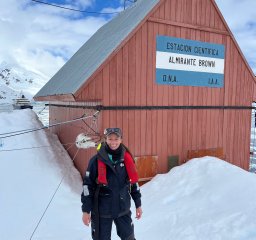 Anna Vaughan合作论文数Dept Engn, Univ Cambridge2Mike Innes合作论文数2
 Stratis Markou合作论文数2
 Chris Rackauckas合作论文数Julia Lab, Massachusetts Institute of Technology;Julia Computing;Pumas-AI2
 Matthew Chantry合作论文数School of Mathematics, University of Bristol2
 Emily Shuckburgh合作论文数Cambridge Institute for Sustainability Leadership, University of Cambridge2
 Michael Herzog合作论文数Department of Geography, University of Cambridge2
 Alan Edelman合作论文数Department of Mathematics, Massachusetts Institute of Technology;Julia Computing, Inc2
 Arno Solin合作论文数Aalto University2
 Vincent Fortuin合作论文数Institute for Machine Learning, ETH Zurich2Elliot Saba合作论文数Electrical Engineering, University of Washington2Bénédicte Dousset合作论文数1Anita Faul合作论文数1
 Fruzsina Agocs合作论文数Cavendish Lab, Univ Cambridge1
 Aditya Ravuri合作论文数Univ Cambridge1
 Ramit Debnath合作论文数Cambridge Zero, University of Cambridge1
 Michael Pearce合作论文数University of Warwick, Gibbet Hill Road, Coventry, CV4 7AL, UK1
 Andrew Elliott合作论文数Alan Turing Inst, London, England1
 María Pérez-Ortiz合作论文数Department of Computer Science, University College London1
 Viral B. Shah合作论文数JuliaHub;The Julia Language1
 Thang D. Bui合作论文数School of Computing, Australian National University1
 Eric Perim合作论文数Instituto de Física Gleb Wataghin, Universidade Estadual de Campinas1
 Camilo Mora合作论文数Department of Geography and Environment, College of Social Sciences, University of Hawaii at Manoa1
 Jeremy Wilkinson合作论文数1
 Stephen Law合作论文数Department of Geography, Faculty of Social & Historical Sciences, University College London;Beautiful Places AI1
 Ieva Kazlauskaite合作论文数Department of Engineering, University of Cambridge1
 Anil Madhavapeddy合作论文数Department of Computer Science and Technology, University of Cambridge1
 David Schroeder合作论文数University of Reading1
 Nic Lane (李克澜)合作论文数Machine Learning Systems Lab, Department of Computer Science and Technology, University of Cambridge;Flower Labs;LEX AI1
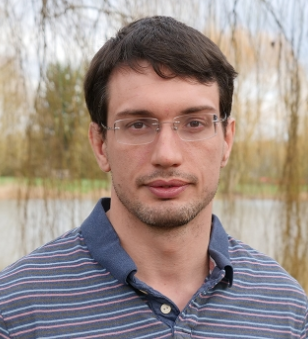 Chris Russell合作论文数Oxford Internet Institute, University of Oxford1
 Neil Lawrence合作论文数Department of Computer Science and Technology, University of Cambridge;Department of Computer Science, The University of Sheffield1
 Markus Kaiser合作论文数Max-Planck-Institut für Biochemie, Am Klopferspitz 18a, D-82152 Planegg-Martinsried, Germany1




