High-throughput RNA-seq technology has provided an unprecedented opportunity to reveal the very complex structures of transcriptomes. However, it is an important and highly challenging task to assemble vast amounts of short RNA-seq reads into transcriptomes with alternative splicing isoforms. In this study, we present a novel de novo assembler, BinPacker, by modeling the transcriptome assembly problem as tracking a set of trajectories of items with their sizes representing coverage of their corresponding isoforms by solving a series of bin-packing problems. This approach, which subtly integrates coverage information into the procedure, has two exclusive features: 1) only splicing junctions are involved in the assembling procedure; 2) massive pell-mell reads are assembled seemingly by moving a comb along junction edges on a splicing graph. Being tested on both real and simulated RNA-seq datasets, it outperforms almost all the existing de novo assemblers on all the tested datasets, and even outperforms those ab initio assemblers on the real dog dataset. In addition, it runs substantially faster and requires less memory space than most of the assemblers. BinPacker is published under GNU GENERAL PUBLIC LICENSE and the source is available from: http://sourceforge.net/projects/transcriptomeassembly/files/BinPacker_1.0.tar.gz/download. Quick installation version is available from: http://sourceforge.net/projects/transcriptomeassembly/files/BinPacker_binary.tar.gz/download.
Indiana University provides powerful compute, storage, and network resources to a diverse local and national research community every day. IU's facilities have been used to support data-intensive applications ranging from digital humanities to computational biology.For this year's bandwidth challenge, several IU researchers will conduct experiments from the exhibit floor utilizing the resources that University Information Technology Services currently provides.Using IU's newly constructed 535 TB Data Capacitor and an additional component installed on the exhibit floor, we will use Lustre across the wide area network to simultaneously facilitate dynamic weather modeling, protein analysis, instrument data capture, and the production, storage, and analysis of simulation data.
Case-based reasoning has been applied successfully to many diagnostic tasks, and much attention has been directed towards maximizing performance of the case-based diagnostic process. In distributed collaboration contexts, however, high-performance CBR alone may not be sufficient: individual abilities and organizational roles introduce unique constraints on how support should be applied. To maximize the usefulness of a case-based support system, system design must reflect divergent user capabilities and roles. This paper presents a case study of a CBR-based system to support collaborative distributed troubleshooting by ad hoc teams of sailors and shipboard experts. It shows how case sharing between participants can be used to increase confidence and aid situation assessment, “jump-starting” the aid process. It also shows how information from cases can be used to streamline communication between collaborators, and how the communication process needed to handle novel situations can be exploited as a natural vehicle for dialogue-driven generation of new cases to fill gaps in the existing case-base.
Following established naval procedure, expert electronics technicians remotely support non-expert sailors via telephone, email, and chat referring to paper-based manuals as a common reference. Initially, experts have little contextual information about the problem and so must construct sufficient understanding through exchanges with the ship before offering help. To streamline and improve this interaction, we are developing a system to coordinate and contextualize knowledge. The system will help bridge the gap between experts and nonexperts by simultaneously using stored cases and concept maps to: 1) Provide the expert with a picture of the user’s task context, and 2) Provide the nonexpert with relevant domain information and contextualized corrective actions. Together, cases and concept maps will support troubleshooting and bridge the gap between experts and nonexperts across the organization.
 Steven Bogaerts合作论文数Science Department, Computer;Indiana University;Computer Science Department, Indiana University3
 David B. Leake合作论文数Department of Computer Science, The Luddy School of Informatics, Computing, and Engineering, Indiana University2Michael A. Evans合作论文数2Matt Link合作论文数1s teige合作论文数1Zheng Chang合作论文数School of Computer Science and Technology, Shandong University of Technology1
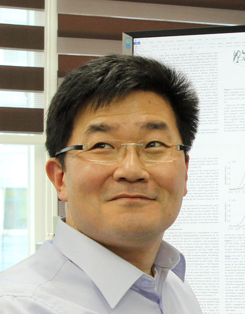 Mu-Hyun (Mookie) Baik合作论文数Department of Chemistry, Center for Catalytic Hydrocarbon Functionalizations, Institute for Basic Science;Department of Chemistry, Korea Advanced Institute of Science and Technology1
 Juntao Liu (柳军涛)合作论文数School of Mathematics and Statistics, Shandong University1
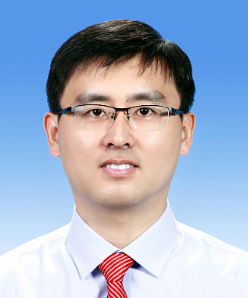 Bingqiang Liu (刘丙强)合作论文数School of Mathematics, Shandong University1
 John C. Huffman合作论文数Department of Chemistry, The College of Arts & Sciences, Indiana University Bloomington;Molecular Structure Center, Indiana University Bloomington1
 Guojun Li (李国君)合作论文数Research Center for Mathematics and Interdisciplinary Sciences, Shandong University1Matt Davy合作论文数1
 Craig A. Stewart合作论文数Indiana University1
 Beth Plale合作论文数Luddy School of Informatics, Computing, and Engineering, Indiana University Bloomington1Greg Pike合作论文数1Stephen Simms合作论文数1
 Alejandro Valerio合作论文数Science Department, Computer;Indiana University;Computer Science Department, Indiana University1Bret Hammond合作论文数1Doug Balog合作论文数1Dennis Gannon合作论文数Department of Computer Science at Indiana University;Indiana Pervasive Technology Labs1
 Xiuzhen Huang合作论文数Department of Computer Science,;Arkansas State University.1
 Randall Bramley合作论文数Luddy School of Informatics, Computing, and Engineering, Indiana University Bloomington1
 Pengyin Chen合作论文数College of Agriculture, Food & Natural Resources, University of Missouri1




