This paper studies the COVID-19 pandemic’s impact on Indonesia’s labor market, using the exogenous timing of the pandemic in a seasonal difference-in-differences framework. We use multiple rounds of Indonesia’s National Labor Force Survey to establish a pre-pandemic employment trend and attribute any difference from this trend to the estimated effect of the pandemic on employment outcomes. We find mixed impacts of the pandemic on Indonesia’s labor market. While the pandemic has reduced the gender gap in employment participation due to the “added worker effect” among women, it has also lowered overall employment quality among both women and men. The increase in female employment was mainly driven by women in rural areas without a high school education entering either informal agricultural employment or unpaid family work. For men, the pandemic had negative employment impacts for all subgroups. Among the employed, both women and men work fewer hours and earn lower wages.
This paper investigates how elite capture affects the welfare gains from targeted government transfer programs in Indonesia, using both a high-stakes field experiment that varied the extent of elite influence and nonexperimental data on a variety of existing government programs. While the relatives of those holding formal leadership positions are more likely to receive benefits in some programs, we argue that the welfare consequences of elite capture appear small: eliminating elite capture entirely would improve the welfare gains from these programs by less than one percent.
In the six months since the previous East Asia and Pacific (EAP) economic update, developing EAP has faced a challenging external environment. Financial market conditions in the region, however, have been volatile over much of the past 6 months, as in the rest of the world. Over the next two to three years, growth in developing EAP is expected to ease modestly. Poverty in developing EAP has declined rapidly in recent years, and is projected to fall further with continued growth; however, in several countries the pace of poverty reduction has been restricted by limited labor market opportunities, particularly for disadvantaged groups. The positive outlook for growth and poverty reduction in the region in this base case is subject to elevated risks. The outlook for the Pacific Island Countries (PICs) is heavily dependent on their ability to overcome geographic constraints and take advantage of the relatively narrow set of opportunities available to them. Sustaining the pace of poverty reduction will require measures to enhance the business environment, improve education and health outcomes, and strengthen social safety nets.
This paper shows that adding a small application cost to a transfer program can substantially improve targeting through self-selection. Our village-level experiment in Indonesia finds that requiring beneficiaries to apply for benefits results in substantially poorer beneficiaries than automatic enrollment using the same asset test. Marginally increasing application costs on an experimental basis does not further improve targeting. Estimating a model of the application decision implies that the results are largely driven by the nonpoor, who make up the bulk of the population, forecasting that they are unlikely to pass the asset test and therefore not bothering to apply.
Economic theory suggests that, when designing aid programs, ordeal mechanisms that impose differential costs for rich and poor can induce self-selection and hence improve targeting ("self-targeting").We first re-examine this theory and show that ordeal mechanisms may actually have theoretically ambiguous effects on targeting: for example, time spent applying imposes a higher monetary cost on the rich, but may impose a higher utility cost on the poor.We then examine these issues empirically by conducting a 400-village field experiment within Indonesia's Conditional Cash Transfer program.Targeting in the program is usually conducted by automatically enrolling candidates who pass an asset test.We compare whether instituting an ordeal mechanism, where villagers come to a central application site to apply and take the asset test, improves targeting over the existing automatic enrollment system.Within self-targeting villages, we find that the poor are more likely to apply, even conditional on whether they would pass the asset test.On net, self-targeting villages have a much poorer group of beneficiaries than status quo villages.However, marginally increasing the ordeal does not necessarily improve targeting: while experimentally increasing the distance to the application site reduces the number of applicants, it screens out both rich and poor in roughly equal proportions.Estimating the model structurally, we show that only one would need to increase the ordeal dramatically (e.g.tripling wait times to 9 hours or more) to induce detectable additional selection.In short, ordeal mechanisms can induce self-selection, but marginally increasing the ordeal can impose additional costs on applicants without necessarily improving targeting.
 Vivi Alatas合作论文数4Matthew Wai-Poi合作论文数3
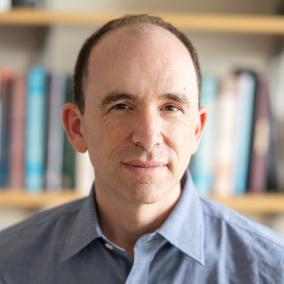 Benjamin Olken合作论文数Department of Economics, Massachusetts Institute of Technology;Abdul Latif Jameel Poverty Action Lab;National Bureau of Economic Research3
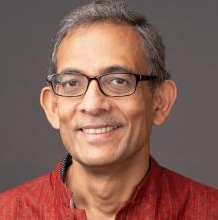 Abhijit Banerjee合作论文数Department of Economics, Massachusetts Institute of Technology3
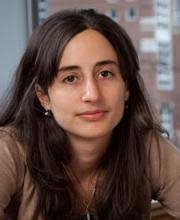 Rema Hanna合作论文数Harvard Kennedy School, Harvard University3May Thet Zin合作论文数1Ekaterine T. Vashakmadze合作论文数1Kevin Thomas Garcia Cruz合作论文数1Miguel Eduardo Sánchez Martín合作论文数1Sebastian Eckardt合作论文数1Samuel Freije-Rodríguez合作论文数1Mizuho Kida合作论文数1Rafael Muñoz Moreno合作论文数1Viet Tuan Dinh合作论文数1Karl Kendrick Tiu Chua合作论文数1somneuk davading合作论文数1Reno Dewina合作论文数1Karlis Smits合作论文数1elitza alexandrova mileva合作论文数1matthew grant waipoi合作论文数1carolina diazbonilla合作论文数1Ndiame Diop合作论文数1Nandini Krishnan合作论文数1yan sun合作论文数1joseph louie c limkin合作论文数1davaadalai batsuuri合作论文数1habib rab合作论文数1keomanivone phimmahasay合作论文数1altantsetseg shiilegmaa合作论文数1Reena Badiani-Magnusson合作论文数1
 Sean Hambali合作论文数Lembaga Penyelidikan Ekonomi dan Masyarakat, LPEM FEB UI1
 Daniel Halim合作论文数World Bank1maria monica wihardja合作论文数World Bank1Sjamsu Rahardja合作论文数1Fitria Fitrani合作论文数1David Knight合作论文数1
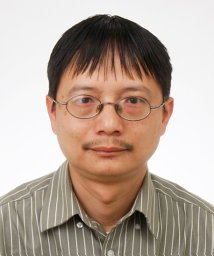 Linh HOANG Vu合作论文数Faculty of Mathematics, Mechanics and Informatics 334, Vietnam National University1Robert Taliercio合作论文数1Maryla Maliszewska合作论文数Poland1
 Rogier van den Brink合作论文数University Food and Nutrition;University of Wi;Department of Agricul1Gabriel Demombynes合作论文数Brookings Insitution, iiYale University1




