Neutron captures and delayed decays of reaction products are common sources of backgrounds in ultra-rare event searches. In this work, we studied 13 C( α, n ) 16 O reactions induced by α -particles emitted within the calibration sources of the Majorana Demonstrator . These sources are thorium-based calibration standards enclosed in carbon-rich materials. The reaction rate was estimated by using the 6129-keV γ -rays emitted from the excited 16 O states that are populated when the incoming α -particles exceed the reaction Q-value. Thanks to the excellent energy performance of the Demonstrator ’s germanium detectors, these characteristic photons can be clearly observed in the calibration data. Facilitated by Geant4 simulations, a comparison between the observed 6129-keV photon rates and predictions by a TALYS-based software was performed. The measurements and predictions were found to be consistent, albeit with large statistical uncertainties. This agreement provides support for background projections from ( α, n )-reactions in future double-beta decay search efforts.
The $^{15}$O($\alpha$,$\gamma$)$^{19}$Ne reaction is responsible for breakout from the hot CNO cycle in Type I x-ray bursts. Understanding the properties of resonances between $E_x = 4$ and 5 MeV in $^{19}$Ne is crucial in the calculation of this reaction rate. The spins and parities of these states are well known, with the exception of the 4.14- and 4.20-MeV states, which have adopted spin-parities of 9/2$^-$ and 7/2$^-$, respectively. Gamma-ray transitions from these states were studied using triton-$\gamma$-$\gamma$ coincidences from the $^{19}$F($^{3}$He,$t\gamma$)$^{19}$Ne reaction measured with GODDESS (Gammasphere ORRUBA Dual Detectors for Experimental Structure Studies) at Argonne National Laboratory. The observed transitions from the 4.14- and 4.20-MeV states provide strong evidence that the $J^\pi$ values are actually 7/2$^-$ and 9/2$^-$, respectively. These assignments are consistent with the values in the $^{19}$F mirror nucleus and in contrast to previously accepted assignments.
The Majorana Demonstrator is an experiment constructed to search for neutrinoless double-beta decays in germanium-76 and to demonstrate the feasibility to deploy a ton-scale experiment in a phased and modular fashion. It consists of two modular arrays of natural and Ge-enriched germanium detectors totaling 44.1 kg (29.7 kg enriched detectors), located at the 4850’ level of the Sanford Underground Research Facility in Lead, South Dakota, USA. Data taken with this setup since summer 2015 at different construction stages of the experiment show a clear reduction of the observed background index around the ROI for 0νββdecay search due to improvements in shielding. We discuss the statistical approaches to search for a 0νββ-signal and derive the physics sensitivity for an expected exposure of 10 kg·y from enriched detectors using a profile likelihood based hypothesis test in combination with toy Monte Carlo data.
The Majorana Demonstrator is an array of point-contact Ge detectors fabricated from Ge isotopically enriched to 88% in 76Ge to search for neutrinoless double beta decay. The processing of Ge for germanium detectors is * Corresponding author. E-mail address: avignone@physics.sc.edu (F.T. Avignone III). 1 Deceased. 2 Alternate address: Department of Nuclear Engineering, University of California, Berkeley, CA, USA. https://doi.org/10.1016/j.nima.2017.09.036 Received 14 August 2017; Accepted 15 September 2017 Available online 7 October 2017 0168-9002/© 2017 The Authors. Published by Elsevier B.V. This is an open access article under the CC BY-NC-ND license (http://creativecommons.org/licenses/by-nc-nd/4.0/). N. Abgrall et al. Nuclear Inst. and Methods in Physics Research, A 877 (2018) 314–322 a well-known technology. However, because of the high cost of Ge enriched in 76Ge special procedures were required to maximize the yield of detector mass and to minimize exposure to cosmic rays. These procedures include careful accounting for the material; shielding it to reduce cosmogenic generation of radioactive isotopes; and development of special reprocessing techniques for contaminated solid germanium, shavings, grindings, acid etchant and cutting fluids from detector fabrication. Processing procedures were developed that resulted in a total yield in detector mass of 70%. However, none of the acid-etch solution and only 50% of the cutting fluids from detector fabrication were reprocessed. Had they been processed, the projections for the recovery yield would be between 80% and 85%. Maximizing yield is critical to justify a possible future ton-scale experiment. A process for recovery of germanium from the acid-etch solution was developed with yield of about 90%. All material was shielded or stored underground whenever possible to minimize the formation of 68Ge by cosmic rays, which contributes background in the double-beta decay region of interest and cannot be removed by zone refinement and crystal growth. Formation of 68Ge was reduced by a significant factor over that in natural abundance detectors not protected from cosmic rays. © 2017 The Authors. Published by Elsevier B.V. This is an open access article under the CC BY-NC-ND license (http://creativecommons.org/licenses/by-nc-nd/4.0/).
A multi-step Coulomb excitation measurement with the GRETINA and CHICO2 detector arrays was carried out with a 430-MeV beam of the neutron-rich 110Ru (t1/2=12s) isotope produced at the CARIBU facility. This represents the first successful measurement following the post-acceleration of an unstable isotope of a refractory element. The reduced transition probabilities obtained for levels near the ground state provide strong evidence for a triaxial shape; a conclusion confirmed by comparisons with the results of beyond-mean-field and triaxial rotor model calculations.
1. Department of Physics, University of Michigan, Ann Arbor, MI 48109 USA; 2. Physics Division, Oak Ridge National Laboratory, Oak Ridge, TN 37831 USA; 3. School of Physics and Astronomy, Tel Aviv University, Tel Aviv 69978 Israel; 4. Ion Beam Applications S. A., Louvain La Neuve, B-1348 Belgium; 5. Integrated Sensors, LLC, Ottawa Hills, OH 43606 USA (telephone: 419-536-3212, e-mail: peter@isensors.net).
Fusion excitation functions for the reactions of {sup 124,132}Sn with {sup 40,48}Ca were measured at energies near and below the Coulomb barrier. Weak sub-barrier fusion enhancement accounted for by coupling to the first 2{sup +} and 3{sup -} states in the target and projectile was observed for {sup 124,132}Sn+{sup 48}Ca. However, the {sup 124,132}Sn+{sup 40}Ca fusion cross sections are very strongly enhanced below the barrier and this difference survives even after correcting for trivial size effects. Although the enhancement appears to be related to the existence of large positive Q values for neutron transfer reactions, it is not proportional to the magnitudes of those Q values, which are much larger for {sup 132}Sn+{sup 40}Ca than for {sup 124}Sn+{sup 40}Ca.
Capture-fission cross sections were measured for the collision of the massive nucleus {sup 132}Sn with {sup 96}Zr at center-of-mass energies ranging from 192.8 to 249.6 MeV in an attempt to study fusion enhancement and hindrance in this reaction involving very neutron-rich nuclei. Coincident fission fragments were detected using silicon detectors. Using angle and energy conditions, deep inelastic scattering events were separated from fission events. Coupled-channels calculations can describe the data if the surface diffuseness parameter, a, is allowed to be 1.10 fm instead of the customary 0.6 fm. The measured capture-fission cross sections agree moderately well with model calculations using the dinuclear system model. If we use this model to predict fusion barrier heights for these reactions, we find the predicted fusion hindrance, as represented by the extra push energy, is greater for the more neutron-rich system, lessening the advantage of the lower interaction barriers with neutron-rich projectiles.
Capture-fission cross sections were measured for the near symmetric reaction between the massive nuclei Sn-124 and Zr-96 for center of mass energies from 195 to 265 MeV. Coincident fission fragments were detected and separated from elastic and deep inelastic scattering products by angle/energy/mass conditions. The measured capture cross sections agree quite well with calculations using the dinuclear system (DNS) model. The DNS model also predicts the fusion cross section for this reaction with a fusion barrier height of 208.0 MeV. The deduced extra push energy, corresponding to this barrier height, differs from that deduced from evaporation residue measurements.
We have measured the B(E2;0(+) --> 2(+)) for the first excited 2(+) states in the double-closed shell nucleus Sn-132 and the two-neutron nucleus Sn-134. The results, based on a preliminary analysis are shown in Fig. 1 along with measurements on the stable Sn isotopes, and earlier results on Sn-126,Sn-128,Sn-130 [1]. The experimental setup developed for the Sn-132,Sn-134 measurements was also employed in a successful measurement of B(E2;0(+) --> 2(+)) for the closed-neutron-shell nucleus Ge-82.
Radioactive ion beams of 55 MeV C-11 from the BEARS project at LBNL and a thick-target technique were used to study resonant states in N-12. With a reaction in inverse kinematics an excitation function of elastic scattering cross section was measured in a single exposure covering the center of mass energy range between 300 keV to 1100 keV. The elastic scattering reaction C-11(p,p)C-11 is related to the reaction C-11(p,gamma)12N, an important branch point in the hot pp chains and a determinant of the evolution of supermassive stars. The data was analyzed using the R-matrix code MULTI. Preliminary results suggests that the first excited state in N-12 (0.96 MeV) might play a more important role in determining the C-11(p,gamma)N-12 reaction rate than previously believed.
The time scales for nuclear fission have been explored using both pre-and postfission neutrons and GDR gamma rays. Four systems were investigated: 133-MeV 16 O + 176 Yb and 208 Pb and 104-MeV 4 He + 188 Os and 209 Bi. Fission fragments were measured in coincidence with PPACs. The neutrons were detected using eight detectors from the DEMON array, while gamma rays were measured using the US BaF2 array. The pre-and postfission gamma rays were determined using moving source fits parallel and perpendicular to the fission fragment emission directions. The time scales for fission for the neutrons were determined using the neutron clock technique. The gamma-ray data were fitted using a statistical model calculation based on the code CASCADE. The results of the fits from both data types were used to extract nuclear friction coefficients, γ , and fission time scales. The γ values ranged from 7 to 20, while the fission times were (31–105)×10 −21 s.
The spectra of high-energy γ rays emitted by the Giant Dipole Resonance (GDR) built on moderately excited states associated with the evaporation of 0, 1 and 2 nucleons were measured in the 90Zr+89Y symmetric fusion reaction. The radiative fusion data suggest statistical emission from the compound nucleus. In addition, the analysis of the high-energy γ-ray spectra associated with the different evaporation channels at the present temperature of 0.7 MeV and spin range 15–20 ℏ show a fairly narrow width of 5.0±0.35 MeV. This value is smaller than what would be expected in a nucleus where shell effects do not play a role.
Projectile photon coincidences were measured for the scattering of an 80 MeV/nucleon 64Zn beam from *‘*Pb and *“Bi targets at the GANIL heavy ion accelerator facility. Projectile-like particles between 0.5” and 4.5“ relative to the incident beam direction were detected in the SPEG energy loss spectrometer where their momentum, charge, and mass were determined. Photons were detected in the BaF2 scintillation detector array TAPS. Light charged particles produced in the reaction were detected in the KVI Forward Wall. The analysis of the data acquired in this experiment is focused on three different phenomena: (1) the two phonon giant dipole resonance, (2) time dependence of the decay of the one phonon giant dipole resonance, and (3) giant resonance strength in projectile nuclei.
 M. L. Halbert合作论文数9James R. Beene合作论文数7Dan Shapira合作论文数7Fe Bertrand合作论文数7
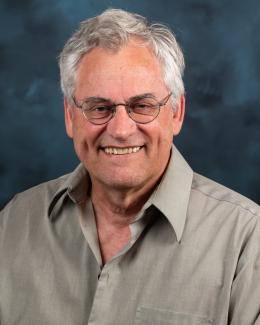 David C. Radford合作论文数Oak Ridge National Laboratory;Department of Physics and Astronomy, University of North Carolina at Chapel Hill6D. Horen合作论文数5R. Auble合作论文数5A. Galindo-Uribarri合作论文数Oak Ridge National Laboratory5Daniel W. Stracener合作论文数Forschungszentrum Jfilich5I. Arnquist合作论文数4C. Christofferson合作论文数4M. Busch合作论文数4A. L. Reine合作论文数4C. R. Haufe合作论文数4D. Tedeschi合作论文数4M. Buuck合作论文数4Am Lopez合作论文数4t caldwell合作论文数4C. Wiseman合作论文数Ctr Expt Nucl Phys & Astrophys, Univ Washington4S. Vasilyev合作论文数4B. X. Zhu合作论文数4P-H Chu合作论文数4C.-H. Yu合作论文数4
 E. W. Hoppe合作论文数Pacific Northwest Natl Lab4A. W. P. Poon合作论文数Lawrence Berkeley National Laboratory4Green M P合作论文数4M. F. Kidd合作论文数Tennessee Technological University, Tennessee Technological Univ4
 Michael Thoennessen合作论文数National Superconducting Cyclotron Laboratory, Department of Physics & Astronomy, Michigan State University4
 Alexander S. Barabash合作论文数Department of High Energies Physics, Institute of Theoretical and Experimental Physics;National Research Center Kurchatov Institute4
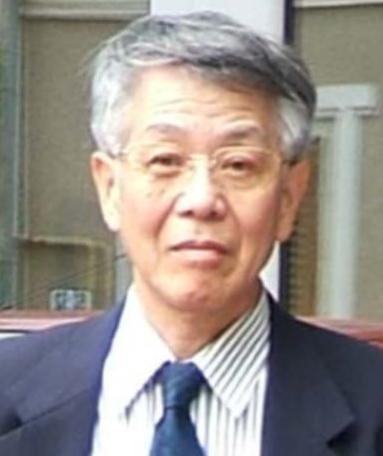 Hiroyasu Ejiri合作论文数Research Center for Nuclear Physics, Osaka University4
 Peter Mueller合作论文数Interim Group, Argonne National Laboratory;Physics Division, Argonne National Laboratory;University of Washington4R. Henning合作论文数4John F. Wilkerson合作论文数University of Washington4B. Burks合作论文数4
 Michael P. Carpenter合作论文数Physics Division, Argonne National Laboratory4
 Ralph Massarczyk合作论文数Institut für Strahlenphysik, Forschungszentrum Dresden-Rossendorf4
 Clara Cuesta合作论文数Grupo de Física Nuclear y Astropartículas, Universidad de Zaragoza4
 K. Rielage合作论文数Los Alamos National Laboratory4
 Demetrios Sarantites合作论文数Department of Chemistry, College of Arts & Sciences, Washington University in St. Louis4
 Gabriele Giovanetti合作论文数4
 Frank Avignone III合作论文数Department of Physics and Astronomy, College of Arts and Sciences, University of South Carolina;Oak Ridge National Laboratory4V. E. Guiseppe合作论文数4Y. V. Efremenko合作论文数Oak Ridge National Laboratory4
 Dariusz Seweryniak合作论文数4V. Yumatov合作论文数3K. Vorren合作论文数3F. Bertrand合作论文数3A. M. Suriano合作论文数3
 Charles J Barton合作论文数3




