In-context learning (ICL) enables Large Language Models (LLMs) to adapt to new tasks with only a small set of examples at inference time, thereby avoiding task-specific fine-tuning. However, in-context examples may contain privacy-sensitive information that should not be revealed through model outputs. Existing differential privacy (DP) approaches to ICL are either computationally expensive or rely on heuristics with limited effectiveness, including context oversampling, synthetic data generation, or unnecessary thresholding. We reformulate private ICL through the lens of a Product-of-Experts model. This gives a theoretically grounded framework, and the algorithm can be trivially parallelized. We evaluate our method across five datasets in text classification, math, and vision-language. We find that our method improves accuracy by more than 30 percentage points on average compared to prior DP-ICL methods, while maintaining strong privacy guarantees.
The hidden state threat model of differential privacy (DP) assumes that the adversary has access only to the final trained machine learning (ML) model, without seeing intermediate states during training. However, the current privacy analyses under this model are restricted to convex optimization problems, reducing their applicability to multi-layer neural networks, which are essential in modern deep learning applications. Notably, the most successful applications of the hidden state privacy analyses in classification tasks have only been for logistic regression models. We demonstrate that it is possible to privately train convex problems with privacy-utility trade-offs comparable to those of 2-layer ReLU networks trained with DP stochastic gradient descent (DP-SGD). This is achieved through a stochastic approximation of a dual formulation of the ReLU minimization problem, resulting in a strongly convex problem. This enables the use of existing hidden state privacy analyses and provides accurate privacy bounds also for the noisy cyclic mini-batch gradient descent (NoisyCGD) method with fixed disjoint mini-batches. Empirical results on benchmark classification tasks demonstrate that NoisyCGD can achieve privacy-utility trade-offs on par with DP-SGD applied to 2-layer ReLU networks.
From molecular imaging to wireless communications, the ability to align and reconstruct signals from multiple misaligned observations is crucial for system performance. We study the problem of multi-reference alignment (MRA), which arises in many real-world problems, such as cryo-EM, computer vision, and, in particular, wireless communication systems. Using a probabilistic approach to model MRA, we find a new algorithm that uses relative poses as nuisance variables to marginalize out – thereby removing the global symmetries of the problem and allowing for more direct solutions and improved convergence. The decentralization of this approach enables significant computational savings by avoiding the cubic scaling of centralized methods through cycle consistency. Both proposed algorithms achieve lower reconstruction error across experimental settings.
The pandemic in 2020 and 2021 had enormous economic and societal consequences, and studies show that contact tracing algorithms can be key in the early containment of the virus. While large strides have been made towards more effective contact tracing algorithms, we argue that privacy concerns currently hold deployment back. The essence of a contact tracing algorithm constitutes the communication of a risk score. Yet, it is precisely the communication and release of this score to a user that an adversary can leverage to gauge the private health status of an individual. We pinpoint a realistic attack scenario and propose a contact tracing algorithm with differential privacy guarantees against this attack. The algorithm is tested on the two most widely used agent-based COVID19 simulators and demonstrates superior performance in a wide range of settings. Especially for realistic test scenarios and while releasing each risk score with epsilon=1 differential privacy, we achieve a two to ten-fold reduction in the infection rate of the virus. To the best of our knowledge, this presents the first contact tracing algorithm with differential privacy guarantees when revealing risk scores for COVID19.
The COVID19 pandemic had enormous economic and societal consequences. Contact tracing is an effective way to reduce infection rates by detecting potential virus carriers early. However, this was not generally adopted in the recent pandemic, and privacy concerns are cited as the most important reason. We substantially improve the privacy guarantees of the current state of the art in decentralized contact tracing. Whereas previous work was based on statistical inference only, we augment the inference with a learned neural network and ensure that this neural augmentation satisfies differential privacy. In a simulator for COVID19, even at epsilon=1 per message, this can significantly improve the detection of potentially infected individuals and, as a result of targeted testing, reduce infection rates. This work marks an important first step in integrating deep learning into contact tracing while maintaining essential privacy guarantees.
Transfer learning is the predominant paradigm for training deep networks on small target datasets. Models are typically pretrained on large ``upstream'' datasets for classification, as such labels are easy to collect, and then finetuned on ``downstream'' tasks such as action localisation, which are smaller due to their finer-grained annotations. In this paper, we question this approach, and propose co-finetuning -- simultaneously training a single model on multiple ``upstream'' and ``downstream'' tasks. We demonstrate that co-finetuning outperforms traditional transfer learning when using the same total amount of data, and also show how we can easily extend our approach to multiple ``upstream'' datasets to further improve performance. In particular, co-finetuning significantly improves the performance on rare classes in our downstream task, as it has a regularising effect, and enables the network to learn feature representations that transfer between different datasets. Finally, we observe how co-finetuning with public, video classification datasets, we are able to achieve state-of-the-art results for spatio-temporal action localisation on the challenging AVA and AVA-Kinetics datasets, outperforming recent works which develop intricate models.
: The field of Out-of-Distribution (OOD) detection aims to separate OOD data from in-distribution (ID) data in order to make safe predictions. With the increasing application of Convolutional Neural Networks (CNNs) in sensitive environments such as autonomous driving and security, this field is bound to become indispensable in the future. Although the OOD detection field has made some progress in recent years, a fundamental understanding of the underlying phenomena enabling the separation of datasets remains lacking. We find that the OOD detection relies heavily on the covariate shift of the data and not so much on the semantic shift, i.e. a CNN does not carry explicit semantic information and relies solely on differences in features. Although these features can be affected by the underlying semantics, this relation does not seem strong enough to rely on. Conversely, we found that since the CNN training setup determines what features are learned, that it is an important factor for the OOD performance. We found that variations in the model training can lead to an increase or decrease in the OOD detection performance. Through this insight, we obtain an increase in OOD detection performance on the common OOD detection benchmarks by changing the training procedure and using the simple Maximum Softmax Probability (MSP) model introduced by (Hendrycks and Gimpel, 2016). We hope to inspire others to look more closely into the fundamental principles underlying the separation of two datasets. The code for reproducing our results can be found at https://github.com/SimonMariani/OOD-detection.
Pandemics have a major impact on society and the economy. In the case of a new virus, such as COVID-19, high-grade tests and vaccines might be slow to develop and scarce in the crucial ini-tial phase. With no time to waste and lockdowns being expensive, contact tracing is thus an essential tool for policymakers. In theory, statistical inference on a virus transmission model can provide an effective method for tracing infections. However, in practice, such algorithms need to run decentralized, rendering existing methods – that require hundreds or even thousands of daily messages per person – infeasible. In this paper, we develop an algorithm that (i) requires only a few (2-5) daily messages, (ii) works with extremely low bandwidths (3-5 bits) and (iii) enables quarantining and targeted testing that drastically re-duces the peak and length of the pandemic. We compare the effectiveness of our algorithm using two agent-based simulators of realistic contact patterns and pandemic parameters and show that it performs well even with low bandwidth, imprecise tests, and incomplete population cov-erage.
We propose a method to learn image representations from uncurated videos. We combine a supervised loss from off-the-shelf object detectors and self-supervised losses which naturally arise from the video-shot-frame-object hierarchy present in each video. We report competitive results on 19 transfer learning tasks of the Visual Task Adaptation Benchmark (VTAB), and on 8 out-of-distribution-generalization tasks, and discuss the benefits and shortcomings of the proposed approach. In particular, it improves over the baseline on all 18/19 few-shot learning tasks and 8/8 out-of-distribution generalization tasks. Finally, we perform several ablation studies and analyze the impact of the pretrained object detector on the performance across this suite of tasks.
Accurate estimation of predictive uncertainty (model calibration) is essential for the safe application of neural networks. Many instances of miscalibration in modern neural networks have been reported, suggesting a trend that newer, more accurate models produce poorly calibrated predictions. Here, we revisit this question for recent state-of-the-art image classification models. We systematically relate model calibration and accuracy, and find that the most recent models, notably those not using convolutions, are among the best calibrated. Trends observed in prior model generations, such as decay of calibration with distribution shift or model size, are less pronounced in recent architectures. We also show that model size and amount of pretraining do not fully explain these differences, suggesting that architecture is a major determinant of calibration properties.
We investigate the impact of aliasing on generalization in Deep Convolutional Networks and show that data augmentation schemes alone are unable to prevent it due to structural limitations in widely used architectures. Drawing insights from frequency analysis theory, we take a closer look at ResNet and EfficientNet architectures and review the trade-off between aliasing and information loss in each of their major components. We show how to mitigate aliasing by inserting non-trainable low-pass filters at key locations, particularly where networks lack the capacity to learn them. These simple architectural changes lead to substantial improvements in generalization on i.i.d. and even more on out-of-distribution conditions, such as image classification under natural corruptions on ImageNet-C [11] and few-shot learning on Meta-Dataset [26]. State-of-the art results are achieved on both datasets without introducing additional trainable parameters and using the default hyper-parameters of open source codebases.
Before deploying machine learning models it is critical to assess their robustness. In the context of deep neural networks for image understanding, changing the object location, rotation and size may affect the predictions in non-trivial ways. In this work we perform a fine-grained analysis of robustness with respect to these factors of variation using SI-Score, a synthetic dataset. In particular, we investigate ResNets, Vision Transformers and CLIP, and identify interesting qualitative differences between these.
Modern deep convolutional networks (CNNs) are often criticized for not generalizing under distributional shifts. However, several recent breakthroughs in transfer learning suggest that these networks can cope with severe distribution shifts and successfully adapt to new tasks from a few training examples. In this work we study the interplay between out-of-distribution and transfer performance of modern image classification CNNs for the first time and investigate the impact of the pre-training data size, the model scale, and the data preprocessing pipeline. We find that increasing both the training set and model sizes significantly improve the distributional shift robustness. Furthermore, we show that, perhaps surprisingly, simple changes in the preprocessing such as modifying the image resolution can significantly mitigate robustness issues in some cases. Finally, we outline the shortcomings of existing robustness evaluation datasets and introduce a synthetic dataset SI-SCORE we use for a systematic analysis across factors of variation common in visual data such as object size and position.
Training convolutional networks for semantic segmentation with strong (per-pixel) and weak (per-bounding-box) supervision requires a large amount of weakly labeled data. We propose two methods for selecting the most relevant data with weak supervision. The first method is designed for finding visually similar images without the need of labels and is based on modeling image representations with a Gaussian Mixture Model (GMM). As a byproduct of GMM modeling, we present useful insights on characterizing the data generating distribution. The second method aims at finding images with high object diversity and requires only the bounding box labels. Both methods are developed in the context of automated driving and experimentation is conducted on Cityscapes and Open Images datasets. We demonstrate performance gains by reducing the amount of employed weakly labeled images up to 100 times for Open Images and up to 20 times for Cityscapes.
We propose a normalization layer for unsupervised domain adaption in semantic scene segmentation. Normalization layers are known to improve convergence and generalization and are part of many state-of-the-art fully-convolutional neural networks. We show that conventional normalization layers worsen the performance of current Unsupervised Adversarial Domain Adaption (UADA), which is a method to improve network performance on unlabeled datasets and the focus of our research. Therefore, we propose a novel Domain Agnostic Normalization layer and thereby unlock the benefits of normalization layers for unsupervised adversarial domain adaptation. In our evaluation, we adapt from the synthetic GTA5 data set to the real Cityscapes data set, a common benchmark experiment, and surpass the state-of-the-art. As our normalization layer is domain agnostic at test time, we furthermore demonstrate that UADA using Domain Agnostic Normalization improves performance on unseen domains, specifically on Apolloscape and Mapillary.
Data analytics helps basketball teams to create tactics. However, manual data collection and analytics are costly and ineffective. Therefore, we applied a deep bidirectional long short-term memory (BLSTM) and mixture density network (MDN) approach. This model is not only capable of predicting a basketball trajectory based on real data, but it also can generate new trajectory samples. It is an excellent application to help coaches and players decide when and where to shoot. Its structure is particularly suitable for dealing with time series problems. BLSTM receives forward and backward information at the same time, while stacking multiple BLSTMs further increases the learning ability of the model. Combined with BLSTMs, MDN is used to generate a multi-modal distribution of outputs. Thus, the proposed model can, in principle, represent arbitrary conditional probability distributions of output variables. We tested our model with two experiments on three-pointer datasets from NBA SportVu data. In the hit-or-miss classification experiment, the proposed model outperformed other models in terms of the convergence speed and accuracy. In the trajectory generation experiment, eight model-generated trajectories at a given time closely matched real trajectories.
One of the emerging trends for sports analytics is the growing use of player and ball tracking data. A parallel development is deep learning predictive approaches that use vast quantities of data with less reliance on feature engineering. This paper applies recurrent neural networks in the form of sequence modeling to predict whether a three-point shot is successful. The models are capable of learning the trajectory of a basketball without any knowledge of physics. For comparison, a baseline static machine learning model with a full set of features, such as angle and velocity, in addition to the positional data is also tested. Using a dataset of over 20,000 three pointers from NBA SportVu data, the models based simply on sequential positional data outperform a static feature rich machine learning model in predicting whether a three-point shot is successful. This suggests deep learning models may offer an improvement to traditional feature based machine learning methods for tracking data.
 Josip Djolonga合作论文数Google Brain5
 Mario Lučić合作论文数Google DeepMind5
 Christos Louizos合作论文数University of Amsterdam5
 Max Welling合作论文数CuspAI4
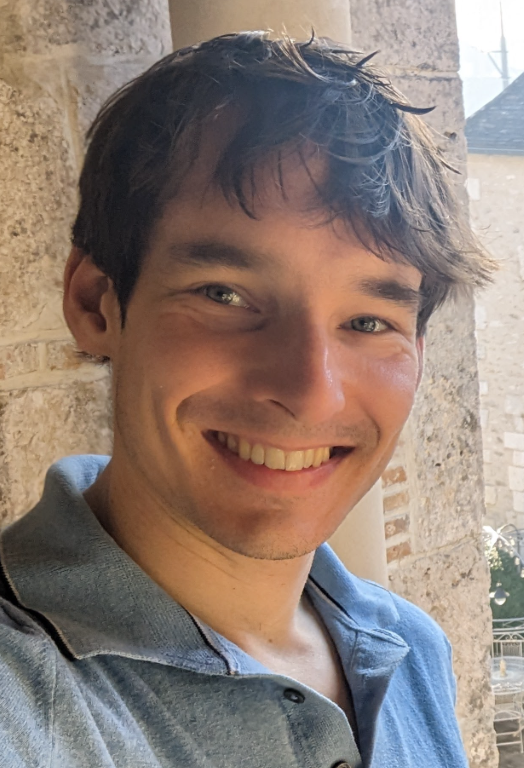 Neil Houlsby合作论文数Anthropic4
 Yuki M. Asano合作论文数Department of Computer Science & Artificial Intelligence, University of Technology Nuremberg3
 Xiaohua Zhai (翟晓华)合作论文数Meta3
 Panagiotis Meletis合作论文数Univ Technol, Eindhoven, Netherlands2
 Matthias Minderer合作论文数Microsoft AI2
 Sylvain Gelly合作论文数Google2
 Jessica Yung合作论文数Deepmind2
 Rajiv Shah合作论文数University of Illinois at Chicago2
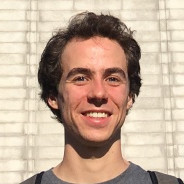 Michael Tschannen合作论文数Google DeepMind2
 Gijs Dubbelman合作论文数Eindhoven University of Technology2
 Lucas Beyer合作论文数Meta2
 Alexander Kolesnikov合作论文数Meta2
 Guillaume Chevalier合作论文数Laval University1DAN MOLDOVAN合作论文数1
 Sander Klomp合作论文数ViNotion B.V.1Arash Behboodi合作论文数1
 Rennong Yang合作论文数1Yu Zhao合作论文数1
 Frances Ann Hubis合作论文数ETH Zurich1
 Antti Koskela合作论文数Nokia Bell Labs1
 Joan Puigcerver合作论文数Google1
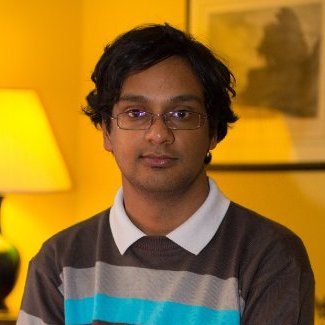 Anurag Arnab合作论文数Google DeepMind1
 Marvin Ritter合作论文数Google DeepMind1
 Mostafa Dehghani合作论文数Google DeepMind1
 Ross Goroshin合作论文数Google Brain Montreal Team;Mila1
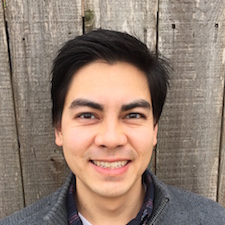 Alexander D'Amour合作论文数Google Brain1
 Dustin Tran合作论文数xAI1
 Chen Sun (孙晨)合作论文数1
 Peter H.N. De With合作论文数Department of Electrical Engineering, Eindhoven University of Technology1
 Mohammad Mahdi Derakhshani合作论文数Video & Image Sense Lab, University of Amsterdam1
 Hugo Larochelle合作论文数Mila - Quebec AI Institute;Department of Computer Science and Operations Research, Université de Montréal1
 Vincent Dumoulin合作论文数Google1
 Cordelia Schmid合作论文数INRIA;Google1
 Xuehan Xiong合作论文数ByteDance1
 Aravindh Mahendran合作论文数Google Research1
 Cristina Nader Vasconcelos (Cristina Vasconcelos)合作论文数Google1
 Alexey A. Gritsenko合作论文数Google DeepMind1
 Gabriele Cesa合作论文数Qualcomm AI Research1
 Nicolas Le Roux合作论文数Université de Montréal;McGill University1




