We present a method for producing dense active appearance models (AAMs), suitable for video-realistic synthesis. To this end we estimate a joint alignment of all training images using a set of pairwise registrations and ensure that these pairwise registrations are only calculated between similar images. This is achieved by defining a graph on the image set whose edge weights correspond to registration errors and computing a bounded diameter minimum spanning tree. Dense optical flow is used to compute pairwise registration and a flow refinement method to align small scale texture is introduced. Further, given the registration of training images, vertices are added to the AAM to minimise the error between the observed flow fields and the flow fields interpolated between the AAM mesh points. We demonstrate a significant improvement in model compactness.
This paper presents a method for 3D lip registration when tracking a face model from video and depth map data. The inner and outer lip contours are tracked in 2D using features obtained from Boosted Edge Learning (BEL). Given the lip contours and a reconstructed depth map, the 3D mouth region of a mesh is registered at each frame independently, accounting for the self occlusions of the lips that occur during speech. Experiments show that this leads to significantly higher registration accuracy in the perceptually important mouth region. The proposed method is also shown to have lower error than an Active Appearance Model based registration method.
This paper presents a complete system for expressive visual text-to-speech (VTTS), which is capable of producing expressive output, in the form of a 'talking head', given an input text and a set of continuous expression weights. The face is modeled using an active appearance model (AAM), and several extensions are proposed which make it more applicable to the task of VTTS. The model allows for normalization with respect to both pose and blink state which significantly reduces artifacts in the resulting synthesized sequences. We demonstrate quantitative improvements in terms of reconstruction error over a million frames, as well as in large-scale user studies, comparing the output of different systems.
Creating a realistic talking head, which given an arbitrary text as input generates a realistic looking face speaking the text, has been a long standing research challenge. Talking heads which cannot express emotion have been made to look very realistic by using concatenative approaches [Wang et al. 2011], however allowing the head to express emotion creates a much more challenging problem and model based approaches have shown promise in this area. While 2D talking heads currently look more realistic than their 3D counterparts, they are limited both in the range of poses they can express and in the lighting conditions that they can be rendered under. Previous attempts to produce videorealistic 3D expressive talking heads [Cao et al. 2005] have produced encouraging results but not yet achieved the level of realism of their 2D counterparts.
A controllable computer animated avatar that could be used as a natural user interface for computers is demonstrated. Driven by text and emotion input, it generates expressive speech with corresponding facial movements. To create the avatar, HMM-based text-to-speech synthesis is combined with active appearance model (AAM)-based facial animation. The novelty is the degree of control achieved over the expressiveness of both the speech and the face while keeping the controls simple. Controllability is achieved by training both the speech and facial parameters within a cluster adaptive training (CAT) framework. CAT creates a continuous, low dimensional eigenspace of expressions, which allows the creation of expressions of different intensity (including ones more intense than those in the original recordings) and combining different expressions to create new ones. Results on an emotion-recognition task show that recognition rates given the synthetic output are comparable to those given the original videos of the speaker. Copyright © 2013 ISCA.
We present a multispectral photometric stereo method for capturing geometry of deforming surfaces. A novel photometric calibration technique allows calibration of scenes containing multiple piecewise constant chromaticities. This method estimates per-pixel photometric properties, then uses a RANSAC-based approach to estimate the dominant chromaticities in the scene. A likelihood term is developed linking surface normal, image intensity and photometric properties, which allows estimating the number of chromaticities present in a scene to be framed as a model estimation problem. The Bayesian Information Criterion is applied to automatically estimate the number of chromaticities present during calibration. A two-camera stereo system provides low resolution geometry, allowing the likelihood term to be used in segmenting new images into regions of constant chromaticity. This segmentation is carried out in a Markov Random Field framework and allows the correct photometric properties to be used at each pixel to estimate a dense normal map. Results are shown on several challenging real-world sequences, demonstrating state-of-the-art results using only two cameras and three light sources. Quantitative evaluation is provided against synthetic ground truth data.
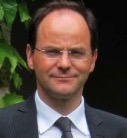 Roberto Cipolla合作论文数Department of Engineering, University of Cambridge;Cambridge Research Laboratory, Toshiba Europe Ltd6
 Björn Stenger合作论文数Rakuten Institute of Technology;Rakuten Group, Inc.6
 Vincent Wan合作论文数Department of Computer Science, University of Sheffield3
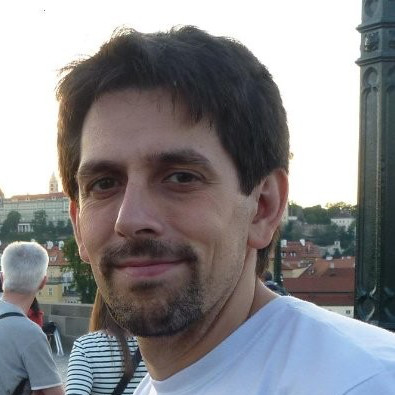 Javier Latorre合作论文数Apple1
 Yannis Stylianou合作论文数Computer Science Department, University of Crete;Apple1
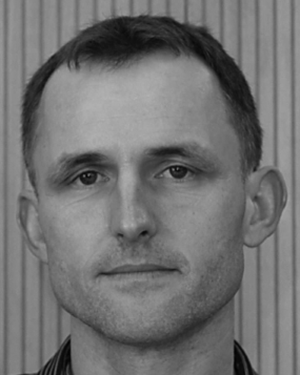 Norbert Braunschweiler合作论文数Institute of Natural Language Processing;University of Stuttgart;Institute of Natural Language Processing, University of Stuttgart1
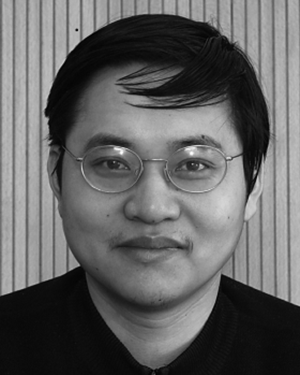 Langzhou Chen合作论文数1
 Art Blokland合作论文数1Balakrishna Kolluru合作论文数Department of Computer Science;University of Shefeld;Department of Computer Science, University of Shefeld1
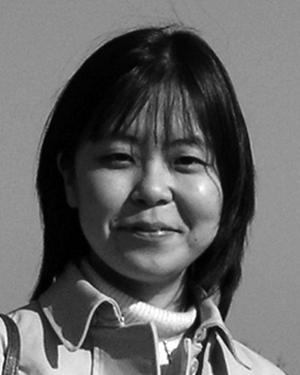 Kayoko Yanagisawa合作论文数1
 Ranniery Maia合作论文数Cambridge Res Lab, Toshiba Res Europe Ltd1
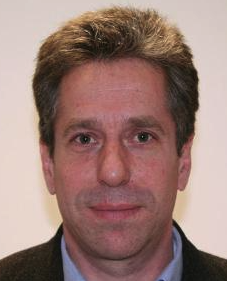 Mark Gales合作论文数Information Engineering Division, Department of Engineering, University of Cambridge1
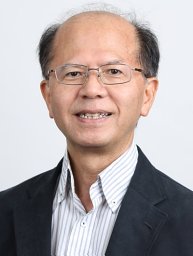 Masami Akamine (赤嶺政巳)合作论文数Graduate School of Engineering, Tohoku University;Al Electronics Education and Research Center, Tohoku University1




