INTRODUCTION:Persistent stigma, lack of knowledge about mental health, and negative attitudes toward treatment are among the most significant barriers to military service members and veterans seeking behavioral health care. With the high rates of untreated behavioral health needs among service members and veterans, identifying effective programs for reducing barriers to care is a national priority. This study adapted Mental Health First Aid (MHFA), an evidence-based program for increasing mental health knowledge, decreasing stigma, and increasing laypeople's confidence in helping and frequency of referring people in need, for military and veteran populations and pilot tested the adapted training program with 4 Army National Guard armories.MATERIALS AND METHODS:A total of 176 community first responders (CFRs) participated in a comparative outcomes study, with 69 receiving the training and 107 participating in the control group. CFRs were individuals in natural positions within the Armory or home communities of Guard members to identify and help service members in mental health crisis. Surveys assessing confidence in helping, attitudes toward help seeking, knowledge of resources, use of MHFA practices, and stigma were completed before the training, immediately post-training, at 4 months post-training, and at 8 months post-training. Analyses included repeated measures analysis of variances on data from CFRs who received the training and mixed between-within subjects analysis of variances comparing the intervention and control group longitudinally at three time points. Institutional review board approval for this study was received from Montana State University and the U.S. Army Medical Department, Medical Research and Materiel Command, Human Research Protection Office.RESULTS:Significant and meaningful improvements in confidence (p < 0.05, η2 = 0.49), knowledge (p < 0.05, η2 = 0.39), behaviors (p < 0.05, η2 = 0.27), and stigma (p < 0.05, η2 = 0.16) were observed among trainees. When compared to a control group, statistically meaningful differences in change over time were observed for knowledge (η2 = 0.03), attitudes (η2 = 0.02), confidence (η2 = 0.06), and stigma (η2 = 0.02), with a significant and meaningful difference observed for practice behaviors (p < 0.05, η2 = 0.07).CONCLUSIONS:Results from the comparative outcomes pilot study of military and veterans MHFA indicate that the intervention is acceptable and feasible to implement in National Guard Armories and among non-Guard community-based first responders. There was a significant intervention effect detected for the likelihood that a CFR would use appropriate engagement, support, and referral practices when identifying someone in need of mental health support. In addition, there were positive growth trends in the data for improvements in confidence, knowledge of mental health resources, attitudes toward help seeking, and stigma, which indicate that with a larger number of participants and armories we would expect to see significant intervention effects. Study weaknesses included insufficient power and demographic data for more robust analyses of intervention effects. A larger randomized controlled trial is recommended for better establishing efficacy; however, these results indicate that Military and Veterans MHFA is a promising intervention for reducing critical barriers to care.
When compared with other demographics, young males are more likely to take a variety of risks (like skateboarding, using drugs) and use risky behaviors to attract romantic partners. This study extended research on risk by assessing the attractiveness of 101 different kinds of risks performed by males and females. As predicted, factor analysis revealed that the attractiveness of diverse risks clustered around two major dimensions: risks like those faced by hunter-gatherer humans (e.g., handling fire and dangerous animals) and risks that are uniquely modern (e.g., driving without seat belts). Additionally, results confirmed that modern risks were rated as unattractive for both sexes, whereas hunter-gatherer risks were rated as especially attractive when performed by males. Discussion focuses on cultural and evolutionary explanations for the link between risk and attractiveness.
In this study of perceived legitimacy, Australian citizens from a randomly selected national sample first responded to information about how judicial authorities responded to two crimes (green protest, date rape) in terms of seriousness and recommended punishment. They also provided ratings of the importance of a set of values for judicial authorities compared with self, and measures of global value discrepancy, procedural fairness, expertise, and legitimacy. Results showed that perceived legitimacy was negatively related to global value discrepancy and that the information provided to participants about judge's position primed differences in value discrepancy only for the date rape crime. Other findings also implied that the nature of the offense moderated legitimacy/value discrepancy relations. Perceived legitimacy was also positively related to procedural fairness and the expertise of the authority, and higher when the judicial authority was perceived to assign specific values as even more important than participants did themselves.
ABSTRACT The authors surveyed women from 2 communities: Anchorage, Alaska (N = 51), an urban area, and Haines, Alaska (N = 41), an isolated rural community. Participants from Haines scored lower on measures of self-objectification, internalization of sociocultural attitudes toward appearance, participation in beauty enhancement behaviors, and perceived normative beauty enhancement behaviors. Women from Haines also engaged in more empowering exercise (i.e., yoga and outdoor exercise). Internalization of sociocultural attitudes toward appearance mediated the relation between perceived normative beauty enhancement behaviors and self-objectification for women living in both communities. The current study suggests that communities may present opportunities to engage in activities that influence one's predisposition to self-objectify. The nonexperimental nature of this study, however, prevents the definitive establishment of the direction of causality between variables.
This film presents an excellent opportunity for critical viewing by families because it unflinchingly examines and critiques gender roles and explores identity development in late adolescence and y...
Views of a selection committee's decision to promote a woman over a man on the basis of affirmative action were studied in a random sample of Australians (118 men and 111 women). The relations between perceptions of workplace gender discrimination, feelings of collective responsibility and guilt for discrimination, and judgments of entitlement to and, secondarily, deservingness of affirmative action were examined. AMOS analyses indicated that men's reports of collective guilt predicted attitudes toward women's entitlement. No coherent model was observed for women, which suggested ambivalent attitudes toward affirmative action. Gender differences in discrimination beliefs also suggested that women believe men are unfairly advantaged and that men believe women are responsible for their own disadvantage. Implications for research examining collective emotions and their role in social justice judgments are discussed.
This study investigated beliefs about gender discrimination in opportunities for promotion in organisations and their relation to gender and gender-focused ambivalent beliefs as measured, respectively, by the Ambivalent Sexism Inventory (ASI) and the Ambivalence toward Men Inventory (AMI) (Glick and Fiske, Ambivalent sexism. In M.P. Zanna (Ed.), Advances in experimental social psychology, 33: pp. 115-188, San Diego, CA: Academic, 2001a). These two inventories were administered to 225 students at Flinders University in Adelaide, Australia along with discrimination items concerning advantage, responsibility, guilt, and resentment about the advancement of men and women in the workplace. Results showed gender differences in discrimination beliefs and in the hostile and benevolent scales from the ASI and AMI. Gender differences and relations between these scales and the discrimination variables were interpreted in terms of system-justification, self and group interests, and the effects of values and beliefs about deservingness and entitlement.
The editor thanks the following ad hoc reviewers who have reviewed manuscripts for Volume 19 of Social Justice Research … Gary Blasi Ramona Bobocel Robert Boeckmann Thomas Boll Joel Brockner Kevin Carlsmith Ya-Ru Chen Margaret Clark Russell Cropanzano Claudia Dalbert Micha l Dambrun David De Cremer Jim Devine Mark Ferguson Mark Fondacaro Mindi Foster Jamie Goldenberg Harold Grasmick Carolyn Hafer Curtis Hardin Alex Haslam … Ran Hassin Rebecca Hollander-Blumoff Matthew Hunt Aaron Kay Laura Kray Eric Lambert Mel Lerner Anesu Mandisodza John McClure Elizabeth Morrison Keith Murnighan Jaime Napier Laurie O'Brien Stephen Owen Quinetta Roberson Julian Roberts Linda Skitka Ann Tenbrunsel Kees van den Bos Kimberly Wade-Benzoni Robb Willer … Social Justice Research, Vol. 19, No. 4, December 2006 (© 2006) DOI: 10.1007/s11211-006-0025-5 … Reproduced with permission of the …
Aims: To assess (1) the alcohol and other drug (AOD) consumption patterns of adolescent new entrants to the Australian workforce and (2) the association between these consumption patterns and workplace factors. Methods: A cross-sectional survey of 300 first-year apprentices (aged 15–22 years) employed in South Australian workplaces was conducted. Findings: More than 40% of apprentices surveyed reported cannabis and alcohol consumption patterns that placed them at risk of potential harm. In addition, 19% reported drinking alcohol and 6.7% reported using cannabis during work-related hours. Workplace alcohol availability and the existence of workplace AOD policies were significantly associated with apprentices’ consumption patterns. Apprentices employed in workplaces where alcohol was available used alcohol more often than those reporting no alcohol availability at work. Apprentices reporting an alcohol policy at their workplace reported less alcohol use compared to apprentices reporting no policy. Apprentices reporting a drug policy at their workplace reported lower levels of cannabis and alcohol use compared to those reporting no policy. Conclusions: Workplace factors, in particular workplace AOD policies, were significantly associated with adolescent AOD use both at and away from the workplace. These findings indicate that the workplace has potential as a setting for prevention strategies design to minimize AOD-related harms.
Performance-enhancing drug use by elite athletes is a modern sporting and social concern. We applied a long-overdue theoretical framework, perceptual deterrence, to predicting the banned drug-use decisions of 116 elite Australian footballers and soccer players. The strongest influence on athletes' hypothetical decisions to use drugs was their personal moral beliefs and health concerns, each of which also mediated the relationship between drug testing and athletes' decisions to use banned substances. Drug testing had little influence on athletes' imagined drug use decisions, although there are athletes for whom legal sanctions are necessary. The results have important implications for the way in which authorities fund and frame future anti-drug initiatives; particularly the relationship between drug testing and athletes' personal moral beliefs.
 Tom R. Tyler合作论文数Yale Law School, Yale University10
 Yuen J. Huo合作论文数Department of Psychology, College of Life Sciences, University of California, Los Angeles6
 Norman Feather合作论文数College of Education, Psychology and Social Work, Flinders University6
 Heather J Smith合作论文数6
 Markie Blumer合作论文数3Desiree Compton合作论文数3Ian R. McKee合作论文数2Ken Pidd合作论文数NCETA, Flinders Univ S Australia2
 Stephenie Chaudoir合作论文数Dept Psychol, Bradley Univ2
 Peter Strelan合作论文数Charles Sturt University2Gwen Lupfer-Johnson合作论文数2Carolyn Turpin-Petrosino合作论文数1Ann Tenbrunsel合作论文数1Ramona Bobocel合作论文数1
 Kimberly Wade-Benzoni合作论文数Management and Organization, Fuqua School of Business, Duke University1
 Aaron Charles Kay合作论文数Department of Psychology and Neuroscience, Trinity College of Arts & Sciences, Duke University1
 Elizabeth Wolfe Morrison合作论文数Department of Management and Organizations, Leonard N. Stern School of Business, New York University1
 Ya-Ru Chen合作论文数Samuel Curtis Johnson Graduate School of Management, Cornell SC Johnson College of Business, Cornell University1
 Margaret Clark合作论文数Department of Psychology, Yale University1
 Joel Brockner合作论文数Management Division, Columbia Business School, Columbia University1
 Linda J. Skitka合作论文数Department of Psychology, College of Liberal Arts and Sciences, University of Illinois at Chicago1
 Kees Van Den Bos合作论文数Department of Social and Organizational Psychology, Utrecht University1
 Laura Kray合作论文数Center for Equity, Gender, and Leadership, Haas School of Business, University of California, Berkeley1
 Nathaniel V Mohatt合作论文数The Consultation Center and Division of Prevention and Community Research. nathaniel.mohatt@yale.edu1Shepler Desire合作论文数1
 Alex Haslam合作论文数School of Psychology, The University of Queensland1
 De Cremer合作论文数D'Amore-McKim School of Business, Northeastern University;Institute for Experiential AI, Northeastern University;Yale Law School, Yale University1
 John Mcclure合作论文数Victoria University of Wellington1
 Laurie O'Brien合作论文数University of Kansas1
 Jeffrey Liew合作论文数Department of Psychological & Brain Sciences, College of Arts & Sciences, Texas A&M University;School of Education and Human Development, Texas A&M University;Department of Educational Psychology Courtesy Appointment, Texas A&M University1
 Russell Cropanzano合作论文数Department of Organizational Behavior, Leeds School of Business, University of Colorado Boulder1Mary Morris合作论文数1
 J. Keith Murnighan合作论文数Kellogg School of Management, Northwestern University1Carolyn L. Hafer合作论文数1Anesu N. Mandisodza合作论文数1Claudia Lampman合作论文数1
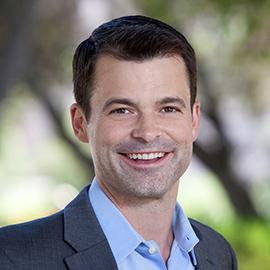 Robb Willer合作论文数Department of Psychology, Stanford University1
 John Petraitis合作论文数1
 Claudia Dalbert合作论文数University of Halle-Wittenberg1
 Harold G. Grasmick合作论文数Department of Sociology;University of Oklahoma1
 Mindi Foster合作论文数Carleton University1Kevin M. Carlsmith合作论文数1Stephen S. Owen合作论文数1Mark R. Fondacaro合作论文数Department of Psychology, Indiana University1
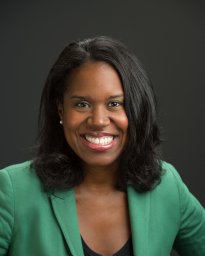 Quinetta M. Roberson合作论文数Cornell University1
 Eric G. Lambert合作论文数Department of Criminal Justice, Wayne State University1
 Jaime L. Napier合作论文数Department of Psychology, Yale University1Jay H. Shore合作论文数1
 Mark Ferguson合作论文数College of Management, Georgia Institute of Technology1




