Moralized attitudes motivate social change, political participation, and charitable giving, but at the same time, hinder compromise, conformity, and acceptance of procedural solutions to conflict. Although considerable research has explored the consequences of moralized attitudes, the processes that lead to attitude moralization and demoralization are less clear. Across six studies (N = 4,464), we contrasted the moralization of attitudes about male circumcision (typically viewed as a matter of preference or convention in the United States) with the demoralization of attitudes about female circumcision (a practice most Americans see as immoral). For male circumcision, stronger negative emotional reactions consistently mediated the association between exposure to evocative information and stronger moral conviction, even when accounting for participants' underlying levels of support or opposition. For female circumcision, demoralization was observed but less consistently across studies, and mediational evidence emerged only under stronger informational "pushes": No individual piece of information was potent enough to predict demoralization on its own when participants chose which information to read, but weaker negative emotional reactions fully mediated the effect of information exposure on reduced moral conviction when participants were randomly assigned to read all (vs. no) information. These findings suggest that although negative emotion plays a central role in both moralization and demoralization, demoralization is harder to achieve and may require more extensive information exposure. In other words, attitudes may acquire their moral significance more readily than they lose it. (PsycInfo Database Record (c) 2026 APA, all rights reserved).
Debates about issues such anthropomorphic climate change have raised alarm that there may be systematic differences in liberals' and conservatives' trust in science. Indeed, conservatives in the U.S. are much more skeptical of science than their liberal counterparts. However, there is little to no association between political orientation and trust in science in most non-U.S. countries and the cognitive processes underlying science denial are symmetric across ideological lines. Where ideological gaps emerge, politics is highly polarized, and one side has strategically sown doubt about scientific findings. Whether liberals trust science more than conservatives or vice versa depends on which side's party, leaders, and media promote skepticism about ideologically "inconvenient" scientific findings.
There are widespread concerns that conspiracy theories undermine democracies. But do conspiracy beliefs increase criticism of democracy and/or support for authoritarianism? Or are antidemocratic people more likely to endorse conspiracy beliefs? To answer these important questions, we collected longitudinal data during two concurrent democratic elections-the 2020 US Presidential Election (N = 609) and the 2020 General Election in New Zealand (N = 603). Random intercept cross-lagged panel models tested whether conspiracy beliefs affect criticism of democracy in general, as well as support for authoritarianism, and both direct and representative democracy, specifically. There was little evidence that conspiracy beliefs temporally preceded changes in attitudes toward democracy or support for any specific form of government. Instead, people who supported authoritarianism more subsequently endorsed stronger conspiracy beliefs. The results suggested that, in the context of electoral contests (e.g., elections), antidemocratic people are more likely to endorse conspiracy beliefs rather than conspiracy beliefs fostering antidemocratic views.
When people think of a utopian future, what do they imagine? We examined (a) whether people's self-generated utopias differ by how much they criticize, seek to change or escape from an undesirable present; and (b) whether these distinct types of utopian thinking predict system-critical attitudes and intentions to change the status quo. Participants (N = 509) wrote about a future where a social issue they supported was resolved (e.g. economic inequality and climate change). Latent profile analysis revealed a subgroup of change-oriented utopian thinkers with lower system satisfaction and higher action intentions than the other two subgroups. Unexpectedly, the remaining profiles imagined ominous (dystopian thinkers) or 'neutral' (ambivalent future thinkers) futures and expressed mixed social change support. Computerized linguistic analyses further revealed that dystopian thinkers used more hopelessness-related language than change-oriented utopian thinkers. Ambivalent future thinkers were as 'hopeless' as dystopian thinkers but, like change-oriented utopian thinkers, used more fairness-related language. Thus, change-oriented utopian thinkers distinctly imagined a fairer-and possible-future. These results illustrate heterogeneity in how people imagine the future of their societies on specific issues. Critically, the features of these visions predict system-critical attitudes and a willingness to agitate for change.
Although separate research programs examine how emotional reactions to the past, present and future predict collective action, research has yet to compare them simultaneously. Across three studies (N = 2764) and two social issues (plastic pollution and abortion), we examined whether reflecting on a positive or negative past, present or future elicits distinct emotions which indirectly predict collective action. Results revealed multiple countervailing indirect effects. For supporters of progressive causes, positive futures indirectly predicted higher action via increased hope, whereas negative futures indirectly predicted lower action via decreased hope. Positively valenced events also indirectly predicted lower action by decreasing anger and fear, regardless of time-referent. Conversely, negatively valenced events were more influential for proponents of conservative causes and indirectly predicted action via diverse emotions. We discuss the potential for, and limitations of, temporal comparisons to influence emotions implicated in collective action, and how the salience of these frames varies by context.
The degree to which one experiences an attitude as a moral conviction is associated with a host of consequences, such as charitable giving, volunteerism, political engagement, resistance to compromise, intolerance of dissenting viewpoints, and acceptance of any means, including violence, to achieve morally preferred ends. Despite these profound ramifications, our understanding of the psychological functions of moral conviction remains limited. In three studies, we tested competing hypotheses about two possible functions of moral conviction: personal identity and social identity expression. Study 1 developed and validated personal and social identity function measures in a U.S. sample and provided an initial test of hypotheses (N = 320). Study 2 further validated these measures and tested whether cultural mindset moderated the relationship between identity functions and moral conviction in a U.S. sample (N = 364). Study 3 tested hypotheses cross-culturally (i.e., using U.S. and Indian samples, N = 300). The personal identity function uniquely predicted moral conviction in all three studies and across six issue domains, whereas the social identity function did not (Studies 1-3). Surprisingly, neither cultural mindset (i.e., an independent and interdependent self-construal or endorsement of the individualizing or binding moral foundations) nor culture moderated these results.
Pundits have speculated that the spread of conspiracies and misinformation (termed "misbeliefs") is leading to a resurgence of right-wing, reactionary movements. However, the current empirical picture regarding the relationship between misbeliefs and collective action is mixed. We help clarify these associations by using two waves of data collected during the COVID-19 Pandemic (in Australia, N = 519, and the United States, N = 510) and democratic elections (in New Zealand N = 603, and the United States N = 609) to examine the effects of misbeliefs on support for reactionary movements (e.g., anti-lockdown protests, Study 1; anti-election protests, Study 2). Results reveal that within-person changes in misbeliefs correlate positively with support for reactionary collective action both directly (Studies 1-2) and indirectly by shaping the legitimacy of the authority (Study 1b). The relationship between misbelief and legitimacy is, however, conditioned by the stance of the authority in question: the association is positive when authorities endorse misbeliefs (Study 1a) and negative when they do not (Study 1b). Thus, the relationship between conspiracy beliefs and action hinges upon the alignment of the content of the conspiracy and the goals of the collective action.
Moral foundations theory (MFT) argues that liberals and conservatives form different moral positions because liberals emphasize the values of harm and fairness, whereas conservatives emphasize the values of group loyalty, authority, and purity. In five studies (total N = 3,327), we investigated whether political orientation moderated the relationship between the perceived relevance of each moral foundation and moral conviction (i.e., the extent to which one perceives their attitude as based on morality) across four issues. Political differences in this relationship emerged but were inconsistent across issues and did not always align with the predictions of MFT or several other theoretical explanations. Our findings together with previous research indicate that MFT may do a better job predicting attitude position than it does predicting whether people perceive that their attitudes are moral convictions, and that some foundations may reflect conventional rather than moral values (e.g., authority).
Scientific evidence regularly guides policy decisions 1 , with behavioural science increasingly part of this process 2 . In April 2020, an influential paper 3 proposed 19 policy recommendations (‘claims’) detailing how evidence from behavioural science could contribute to efforts to reduce impacts and end the COVID-19 pandemic. Here we assess 747 pandemic-related research articles that empirically investigated those claims. We report the scale of evidence and whether evidence supports them to indicate applicability for policymaking. Two independent teams, involving 72 reviewers, found evidence for 18 of 19 claims, with both teams finding evidence supporting 16 (89%) of those 18 claims. The strongest evidence supported claims that anticipated culture, polarization and misinformation would be associated with policy effectiveness. Claims suggesting trusted leaders and positive social norms increased adherence to behavioural interventions also had strong empirical support, as did appealing to social consensus or bipartisan agreement. Targeted language in messaging yielded mixed effects and there were no effects for highlighting individual benefits or protecting others. No available evidence existed to assess any distinct differences in effects between using the terms ‘physical distancing’ and ‘social distancing’. Analysis of 463 papers containing data showed generally large samples; 418 involved human participants with a mean of 16,848 (median of 1,699). That statistical power underscored improved suitability of behavioural science research for informing policy decisions. Furthermore, by implementing a standardized approach to evidence selection and synthesis, we amplify broader implications for advancing scientific evidence in policy formulation and prioritization.
One frustrating aspect of being a moral psychologist is having to cope with scholars promiscuously attaching the label “moral” to all kinds of things, without necessarily explaining how or why the phenomena being studied warrants the label. We could call this phenomenon the “Potter Stewart Problem.” The U.S. Supreme Court struggled for decades to develop a coherent definition of and framework for deciding First Amendment cases involving obscenity and pornography. In the 1964 case Jacobellis v. Ohio, U.S. Supreme Court Justice Potter Stewart argued that criminal obscenity laws could be applied only to cases of “hard-core pornography.” When pressed to define what he meant by “hard-core pornography,” he declined to provide a definition and simply replied, “I know it when I see it.” Many psychologists have seemingly taken the same approach to the study of morality: “They know it when they see it” and seem to have little desire to explicitly define what it is, exactly, that makes the phenomenon moral. One very prominent example of the Potter Stewart problem is Milgram’s (1974) classic study on the power of destructive obedience. An authority figure (the experimenter) instructed research participants to administer painful shocks to another presumed participant (the “learner”) when the learner failed to give correct answers to a memory test for different pairs of words. (The learner was in fact a research confederate). Despite the learner’s objections that the shocks were exacerbating a preexisting heart condition, the research participants generally obeyed the authority who pressed them to give increasingly high levels of shocks as the learner continued to give occasional wrong answers to the memory task, even after the learner stropped responding after vigorously complaining about his heart. Milgram (1974) concluded that, “When individuals are asked to perform actions that conflict with their core moral beliefs, only a small fraction have the capacity to resist authority” (p. 6). However, how can we really know whether the research participants in Milgram’s studies perceived the experimental situation as a tradeoff between their personal sense of morality and obedience? Dahl (this issue) provides a possible solution to Milgram’s Potter Stewart problem. A definition of morality could provide a normative guide to interpret whether the experimental situation Milgram created was indeed moral. The Dahl Definition
We provide the first systematic investigation of trends in the incivility of American politicians on Twitter, a dominant platform for political communication in the United States. Applying a validated artificial intelligence classifier to all 1.3 million tweets made by members of Congress since 2009, we observe a 23% increase in incivility over a decade on Twitter. Further analyses suggest that the rise was partly driven by reinforcement learning in which politicians engaged in greater incivility following positive feedback. Uncivil tweets tended to receive more approval and attention, publicly indexed by large quantities of "likes" and "retweets" on the platform. Mediational and longitudinal analyses show that the greater this feedback for uncivil tweets, the more uncivil tweets were thereafter. We conclude by discussing how the structure of social media platforms might facilitate this incivility-reinforcing dynamic between politicians and their followers.
This review covers theory and research on the psychological characteristics and consequences of attitudes that are experienced as moral convictions, that is, attitudes that people perceive as grounded in a fundamental distinction between right and wrong. Morally convicted attitudes represent something psychologically distinct from other constructs (e.g., strong but nonmoral attitudes or religious beliefs), are perceived as universally and objectively true, and are comparatively immune to authority or peer influence. Variance in moral conviction also predicts important social and political consequences. Stronger moral conviction about a given attitude object, for example, is associated with greater intolerance of attitude dissimilarity, resistance to procedural solutions for conflict about that issue, and increased political engagement and volunteerism in that attitude domain. Finally, we review recent research that explores the processes that lead to attitude moralization; we integrate these efforts and conclude with a new domain theory of attitude moralization.
The moral roles assigned to nations that took part in the Second World War cast a shadow over contemporary international politics. To understand contemporary moral beliefs about the war, we took 11 mostly student samples from 9 nations that took part in the European theatre of war (total N = 1,427). We asked respondents, in free and scaled listings, to identify the war's heroes, villains, victims, and recipients of help. Nations and individuals seen as heroes, victims, and villains could be readily identified by most samples and showed both continuity and difference across nations. Most nations preferentially assigned themselves hero and victim roles, and the two were correlated positively, showing ingroup favouritism linked to victimhood. These findings show the importance of morality to contemporary views of the war and suggest further directions for studying today's political climate in Europe and elsewhere.
Moral conviction refers to the perception that one’s feelings about a given attitude object are based on one’s beliefs about right and wrong. Holding an attitude with moral conviction means that a person has attached moral significance to it. Some people hold an attitude based on their likes and dislikes, or their preferences. Other attitudes may be based more on norms and conventions in a society, such as what the law dictates or what close others believe. Still other attitudes are based on people’s beliefs about right and wrong, and thus are attitudes held with moral conviction. Unlike some of the other dominant ways of conceptualizing morality in moral psychology, research on moral conviction takes a bottom-up approach. Instead of assuming certain issues are moral, individuals are asked to evaluate different attitude objects and issues based on their beliefs about right and wrong with questions like, “To what extent is your position on X connected to your beliefs about fundamental right and wrong?” Attitudes held with strong moral conviction, also called “moral mandates,” have a number of important characteristics and consequences that set them apart from other strong, but nonmoral, attitudes. When an attitude is based on one’s sense of right and wrong, it is perceived to be more of an objective fact (e.g., it is the correct and factual position to have) that should be universally held. Morally convicted attitudes have a stronger emotional intensity than equally strong but nonmoral attitudes. These attitudes are more likely to have a motivational component to them, so people act in favor of their moral attitudes because they provide justification for the action and are seen as obligations. Moral convictions can also provide an internal guide for behavior, independent of authority or group influence (i.e., authority independence). Moral mandates have a variety of consequences, which can be seen in either a normatively positive or negative light. Moral conviction is, for example, associated with increased political engagement and volunteerism (generally seen as normative goods), but also predicts increased intolerance and unwillingness to compromise with those who do not share one’s moral point of view (generally seen as normative bads).
A poisonous cocktail of othering, aversion, and moralization poses a threat to democracy
P olitical polarization, a concern in many countries, is especially acrimonious in the United States (see the first box). For decades, scholars have studied polarization as an ideological matter—how strongly Democrats and Republicans diverge vis-à-vis political ideals and policy goals. Such competition among groups in the marketplace of ideas is a hallmark of a healthy democracy. But more recently, researchers have identified a second type of polarization, one focusing less on triumphs of ideas than on dominating the abhorrent supporters of the opposing party (1). This literature has produced a proliferation of insights and constructs but few interdisciplinary efforts to integrate them. We offer such an integration, pinpointing the superordinate construct of political sectarianism and identifying its three core ingredients: othering, aversion, and moralization. We then consider the causes of political sectarianism and its consequences for U.S. society—especially the threat it poses to democracy. Finally, we propose interventions for minimizing its most corrosive aspects.
The COVID-19 pandemic represents a massive global health crisis. Because the crisis requires large-scale behaviour change and places significant psychological burdens on individuals, insights from the social and behavioural sciences can be used to help align human behavior with the recommendations of epidemiologists and public health experts. Here we discuss evidence from a selection of research topics relevant to pandemics, including work on navigating threats, social and cultural influences on behaviour, science communication, moral decision-making, leadership, and stress and coping. In each section, we note the nature and quality of prior research, including uncertainty and unsettled issues. We identify several insights for effective response to the COVID-19 pandemic, and also highlight important gaps researchers should move quickly to fill in the coming weeks and months.
We contacted a random sample of social/personality psychologists in the United States and asked for copies of their graduate syllabi. We coded more than 3,400 papers referenced on these syllabi for gender of authors as well as other characteristics. Less than 30% of the papers referenced on these syllabi were written by female first authors, with no evidence of a trend toward greater inclusion of papers published by female first authors since the 1980s. The difference in inclusion rates of female first-authored papers could not be explained by a preference for including classic over contemporary papers in syllabi (there was evidence of a recency bias instead) or the relative availability of female first-authored papers in the published literature. Implications are discussed.
"An Optimistic Take on Avoiding Liberal (and Other Sources) of Bias." Psychological Inquiry, 31(1), pp. 88–89
Moral courage, that is, defending moral beliefs despite personal risks, is often seen as a hallmark of prosocial behavior. We argue that prosociality in moral courage is, however, complex. While its prosociality is often evident at a higher societal level, it can be contested in some aspects of morally courageous acts. We review the literature on two such aspects and highlight that differences and conflicts in moral beliefs, as well as the confrontational nature of many morally courageous acts, call into question prosociality. We recommend that future research takes the complexity of prosociality in moral courage into account to obtain a comprehensive and nuanced understanding of the psychological underpinnings of moral courage and its contributions to the functioning of societies.
 Daniel C. Wisneski合作论文数Department of Psychology, University of Illinois32
 Christopher W. Bauman合作论文数Resolution Research Center;Kellogg School of Management;Resolution Research Center, Kellogg School of Management23
 G. Scott Morgan合作论文数21
 Elizabeth Mullen合作论文数Graduate School of Business21
 Peter Liberman合作论文数Polit Sci, CUNY Queens Coll14
 Kl Mosier合作论文数9
 Anthony N. Washburn合作论文数University of Illinois at Chicago9Syed Javed Nazir合作论文数8Brad J. Bushman合作论文数8
 Arne Sjostrom合作论文数8Kathleen L. Mosier合作论文数8Mario Gollwitzer合作论文数7Mueller Allison合作论文数Department of Medical Social Sciences, Northwestern University Feinberg School of Medicine7Searight H Russell合作论文数7
 Brittany E Hanson合作论文数Department of Psychology6
 Matt Motyl合作论文数Department of Psychology, University of Virginia6
 Frimer Jeremy A合作论文数Dept Psychol, Univ Winnipeg5
 Mark J. Brandt合作论文数Department of Social Psychology, Tilburg University5Brad L. Lytle合作论文数5
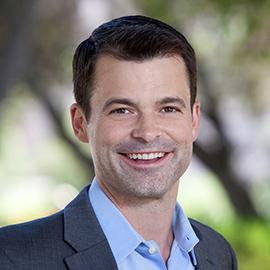 Robb Willer合作论文数Department of Psychology, Stanford University5
 Zachary J Melton合作论文数Univ Illinois4
 Timothy S Carsel合作论文数Dept Psychol, Univ Illinois4
 J P Prims合作论文数Univ Illinois4
 Morgana Lizzio-Wilson合作论文数Dept Psychol, Univ Exeter4
 Jamie Druckman合作论文数Department of Political Science, School of Arts & Sciences, University of Rochester;Aarhus University4
 Philip Tetlock合作论文数Department of Management, The Wharton School, University of Pennsylvania4Manley C M合作论文数4
 Emma Thomas合作论文数Sch Psychol & Exercise Sci, Murdoch Univ4
 Alex Haslam合作论文数School of Psychology, The University of Queensland4
 Danny Osborne合作论文数School of Psychology, Faculty of Science, The University of Auckland4
 Michael Wenzel合作论文数School of Psychology, Flinders University4
 Susan Hutchinson合作论文数4
 Eli J. Finkel合作论文数Department of Management and Organizations, Kellogg School of Management, Northwestern University;Department of Psychology, Northwestern University4Edward Sargis合作论文数4J. Robert Russo合作论文数4Mark D. Burdick合作论文数4
 Joshua A. Tucker合作论文数New York University4
 David G. Rand合作论文数Department of Information Science, Bowers College of Computing and Information Science, Cornell University4susan heers合作论文数3Kendal M. Wong合作论文数3
 Caitlyn Yantis合作论文数Franklin & Marshall Coll, Lancaster, PA 17604 USA3
 Jiaqing Sun (孙嘉卿)合作论文数Dept Management, London Sch Econ & Polit Sci3
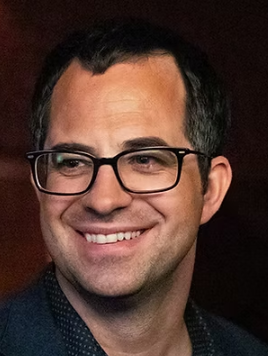 Jay Van Bavel合作论文数Department of Psychology, Center for Neural Science, New York University;Center for Conflict and Cooperation, New York University;Norwegian School of Economics3
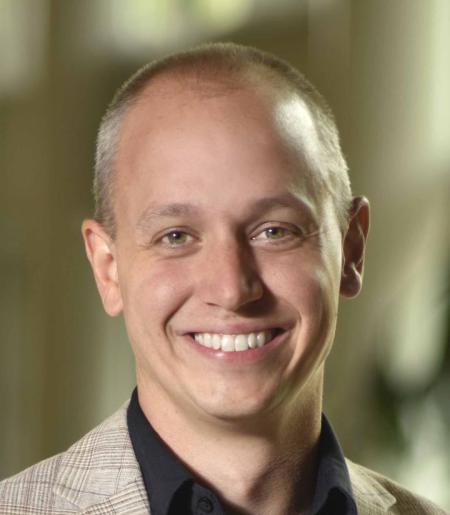 Gordon Pennycook合作论文数Department of Psychology, College of Arts & Sciences, Cornell University3
 Wilhelm Hofmann合作论文数University of Koblenz-Landau3
 Christina Maslach合作论文数Department of Psychology, University of California, Berkeley3Brian Chamberlin合作论文数3
 Mina Cikara合作论文数Department of Psychology, Harvard University3
 Naomi Ellemers合作论文数Faculty of Social Sciences, Utrecht University/University of Queensland3




