We computed realistic 3D radiative magnetohydrodynamic (MHD) near-surface models of starspots with substantial penumbrae on cool main sequence stars using the MURaM simulation code. This work is an improvement on the previous starspot models in a slab geometry. The umbra, penumbra, and the quiet star for all starspots are distinct, not only in intensity and temperature, but also in thermodynamic and velocity structure. These models represent a significant step towards modeling the starspot contribution to stellar light curves.
We present a complete analysis of Fermi Large Area Telescope (LAT) data of GRB 221009A, the brightest gamma-ray burst (GRB) ever detected. The burst emission above 30 MeV detected by the LAT preceded, by 1 s, the low-energy (<10 MeV) pulse that triggered the Fermi Gamma-Ray Burst Monitor (GBM), as has been observed in other GRBs. The prompt phase of GRB 221009A lasted a few hundred seconds. It was so bright that we identify a bad time interval of 64 s caused by the extremely high flux of hard X-rays and soft gamma rays, during which the event reconstruction efficiency was poor and the dead time fraction quite high. The late-time emission decayed as a power law, but the extrapolation of the late-time emission during the first 450 s suggests that the afterglow started during the prompt emission. We also found that high-energy events observed by the LAT are incompatible with synchrotron origin, and, during the prompt emission, are more likely related to an extra component identified as synchrotron self-Compton (SSC). A remarkable 400 GeV photon, detected by the LAT 33 ks after the GBM trigger and directionally consistent with the location of GRB 221009A, is hard to explain as a product of SSC or TeV electromagnetic cascades, and the process responsible for its origin is uncertain. Because of its proximity and energetic nature, GRB 221009A is an extremely rare event.
This article presents constraints on dark-matter-electron interactions obtained from the first underground data-taking campaign with multiple SuperCDMS HVeV detectors operated in the same housing. An exposure of 7.63 g-days is used to set upper limits on the dark-matter-electron scattering cross section for dark matter masses between 0.5 and 1000 MeV=c(2), as well as upper limits on dark photon kinetic mixing and axionlike particle axioelectric coupling for masses between 1.2 and 23.3 eV=c(2). Compared to an earlier HVeV search, sensitivity was improved as a result of an increased overburden of 225 meters of water equivalent, an anticoincidence event selection, and better pile-up rejection. In the case of dark-matter-electron scattering via a heavy mediator, an improvement by up to a factor of 25 in cross section sensitivity was achieved.
A 2.1-year periodic oscillation of the gamma-ray flux from the blazar PG 1553+113 has previously been tentatively identified in almost 7 year of data from the Fermi Large Area Telescope. After 15 years of Fermi sky-survey observations, doubling the total time range, we report >7 cycle gamma-ray modulation with an estimated significance of 4 sigma against stochastic red noise. Independent determinations of oscillation period and phase in the earlier and the new data are in close agreement (chance probability <0.01). Pulse timing over the full light curve is also consistent with a coherent periodicity. Multiwavelength new data from Swift X-Ray Telescope, Burst Alert Telescope, and UVOT, and from KAIT, Catalina Sky Survey, All-Sky Automated Survey for Supernovae, and Owens Valley Radio Observatory ground-based observatories as well as archival Rossi X-Ray Timing Explorer satellite-All Sky Monitor data, published optical data of Tuorla, and optical historical Harvard plates data are included in our work. Optical and radio light curves show clear correlations with the gamma-ray modulation, possibly with a nonconstant time lag for the radio flux. We interpret the gamma-ray periodicity as possibly arising from a pulsational accretion flow in a sub-parsec binary supermassive black hole system of elevated mass ratio, with orbital modulation of the supplied material and energy in the jet. Other astrophysical scenarios introduced include instabilities, disk and jet precession, rotation or nutation, and perturbations by massive stars or intermediate-mass black holes in polar orbit.
Besides a dense coverage of their high latitudes by starspots, rapidly rotating cool stars also display low-latitude spots in Doppler images, although generally with a lower coverage. In contrast, flux emergence models of fast-rotating stars predict strong poleward deflection of radially rising magnetic flux as the Coriolis effect dominates over buoyancy, leaving a spot-free band around the equator. To resolve this discrepancy, we consider a flux tube near the base of the convection zone in a solar-type star rotating eight times faster than the Sun, considering field intensification by weak-tube explosions. For the intensification to continue into to the buoyancy-dominated regime, the upper convection zone must have a significantly steeper temperature gradient than in the Sun, by a factor that is comparable with that found in 3D simulations of rotating convection. Within the hypothesis that stellar active regions stem from the base of the convection zone, flux emergence between 1-20 degree latitudes requires highly supercritical field strengths of up to 500 kG in rapidly rotating stars. These field strengths require explosions of 100-kG tubes within the convection zone, compatible with reasonable values of the superadiabatic temperature gradient associated with the more rapid rotation.
The nearby elliptical galaxy M87 contains one of the only two supermassive black holes whose emission surrounding the event horizon has been imaged by the Event Horizon Telescope (EHT). In 2018, more than two dozen multi-wavelength (MWL) facilities (from radio to gamma-ray energies) took part in the second M87 EHT campaign. The goal of this extensive MWL campaign was to better understand the physics of the accreting black hole M87*, the relationship between the inflow and inner jets, and the high-energy particle acceleration. Understanding the complex astrophysics is also a necessary first step towards performing further tests of general relativity. The MWL campaign took place in April 2018, overlapping with the EHT M87* observations. We present a new, contemporaneous spectral energy distribution (SED) ranging from radio to very high energy (VHE) gamma-rays, as well as details of the individual observations and light curves. We also conduct phenomenological modelling to investigate the basic source properties. We present the first VHE gamma-ray flare from M87 detected since 2010. The flux above 350 GeV has more than doubled within a period of about 36 hours. We find that the X-ray flux is enhanced by about a factor of two compared to 2017, while the radio and millimetre core fluxes are consistent between 2017 and 2018. We detect evidence for a monotonically increasing jet position angle that corresponds to variations in the bright spot of the EHT image. Our results show the value of continued MWL monitoring together with precision imaging for addressing the origins of high-energy particle acceleration. While we cannot currently pinpoint the precise location where such acceleration takes place, the new VHE gamma-ray flare already presents a challenge to simple one-zone leptonic emission model approaches, and emphasises the need for combined image and spectral modelling.
The recent detection of extended γ-ray emission around middle-aged pulsars is interpreted as inverse-Compton scattering of ambient photons by electron-positron pairs escaping the pulsar wind nebula, which are confined near the system by unclear mechanisms. This emerging population of γ-ray sources was first discovered at TeV energies and remains underexplored in the GeV range. To address this, we conducted a systematic search for extended sources along the Galactic plane using 14 years of Fermi-LAT data above 10 GeV, aiming to identify a number of pulsar halo candidates and extend our view to lower energies. The search covered the inner Galactic plane (| l|≤ 100^∘, | b|≤ 1^∘) and the positions of known TeV sources and bright pulsars, yielding broader astrophysical interest. We found 40 such sources, forming the Second Fermi Galactic Extended Sources Catalog (2FGES), most with 68 1.0^∘ and relatively hard spectra with photon indices below 2.5. We assessed detection robustness using field-specific alternative interstellar emission models and by inspecting significance maps. Noting 13 sources previously known as extended in the 4FGL-DR3 catalog and five dubious sources from complex regions, we report 22 newly detected extended sources above 10 GeV. Of these, 13 coincide with H.E.S.S., HAWC, or LHAASO sources; six coincide with bright pulsars (including four also coincident with TeV sources); six are associated with 4FGL point sources only; and one has no association in the scanned catalogs. Notably, six to eight sources may be related to pulsars as classical pulsar wind nebulae or pulsar halos.
We present 294 pulsars found in GeV data from the Large Area Telescope (LAT) on the Fermi Gamma-ray Space Telescope. Another 33 millisecond pulsars (MSPs) discovered in deep radio searches of LAT sources will likely reveal pulsations once phase-connected rotation ephemerides are achieved. A further dozen optical and/or X-ray binary systems colocated with LAT sources also likely harbor gamma-ray MSPs. This catalog thus reports roughly 340 gamma-ray pulsars and candidates, 10% of all known pulsars, compared to ≤11 known before Fermi. Half of the gamma-ray pulsars are young. Of these, the half that are undetected in radio have a broader Galactic latitude distribution than the young radio-loud pulsars. The others are MSPs, with six undetected in radio. Overall, ≥236 are bright enough above 50 MeV to fit the pulse profile, the energy spectrum, or both. For the common two-peaked profiles, the gamma-ray peak closest to the magnetic pole crossing generally has a softer spectrum. The spectral energy distributions tend to narrow as the spindown power E ̇ decreases to its observed minimum near 10 33 erg s −1 , approaching the shape for synchrotron radiation from monoenergetic electrons. We calculate gamma-ray luminosities when distances are available. Our all-sky gamma-ray sensitivity map is useful for population syntheses. The electronic catalog version provides gamma-ray pulsar ephemerides, properties, and fit results to guide and be compared with modeling results.
We report the discovery of GRB 221009A, the highest flux gamma-ray burst (GRB) ever observed by the Fermi Gamma-ray Burst Monitor (Fermi-GBM). This GRB has continuous prompt emission lasting more than 600 s, which smoothly transitions to afterglow emission visible in the Fermi-GBM energy range (8 keV–40 MeV), and total energetics higher than any other burst in the Fermi-GBM sample. By using a variety of new and existing analysis techniques we probe the spectral and temporal evolution of GRB 221009A. We find no emission prior to the Fermi-GBM trigger time ( t 0 ; 2022 October 9 at 13:16:59.99 UTC), indicating that this is the time of prompt emission onset. The triggering pulse exhibits distinct spectral and temporal properties suggestive of the thermal, photospheric emission of shock breakout, with significant emission up to ∼15 MeV. We characterize the onset of external shock at t 0 + 600 s and find evidence of a plateau region in the early-afterglow phase, which transitions to a slope consistent with Swift-XRT afterglow measurements. We place the total energetics of GRB 221009A in context with the rest of the Fermi-GBM sample and find that this GRB has the highest total isotropic-equivalent energy ( E γ ,iso = 1.0 × 10 55 erg) and second highest isotropic-equivalent luminosity ( L γ ,iso = 9.9 × 10 53 erg s –1 ) based on its redshift of z = 0.151. These extreme energetics are what allowed us to observe the continuously emitting central engine of Fermi-GBM from the beginning of the prompt emission phase through the onset of early afterglow.
We present a new analysis of previously published of SuperCDMS data using a profile likelihood framework to search for sub-GeV dark matter (DM) particles through two inelastic scattering channels: bremsstrahlung radiation and the Migdal effect. By considering these possible inelastic scattering channels, experimental sensitivity can be extended to DM masses that are undetectable through the DM-nucleon elastic scattering channel, given the energy threshold of current experiments. We exclude DM masses down to $220~\textrm{MeV}/c^2$ at $2.7 \times 10^{-30}~\textrm{cm}^2$ via the bremsstrahlung channel. The Migdal channel search provides overall considerably more stringent limits and excludes DM masses down to $30~\textrm{MeV}/c^2$ at $5.0 \times 10^{-30}~\textrm{cm}^2$.
The Fermi Large Area Telescope (LAT) light curve repository (LCR) is a publicly available, continually updated library of gamma-ray light curves of variable Fermi-LAT sources generated over multiple timescales. The Fermi-LAT LCR aims to provide publication-quality light curves binned on timescales of 3 days, 7 days, and 30 days for 1525 sources deemed variable in the source catalog of the first 10 years of Fermi-LAT observations. The repository consists of light curves generated through full likelihood analyses that model the sources and the surrounding region, providing fluxes and photon indices for each time bin. The LCR is intended as a resource for the time-domain and multi-messenger communities by allowing users to quickly search LAT data to identify correlated variability and flaring emission episodes from gamma-ray sources. We describe the sample selection and analysis employed by the LCR and provide an overview of the associated data access portal.
We measured the nuclear-recoil ionization yield in silicon with a cryogenic phonon-sensitive gram-scale detector. Neutrons from a monoenergetic beam scatter off of the silicon nuclei at angles corresponding to energy depositions from 4 keV down to 100 eV, the lowest energy probed so far. The results show no sign of an ionization production threshold above 100 eV. These results call for further investigation of the ionization yield theory and a comprehensive determination of the detector response function at energies below the keV scale.
The Near Ultraviolet High Density (NUV-HD) SiPMs produced by Fondazione Bruno Kessler have been employed to develop 16-pixel optical units to equip the focal plane of the prototype Schwarzschild–Couder Telescope (pSCT) proposed as a possible design for the Medium-Sized Telescope of the Cherenkov Telescope Array Observatory. After the assembly procedure, the optical units were tested and characterized to study their performance and homogeneity in terms of gain and dark count rate. In this work, we report on the assembly procedure and on the laboratory tests performed on different production of NUV-HD and the selection we made for the best quality sensors to be used in the installation on the telescope camera. Currently 36 NUV-HD3 optical units have been successfully integrated on the pSCT camera, together with 64 HAMAMATSU MPPCs. An upgrade of the pSCT camera is foreseen over the next years when the full focal plane is expected to be equipped entirely with FBK NUV-HD3 SiPMs, for a total of 11328 pixels.
Recent experiments searching for sub-GeV/$c^2$ dark matter have observed event excesses close to their respective energy thresholds. Although specific to the individual technologies, the measured excess event rates have been consistently reported at or below event energies of a few-hundred eV, or with charges of a few electron-hole pairs. In the present work, we operated a 1-gram silicon SuperCDMS-HVeV detector at three voltages across the crystal (0 V, 60 V and 100 V). The 0 V data show an excess of events in the tens of eV region. Despite this event excess, we demonstrate the ability to set a competitive exclusion limit on the spin-independent dark matter--nucleon elastic scattering cross section for dark matter masses of $\mathcal{O}(100)$ MeV/$c^2$, enabled by operation of the detector at 0 V potential and achievement of a very low $\mathcal{O}(10)$ eV threshold for nuclear recoils. Comparing the data acquired at 0 V, 60 V and 100 V potentials across the crystal, we investigated possible sources of the unexpected events observed at low energy. The data indicate that the dominant contribution to the excess is consistent with a hypothesized luminescence from the printed circuit boards used in the detector holder.
We present an incremental version (4FGL-DR3, for Data Release 3) of the fourth Fermi-LAT catalog of gamma-ray sources. Based on the first twelve years of science data in the energy range from 50 MeV to 1 TeV, it contains 6658 sources. The analysis improves on that used for the 4FGL catalog over eight years of data: more sources are fit with curved spectra, we introduce a more robust spectral parameterization for pulsars, and we extend the spectral points to 1 TeV. The spectral parameters, spectral energy distributions, and associations are updated for all sources. Light curves are rebuilt for all sources with 1 yr intervals (not 2 month intervals). Among the 5064 original 4FGL sources, 16 were deleted, 112 are formally below the detection threshold over 12 yr (but are kept in the list), while 74 are newly associated, 10 have an improved association, and seven associations were withdrawn. Pulsars are split explicitly between young and millisecond pulsars. Pulsars and binaries newly detected in LAT sources, as well as more than 100 newly classified blazars, are reported. We add three extended sources and 1607 new point sources, mostly just above the detection threshold, among which eight are considered identified, and 699 have a plausible counterpart at other wavelengths. We discuss degree-scale residuals to the global sky model and clusters of soft unassociated point sources close to the Galactic plane, which are possibly related to limitations of the interstellar emission model and missing extended sources.
CDMSlite Run 2 was a search for weakly interacting massive particles (WIMPs) with a cryogenic 600 g Ge detector operated in a high-voltage mode to optimize sensitivity to WIMPs of relatively low mass from 2 - 20 GeV/$c^2$. In this article, we present an effective field theory (EFT) analysis of the CDMSlite Run 2 data using an extended energy range and a comprehensive treatment of the expected background. A binned likelihood Bayesian analysis was performed on the recoil energy data, taking into account the parameters of the EFT interactions and optimizing the data selection with respect to the dominant background components. Energy regions within 5$\sigma$ of known activation peaks were removed from the analysis. The Bayesian evidences resulting from the different operator hypotheses show that the CDMSlite Run 2 data are consistent with the background-only models and do not allow for a signal interpretation assuming any additional EFT interaction. Consequently, upper limits on the WIMP mass and coupling-coefficient amplitudes and phases are presented for each EFT operator. These limits improve previous CDMSlite Run 2 bounds for WIMP masses above 5 GeV/$c^2$.
Two photo-neutron sources, (YBe)-Y-88-Be-9 and (SbBe)-Sb-124-Be-9, have been used to investigate the ionization yield of nuclear recoils in the CDMSlite germanium detectors by the SuperCDMS collaboration. This work evaluates the yield for nuclear recoil energies between 1 and 7 keV at a temperature of similar to 50 mK. We use a GEANT4 simulation to model the neutron spectrum assuming a charge yield model that is a generalization of the standard Lindhard model and consists of two energy dependent parameters. We perform a likelihood analysis using the simulated neutron spectrum, modeled background, and experimental data to obtain the best fit values of the yield model. The ionization yield between recoil energies of 1 and 7 keV is shown to be significantly lower than predicted by the standard Lindhard model for germanium. There is a general lack of agreement among different experiments using a variety of techniques studying the low energy range of the nuclear recoil yield, which is most critical for interpretation of direct dark matter searches. This suggests complexity in the physical process that many direct detection experiments use to model their primary signal detection mechanism and highlights the need for further studies to clarify underlying systematic effects that have not been well understood up to this point.
After large galaxies merge, their central supermassive black holes are expected to form binary systems. Their orbital motion should generate a gravitational wave background (GWB) at nanohertz frequencies. Searches for this background use pulsar timing arrays, which perform long-term monitoring of millisecond pulsars at radio wavelengths. We used 12.5 years of Fermi Large Area Telescope data to form a gamma-ray pulsar timing array. Results from 35 bright gamma-ray pulsars place a 95% credible limit on the GWB characteristic strain of 1.0 x 10(-14) at a frequency of 1 year(-1). The sensitivity is expected to scale with t(obs), the observing time span, as t(obs)(-13/6). This direct measurement provides an independent probe of the GWB while offering a check on radio noise models.
The SuperCDMS Collaboration is currently building SuperCDMS SNOLAB, a dark matter search focused on nucleon-coupled dark matter in the 1-5 GeV/c$^2$ mass range. Looking to the future, the Collaboration has developed a set of experience-based upgrade scenarios, as well as novel directions, to extend the search for dark matter using the SuperCDMS technology in the SNOLAB facility. The experienced-based scenarios are forecasted to probe many square decades of unexplored dark matter parameter space below 5 GeV/c$^2$, covering over 6 decades in mass: 1-100 eV/c$^2$ for dark photons and axion-like particles, 1-100 MeV/c$^2$ for dark-photon-coupled light dark matter, and 0.05-5 GeV/c$^2$ for nucleon-coupled dark matter. They will reach the neutrino fog in the 0.5-5 GeV/c$^2$ mass range and test a variety of benchmark models and sharp targets. The novel directions involve greater departures from current SuperCDMS technology but promise even greater reach in the long run, and their development must begin now for them to be available in a timely fashion. The experienced-based upgrade scenarios rely mainly on dramatic improvements in detector performance based on demonstrated scaling laws and reasonable extrapolations of current performance. Importantly, these improvements in detector performance obviate significant reductions in background levels beyond current expectations for the SuperCDMS SNOLAB experiment. Given that the dominant limiting backgrounds for SuperCDMS SNOLAB are cosmogenically created radioisotopes in the detectors, likely amenable only to isotopic purification and an underground detector life-cycle from before crystal growth to detector testing, the potential cost and time savings are enormous and the necessary improvements much easier to prototype.
We present the first Fermi - Large Area Telescope (LAT) solar flare catalog covering the 24 th solar cycle. This catalog contains 45 Fermi -LAT solar flares (FLSFs) with emission in the gamma-ray energy band (30 MeV - 10 GeV) detected with a significance greater than 5 sigma over the years 2010-2018. A subsample containing 37 of these flares exhibit delayed emission beyond the prompt-impulsive hard X-ray phase with 21 flares showing delayed emission lasting more than two hours. No prompt-impulsive emission is detected in four of these flares. We also present in this catalog the observations of GeV emission from 3 flares originating from Active Regions located behind the limb (BTL) of the visible solar disk. We report the light curves, spectra, best proton index and localization (when possible) for all the FLSFs. The gamma-ray spectra is consistent with the decay of pions produced by >300 MeV protons. This work contains the largest sample of high-energy gamma-ray flares ever reported and provides the unique opportunity to perform population studies on the different phases of the flare and thus allowing to open a new window in solar physics.
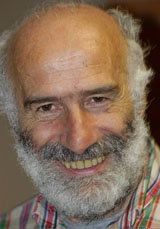 Ronaldo Bellazzini合作论文数Istituto Nazionale di Fisica Nucleare250
 Aldo Morselli合作论文数Dipartimento di Fisica, Università degli Studi di Roma "Tor Vergata";INFN Section, University of Roma "Tor Vergata"247
 Piergiorgio Fusco合作论文数Department of Physics, Università degli Studi di Bari Aldo Moro;Bari Division of Istituto Nazionale di Fisica Nucleare246
 Francesco Longo合作论文数Dipartimento di Fisica, Università di Trieste244Mario N. Mazziotta合作论文数Dipartimento di Fisica, Universita di Bari244Stefano Ciprini合作论文数Istituto Nazionale di Fisica Nucleare;Space Science Data Center, Agenzia Spaziale Italiana;Dipartimento di Fisica, Università degli studi di Tor Vergata244
 Maria Elena Monzani合作论文数SLAC National Accelerator Laboratory;Kavli Institute for Particle Astrophysics and Cosmology, Stanford University;Vatican Observatory243
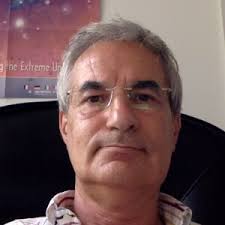 Nicola Giglietto合作论文数Department of Physics, Politecnico di Bari243
 Francesco Loparco合作论文数Dipartimento di Fisica, Universita degli Studi di Bari Aldo Moro242
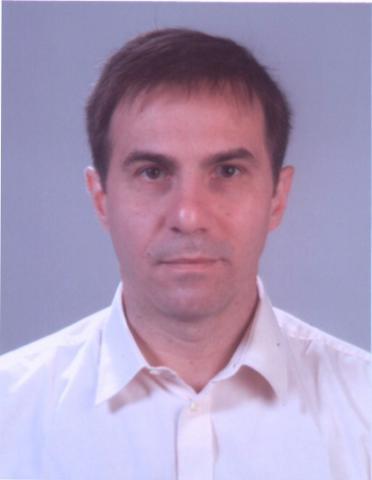 Denis Bastieri合作论文数Dipartimento di Fisica e Astronomia, University of Padova242
 Francesca Gargano合作论文数Policlinico Universitario Campus Bio-Medico241
 Patrizia A. Caraveo合作论文数Institute of Cosmic Physics241
 Sylvain Guiriec合作论文数Department of Physics, Columbian College of Arts and Sciences, George Washington University;Goddard Space Flight Center, National Aeronautics and Space Administration241
 Philippe Bruel合作论文数Laboratoire Leprince Ringuet, Institut National De Physique Nucléaire Et De Physique Des Particules, CNRS241Michael Kuss合作论文数Istituto Nazionale di Fisica Nucleare240
 Luca Baldini合作论文数Deaprtment of Physics Enrico Fermi, Università di Pisa240Silvia Rainò合作论文数Dipartimento Di Fisica, Università degli Studi di Bari Aldo Moro240
 Pasquale Lubrano合作论文数Dipartimento di Fisica, Università degli Studi di Perugia;Istituto Nazionale di Fisica Nucleare240
 Francesco de Palma合作论文数Dipartimento di Matematica e Fisica, Università del Salento238P. Spinelli合作论文数Dipartimento Fis M Merlin, Univ Politecn Bari237
 Eric Nuss合作论文数Université de Montpellier236Carmelo Sgrò合作论文数235
 Peter Michelson合作论文数Physics Department, School of Humanities and Sciences, Stanford University235
 Melissa Pesce-Rollins合作论文数Istituto Nazionale di Fisica Nucleare, Sezione di Pisa233
 Olaf Reimer合作论文数Universität Innsbruck232
 Massimiliano Razzano合作论文数Dipartimento di Fisica, Universita' di Pisa229J. Bregeon合作论文数226
 Cecilia Favuzzi合作论文数Dipartimento Interateneo di Fisica, Università di Bari;Dipartimento Interateneo di Fisica, Politecnico di Bari225
 Riccardo Rando合作论文数Dipartimento di Fisica e Astronomia "Galileo Galilei", Università di Padova224G. BARBIELLINI合作论文数223
 Isabelle Grenier合作论文数Université Paris Cité223
 Francis Piron合作论文数Nestlé Indonesia;National bank of Indonesia;Adidas Indonesia;Swiss Business School221
 Marco Ajello合作论文数College of Science, Clemson University220
 Igor Moskalenko合作论文数Hansen Experimental Physics Laboratory, Stanford University220
 Elena Orlando合作论文数Department of Physics, Stanford University219
 Gloria Spandre合作论文数Istituto Nazionale di Fisica Nucleare Sezione di Pisa217
 Guðlaugur Jóhannesson合作论文数Science Institute, University of Iceland217M. N. Lovellette合作论文数216
 Markus Ackermann合作论文数Neutrino Astronomy Group, Deutsches Elektronen-Synchrotron214
 Claudia Cecchi合作论文数Dipartimento di Fisica, Università degli Studi di Perugia213
 Persis Drell合作论文数Physics Department, School of Humanities and Sciences, Stanford University;School of Engineering, Stanford University212
 Luca Latronico合作论文数Istituto Nazionale di Fisica Nucleare210Gary Lunt Godfrey合作论文数209Eric J. Siskind合作论文数NYCB Real-Time Computing Inc.208Alexandre Chekhtman合作论文数George Mason University205
 Troy Porter合作论文数W. W. Hansen Experimental Physics Laboratory, Stanford University204
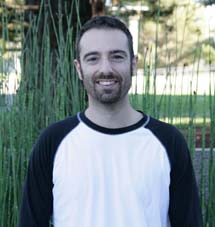 David Paneque合作论文数Kavli Institute for Particle Astrophysics and Cosmology/Department of Physics and Stanford Linear Accelerator Center, Stanford University204Dario Gasparrini合作论文数INFN;ASI Science Data Center199
 James Chiang合作论文数SLAC National Accelerator Laboratory, Stanford University;Kavli Institute for Particle Astrophysics and Cosmology, Stanford University199




