Models of interacting dark energy (DE) and dark matter (DM) involving pure momentum exchange are a promising avenue for resolving cosmological tensions. However, the behaviour of these interactions in the theoretically challenging limit where the DE equation of state, w, approaches-1 is not fully understood. We demonstrate that a generic feature of these models is a w-dependent velocity-locking mechanism, which systematically shifts the onset of matter power spectrum suppression to smaller scales as w -> -1. The suppression magnitude depends on the difference in fluid velocities. In this limit, however, the interaction's drag dominates over the DE pressure support and causes the DE velocity to track that of the DM fluid at larger scales. This mechanism provides a physical explanation for the weaker constraints found in the literature when w approximate to -1 in models where the interaction strength does not explicitly depend on w. We also demonstrate that the common approximation of neglecting DE perturbations (ODE = theta DE = 0) fails in this limit. By artificially increasing the velocity difference between the fluids, this simplification incorrectly removes the w-dependent velocity-locking mechanism and erases the shift in power spectrum suppression to smaller scales. This leads to an overestimation of the constraining power of cosmological data on the interaction strength.
Models of interacting dark energy and dark matter offer a possible solution to cosmological tensions. In this work, we examine a pure momentum-exchange model with a time-dependent coupling strength ξ(z) that could help to alleviate the S_8 tension. We perform Fisher forecasting and MCMC analysis to constrain the coupling strength of this interaction for different redshift bins 0.0<z<2.1, using the specifications of upcoming DESI-like surveys. For this analysis, we examine both a model with a constant equation of state w=-0.9, as well as a thawing dark energy model with an evolving w(z). We show that, for a constant equation of state, ξ(z) can be well constrained in all redshift bins. However, due to a weaker effect at early times, the constraints are significantly reduced at high redshifts in the case of a thawing w(z) model.
We implement Crossing Statistics to reconstruct in a model-agnostic manner the expansion history of the universe and properties of dark energy, using DESI Data Release 1 (DR1) BAO data in combination with one of three different supernova compilations (PantheonPlus, Union3, and DES-SN5YR) and Planck CMB observations. Our results hint towards an evolving and emergent dark energy behaviour, with negligible presence of dark energy at $z\gtrsim 1$, at varying significance depending on the data sets combined. In all these reconstructions, the cosmological constant lies outside the $95\%$ confidence intervals for some redshift ranges. This dark energy behaviour, reconstructed using Crossing Statistics, is in agreement with results from the conventional $w_0$--$w_a$ dark energy equation of state parametrization reported in the DESI Key cosmology paper. Our results add an extensive class of model-agnostic reconstructions with acceptable fits to the data, including models where cosmic acceleration slows down at low redshifts. We also report constraints on $H_0r_d$ from our model-agnostic analysis, independent of the pre-recombination physics.
ABSTRACT We perform a multitracer full-shape analysis in Fourier space based on the effective field theory of large-scale structure (EFTofLSS) using the complete Sloan Digital Sky Survey IV (SDSS-IV) extended Baryon Oscillation Spectroscopic Survey (eBOSS) DR16 luminous red galaxy (LRG) and emission line galaxy (ELG) samples. We study in detail the impact of the volume projection effect and different prior choices when doing the full-shape analysis based on the EFTofLSS model. We show that adopting a combination of Jeffreys prior and Gaussian prior can mitigate the volume effect and avoid exploring unphysical regions in the parameter space at the same time, which is crucial when jointly analysing the eBOSS LRG and ELG samples. We validate our pipeline using 1000 eBOSS EZmocks. By performing a multitracer analysis on mocks with comparable footprints, we find that cosmological constraints can be improved by $\sim 10-35~{{\ \rm per\ cent}}$ depending on whether we assume zero stochastic terms in the cross power spectrum, which breaks the degeneracy and boosts the constraints on the standard deviation of matter density fluctuation σ8. Combining with the Big Bang Nucleosynthesis (BBN) prior and fixing the spectral tilt ns to Planck value, our multitracer full-shape analysis measures H0 = 70.0 ± 2.3 km s−1Mpc−1, $\Omega _m=0.317^{+0.017}_{-0.021}$, $\sigma _8=0.787_{-0.062}^{+0.055}$, and $S_8=0.809_{-0.078}^{+0.064}$, consistent with the Planck 2018 results. In particular, the constraint on σ8 is improved beyond that obtained from the single tracer analysis by 18 per cent, or by 27 per cent when assuming zero stochastic terms in the cross power spectrum.
ABSTRACT We evaluate the effectiveness of early dark energy (EDE) in addressing the Hubble tension using the luminous red galaxy (LRG), quasar (QSO), and emission line galaxy (ELG) samples from the completed eBOSS survey. We perform cosmological parameter measurements based on full shape analysis of the power spectrum employing the effective field theory of large-scale structure (EFTofLSS). EDE is known to strongly suffer from volume projection effects, complicating cosmological constraints’ interpretation. To quantify the volume projection effects within an EDE full shape analysis, we explore the impact of different prior choices on the nuisance parameters of EFTofLSS through an extensive mock study. We compare classical Gaussian priors to the non-informative Jeffreys prior, known to mitigate volume projection effects in ΛCDM. Our full shape analysis combines eBOSS and BOSS data with Planck, external Baryon Acoustic Oscillation (BAO), PantheonPlus, and SH0ES supernova data. EDE reduces the tension from 5.2σ to 3σ compared to ΛCDM, yielding $H_0=71.73_{-0.86}^{+0.82}$ km s−1 Mpc−1 with $f_\mathrm{EDE} = 0.1179_{-0.022}^{+0.025}$ (Gaussian priors) and $H_0=72.03_{-0.87}^{+0.82}$ km s−1 Mpc−1 with $f_\mathrm{EDE} = 0.1399_{-0.022}^{+0.023}$ (Jeffreys prior). Although the Hubble tension is mitigated compared to ΛCDM, the inclusion of eBOSS data amplifies the tension within EDE from 2σ to 3σ, in contrast to the full shape analysis of BOSS data with Planck, external BAO, PantheonPlus, and SH0ES. This highlights the significance of incorporating additional large-scale structure data in discussions concerning models aiming to resolve the Hubble tension.
We consider two models of interacting dark energy, both of which interact only through momentum exchange. One is a phenomenological one-parameter extension to wCDM, and the other is a coupled quintessence model described by a Lagrangian formalism. Using a variety of high and low redshift data sets, we perform a global fitting of cosmological parameters and compare to ΛCDM, uncoupled quintessence, and wCDM. We find that the models are competitive with ΛCDM, even obtaining a better fit when certain data sets are included.
One of the cornerstones of general relativity is the equivalence principle. However, the validity of the equivalence principle has only been established on solar system scales for standard matter fields; this result cannot be assumed to hold for the non-standard matter fields that dominate the gravitational dynamics on cosmological scales. Here we show how the equivalence principle may be tested on cosmological scales for non-standard matter fields using the odd multipoles of the galaxy cross-power spectrum and bispectrum. This test makes use of the imprint on the galaxy cross-power spectrum and bispectrum by the parity-violating general relativistic deformations of the past-light cone, and assumes that galaxies can be treated as test particles that are made of baryons and cold dark matter. This assumption leads to a non-zero galaxy-baryon relative velocity if the equivalence principle does not hold between baryons and dark matter. We show that the relative velocity can be constrained to be less than 28% of the galaxy velocity using the cross-power spectrum of the HI intensity mapping/Ha galaxy survey and the bispectrum of the Hoz galaxy survey.
We perform a reconstruction of the coupling function between vacuum energy and geodesic cold dark matter using the latest observational data. We bin the interaction in seventeen redshift bins but use a correlation prior to prevent rapid, unphysical oscillations in the coupling function. This prior also serves to eliminate any dependence of the reconstruction on the binning method. We use two different forms of the correlation prior, finding that both give similar results for the reconstruction of the dark matter–dark energy interaction. Calculating the Bayes factor for each case, we find no meaningful evidence for deviation from the null interacting case, i.e. ΛCDM, in our reconstruction.
Future precision cosmology from large-scale structure experiments including the Dark Energy Spectroscopic Instrument (DESI) and Euclid will probe wider and deeper cosmic volumes than those covered by previous surveys. The Cartesian power spectrum analysis of anisotropic galaxy clustering based on the Fourier plane wave basis makes a number of assumptions, including the local plane-parallel approximation, that will no longer be valid on very large scales and may degrade cosmological constraints. We propose an approach that utilises a hybrid basis: on the largest scales, clustering statistics are decomposed into spherical Fourier modes which respect the natural geometry of both survey observations and physical effects along the line of sight, such as redshift-space distortions, the Alcock-Paczynsky and light-cone effects; on smaller scales with far more clustering modes, we retain the computational benefit of the power spectrum analysis aided by fast Fourier transforms. This approach is particularly suited to the likelihood analysis of local primordial non-Gaussianity f(NL), through the scale-dependent halo bias, and we demonstrate its applicability with N-body simulations. We also release our public code HARMONIA for galaxy clustering likelihood inference in spherical Fourier or hybrid-basis analyses.
Likelihood fitting to two-point clustering statistics made from galaxy surveys usually assumes a multivariate normal distribution for the measurements, with justification based on the central limit theorem given the large number of overdensity modes. However, this assumption cannot hold on the largest scales where the number of modes is low. Whilst more accurate distributions have previously been developed in idealized cases, we derive a procedure suitable for analysing measured monopole power spectra with window effects, stochastic shot noise, and the dependence of the covariance matrix on the model being fitted all taken into account. A data transformation is proposed to give an approximately Gaussian likelihood, with a variance--correlation decomposition of the covariance matrix to account for its cosmological dependence. By comparing with the modified-$t$ likelihood derived under the usual normality assumption, we find in numerical tests that our new procedure gives more accurate constraints on the local non-Gaussianity parameter $f_\mathrm{NL}$, which is sensitive to the large-scale power. A simple data analysis pipeline is provided for straightforward application of this new approach in preparation for forthcoming large galaxy surveys such as DESI and Euclid.
We consider a self-consistent and physical approach to interacting dark energy models described by a Lagrangian, and identify a new class of models with variable dark energy sound speed. We show that if the interaction between dark energy in the form of quintessence and cold dark matter is purely momentum exchange this generally leads to a dark energy sound speed that deviates from unity. Choosing a specific sub-case, we study its phenomenology by investigating the effects of the interaction on the cosmic microwave background and linear matter power spectrum. We also perform a global fitting of cosmological parameters using CMB data, and compare our findings to ΛCDM.
The properties of large underdensities in the distribution of galaxies in the Universe, known as cosmic voids, are potentially sensitive probes of fundamental physics. We use data from the MultiDark suite of N-body simulations and multiple halo occupation distribution mocks to study the relationship between galaxy voids, identified using a watershed void-finding algorithm, and the gravitational potential $\Phi$. We find that the majority of galaxy voids correspond to local density minima in larger-scale overdensities, and thus lie in potential wells. However, a subset of voids can be identified that closely trace maxima of the gravitational potential and thus stationary points of the velocity field. We identify a new void observable, $\lambda_v$, which depends on a combination of the void size and the average galaxy density contrast within the void, and show that it provides a good proxy indicator of the potential at the void location. A simple linear scaling of $\Phi$ as a function of $\lambda_v$ is found to hold, independent of the redshift and properties of the galaxies used as tracers of voids. We provide an accurate fitting formula to describe the spherically averaged potential profile $\Phi(r)$ about void centre locations. We discuss the importance of these results for the understanding of the evolution history of voids, and for their use in precision measurements of the integrated Sachs-Wolfe effect, gravitational lensing and peculiar velocity distortions in redshift space.
Small temperature anisotropies in the cosmic microwave background (CMB) can be sourced by density perturbations via the late-time integrated Sachs-Wolfe (ISW) effect. Large voids and superclusters are excellent environments to make a localized measurement of this tiny imprint. In some cases excess signals have been reported. We probed these claims with an independent data set, using the first year data of the Dark Energy Survey (DES) in a different footprint, and using a different superstructure finding strategy. We identified 52 large voids and 102 superclusters at redshifts 0.2 < z < 0.65. We used the Jubilee simulation to a priori evaluate the optimal ISW measurement configuration for our compensated top-hat filtering technique, and then performed a stacking measurement of the CMB temperature field based on the DES data. For optimal configurations, we detected a cumulative cold imprint of voids with Delta T-f approximate to -5.0 +/- 3.7 mu K and a hot imprint of superclusters Delta T-f approximate to 5.1 +/- 3.2 mu K; this is similar to 1.2 sigma higher than the expected vertical bar Delta T-f vertical bar approximate to 0.6 mu K imprint of such superstructures in Lambda cold dark matter (Lambda CDM). If we instead use an a posteriori selected filter size (R/R-v = 0.6), we can find a temperature decrement as large as Delta T-f approximate to -9.8 +/- 4.7 mu K for voids, which is similar to 2 sigma above Lambda CDM expectations and is comparable to previous measurements made using Sloan Digital Sky Survey superstructure data.
We forecast constraints on neutral hydrogen (HI) and cosmological parameters using near-term intensity mapping surveys with instruments such as BINGO, MeerKAT, and the SKA, and Stage III and IV optical galaxy surveys. If foregrounds and systematic effects can be controlled - a problem which becomes much easier in cross-correlation - these surveys will provide exquisite measurements of the HI density and bias, as well as measurements of the growth of structure, the angular diameter distance, and the Hubble rate, over a wide range of redshift. We also investigate the possibility of detecting the late time ISW effect using the Planck satellite and forthcoming intensity mapping surveys, finding that a large sky survey with Phase 1 of the SKA can achieve a near optimal detection.
A flat Friedman-Roberson-Walker universe dominated by a cosmological constant ($\Lambda$) and cold dark matter (CDM) has been the working model preferred by cosmologists since the discovery of cosmic acceleration. However, tensions of various degrees of significance are known to be present among existing datasets within the $\Lambda$CDM framework. In particular, the Lyman-$\alpha$ forest measurement of the Baryon Acoustic Oscillations (BAO) by the Baryon Oscillation Spectroscopic Survey (BOSS) prefers a smaller value of the matter density fraction $\Omega_{\rm M}$ compared to the value preferred by cosmic microwave background (CMB). Also, the recently measured value of the Hubble constant, $H_0=73.24\pm1.74 \ {\rm km}\ {\rm s}^{-1} \ {\rm Mpc}^{-1}$, is $3.4\sigma$ higher than $66.93\pm0.62 \ {\rm km}\ {\rm s}^{-1} \ {\rm Mpc}^{-1}$ inferred from the Planck CMB data. In this work, we investigate if these tensions can be interpreted as evidence for a non-constant dynamical dark energy (DE). Using the Kullback-Leibler (KL) divergence to quantify the tension between datasets, we find that the tensions are relieved by an evolving DE, with the dynamical DE model preferred at a $3.5\sigma$ significance level based on the improvement in the fit alone. While, at present, the Bayesian evidence for the dynamical DE is insufficient to favour it over $\Lambda$CDM, we show that, if the current best fit DE happened to be the true model, it would be decisively detected by the upcoming DESI survey.
We examine the ability of the $Lambda$CDM model to simultaneously fit different types of cosmological observations and apply a recently proposed test, based on the Kullback-Leibler divergence, to quantify the tension between different subsets of data. We find a tension between the distance indicators derived from a $Lambda$CDM model using a combined dataset, and the recent $H_0$ measurements, as well as the high redshift Baryon Acoustic Oscillations (BAO) obtained from the Lyman-$alpha$ forest spectra. We then allow for a dynamical dark energy (DE) and perform a Bayesian non-parametric reconstruction of the DE equation of state as a function of redshift. We find that the tension with $H_0$ and Lyman-$alpha$ forest BAO is effectively relieved by a dynamical DE. Although a comparison of the Bayesian evidence for dynamical DE with that of $Lambda$CDM shows that the tension between the datasets is not sufficiently strong to support a model with more degrees of freedom, we find that an evolving DE is preferred at a $3.5sigma$ significance level based solely on the improvement in the fit. We also perform a forecast for the upcoming DESI survey and demonstrate that, if the current best fit DE happens to be the true model, it will be decisively supported by the Bayesian evidence.
We show how standard Newtonian N-body simulations can be interpreted in terms of the weak-field limit of general relativity by employing the recently developed Newtonian motion gauge. Our framework allows the inclusion of radiation perturbations and the non-linear evolution of matter. We show how to construct the weak-field metric by combining Newtonian simulations with results from Einstein-Boltzmann codes. We discuss observational effects on weak lensing and ray tracing, identifying important relativistic corrections.
Initial conditions for (Newtonian) cosmological N-body simulations are usually set by re-scaling the present-day power spectrum obtained from linear (relativistic) Boltzmann codes to the desired initial redshift of the simulation. This back-scaling method can account for the effect of inhomogeneous residual thermal radiation at early times, which is absent in the Newtonian simulations. We analyse this procedure from a fully relativistic perspective, employing the recently-proposed Newtonian motion gauge framework. We find that N-body simulations for ACDM cosmology starting from back-scaled initial conditions can be self consistently embedded in a relativistic space-time with first-order metric potentials calculated using a linear Boltzmann code. This space-time coincides with a simple "N-body gauge" for z < 50 for all observable modes. Care must be taken, however, when simulating nonstandard cosmologies. As an example, we analyse the back-scaling method in a cosmology with decaying dark matter, and show that metric perturbations become large at early times in the back-scaling approach, indicating a breakdown of the perturbative description. We suggest a suitable "forwards approach" for such cases.
A flat Friedman-Roberson-Walker universe dominated by a cosmological constant ($\Lambda$) and cold dark matter (CDM) has been the working model preferred by cosmologists since the discovery of cosmic acceleration. However, tensions of various degrees of significance are known to be present among existing datasets within the $\Lambda$CDM framework. In particular, the Lyman-$\alpha$ forest measurement of the Baryon Acoustic Oscillations (BAO) by the Baryon Oscillation Spectroscopic Survey (BOSS) prefers a smaller value of the matter density fraction $\Omega_{\rm M}$ compared to the value preferred by cosmic microwave background (CMB). Also, the recently measured value of the Hubble constant, $H_0=73.24\pm1.74 {\rm km} {\rm s}^{-1} {\rm Mpc}^{-1}$, is $3.4\sigma$ higher than $66.93\pm0.62 {\rm km} {\rm s}^{-1} {\rm Mpc}^{-1}$ inferred from the Planck CMB data. In this work, we investigate if these tensions can be interpreted as evidence for a non-constant dynamical dark energy (DE). Using the Kullback-Leibler (KL) divergence to quantify the tension between datasets, we find that the tensions are relieved by an evolving DE, with the dynamical DE model preferred at a $3.5\sigma$ significance level based on the improvement in the fit alone. While, at present, the Bayesian evidence for the dynamical DE is insufficient to favour it over $\Lambda$CDM, we show that, if the current best fit DE happened to be the true model, it would be decisively detected by the upcoming DESI survey.
We present a fully relativistic calculation of the matter bispectrum at second order in cosmological perturbation theory assuming a Gaussian primordial curvature perturbation. For the first time we perform a full numerical integration of the bispectrum for both baryons and cold dark matter using the second-order Einstein-Boltzmann code, SONG. We review previous analytical results and provide an improved analytic approximation for the second-order kernel in Poisson gauge which incorporates Newtonian nonlinear evolution, relativistic initial conditions, the effect of radiation at early times and the cosmological constant at late times. Our improved kernel provides a percent level fit to the full numerical result at late times for most configurations, including both equilateral shapes and the squeezed limit. We show that baryon acoustic oscillations leave an imprint in the matter bispectrum, making a significant impact on squeezed shapes.
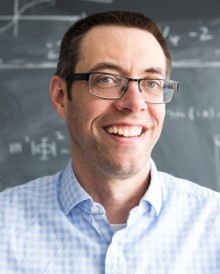
 Kazuya Koyama合作论文数Institute of Cosmology and Gravitation, Faculty of Technology, University of Portsmouth18
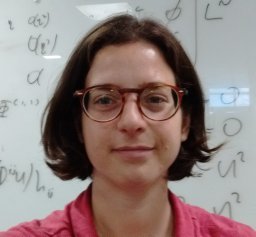
 Will Percival合作论文数Department of Physics and Astronomy, Faculty of Science, University of Waterloo15
 Gongbo Zhao (赵公博)合作论文数National Astronomical Observatories, Chinese Academy of Sciences;University of Chinese Academy of Sciences11
 David Wands合作论文数Institute of Cosmology and Gravitation, University of Portsmouth11
 Stephen Boughn合作论文数Princeton University;Haverford College;Haverford College, Princeton University11
 Levon Pogosian合作论文数Dept Phys, Simon Fraser Univ10Christian Fidler合作论文数9
 Tommaso Giannantonio合作论文数9
 Bob Nichol合作论文数School of Mathematics and Physics, Faculty of Engineering and Physical Sciences, University of Surrey8Alex R. Dzierba合作论文数8
 Ashley J. Ross合作论文数Center for Cosmology and AstroParticle Physics, College of Arts and Sciences, The Ohio State University8R.C. Fernow合作论文数8
 David Bacon合作论文数School of Engineering, Faculty of Science and Engineering, University of Liverpool;Department of Engineering, University of Liverpool7D. Zieminska合作论文数6JH GOLDMAN合作论文数6Z. Bar-Yam合作论文数6
 Susan K Blessing合作论文数Department of Physics, College of Arts & Sciences, Florida State University6
 Rita Tojeiro合作论文数School of Physics and Astronomy, University of St Andrews6
 Guido Walter Pettinari合作论文数Institute of Cosmology and Gravitation;University of Portsmouth;Institute of Cosmology and Gravitation, University of Portsmouth6
 Antonio J. Cuesta合作论文数Instituto de Astrof ´ õsica de Andaluc6
 Ariel Sánchez合作论文数Max Planck Institute for Extraterrestrial Physics6H. Kirk合作论文数6H. J. Willutzki合作论文数5
 Ue-Li Pen合作论文数David A. Dunlap Department of Astronomy & Astrophysics, University of Toronto;Canadian Institute for Theoretical Astrophysics;Academia Sinica Institute of Astronomy & Astrophysics5Marc Manera合作论文数5Tram Thomas合作论文数Institut de Théorie des Phénomènes Physiques, École Polytechnique Fédérale de Lausanne5James D. Thomas合作论文数5
 Amber S. Boehnlein合作论文数Computational Sciences and Technology Division, Jefferson Laboratory5
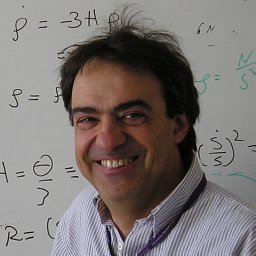
 Alkistis Pourtsidou合作论文数University of Athens;School of Sciences;Faculty of Physics;School of Sciences, University of Athens5Jon Brinkmann合作论文数Apache Point Observatory5JP Dowd合作论文数4
 Yuting Wang (王钰婷)合作论文数National Astronomical Observatories, Chinese Academy of Sciences;University of Chinese Academy of Sciences4R. Miquel合作论文数Inst Fis dAltes Energ IFAE, Barcelona Inst Sci & Technol4
 Tom Theuns合作论文数Department of Physics, Durham University;Institute for Computational Cosmology, Durham University4Graziano Rossi合作论文数4
 Daniel Eisenstein合作论文数Center for Astrophysics, Harvard University;Department of Astronomy, Harvard University4
 Neil Turok合作论文数School of Physics & Astronomy, University of Edinburgh;Higgs Centre for Theoretical Physics, University of Edinburgh4
 Enrique Gaztanaga合作论文数Institut de Ciencies de l'Espai4
 Priyamvada Natarajan合作论文数Department of Physics, Yale University;Flatiron Institute, Center for Computational Astrophysics;Black Hole Initiative, Harvard University;DARK Cosmology Center, Niels Bohr Institute;Dark Cosmology Centre, Niels Bohr Institute, University of Copenhagen4
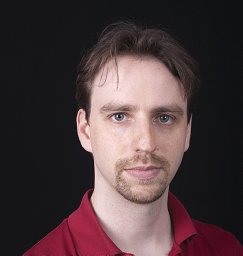
 Marco Bruni合作论文数Institute of Cosmology and Gravitation, University of Portsmouth4
 Chia-Hsun Chuang合作论文数Department of Physics & Astronomy;Univ . of Ok;Department of Physics & Astronomy, Univ . of Ok4Francesco Pace合作论文数4
 Arman Shafieloo合作论文数Inter-University Centre for Astronomy and Astrophysics4
 J. Richard Bond合作论文数Department of Physics, University of Toronto;Canadian Institute for Theoretical Astrophysics, University of Toronto4
 Cornelius Rampf合作论文数Inst Cosmol & Gravitat, Univ Portsmouth4
 Roy Maartens合作论文数Department of Physics & Astronomy, University of Western Cape4David H. Brooks合作论文数Mullard Space Science Laboratory, University College London;Department of Physics & Astronomy, University College London4
 Jochen Weller合作论文数Department of Physics, Faculty of Physics, Ludwig-Maximilians-Universität München;University Observatory, Ludwig-Maximilians University;Max-Planck Institute of Extraterrestrial Physics.4Luiz N. Da Costa合作论文数4




