This essay argues for a mixed-resource approach to scientific modeling and applies it to questions in philosophy of mind. A mixed-resource approach makes use of whatever resources-at whatever scale, from whatever academic discipline-seem useful, freely combining such varied resources in individual models. The success of mixed-resource modeling challenges the widely shared commitment to a personal level in the context of which mental states are to be studied in relative isolation. The adoption of a mixed-resource perspective has the potential to transform treatment of further matters in philosophy of mind, which is illustrated by discussion of psychological Frege cases.
These ten lectures articulate a distinctive vision of the structure and workings of the human mind, drawing from research on embodied cognition as well as from historically more entrenched approaches to the study of human thought. On the author’s view, multifarious materials co-contribute to the production of virtually all forms of human behavior, rendering implausible the idea that human action is best explained by processes taking place in an autonomous mental arena – those in the conscious mind or occurring at the so-called personal level. Rather, human behavior issues from a widely varied, though nevertheless integrated, collection of states and mechanisms, the integrated nature of which is determined by a form of clustering in the components’ contributions to the production of intelligent behavior. This package of resources, the cognitive system, is the human self. Among its elements, the cognitive system includes a vast number of representations, many subsets of which share their content. On the author’s view, redundancy of content itself constitutes an important explanatory quantity; the greater the extent of content-redundancy among representations that co-contribute to the production of an instance of behavior, the more fluid the behavior. In the course of developing and applying these views, the author addresses questions about the content of mental representations, extended cognition, the value of knowledge, and group minds.
This essay presents the conditional probability of co-contribution account of the individuation of cognitive systems (CPC) and argues that CPC provides an attractive basis for a theory of the cognitive self. The argument proceeds in a largely indirect way, by emphasizing empirical challenges faced by an approach that relies entirely on predictive processing (PP) mechanisms to ground a theory of the cognitive self. Given the challenges faced by PP-based approaches, we should prefer a theory of the cognitive self of the sort CPC offers, one that accommodates variety in the kinds of mechanism that, when integrated, constitute a cognitive system (and thus the cognitive self), to a theory according to which the cognitive self is composed of essentially one kind of thing, for instance, prediction-error minimization mechanisms. The final section focuses on one of the central functions of the cognitive self: to engage in conscious reasoning. It is argued that the phenomenon of conscious, deliberate reasoning poses an apparently insoluble problem for a PP-based view, one that seems to rest on a structural limitation of predictive-processing models. In a nutshell, conscious reasoning is a single-stream phenomenon, but, in order for PP to apply, two streams of activity must be involved, a prediction stream and an input stream. Thus, with regard to the question of the nature of the self, PP-based views must yield to an alternative approach, regardless of whether proponents of the predictive processing, as a comprehensive theory of cognition, can handle the various empirical challenges canvassed in the preceding section.
A vexing problem in contemporary epistemology—one with origins in Plato’s Meno —concerns the value of knowledge, and in particular, whether and how the value of knowledge exceeds the value of mere (unknown) true opinion. The recent literature is deeply divided on the matter of how best to address the problem. One point, however, remains unquestioned: that if a solution is to be found, it will be at the personal level, the level at which states of subjects or agents, as such, appear. We take exception to this orthodoxy, or at least to its unquestioned status. We argue that subpersonal states play a significant—arguably, primary—role in much epistemically relevant cognition and thus constitute a domain in which we might reasonably expect to locate the “missing source” of epistemic value, beyond the value attached to mere true belief.
It is often claimed that structured collections of individuals with mental or cognitive states-such collections as courts, countries, and corporations-have mental or cognitive states of their own.The existing critical literature casts substantial doubt on this claim.In this paper, I evaluate a defensive move made by some proponents of the view that groups have mental or cognitive states of their own: to concede that group states and individual states aren't of the same specific natural kinds, while holding that groups instantiate different species of mental or cognitive states-perhaps a different species of cognition it self-from those instantiated by humans.In order to evaluate this defense of group cognition, I present a view of natural kinds-or at least of the sort of evidence that supports inferences to sameness of natural kind-a view I have previously dubbed the 'tweak-andextend' theory, as well as a theory of cognitive systems.Guided by the tweak-and-extend approach, I arrive at a tentative conclusion: that what is common to models of individual cognitive processing and models of group processing does not suffice to establish sameness of cognitive (or mental) kinds, properties, or state-types across individuals and extant groups, not even at a generic level.
A theory of cognitive systems individuation is presented and defended. The approach has some affinity with Leonard Talmy’s Overlapping Systems Model of Cognitive Organization, and the paper’s first section explores aspects of Talmy’s view that are shared by the view developed herein. According to the view on offer – the conditional probability of co-contribution account (cpc) – a cognitive system is a collection of mechanisms that contribute, in overlapping subsets, to a wide variety of forms of intelligent behavior. Central to this approach is the idea of an integrated system. A formal characterization of integration is laid out in the form of a conditional-probability based measure of the clustering of causal contributors to the production of intelligent behavior. I relate the view to the debate over extended and embodied cognition and respond to objections that have been raised in print by Andy Clark, Colin Klein, and Felipe de Brigard.
This paper engages critically with anti-representationalist arguments pressed by prominent enactivists and their allies. The arguments in question are meant to show that the as-such and job-description problems constitute insurmountable challenges to causal-informational theories of mental content. In response to these challenges, a positive account of what makes a physical or computational structure a mental representation is proposed; the positive account is inspired partly by Dretske's views about content and partly by the role of mental representations in contemporary cognitive scientific modeling.
 Antonella Tramacere合作论文数Dept Philosophy & Commun Studies, Univ Bologna4
 Jörntell Henrik合作论文数Dept Expt Med Sci, Lund Univ4
 Atsushi Iriki (入來篤史)合作论文数Laboratory for Symbolic Cognitive Development, RIKEN Center for Biosystems Dynamics Research4
 Uta Frith合作论文数Institute of Cognitive Neuroscience, University College London4
 Giovanni Pezzulo合作论文数Institute of Cognitive Sciences and Technologies, National Research Council of Italy4
 Pierre-Yves Oudeyer合作论文数Inria Center, University of Bordeaux4
 Gottfried Vosgerau合作论文数University of Düsseldorf4
 Saskia K Nagel合作论文数Institute of Cognitive Science;Universitat Osnabr;Institute of Cognitive Science, Universitat Osnabr4
 Peter König合作论文数Institut für Kognitionswissenschaft, Universität Osnabrück3
 Cecilia Heyes合作论文数All Souls College, University of Oxford;University College London3
 Antonia Hamilton合作论文数Institute of Cognitive Neuroscience, University College London2
 Bryce Huebner合作论文数Department of Philosophy, Georgetown University2
 Przemysław Nowakowski合作论文数Centre for Phlosophical Research1
 Olaf Blanke合作论文数Geneva University Hospital1
 Pulvermüller Friedemann合作论文数Brain Language Laboratory, Fachbereich Philosophie und Geisteswissenschaften, Freie Universität Berlin;Department of Philosophy and Humanities, Freie Universität Berlin1
 Anil Seth合作论文数University of Sussex;CIFAR1
 Elisabeth Hill合作论文数Department of Psychology, Goldsmiths, University of London1
 Gallagher Shaun (肖恩·加拉格尔)合作论文数Department of Philosophy, University of Memphis1
 James Kilner合作论文数Institute of Neurology, University College London;Brain Body and Behaviour Lab, Institute of Cognitive Neuroscience, University College London1
 Guenther Knoblich合作论文数Department of Cognitive Science, Central European University1
 Andrew B. Schwartz合作论文数McGowan Institute for Regenerative Medicine, University of Pittsburgh1
 Moshe Bar合作论文数The Gonda Multidisciplinary Brain Research Center, Bar-Ilan University1
 Tony J Prescott合作论文数Department of Computer Science, University of Sheffield1Ford Judith M合作论文数1Wolfgang Prinz合作论文数1
 Jakob Hohwy合作论文数School of Philosophical, Historical and International Studies, Faculty of Arts, Monash University1
 Pierre E. Jacob合作论文数Département des Systèmes d’Information, Sciences de la Décision et Statistiques, ESSEC Business School1
 Martin Butz合作论文数Department of Computer Science, Faculty of Science, Eberhard Karls Universitat Tubingen;Departments of psychology, Faculty of Science, Eberhard Karls Universitat Tubingen1
 Alexander Maye合作论文数1
 Witold M. Wachowski合作论文数Humanistyczny - Instytut Filozofii1
 Richard Menary合作论文数Department of Philosophy, The University of Wollongong1
 Paul F.M.J. Verschure合作论文数Technology Department, Universitat Pompeu Fabra;Barcelona Institute of Science and Technology1
 Gabriella Vigliocco合作论文数Department of Experimental Psychology, University College London1
 Jeannette Bohg合作论文数Interactive Perception and Robot Learning Lab, Stanford AI Lab, Computer Science Department, Stanford University1
 Peter F. Dominey合作论文数Robot Cognition Laboratory1
 Marek McGann合作论文数1
 J. Adam Carter合作论文数COGITO Epistemology Research Centre, University of Glasgow;School of Humanities, University of Glasgow1
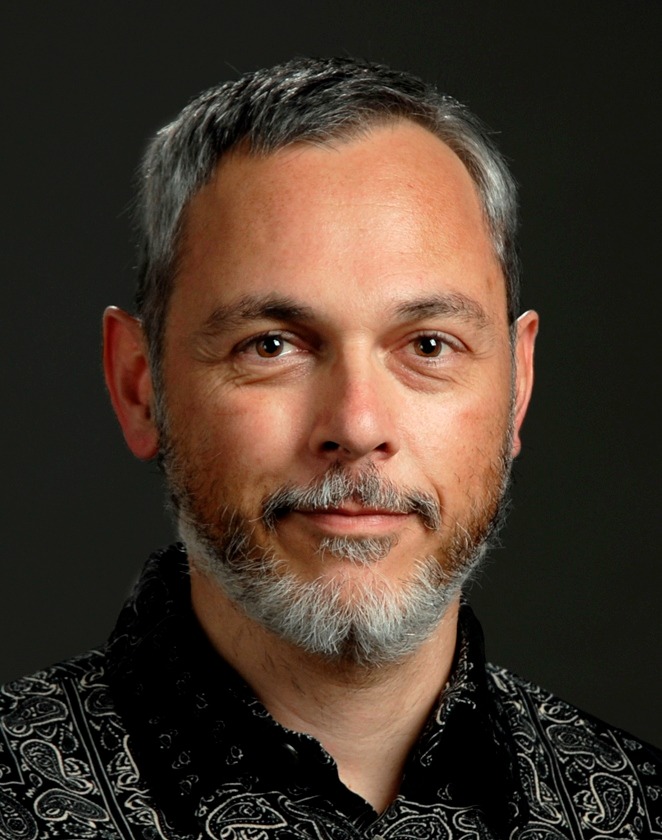 Bernhard Hommel合作论文数Department of Psychology, Shandong Normal University;University Hospital Carl Gustav Carus, TU Dresden1
 Lawrence Barsalou合作论文数School of Psychology & Neuroscience, University of Glasgow;Institute of Neuroscience and Psychology, University of Glasgow1
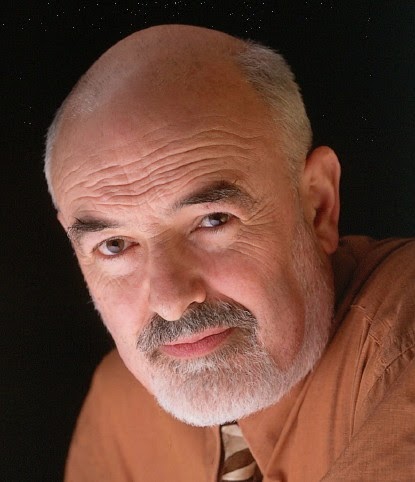 Chris Frith合作论文数Wellcome Centre for Human Neuroimaging, University College London1
 Ezequiel Morsella合作论文数Department of Psychology, Columbia University1
 John K. Tsotsos合作论文数Department of Electrical Engineering and Computer Science, Lassonde School of Engineering, York University1
 Thomas Metzinger合作论文数Frankfurt Institute for Advanced Studies Frankfurt;Department of Philosophy;Department of Philosophy, Frankfurt Institute for Advanced Studies Frankfurt1
 Tobias Heed合作论文数University of Hamburg Biological Psychology and Neuropsychology1
 Martí Sánchez-Fibla合作论文数Technology Department, Universitat Pompeu Fabra1
 Miriam Kyselo合作论文数University of Osnabrueck Institute of Cognitive Science1
 Matej Hoffmann合作论文数AI Lab, University of Zürich1
 J. Kevin O'Regan合作论文数Laboratoire Psychologie de la Perception, Centre National de Recherche Scientifique, Université Paris Descartes1




