Experimental studies of the collision phenomena of submicrometer particles is a developing field. This review examines the range of phenomena that can be observed with new experimental approaches. The primary focus is on single-particle impact studies enabled by charge detection mass spectrometry (CDMS) implemented using the Aerosol Impact Spectrometer (AIS) at the University of California, San Diego. The AIS combines electrospray ionization, aerodynamic lens techniques, CDMS, and an electrostatic linear accelerator to study the dynamics of particle impact over a wide range of incident velocities. The AIS has been used for single-particle impact experiments on positively charged particles of diverse composition, including polystyrene latex spheres, tin particles, and ice grains, over a wide range of impact velocities. Detection schemes based on induced charge measurements and time-of-flight mass spectrometry have enabled measurements of the impact inelasticity through the determination of the coefficient of restitution, measurements of the angular distributions of scattered submicrometer particles, and the chemical composition and dissociation of solute molecules in hypervelocity ice grain impacts.
The impact dynamics of ice grains on surfaces as a function of velocity, including particle breakup and impact ionization, are of intrinsic interest and are critical for the design of future probes to study the ice grain plume around Enceladus. Measurements of the scattering dynamics of similar to 700 nm diameter pure water ice grains upon 0.2-2.4 km/s impact with a metal target are reported here. Production of these Enceladus plume grain analogues and their subsequent acceleration to controlled final velocities were performed with an aerosol impact spectrometer. The particle impact and various impact behaviors, including rebound, sticking, particle fragmentation, and impact ionization, were charac-terized as a function of velocity with an angle-resolved image-charge particle detector. The probability of rebound, sticking, and particle fragmentation was the highest below 400 m/s, between 400 and 800 m/s, and above 800 m/s, respectively. Impact ionization was also observed for impact velocities above 1000 m/s.
In-situ Raman spectroscopy of single levitated charged aqueous microdroplets irradiated by dual-beam (266 and 532 nm) lasers demonstrates that the nitrate anion (NO3-) can be depleted in the droplet through an energy transfer mechanism following excitation of sulfanilic acid (SA), a UV-absorbing aromatic organic compound. Upon 266 nm irradiation, a fast decrease of the NO3- concentration was observed when SA is present in the droplet. This photoinduced reaction occurs without the direct photolysis of NO3-. Instead, the rate of NO3- depletion was found to depend on the initial concentration of SA and the pH of the droplet. Based on absorption-emission spectral analysis and excited-state energy calculations, triplet-triplet energy transfer between SA and NO3- is proposed as the underlying mechanism for the depletion of NO3- in aqueous microdroplets. These results suggest that energy transfer mechanisms initiated by light-absorbing organic molecules may play a significant role in NO3- photochemistry.
Planetary exploration mission concepts that include flying directly through material for collection and/or analysis are becoming increasingly common, with Enceladus water ice particles offering a particularly high-value target. Despite this interest, understanding and predicting what happens to ice samples upon impacting a surface at the high- and hyper-velocities expected for these missions remains a critical knowledge gap. We describe a set of custom simulations using the Hot Optimal Transportation Meshfree method that was implemented to better understand ice impacts. We then compare the simulations with relevant experimental results from the Aerosol Impact Spectrometer. These simulations and experiments illustrate the complex relationship between different energy dissipation mechanisms and how they affect the fate of the particle. These results highlight the importance of understanding the implications of this complex physics on successful sample collection and transfer in order to achieve the scientific goals of the mission. Many mission concepts exploring planets, moons and other bodies include flying directly through material such as gas, ice particles, or dust grains for collection and/or analysis. In particular, Saturn's moon Enceladus has a plume of water ice particles that appear to be sourced from its subsurface ocean, making them valuable to study for understanding the ocean composition, as well as its potential to host life. Currently, we have limited insights into what will happen to ice particles that impact a spacecraft moving through a plume. The outcome of these impacts is critical to achieving the scientific goals proposed for these missions. We describe a set of simulations complemented by experiments to elucidate the fate of these impacted particles. Simulation results highlight the complex interplay between the different energy dissipation mechanisms, and the high sensitivity to particle size, speed, incidence angle, and temperature. Experiments are consistent with the simulations, showing the similar trends for rebounding, sticking, particle fracturing, and phase change. Missions targeting ice particle plume flythrough architectures must consider the implications of the impacts along with their uncertainties in order to select credible methods for meeting the scientific goals of any mission. Impacts of ice particles on spacecraft result in complex energy dissipation mechanisms that affect the fate of the particleMissions targeting ice particle plume fly-through architectures must consider the implications of the impacts to select credible methodsCustom simulations and complementary impact experiments were used to gain insights into the outcome of high-velocity ice particle impacts
The chemistry of pyruvic acid (PA) under thermal dark conditions is limited in bulk solutions, but in microdroplets it is shown to readily occur. Utilizing in situ micro-Raman spectroscopy as a probe, we investigated the chemistry of PA within aqueous microdroplets in a relative humidity- and temperature-controlled environmental cell. We found that PA undergoes a condensation reaction to yield mostly zymonic acid. Interestingly, the reaction follows a size-dependent sigmoidal kinetic profile, i.e., an induction period followed by reaction and then completion. The induction time is linearly proportional to the surface area (R2), and the maximum apparent reaction rate is proportional to the surface-to-volume ratio (1/R), showing that both the induction and reaction occur at the air-water interface. Furthermore, the droplet size is shown to be dynamic due to changes in droplet composition and re-equilibration with the relative humidity within the environmental cell as the reaction proceeds. Overall, the size-dependent sigmoidal kinetics, shown for the first time in microdroplets, demonstrates the complexity of the reaction mechanism and the importance of the air-water interface in the pyruvic acid condensation reaction.
Astrobiology studies are a top priority in answering one of the most fundamental questions in planetary science: Is there life beyond Earth? Saturn's icy moon Enceladus is a prime target in the search for life in our solar system, identified by NASA as the second-highest priority site for a flagship mission in the next decade. The orbital sampling technique of impact ionization mass spectrometry indicated the presence of complex organics in the small icy plume particles ejected by Enceladus encountered previously by Cassini. However, high interaction velocities caused ambiguity as to the origin and identity of the organics. Laboratory validation of this technique is needed to show that biosignature molecules can survive an impact at hypervelocity speeds for detection. Here, we present results on the hypervelocity impact of organic-laden submicron ice grains for in situ mass spectrometric characterization with the first technique to accurately replicate this plume sampling scenario: the Hypervelocity Ice Grain Impact Mass Spectrometer. Our results show good agreement with Cassini data at comparable compositions. We show that amino acids entrained in ice grains can be detected intact after impact at speeds up to 4.2 km/s and that salt reduces their detectability, validating the predictions from other model systems. Our results provide a benchmark for this orbital sampling method to successfully detect signs of life and for the interpretation of past and future data. This work has implications not only for a potential Enceladus mission but also for the forthcoming Europa Clipper mission.
Nanoparticle scattering dynamics play a critical role in a wide range of astrophysical, industrial, and ambient environments; however, experimental data to guide theoretical models that predict this behavior are lacking. The experiments reported here examine these phenomena using single mass-selected, charged, submicron solid tin particles covered with an oxide layer of similar to 10 nm thickness that are accelerated with varying energies onto a highly polished molybdenum surface. The scattering angle and speed for each backscattering event were measured and analyzed, revealing notable size-dependent trends in the coefficient of restitution and onset of sticking and charge transfer over the range from 150 to 500 nm diameter. The experimental results are interpreted using a mechanical model of the measured impact behavior, extending particle scattering measurements into a new intermediate size range, important for understanding the transport of submicron tin particles. An empirical scaling rule is also presented that normalizes the size-dependent behavior in terms of the ratio of the incident kinetic energy and impact contact area.
Experiments examining the production of Enceladus ice grain analogues and the characterization of their impact phenomena are reported. These measurements make use of a unique single particle accelerator-the aerosol impact spectrometer (AIS)-to extend studies of the impact dynamics of ice grains down to the 0.1-10 mu m diameter range relevant to orbital sampling of Enceladus ice grains. Laboratory generation of Enceladus plume grains followed by an examination of their impact dynamics is required to support the interpretation of ice grain orbital sampling in a potential flyby mission concept. In the work reported here, the AIS was used to inject charged water droplets produced in an electrospray ionization source through an aerodynamic lens and into vacuum such that they freeze within 50-200 mu s. The ice grains were then accelerated to a controlled final velocity using a linear accelerator (LINAC). The capability of the LINAC to achieve hypervelocity speeds is explored here. The AIS was equipped with the tapered image charge detector, a multielement image charge detector composed of three charge-sensitive rings and the collision analysis target, providing angle-resolved measurements that revealed impact phenomena including rebound, sticking, and fragmentation for ice grain impacts on a molybdenum target. The velocity-dependent trends of these impact phenomena are reported for impacts ranging from 20 to 900 m/s.
PLUME SAMPLING SCHEMES. S.E. Burke1, M.E.C. Miller1, R.E. Continetti1, K. Hanold1, S.E. Waller2, A. JaramilloBotero3, R.P. Hodyss2, M.J. Malaska2, A.E. Hofmann2, B. Abel4, F. Postberg5, J.I. Lunine6, and M.L. Cable2, 1University of California, San Diego, 2NASA Jet Propulsion Laboratory, California Institute of Technology, 3California Institute of Technology, 4Universitӓt Leipzig, 5Freie Universitӓt Berlin, 6Cornell University
Photoelectron-photofragment coincidence spectroscopy was used to study the dissociation dynamics of the conjugate bases of benzoic acid and p-coumaric acid. Upon photodetachment at 266 nm (4.66 eV) both aromatic carboxylates undergo decarboxylation, as well as the formation of stable carboxyl radicals. The key energetics are computed using high-level electronic structure methods. The dissociation dynamics of benzoate were dominated by a two-body DPD channel resulting in CO2 + C6H5 + e-, with a very small amount of stable C6H5CO2 showing that the radical ground state is stable and the excited states are dissociative. For p-coumarate (p-CA-) the dominant channel is photodetachment resulting in a stable radical and a photoelectron with electron kinetic energy (eKE) <2 eV. We also observed a minor two-body dissociative photodetachment (DPD) channel resulting in CO2 + HOC6H4CHCH + e-, characterized by eKE <0.8 eV. Evidence was also found for a three-body ionic photodissociation channel producing HOC6H5 + HCC- + CO2. The ion beam contained both the phenolate and carboxylate isomers of p-CA-, but DPD only occurred from the carboxylate form. For both species DPD is seen from the first and second excited states of the radical, where vibrational excitation is required for decarboxylation from the first excited radical state.
Mass spectrometry (MS) using impact-induced ionization is an effective means of detecting organic molecules entrained within ice grains.Recent work has demonstrated that the optimal speed for volatilizing and ionizing biomolecules of interest in ice grains is 4-6 km/s.Above this speed range, the biomolecules start to fragment; below this threshold, the energy is not sufficient to promote ionization.A spacecraft with an impact plate and mass spectrometer could therefore be used to perform astrobiology investigations at Enceladus or possibly Europa, without the cost of resources to slow down and/or land.We recommend support of further experimental and theoretical work, in particular a focus on impacts of neutral ice grains, in order to gain a deeper understanding of the physical and chemical mechanisms that occur during hypervelocity impact.We also recommend investment in developing the next generation of MS techniques for hypervelocity sampling, as well as producing/generating mass spectral libraries for future missions to use in the identification of organics and biosignatures.
Photoelectron-photofragment coincidence (PPC) measurements on OH-(C2H4) anions at a photon energy of 3.20 eV revealed stable and dissociative photodetachment product channels, OH-C2H4 + e- and OH + C2H4 + e-, respectively. The main product channel observed was dissociation to the reactants (>67%), OH + C2H4 (v = 0, 1, 2) + e-, where vibrational excitation in the C-H stretching modes of the C2H4 photofragments corresponds to a minor channel. The low kinetic energy release (KER) of the dissociating fragments is consistent with weak repulsion between the OH + C2H4 reactants near the transition state as well as the partitioning of energy into rotation of the dissociation products. An impulsive model was used to account for rotational energy partitioning in the dissociative photodetachment (DPD) process and showed good agreement with the experimental results. The low KER of the dissociating fragments and the similarities in the photoelectron spectra between stable and dissociative events support a mechanism involving the van der Waals complex formed upon photodetachment of OH-(C2H4) as an intermediate in the dominant OH + C2H4 + e- dissociative channel.
Groundbreaking organic chemist and educator
Photoelectron-photofragment coincidence (PPC) spectroscopy is a powerful technique for studying the decarboxylation dynamics of carboxyl radicals. Measurement of photoelectron and photofragment kinetic energies in coincidence provides a kinematically complete measure of the dissociative photodetachment (DPD) dynamics of carboxylate anions. PPC spectroscopy studies of methanoate, ethanoate, propanoate, 2-butenoate, benzoate, p-coumarate and the oxalate monoanion are reviewed. All of the systems studied undergo decarboxylation via a two-body DPD channel i.e., driven by the thermodynamic stability of CO2. Additionally, decarboxylation is observed via a three-body ionic photodissociation channel for p-coumarate. In some cases photodetachment also results in a stable carboxyl radical (RCO2). The branching ratio for DPD, the threshold detachment energy and the peak of the kinetic energy release spectrum are compared for different carboxylates, as a probe of the character of the potential energy landscape in the Franck-Condon region.
The Enceladus plume is a target of astrobiological interest in planetary science since it may carry signs of extraterrestrial life entrapped in ice grains formed from the subsurface ocean of this moon of Saturn. Fly-by mission concepts have been proposed to perform close investigations of the plume, including detailed in situ measurements of chemical composition with a new generation of mass spectrometer instrumentation. Such a scenario involves high-velocity collisions (typically around 5 km/s or higher) of the instrument with the encountered ice grains. Postimpact processes may include molecular fragmentation, impact ionization, and various subsequent chemical reactions that could alter the original material prior to analysis. In order to simulate Enceladus plume fly through conditions, we are developing an ice grain accelerator and have coupled it to the quadrupole ion trap mass spectrometer (QITMS) developed for flight applications. Our experimental setup enables the creation and acceleration of ice particles with well-defined size, charge, and velocity, which are subsequently directed into the QITMS, where they impact the surface of the mass analyzer and the analysis of postimpact, volatilized molecules takes place. In this work, we performed mass spectral analysis of ice grains of ca. 1.3 μm in diameter, accelerated and impacted at velocities up to 1000 m/s, with an upgrade of the accelerator in progress that will enable velocities up to 5000 m/s. We report the first observations of ice grain impacts measured by the QITMS, which were recorded as brief increases in the abundance of water molecules detected within the instrument.
Chemical reactions in atmospheric organic aerosol (OA) add large uncertainties to accurate predictions of the effect of aerosol on health, visibility, and climate. The acceleration of reaction rates of organic compounds in droplets compared to bulk solution has been reported; however, the mechanism and the principle of acceleration largely remains unknown. Malonic acid (MA) is a dicarboxylic acid that exhibits keto-enol tautomerization and is ubiquitous in organic aerosols found in the nature. An environment controlled electrodynamic balance (EDB) coupled with Mie scattering imaging (MSI) and Raman spectroscopy was used to levitate single charged MA droplets and investigate the effect of relative humidity (RH: 90%, 70%, 50%, and 30%) and size (28-91 mu m diameter) on the reaction kinetics of keto-enol tautomerization of MA. Raman spectroscopy of hydrogen-deuterium isotopic exchange in MA droplets enabled quantitative analysis of MA tautomerization kinetics. The result showed slower reaction rates of MA droplets at lower RH as well as in larger-sized droplets. Application of a step-by-step isotopic exchange model to the MA droplets at 90% RH condition was used to determine the enolization rate of MA, yielding a value 10-fold higher than determined in bulk solution. Keto and enol forms of MA have distinctive physicochemical properties, such as reactivity and hydrogen bond structure. The result from our work suggests that keto-enol tautomerization can play an important role for aging of MA-containing OA in nature, as the enol form of MA can undergo accelerated chemical reactions due to the presence of the reactive carbon-carbon double bond.
Transition state dynamics of bimolecular reactions can be probed by photodetachment of a precursor anion when the Franck-Condon region of the corresponding neutral potential energy surface is near a saddle point. In this study, photodetachment of anions at m/z = 49 enabled investigation of the exit channel of the OH + CH3OH → H2O + CH3O reaction using photoelectron-photofragment coincidence spectroscopy. High-level coupled-cluster calculations of the stationary points on the anion surface show that the methoxide-water cluster CH3O-(H2O) is the stable minimum on the anion surface. Photodetachment at a 3.20 eV photon energy leads to long-lived H2O(CH3O) complexes and H2O + CH3O products consistent with both direct dissociative photodetachment and resonance mediated processes on the neutral surface. The partitioning of total kinetic energy in the system indicates that water stretch and bend excitation is induced in dissociative photodetachment and evidence for long-lived complexes consistent with vibrational Feshbach resonances is reported.
Dissociative photodetachment of the FCO2- fluoroformate complex by intense laser pulses is studied using 3D coincidence fragment imaging. The main channels are found to be CO2 + F and FCO + O. Cleavage of the C-F bond is attributed to dissociation on the B[combining tilde]2A1 excited state of the neutral FCO2 radical with significant internal excitation of the molecular fragment, while reductive dissociation of the CO2 moiety is assigned to higher lying states. The measured dissociative ionization products of double-photodetachment are discussed and attributed to intense-laser ionization of dissociative photodetachment products.
 Todd Clements合作论文数22
 Jennifer E. Mann合作论文数Department of Chemistry and Biochemistry;University of California , San Diego;Department of Chemistry and Biochemistry, University of California , San Diego18
 Morgan Miller合作论文数16
 John D. Savee合作论文数Sandia National Laboratories, Sandia National Laboratories15Shen Ben B合作论文数14Amelia W. Ray合作论文数14a k luong合作论文数13
 Berwyck L. J. Poad合作论文数Department of Chemistry, University of Wollongong13Ka Hanold合作论文数12Christopher J Johnson合作论文数11Hj Deyerl合作论文数11Mark C. Garner合作论文数11Yanice Benitez合作论文数10Jemma A Gibbard合作论文数9
 L. N. S. Alconcel合作论文数Department of Chemistry and Biochemistry, University of California, San Diego9Katharine G Lunny合作论文数8Sally Burke合作论文数University of California, San Diego8
 Rico Otto合作论文数8
 H. Guo合作论文数Department of Chemistry and Chemical Biology, The University of New Mexico8c r sherwood合作论文数7
 Zhou Lu (陆洲)合作论文数School of Physics and Electronic Information, Anhui Normal University7
 Strasser Daniel合作论文数Inst Chem, Hebrew Univ Jerusalem7
 Yuan Tseh Lee (李远哲)合作论文数Department of Chemistry, College of Chemistry, University of California, Berkeley7BA BALKO合作论文数6Gn Robinson合作论文数6
 Jun Li (李军)合作论文数School of Chemistry and Chemical Engineering, Chongqing University6
 John F. Stanton合作论文数Department of Chemistry, Liberal Arts and Sciences, University of Florida6
 Joel Bowman合作论文数Department of Chemistry, College of Arts and Sciences, Emory University6Veysel Zengin合作论文数6
 Sarah E. Waller合作论文数Department of Chemistry, Indiana University6k m strong合作论文数5Cm Laperle合作论文数5
 Pyeongeun Kim合作论文数5Zhen Xie合作论文数5
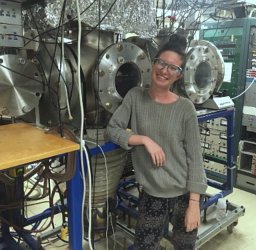 Eleanor Castracane合作论文数Dept Chem & Biochem, Univ Calif San Diego5Brian D Adamson合作论文数5
 Yishai Albeck合作论文数5
 Michael J Malaska合作论文数Neurochemistry Research5Qichi Hu合作论文数5
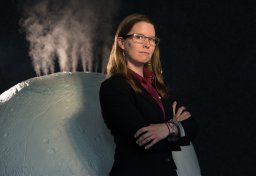 Morgan Cable合作论文数Harriet L. Wilkes Honors College, Florida Atlantic University5
 Andres Jaramillo-Botero合作论文数Material and Process Simulation Center, California Institute of Technology5
 Amy E. Hofmann合作论文数Division of Geological and Planetary Sciences, California Institute of Technology5D. R. Cyr合作论文数4Anton Belousov合作论文数4
 Jianyi Ma合作论文数4
 Daniel M. Neumark合作论文数Chemical Sciences Division, Lawrence Berkeley National Laboratory;College of Chemistry, University of California, Berkeley4
 James H. Lambert合作论文数Center for Risk Management of Engineering Systems, University of Virginia;School of Engineering and Applied Science, University of Virginia;Department of Systems & Information Engineering, University of Virginia;Department of Civil & Environmental Engineering, University of Virginia4
 Robert Hodyss合作论文数Jet Propulsion Laboratory, 4800 Oak Grove Dr., Pasadena Ca, 91109-8099, USA4
 David L. Osborn合作论文数Sandia National Laboratories, National Technology and Engineering Solutions of Sandia, LLC.;Department of Chemical Engineering, College of Engineering, University of California, Davis4




