Recent developments to the M3D-C1 code enable higher fidelity modeling of disruptions, and can be applied in the design verification of reactor-scale tokamaks. Among these new capabilities is a method to mesh conducting vessel structures such as coils and passive plates, packing of the toroidal mesh around gas injectors, as well as anisotropic resistivity inside the vessel structures. We present extended-magnetohydrodynamic (MHD) simulations of disruption mitigation via massive gas injection (MGI) in SPARC. The goal of this study is to inform the disruption mitigation layout of SPARC and aid in the design of an effective gas injector configuration. Fully three-dimensional simulations with M3D-C1 are carried out for various injector configurations with the primary goal of determining the effect of different MGI parameters on heat loads and vessel forces. The simulations include a model for impurity ionization, recombination, advection and radiation, as well as spatially resolved conducting structures around the plasma. A localized mixture of deuterium and neon with a small toroidal and poloidal width is injected in up to six locations. We demonstrate that M3D-C1 can model a rapid shutdown via MGI using narrow and more realistic gas plumes than in previous simulations. As a result of the q = 1 surface in the SPARC baseline case a sawtooth is observed early in the simulations. Despite the sawtooth and the onset of edge MHD instabilities, the impurity distribution remains localized around the injector locations, but enables a radiative shutdown of the plasma. We find that using the maximum of six gas injectors results in a lower peaking factor and leads to a more even distribution of radiation toroidally than using two injectors.
To control and optimize the power of the SPARC tokamak, we require information on the total radiated power of the plasma and its 2D and 3D spatial distribution. The SPARC bolometry diagnostic is being designed and built to measure the radiated power for controlling power balance, investigating the dissipation capabilities of various divertor concepts, and measuring the efficacy of the disruption thermal load mitigation. Proven resistive bolometer sensor technology will be used, with 248 lines of sight integrated into pinhole cameras in 20 different locations. This diversity of views will allow the bolometers to view the core, divertor, and particularly X-points of the plasma with high resolution. 14 of these camera locations are dedicated to 2D equilibrium radiated power, while the remaining six locations are designed to measure 3D radiated energy during disruptions. The bolometer sensor holders, pinhole camera boxes, and cabling have been designed to survive the high neutron flux (but low fluence) and up to 400 °C temperatures seen during operation and vacuum bake. The resistive bolometer sensors use Au absorbers with an Al heat conduction layer and C anti-reflective layer. These sensor chips are wire-bonded to an AlN circuit board, both of which are held inside a custom AlN and stainless steel bolometer holder. Design and optimization of the pinhole camera lines of sight are performed using Cherab. This work details the current state of the design of the SPARC bolometry diagnostic and its interfaces, as well as ongoing work to validate the design.
The SPARC tokamak is a high-field, B-t0 similar to 12 T, medium-sized, R-0 = 1.85 m, tokamak that is presently under construction in Devens, MA, led by Commonwealth Fusion Systems. It will be used to de-risk the high-field tokamak path to a fusion power plant and demonstrate the commercial viability of fusion energy. SPARC's first campaign plan is to achieve Q(fus) > 1 using an ICRF-heated, <10 MW, high current, I-p similar to 8.5 MA, L-mode fueled by D-T gas injection, and its second campaign will investigate H-mode operations in D-D. To facilitate plasma control and scientific learning, a targeted set of similar to 50 plasma diagnostics are being designed and built for operation during these campaigns. While nearly all diagnostics are based on established techniques, the pace of deployment, relative to the first plasma, and the harshness of the thermal, electromagnetic, and radiation environment are unprecedented for medium-sized tokamaks. An overview of the SPARC diagnostic set is given, providing context to further details communicated by the SPARC team in companion publications that are system-specific. The system engineering philosophy for SPARC diagnostics is outlined, and the design and engineering verification process for components inside and outside the primary vacuum boundary are described. Diagnostics are mounted directly to the vacuum vessel as well as housed within a series of eight midplane and 24 off-midplane replaceable port plugs. With limited exceptions, signal conditioning, digitization electronics and cameras as well as lasers and microwave sources are localized to a series of five Diagnostic Lab spaces, totaling similar to 350 m(2), located >15 m from the center of the tokamak, on the other side of a 2.4 m concrete shielding wall. A series of 31 large-scale penetrations have been included in the SPARC Tokamak Hall to facilitate integration of early campaign diagnostics and to provide upgradability.
A new three-dimensional electromagnetic modeling tool ThinCurr has been developed using the existing PSI-Tet finite-element code in support of conducting structure design work for both the SPARC and DIII-D tokamaks. Within this framework a 3D conducting structure model was created for both the SPARC and DIII-D tokamaks in the thin-wall limit. This model includes accurate details of the vacuum vessel and other conducting structural elements with realistic material resistivities. This model was leveraged to support the design of a passive runaway electron mitigation coil (REMC), studying the effect of various design parameters, including coil resistivity, current quench duration, and plasma vertical position, on the effectiveness of the coil. The REMC is a non-axisymmetric coil designed to passively drive large non-axisymmetric fields during the plasma disruption thereby destroying flux surfaces and deconfining RE seed populations. These studies indicate that current designs should apply substantial 3D fields at the plasma surface during future plasma current disruptions as well as highlight the importance of having the REMC conductors away from the machine midplane in order to ensure they are robust to off-normal disruption scenarios.
In 2021 JET exploited its unique capabilities to operate with T and D-T fuel with an ITER-like Be/W wall (JET-ILW). This second major JET D-T campaign (DTE2), after DTE1 in 1997, represented the culmination of a series of JET enhancements-new fusion diagnostics, new T injection capabilities, refurbishment of the T plant, increased auxiliary heating, in-vessel calibration of 14 MeV neutron yield monitors-as well as significant advances in plasma theory and modelling in the fusion community. DTE2 was complemented by a sequence of isotope physics campaigns encompassing operation in pure tritium at high T-NBI power. Carefully conducted for safe operation with tritium, the new T and D-T experiments used 1 kg of T (vs 100 g in DTE1), yielding the most fusion reactor relevant D-T plasmas to date and expanding our understanding of isotopes and D-T mixture physics. Furthermore, since the JET T and DTE2 campaigns occurred almost 25 years after the last major D-T tokamak experiment, it was also a strategic goal of the European fusion programme to refresh operational experience of a nuclear tokamak to prepare staff for ITER operation. The key physics results of the JET T and DTE2 experiments, carried out within the EUROfusion JET1 work package, are reported in this paper. Progress in the technological exploitation of JET D-T operations, development and validation of nuclear codes, neutronic tools and techniques for ITER operations carried out by EUROfusion (started within the Horizon 2020 Framework Programme and continuing under the Horizon Europe FP) are reported in (Litaudon et al Nucl. Fusion accepted), while JET experience on T and D-T operations is presented in (King et al Nucl. Fusion submitted).
The DIII-D tokamak has elucidated crucial physics and developed projectable solutions for ITER and fusion power plants in the key areas of core performance, boundary heat and particle transport, and integrated scenario operation, with closing the core-edge integration knowledge gap being the overarching mission. New experimental validation of high-fidelity, multi-channel, non-linear gyrokinetic turbulent transport models for ITER provides strong confidence it will achieve Q 10 operation. Experiments identify options for easing H-mode access in hydrogen, and give new insight into the isotopic dependence of transport and confinement. Analysis of 2,1 islands in unoptimized low-torque IBS demonstration discharges suggests their onset time occurs randomly in the constant beta phase, most often triggered by non-linear 3-wave coupling, thus identifying an NTM seeding mechanism to avoid. Pure deuterium SPI for disruption mitigation is shown to provide favorable slow cooling, but poor core assimilation, suggesting paths for improved SPI on ITER. At the boundary, measured neutral density and ionization source fluxes are strongly poloidally asymmetric, implying a 2D treatment is needed to model pedestal fuelling. Detailed measurements of pedestal and SOL quantities and impurity charge state radiation in detached divertors has validated edge fluid modelling and new self-consistent 'pedestal-to-divertor' integrated modeling that can be used to optimize reactors. New feedback adaptive ELM control minimizes confinement reduction, and RMP ELM suppression with sustained high core performance was obtained for the first time with the outer strike point in a W-coated, compact and unpumped small-angle slot divertor. Advances have been made in integrated operational scenarios for ITER and power plants. Wide pedestal intrinsically ELM-free QH-modes are produced with more reactor-relevant conditions, Low torque IBS with W-equivalent radiators can exhibit predator-prey oscillations in T-e and radiation which need control. High-beta(P) scenarios with q(min) > 2, q(95)-7.9, beta(N) > 4, beta(T)-3.3% and H-98y2 > 1.5 are sustained with high density ((n) over bar = 7E19 m(-3), f(G)-1) for 6 tau(E), improving confidence in steady-state tokamak reactors. Diverted NT plasmas achieve high core performance with a non-ELMing edge, offering a possible highly attractive core-edge integration solution for reactors.
Abstract Scanning Capacitance Microscopy (SCM) is an essential technique in semiconductor failure analysis. It is widely known in studies of dopant profiles and carrier concentration. Not only that, SCM can be utilized as an electrical fault isolation tool to localize a failing transistor. Compared to Conductive Atomic Force Microscopy CAFM, the main advantage of SCM is that it can be used on both Silicon on Insulator (SOI) and Bulk Silicon wafers. In addition, SCM can scan over a relatively large area in a shorter time than conventional nanoprobing methods. This paper presents case studies illustrating the effectiveness of SCM for die level top-down failure analysis on 45nm node SOI and 14nm FinFET bulk Si technologies.
Extended-MHD modeling of planned Runaway Electron Mitigation Coils (REMC) for SPARC and DIII-D is performed with the NIMROD code. A coil has been designed for each machine, with the two differing in shape and location, but both having n = 1 symmetry (with n the toroidal mode number). Compared to previous modeling efforts, three improvements are made to the simulations boundary conditions. First a resistive wall model is used in place of an ideal wall. Second, the ThinCurr code is used to compute the time-dependent 3D fields used as magnetic boundary conditions for the simulations. Third, the simulation boundary is moved from the first-wall location to the Vacuum Vessel (VV), which extends the boundary past the location of the internal REMC. To remove the 3D coil from the simulation domain, an equivalent set of 3D fields is calculated at the VV boundary that produce approximately the same field distribution at the last closed flux surface assuming vacuum between the two. Each of these three boundary condition improvements leads to an improvement in the predicted performance of the REMC for both machines. The resistive wall alone primarily effects the resonance of the coil with the plasma after the TQ, affecting the q-profile evolution in the SPARC modeling, and allowing the applied spectrum to be modified in response to the plasma in the DIII-D modeling. The movement of the simulation boundary has the most significant effect on the RE confinement overall, including in the early stages, particularly for a DIII-D inner wall limited equilibrium, where the RE loss fraction increases from 90% to > 99%, with SPARC RE losses also occurring much earlier when the boundary is placed at the VV.
The pre-thermal quench (pre-TQ) dynamics of a pure deuterium (D 2 ) shattered pellet injection (SPI) into a 3MA/7MJ JET H-mode plasma is studied via 3D non-linear MHD modelling with the JOREK code. The interpretative modelling captures the overall evolution of the measured density and radiated power. The simulations also identify the importance of the drifts of ablation plasmoids towards the tokamak low field side (LFS) and the impurities in the background plasma in fragment penetration, assimilation, radiative cooling and MHD activity in D 2 SPI experiments. It is found that plasmoid drifts lead to an about 70% reduction of the central line-integrated density (compared to a simulation without drifts) in the JET D 2 SPI discharge considered. Impurities that pre-exist before the SPI as well as those from possible impurity influxes related to the SPI are shown to dominate the radiation in the considered discharge. With inputs from JOREK simulations, modelling with the Lagrangian particle-based pellet code PELOTON reproduces the deviation of the SPI fragments in the direction of the major radius as observed by the fast camera. This confirms the role of rocket effects and plasmoid drifts in the considered discharge and reinforces the validity of the JOREK modelling. The limited core density rise due to plasmoid drifts and the strong radiative cooling and MHD activity with impurities (depending on their species and concentration) could limit the effectiveness of LFS D 2 SPI in runaway electron avoidance and are worth considering in the design of the ITER disruption mitigation system.
Precise values for radiated energy in tokamak disruption experiments are needed to validate disruption mitigation techniques for burning plasma tokamaks like ITER and SPARC. Control room analysis of radiated power (P rad) on JET assumes axisymmetry, since fitting 3D radiation structures with limited bolometry coverage is an under-determined problem. In mitigated disruptions, radiation is toroidally asymmetric and 3D, due to fast-growing 3D MHD modes and localized impurity sources. To address this problem, Emis3D adopts a physics motivated forward modeling ('guess and check') approach, comparing experimental bolometry data to synthetic data from user-defined radiation structures. Synthetic structures are observed with the Cherab modeling framework and a best fit chosen using a reduced chi 2 statistic. 2D tomographic inversion models are tested, as well as helical flux tubes and 3D MHD simulated structures from JOREK. Two nominally identical pure neon shattered pellet injection (SPI) mitigated discharges in JET are analyzed. 2D tomographic inversions with added toroidal freedom are the best fits in the thermal quench (TQ) and current quench (CQ). In the pre-TQ, 2D reconstructions are statistically the best fits, but are likely over-optimized and do not capture the 3D radiation structure seen in fast camera images. The next-best pre-TQ fits are helical structures that extend towards the high-field side, consistent with an impurity flow under the magnetic nozzle effect also observed in JOREK simulations. Whole-disruption radiated fractions of 0.98+0.03/ -0.29 and 1.01+0.02/-0.17 are found, suggesting that the stored energy may have been fully mitigated by each SPI, although mitigation efficiencies well below ITER and SPARC requirements for high energy pulses are still within the large uncertainties. Emis3D is also used to validate JOREK SPI simulations, and confirms improvements in matching experiment from changes to impurity modeling. Time-dependent toroidal peaking factors are calculated and discussed.
The likelihood of realising tokamak power-plants will be greatly improved by the discovery of high-gain equilibria that resist the formation of small islands and hence avoid the disruptive neoclassical tearing mode. We propose a series of studies to understand how simple tokamak design can leverage aspects of tearing onset physics to maximise passive resistance to island formation. Here we investigate the variation that current profiles can bring about in preventing tearing onset through the cylindrical linear tearing stability parameter Delta ' . A database of 159148 realistic pilot-plant current profiles was generated with Monte Carlo sampling, and the distribution of Delta ' values was linked with interpretable profile characteristics. In agreement with prior theoretical and experimental studies, Delta ' was found to be strongly correlated with the existence and steepness of a local toroidal current well or hill, with the former destabilising and the latter stabilising. In the absence of these two cases, the remaining Delta ' values were linearly bounded by the toroidal current gradient at the rational surface.
Experimental trends in thermal plasma partial recombination resulting from massive D 2 injection into high-Z (Ar) containing runaway electron (RE) plateaus in DIII-D and JET are studied for the purpose of achieving sufficiently low electron density ( n e ≈ 10 18 m − 3 ) to increase RE final loss MHD levels. In both DIII-D and JET, thermal electron density n e is found to drop by ∼100 × when the thermal plasma partially recombines, with a minimum at a vacuum vessel-averaged D 2 density in the range 10 20 − 10 21 m − 3 . RE effective resistivity also drops after partial recombination, indicating expulsion of the Ar content. The n e level after partial recombination is found to increase as RE current is increased. The amount of initial Ar in the RE plateau is not observed to have a strong effect on partial recombination. Partial recombination timescales of order 5 ms in DIII-D and 15 ms in JET are observed. These basic trends and timescales are matched with a 1D diffusion model, which is then used to extrapolate to ITER and SPARC tokamaks. Within the approximations of this model, it is predicted that ITER will be able to achieve sufficiently low n e values on time scales faster than expected RE plateau vertical drift timescales (of order 100 ms), provided sufficient D 2 or H 2 is injected. In SPARC, it is predicted that achieving significant n e recombination will be challenging, due to the very high RE current density. In both ITER and SPARC, it is predicted that achieving low n e will be easier with Ar as a background impurity (rather than Ne).
The ability to identify underlying disruption precursors is key to disruption avoidance. In this paper, we present an integrated deep learning (DL) based model that combines disruption prediction with the identification of several disruption precursors like rotating modes, locked modes, H-to-L back transitions and radiative collapses. The first part of our study demonstrates that the DL-based unstable event identifier trained on 160 manually labeled DIII-D shots can achieve, on average, 84% event identification rate of various frequent unstable events (like H-L back transition, locked mode, radiative collapse, rotating MHD mode, large sawtooth crash), and the trained identifier can be adapted to label unseen discharges, thus expanding the original manually labeled database. Based on these results, the integrated DL-based framework is developed using a combined database of manually labeled and automatically labeled DIII-D data, and it shows state-of-the-art (AUC = 0.940) disruption prediction and event identification abilities on DIII-D. Through cross-machine numerical disruption prediction studies using this new integrated model and leveraging the C-Mod, DIII-D, and EAST disruption warning databases, we demonstrate the improved cross-machine disruption prediction ability and extended warning time of the new model compared with a baseline predictor. In addition, the trained integrated model shows qualitatively good cross-machine event identification ability. Given a labeled dataset, the strategy presented in this paper, i.e. one that combines a disruption predictor with an event identifier module, can be applied to upgrade any neural network based disruption predictor. The results presented here inform possible development strategies of machine learning based disruption avoidance algorithms for future tokamaks and highlight the importance of building comprehensive databases with unstable event information on current machines.
In Izzo et al (2022 Nucl. Fusion 62 096029), state-of-the-art modeling of thermal and current quench (CQ) magnetohydrodynamics (MHD) coupled with a self-consistent evolution of runaway electron (RE) generation and transport showed that a non-axisymmetric (n = 1) in-vessel coil could passively prevent RE beam formation during disruptions in SPARC, a compact high-field tokamak projected to achieve a fusion gain Q > 2 in DT plasmas. However, such suppression requires finite transport of REs within magnetic islands and re-healed flux surfaces; conservatively assuming zero transport in these regions leads to an upper bound of RE current ∼1MA compared to ∼8.7MA of pre-disruption plasma current. Further investigation finds that core-localized electrons, within r/a<0.3 and with kinetic energies ∼0.2 – 15MeV , contribute most to the RE plateau formation. Yet only a relatively small amount of transport, i.e. a diffusion coefficient ∼18m2s−1 , is needed in the core to fully mitigate these REs. Properly accounting for (a) the CQ electric field’s effect on RE transport in islands and (b) the contribution of significant RE currents to disruption MHD may help achieve this.
This article introduces silicon photonics, describes what is needed for photonics failure analysis, and shows examples of analysis results for failures in modern silicon photonics circuits.
Accurate reconstruction of the plasma equilibrium is imperative for successful operation of the SPARC tokamak. In order to assess the expected reconstruction accuracy throughout the duration of design-point discharges, the EFIT equilibrium reconstruction code was deployed for SPARC. Reconstructions from SPARC baseline scenarios were compared with free-boundary equilibria generated by FreeGS, Toksys, and the Tokamak Simulation Code. The key geometric areas of interest, where design constraints are imposed, included: the inner and outer midplane gaps, the X-point locations, as well as the strike point locations. Successful reconstructions of various reference discharges, using deviations in these key geometric quantities as metrics, were calculated from synthetic signals considering an optimized equilibrium magnetic sensor set. The optimization process for this sensor set combined a scan of randomized sensor placement with a linear perturbation analysis to determine critical sensor locations, while simultaneously conforming to design constraints on the sensor placement. This optimized set was also successful in performing equilibrium reconstructions with the addition of error to synthetic measurements of magnetic flux and magnetic field, as well as contributions from eddy currents in conducting structures. These methods represent a workflow of optimization and validation that balances the engineering constraints of sensor placement with achieving sufficient reconstruction fidelity for science and operations missions for SPARC.
Nonlinear 3D MHD simulations of shattered-pellet injection (SPI) in JET show prototypical SPI-driven disruptions using the M3D-C1 and NIMROD extended-MHD codes. Initially, radiation-driven thermal quenches are accelerated by MHD activity as the pellet crosses rational surfaces, leading to a radiation spike, global stochasticization of the magnetic field, and a complete thermal quench. Eventually, current quenches, preceded by a current spike are seen as the Ohmic heating becomes equal to the radiative cooling. The results are qualitatively similar for both a single monolithic pellet, pencil-beam model, and a realistic shatter to represent the SPI plume. A scan in viscosity from 500 to 2000 m 2 s −1 for MHD simulations finds that reducing viscosity increases MHD activity and decreases thermal quench time slightly. A realistic cloud of fragments modeling shows that mixed-D–Ne pellet travels deeper into the plasma core before the thermal quench. At the slow pellet speeds, the pellet is found to be moving slowly enough inward that even the 5% neon in the mixed pellet is enough to effectively radiate the thermal energy available. Radiation toroidal peaking is predicted to be at levels consistent with experimental observations and reduced as the pellet travels deeper into the plasma. These simulations lay the ground work for more-sophisticated validative and predictive modeling of SPI in JET using both M3D-C1 and NIMROD.
A series of experiments have been executed at JET to assess the efficacy of the newly installed shattered pellet injection (SPI) system in mitigating the effects of disruptions. Issues, important for the ITER disruption mitigation system, such as thermal load mitigation, avoidance of runaway electron (RE) formation, radiation asymmetries during thermal quench mitigation, electromagnetic load control and RE energy dissipation have been addressed over a large parameter range. The efficiency of the mitigation has been examined for the various SPI injection strategies. The paper summarises the results from these JET SPI experiments and discusses their implications for the ITER disruption mitigation scheme.
National Laboratory Principal Investigator Lawrence Livermore National Laboratory Nikolas Logan logan35@llnl.gov Contractor Columbia University Carlos Paz-Soldan carlos.pazsoldan@columbia.edu Company Principal Investigator Commonwealth Fusion Systems Alex Creely alex@cfs.energy Ryan Sweeney rsween@mit.edu Award INFUSE 2020 Rd 1 Period of Performance 12/04/20 – 12/04/21 Final Report Submission Date 01/04/22
Runaway electrons (REs) created during tokamak disruptions pose a threat to the reliable operation of future larger machines. Experiments using shattered pellet injection (SPI) have been carried out at the JET tokamak to investigate ways to prevent their generation or suppress them if avoidance is not sufficient. Avoidance is possible if the SPI contains a sufficiently low fraction of high-Z material, or if it is fired early in advance of a disruption prone to runaway generation. These results are consistent with previous similar findings obtained with Massive Gas Injection. Suppression of an already accelerated beam is not efficient using High-Z material, but deuterium leads to harmless terminations without heat loads. This effect is due to the combination of a large magnetohydrodynamic instability scattering REs on a large area and the absence of runaway regeneration during the subsequent current collapse thanks to the flushing of high-Z impurities from the runaway companion plasma. This effect also works in situations where the runaway beam moves upwards and undergoes scraping-off on the wall.
 Robert Granetz合作论文数Plasma Science and Fusion Center, Massachusetts Institute of Technology24
 R. A. Tinguely合作论文数Plasma Sci & Fus Ctr, MIT22
 Carlos Paz-Soldan合作论文数Department of Applied Physics and Applied Mathematics, School of Engineering and Applied Sciences, Columbia University18
 D. Shiraki合作论文数16
 Larry Baylor合作论文数oak ridge national laboratory15
 Michael Lehnen合作论文数Iter15
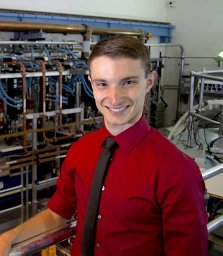 A. J. Creely合作论文数Commonwealth Fus Syst14
 Cristina Rea合作论文数MIT14
 Darren T. Garnier合作论文数14
 Francesco Volpe合作论文数Dept Appl Phys & Appl Math, Columbia Univ14Kevin Joseph Montes合作论文数11
 Jeffrey Herfindal合作论文数Oak Ridge National Laboratory, US Department of Energy11Robert J. La Haye合作论文数General Atomics11Erik Olofsson合作论文数National Board of Fisheries11W. Choi合作论文数Princeton Plasma Physics Laboratory, Princeton, NJ 08543, USA10
 Nicholas Eidietis合作论文数Type One Energy10
 Eric Hollmann合作论文数Center for Energy Research, University of California, San Diego10Stefan Jachmich合作论文数10
 Scott A. Silburn合作论文数Tokamak Science Department, United Kingdom Atomic Energy Authority9
 V. A. Izzo合作论文数University of Washington9J. X. Zhu合作论文数8
 Nikolas C. Logan合作论文数Princeton Plasma Physics Laboratory, Princeton, New Jersey 08543, USA.8
 E. Joffrin合作论文数Commissariat a l'Energie Atomique et aux Energies Alternatives;EUROfusion8Matthew Reinke合作论文数Commonwealth Fusion Systems8
 Massimo Nocente合作论文数7P. Rodriguez Fernandez合作论文数7Ej Strait合作论文数7
 Umar A. Sheikh合作论文数See author list of H. Reimerdes et al. 2022 Nucl. Fusion 62 042018.7
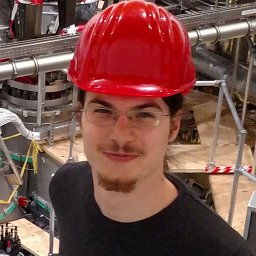 A. Dal Molin合作论文数Institute for Plasma Science and Technology, CNR7
 Martin Greenwald合作论文数Plasma Science and Fusion Center, Massachusetts Institute of Technology7
 Nathan Howard合作论文数Massachusetts Institute of Technology7
 P. J. Carvalho合作论文数7
 Jerry Hughes合作论文数Plasma Science and Fusion Center, Massachusetts Institute of Technology7J. Irby合作论文数7Gabriella Pautasso合作论文数Division of Tokamak Theory, Max Planck Institute for Plasma Physics7B. Stein-Lubrano合作论文数6P. Aleynikov合作论文数6A. Manzanares合作论文数6Cedric Reux合作论文数6B. Lyons合作论文数Department of Physics, Princeton University6
 Tünde-Maria Fülöp合作论文数Plasma Theory Research Group, Division of Subatomic, High Energy and Plasma Physics, Department of Physics, Chalmers University of Technology6
 Donald A Spong合作论文数Oak Ridge National Laboratory6
 Lorenzo Frassinetti合作论文数Division of Fusion Plasma Physics, Department of Electrical Engineering, School of Electrical Engineering and Computer Science, KTH Royal Institute of Technology6
 Luca Giacomelli合作论文数6C. Sommariva合作论文数5cj hansen合作论文数5
 Mathias Hoppe合作论文数5E. Panontin合作论文数5M. Parsons合作论文数5




