Cs2LiYCl6 (CLYC) is a commercial scintillator material having good energy resolution and dual gamma/neutron detection capabilities. CLYC crystals currently used in detectors are grown by the vertical Bridgman method. Boules grown from stoichiometric melts, however, often contain secondary phases, Cs3YCl6 and LiCl, at the beginning and end of the crystal, respectively, suggesting that this composition is incongruently melting. Since no phase diagram containing CLYC existed in the literature prior to this study, the Cs2YCl5–LiCl phase diagram was explored. Several crystals were then grown from various melt compositions. As predicted from the phase diagram, a starting composition of around 60 mol% LiCl did not produce Cs3YCl6 and maintained a low concentration of LiCl.
This article gives a brief overview of the field of crystal growth over several centuries- in fact when it wasn't a field per se, but a collection of independent scientific studies and commercial ventures undertaken by scientists and engineers from many different disciplines. This all changed after WWII with the development of semi-conductor and optical devices requiring high quality single crystals. As a result, the field of crystal growth became an independent entity with societies and its own journal. What is covered here are some of the theo-retical milestones along the way towards our current highly sophisticated understanding of crystallization mechanisms, crystalline perfection and some of the methods used to grow large single crystals of many different classes of materials.
We report results of low-temperature heat-capacity, magnetocaloric-effect, and neutron-diffraction measurements of TmVO 4 , an insulator that undergoes a continuous ferroquadrupolar phase transition associated with local partially filled 4 f orbitals of the thulium (Tm 3+ ) ions. The ferroquadrupolar transition, a realization of Ising nematicity, can be tuned to a quantum critical point by using a magnetic field oriented along the c axis of the tetragonal crystal lattice, which acts as an effective transverse field for the Ising-nematic order. In small magnetic fields, the thermal phase transition can be well described by using a semiclassical mean-field treatment of the transverse-field Ising model. However, in higher magnetic fields, closer to the field-tuned quantum phase transition, subtle deviations from this semiclassical behavior are observed, which are consistent with expectations of quantum fluctuations. Although the phase transition is driven by the local 4 f degrees of freedom, the crystal lattice still plays a crucial role, both in terms of mediating the interactions between the local quadrupoles and in determining the critical scaling exponents, even though the phase transition itself can be described via mean field. In particular, bilinear coupling of the nematic order parameter to acoustic phonons changes the spatial and temporal fluctuations of the former in a fundamental way, resulting in different critical behavior of the nematic transverse-field Ising model, as compared to the usual case of the magnetic transverse-field Ising model. Our results establish TmVO 4 as a model material and electronic nematicity as a paradigmatic example for quantum criticality in insulators.
Single crystals of strontium iodide (SrI2), an important material for nuclear detector applications, are grown commercially in cylindrical ampoules using the Bridgman self-seeding method. As a result, the axial orientation of Bridgman boules varies from run to run. Most crystal growth methods benefit from the use of oriented seeds, which can be helpful in maximizing growth rates and crystal quality. However, it is very difficult to orient SrI2 crystals because they are deliquescent and their surfaces damage easily during cutting and polishing. In this study, unpolished facets formed on an edge-defined film-fed growth (EFG) boule were used to generate the first Laue patterns. The principal boule used in this study had a square cross section and was grown using a seed cut from along the growth axis of a Bridgman boule. X-ray analysis showed that the EFG boule grown from this seed grew along the b-axis and the side facets were the (100) and (001) faces. This work made possible the fabrication of oriented SrI2 seeds for use in future EFG and Czochralski growth experiments and allowed for the determination of the optic axes using polarized light.
The movement and growth of macroscopic ferroelectric domains in a crystal under an electric field (poling voltage) have been studied using laser scattering tomography, a technique heretofore used mainly for studying microscopic defects in crystals. This technique involves scanning successive planes in a crystal with a laser beam and collecting the scattered light in a computer. The data collected can then be visualized as two- or three-dimensional static images or as a video to study structural changes as a function of time. An important feature of this method is that these images can be viewed along any axis in the crystal. Using this technique, we were able to generate images of domain wall nucleation and growth as a function of electric field strength and time. It also allowed for the observation of domain wall movement along any crystallographic direction including down the poling axis which is covered with opaque metallic electrodes. Details of the technique and its use during the poling of a strontium barium niobate crystal are discussed.
Strontium iodide (SrI2), an important new scintillator crystal having a high light yield and excellent energy resolution, was grown for the first time by the edge-defined film-fed (EFG) growth method. Using high purity starting materials and floating dies made of graphite, fused quartz or AlN, large cylindrical, planar or square cross-section single crystals (12–15mm across and >7cm long) were produced at growth rates up to 15mm/h, significantly faster than the current Bridgman growth technology. Details on the equipment used to grow this deliquescent material and on its growth behavior are given along with some discussion of crystalline quality.
The field of crystal growth has a long and distinguished history. Much of today's advanced technologies and scientific knowledge is due to the availability of high-quality single crystals. These crystals (both in bulk and thin film form) can be made from a variety of different chemical compositions (elements to complex compounds) and are application driven. To produce a crystal for a particular application (composition, size, uniformity, etc.), the crystal grower relies on knowledge from various fields such as chemistry, physics, crystallography and mathematics. This historical introduction records the evolution of the field, both with respect to the basic knowledge that has been developed to elucidate the mechanisms involved in the crystallization process, as well as the development of a variety of novel techniques for the preparation of these crystals.
Floating graphite and fused silica dies were used to grow both undoped and Na doped CsI crystals by the edge-defined film-fed growth (EFG) method. Both die materials yielded high quality CsI crystals at high growth rates. Under the conditions employed in these growth experiments, a pull rate of up to 45mm/h was possible using a 15mm diameter graphite die. Growth procedures were developed to enhance crystal quality through iterative die design in combination with numerical modeling. The formation of cylindrical voids (bubble tracks) was investigated and methods were developed for their suppression.
The low temperature scintillation properties of LSO:Ce from 4.3 to 300 K were systematically studied and temperature-dependent light yield nonproportionality was measured for the first time. Increasing temperature from 4.3 to 300 K led to increased decay times and light output, an improvement in both the total energy resolution and light yield nonproportionality, and a red shift in the emission. Mechanisms were proposed to explain the complex trends observed in these scintillation properties.
We describe the design and operation of a unique hydraulic press for the study of scintillator materials under isostatic pressure. This press, capable of developing a pressure of a gigapascal, consists of a large sample chamber pressurized by a two-stage hydraulic amplifier. The optical detection of the scintillation light emitted by the sample is performed, through a large aperture optical port, by a photodetector located outside the pressure vessel. In addition to providing essential pressure-dependent studies on the emission characteristics of radioluminescent materials, this apparatus is being developed to elucidate the mechanisms behind the recently observed dependency of light-yield nonproportionality on electronic band structure. The variation of the light output of a Tl:CsI crystal under 511-keV gamma excitation and hydrostatic pressure is given as an example.
The application of high isostatic pressure has been known to affect the electronic band structure of the host lattice and the electronic states of luminescence centers in scintillators. Using pulse-height gammaray and photoluminescence spectroscopy, the scintillation light output, decay time, and emission behavior of CsI(Tl), NaI(Tl) and LaBr3(Ce) were studied under high isostatic pressure up to 800 MPa. The light output behavior of CsI(Tl) was found to exhibit a different trend than those observed by Nal(Tl) and LaBr3(Ce), explained by shifts in the photoluminescence wavelengths with increased applied pressure. Scintillation decay times were also observed to shorten with pressure. The observed trends in light output and decay times are explained and compared to estimations by analytical models. (C) 2013 Elsevier Ltd. All rights reserved.
A model of edge-defined film-fed (EFG) crystal growth is developed to study melt growth of cylinders of the scintillator crystal cesium iodide (CsI). This system is characterized by strongly nonlinear interactions of heat transfer, capillarity, and die geometry that give rise to multiple solution states under a single set of operating conditions. A thermal-capillary instability is identified that stems from meniscus sag due to gravity, which causes an inflection point to appear in the meniscus shape. This shape allows two solutions to coexist that correspond to different crystal diameters and gap sizes (axial length of liquid bridge between die and crystal). Also identified is an instability of convective heat transfer characterized by a strong interaction of thermal convection with the geometry of the growth interface.
X-ray radioluminescence microscopy (XRLM), a novel fluorescence microscopy technique under focused x-ray excitation, was used to characterize micro-scale luminescence of Eu:Y2O3 and Ce:YAG transparent ceramics and bicrystals. The diffusion length of a known semiconductor measured by XRLM was found to be in agreement with previously measured values, illustrating its use for characterizing charge carrier transport. Emission intensity was found to drop at the boundaries in both Eu:Y2O3 and Ce:YAG ceramics and bicrystals. The depletion in emission at grain boundaries was ultimately found to be related to charge carrier depletion (through either deep trapping or non-radiative recombination). A charge carrier diffusion model was used to understand the effect of grain boundaries on charge carrier transport in these scintillators. The diffusion model was found to accurately predict the spatial distribution of emission in a Ce:YAG single-crystal as a function of x-ray excitation energy. Structural and chemical characterization of grain boundaries in an Eu:Y2O3 ceramic using transmission electron microscopy and secondary ion mass spectrometry mapping showed an ordered boundary region and no detectable segregation of impurities or Eu, justifying the use of an abrupt boundary condition to determine boundary recombination velocities in these materials. The boundary recombination velocities were then used to show that, for ceramics with grain sizes > ∼20 μm, there would be a minimal effect from the detected charge carrier depletion at grain boundaries on their bulk x-ray radioluminescence intensity. Ultimately, this study illustrates how this new XRLM technique can be used to measure charge carrier diffusion properties and how it may be coupled with microstructural and micro-scale chemical analyses to fully investigate the effect of grain boundaries on scintillator properties.
The low temperature scintillation properties of 5 atomic % Eu:SrI 2 from ambient temperature down to 5 K were studied for the first time. With decreasing temperature, a shift in emission wavelength and a shortening of decay time were observed. Light yield and energy resolution exhibited notable changes with temperature, and were maximized as temperature was decreased. A degradation of light yield proportionality with decreasing temperature was observed.
A miniaturized float zone technique using laser heating has been found to have potential for producing superconducting fibers of Bi 2 Sr 2 CaCu 2 O 8 which can carry high currents. Growth stability and growth rate, however, need to be improved if this technique is to be useful for preparing long lengths of 30 μπι diameter high quality fibers for property evaluation and prototype devices. One of the first requirements toward achieving this goal is the preparation of dense, homogeneous starting material. Work on different strategies for starting material preparation are discussed.
AgGaSe2 crystals are useful for nonlinear optical applications after a post-growth heat-treatment in the presence of Ag2Se to eliminate an unavoidable precipitate phase that degrades their optical properties. To understand better the heat-treatment procedure, surface migration and volume diffusion were investigated in the Ag2Se–AgGaSe2 system using reactive diffusion couples which were analyzed by x-ray diffraction, optical microscopy, and electron probe microanalysis. Surface diffusivities of all mobile species were found to be much larger than volume diffusivities. Specific values determined were DsAg = 5.43 × 10⁻⁴ exp(-0.46 eV/kT) and DvAg = 2.40 × 10⁻⁷ exp(-0.84 eV/kT), where DsAg and DvAg are effective surface diffusivity and effective volume diffusivity of Ag, respectively. The corresponding diffusivities for Ga and Se were found to be almost the same, indicating that Ga and Se move together with Ag to maintain binary (Ag2Se and Ga2Se3) stoichiometry and electroneutrality. These findings are consistent with the pattern of annihilation of the second phase precipitates in the AgGaSe2 matrix during heat treatment.
Tungsten bronze ferroelectrics with a morphotropic phase boundary (MPB) have become increasingly important for a variety of applications because of their enhanced and unique properties near the MPB. Lead barium niobate (Pb1−xBaxNb2O6) crystals, which have a morphotropic phase boundary between the orthorhombic (1 − x > ∼0.63) and tetragonal (1 − x, <, 0.63) phases, were grown in sealed Pt crucibles by the vertical Bridgman method for tetragonal compositions near the MPB, and their ferroelectric properties were investigated. The ferroelectric domain structures in as-grown crystals were revealed either by etching in hydrofluoric acid or by polishing with colloidal silica, the latter providing clearer features. Domain size on the surface perpendicular to the polar axis was 10–50 μm. Crystals could be poled by slowly cooling from above the Curie temperatures (300–400 °C) under a dc field of 5 V/mm. The spontaneous polarization Ps of tetragonal Pb1−xBaxNb2O6 was found to be in the range of 0.40–0.70 μC/mm2 at room temperature depending on composition and increased as the composition approached morphotropic phase boundary (1 − x = ∼0.63), as expected.
For the purpose of creating a database of electronic structures of all the known inorganic compounds, we have developed a computational framework based on high-throughput ab initio calculations (AFLOW) and an online repository (www.aflowlib.org). In this article, we report the first step of this task: the calculation of band structures for 7439 compounds intended for the research of scintillator materials for γ-ray radiation detection. Data-mining is performed to select the candidates from 193 456 compounds compiled in the Inorganic Crystal Structure Database. Light yield and scintillation nonproportionality are predicted based on semiempirical band gaps and effective masses. We present a list of materials, potentially bright and proportional, and focus on those exhibiting small effective masses and effective mass ratios.
 R.K. Route合作论文数83D. Elwell合作论文数40
 Robert Byer合作论文数Department of Applied Physics, Stanford University38R.C. DeMattei合作论文数35Robert J. Raymakers合作论文数15Myeongkyu Lee合作论文数14
 Martin M. Fejer合作论文数Fejer Group, Edward L. Ginzton Laboratory, Stanford University14Gopal Chandra Bhar合作论文数Physics Department, Burdwan University Laser Laboratory13
 Udit Chatterjee合作论文数Laser Laboratory;Physics Department;Burdwan University12Nancy Giles合作论文数11
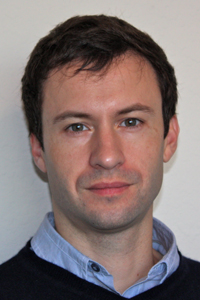 Romain Gaume合作论文数NanoScience Technology Center, College of Optics and Photonics, University fo Central Florida11RC ECKARDT合作论文数11
 Lambertus Hesselink合作论文数Department of Electrical Engineering, Stanford University;Wu Tsai Neurosciences Institute, Stanford University10D. Gazit合作论文数10
 A.M. Rudra合作论文数Laser Laboratory, Burdwan University10Gopalakrishna M. Rao合作论文数9
 Kosuke Nagashio合作论文数Department of Materials Engineering, The University of Tokyo9
 Larry Halliburton合作论文数Department of Physics and Astronomy, West Virginia University9a watcharapasorn合作论文数8W.L. Kway合作论文数8Howard S Lee合作论文数7Alice Liu合作论文数7Y. X. Fan合作论文数7
 Pathik Kumbhakar合作论文数Department of Physics, R.E. College7
 Stefano Curtarolo合作论文数Thomas Lord Department of Mechanical Engineering and Materials Science, Pratt School of Engineering, Duke University;Center for Extreme Materials, Pratt School of Engineering, Duke University7
 Peter G. Schunemann合作论文数BAE Systems, Advanced Systems and Technology, P.O. Box 868, MER15-1813, Nashua, NH 03061-0868, USA7y c lu合作论文数6
 y s wu合作论文数6C. Schwab合作论文数6
 Lam Stephanie合作论文数6
 Sarathdas Das合作论文数6R. Hiskes合作论文数6Stephen R. Podowitz合作论文数6Perla N. Peszkin合作论文数6R.C. De Mattei合作论文数6H. J. Von Bardeleben合作论文数Institut Des Nanosciences de Paris, Sorbonne Université6
 Kevin T. Zawilski合作论文数BAE Systems6R. Route合作论文数5S.Y Lee合作论文数5Eric K. Gustafson合作论文数LIGO, California Institute of Technology5Z. Lu合作论文数5A. Goltzene合作论文数5
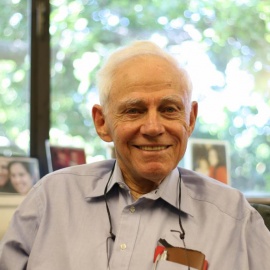 Theodore Geballe合作论文数Department of Materials Science and Engineering, School of Engineering, Stanford University;Stanford Institute for Materials and Energy Sciences, Stanford University5
 Wahyu Setyawan合作论文数Department of Mechanical Engineering and Materials Science;Duke University;Department of Mechanical Engineering and Materials Science, Duke University5K. T. Stevens合作论文数5
 Thierry Caillat合作论文数Jet Propulsion Laboratory, California Institute of Technology5A. Borshchevsky合作论文数5S. T. Yang合作论文数4Ra Huggins合作论文数4




