The suspension systems of production automobiles and trucks are designed to support the comfort and safety of human occupants. The response of these vehicles to the road surface is a function of vehicle loading. In this research we demonstrate the automatic monitoring of vehicle load using an optical sensor and a speed bump. This paper investigates the dynamics of vehicle response and describes the software developed to extract vibrational information from video.
We present a cognitive architecture that heavily utilizes metareasoning for self adaptation,. The architecture is derived in part from neuroscience data and theories about the operation of the human vision system. We also discuss how this architecture is applied in the POIROT system, which learns web services workflow from “observing” a small number of expert examples.
The POIROT project is a four-year effort to develop an architecture that integrates the products of a number of targeted reasoning and learning components to produce executable representations of demonstrated web service workflow processes. To do this it combines contributions from multiple trace analysis (interpretation) and learning methods guided by a meta-control regime that reviews explicit learning hypotheses and posts new learning goals and internal learning subtasks. POIROT's meta-controller guides the activity of its components through largely distinct phases of processing from trace interpretation, to inductive learning, hypotheses combination and experimental evaluation. In this paper we discuss the impact that various kinds of inference during the trace interpretation phase can have on the quality of the learned models.
For reasons of clarity, a typical node–link diagram statically displayed on paper or a computer screen contains fewer than 30 nodes. However, many problems would benefit if far more complex information could be diagrammed. Following Munzner et al., we suggest that with interactive diagrams this may be possible. We describe an interactive technique whereby a subset of a larger network diagram is highlighted by being set into oscillatory motion when a node is selected with a mouse. The subset is determined by a breadth first search of the underlying graph starting from the selected node. This technique is designed to support visual queries on moderately large node-link diagrams containing up to a few thousand nodes. An experimental evaluation was carried out with networks having 32, 100, 320, 1000, and 3200 nodes respectively, and with four highlighting techniques: static highlighting, motion highlighting, static+ motion highlighting, and none. The results show that the interactive highlighting methods support rapid visual queries of nodes in close topological proximity to one another, even for the largest diagrams tested. Without highlighting, error rates were high even for the smallest network that was evaluated. Motion highlighting and static highlighting were equally effective. A second experiment was carried out to evaluate methods for showing two subsets of a larger network simultaneously in such a way that both are clearly distinct. The specific task was to determine if the two subsets had nodes in common. The results showed that this task could be performed rapidly and with few errors if one subset was highlighted using motion and the other was highlighted using a static technique. We discuss the implications for information visualization.
Many different problems can be represented as graphs displayed in the form of node--link diagrams. However, when a graph is large it becomes visually uninterpretable because of the tangle of links. We describe a set of techniques that use motion in an interactive interface to provide effective access to larger graphs. Touching a node with the mouse cursor causes that node and the subgraph of closely connected nodes to oscillate. We argue from perceptual principles that this should be a more effective way of interactively highlighting a subgraph than more conventional static methods. The MEGraph system was developed to gain experience with different forms of motion highlighting. Based on positive feedback, three experiments were carried out to evaluate the effectiveness of motion highlighting for specific tasks. All three showed motion to be more effective than static highlighting, both in increasing the speed of response for a variety of visual queries, and in reducing errors. We argue that motion highlighting can be a valuable technique in applications that require users to understand large graphs.
BBN has developed a system, called VALAD (Voice-Activated Logistics Anchor Desk), which provides a spoken language interface to a logistics information system. Logistics experts can use their natural voice to ask for different types of information or to control the display of the logistics system. The information is displayed on a map or appears in tabular form, as is appropriate. The voice interface is seamless in that the user can choose to use either voice or the traditional keyboard and mouse interface. However, the use of voice often allows the user to short-cut many mouse clicks with a single query or command. The 1200-word VALAD is speaker independent, and runs completely in software on off-the-shelf workstations. VALAD was developed by BBN under the sponsorship of DARPA, the Defense Advanced Research Projects Agency, to demonstrate the applicability of advanced speech recognition and language understanding technology to realistic data base tasks. By enabling users to specify information in the database in natural English, VALAD supports applications such as military planning processes and enhances decision-support environments. A formal experiment with VALAD (conducted by Major T. Bowman at the Command and General Staff College at Ft. Leavenworth) concluded that users could perform routine tasks in 1/3 the time using speech, compared to using the keyboard and mouse. The users, all Army personnel, also thought that speech would reduce training time because it was so easy to use. VALAD was used at the Integrated Feasibility Demonstration at the JDEF in Washington DC in June, 1996. VALAD was also used in the Prairie Warrior '96 military exercise at Ft. Leavenworth in May 1996.
We present a natural language interface system which is based entirely on trained statistical models. The system consists of three stages of processing: parsing, semantic interpretation, and discourse. Each of these stages is modeled as a statistical process. The models are fully integrated, resulting in an end-to-end system that maps input utterances into meaning representation frames.
This paper provides a quick summary of the following topics: enhancements to the PLUM information extraction engine, what we learned from MUC-6 (the Sixth Message Understanding Conference), the results of an experiment on merging templates from two different information extraction engines, a learning technique for named entity recognition, and towards information extraction from speech.
This paper presents Delphi, the natural language component of the BBN Spoken Language System. Delphi is a domain-independent natural language question answering system that is solidly based on linguistic principles, yet which is also robust to ungrammatical input. It includes a domain-independent, broad-coverage grammar of English. Analysis components include an agenda-based best-first parser and a fallback component for partial understanding that works by fragment combination. Delphi has been formally evaluated in the ARPA Spoken Language program's ATIS (Airline Travel Information System) domain, and has performed well. Delphi has also been ported to a spoken language demonstration system in an Air Force Resource Management domain. We discuss results of the evaluation as well as the porting process.
This paper introduces a class of statistical mechanisms, called hidden understanding models, for natural language processing. Much of the framework for hidden understanding models derives from statistical models used in speech recognition, especially the use of hidden Markov models. These techniques are applied to the central problem of determining meaning directly from a sequence of spoken or written words. We present an overall description of the hidden understanding methodology, and discuss some of the critical implementation issues. Finally, we report on experimental results, including results of the December 1993 ARPA evaluation.
Although natural language processing (NLP) has come very far in the last twenty years, the technology has not yet achieved a revolutionary impact on society. Is this because of some fundamental limitation that can never be overcome? Is it because there has not been enough time to refine and apply theoretical work that has already been done?
This paper presents the Semantic Linker, the fallback component used by the the DELPHI natural language component of the BBN spoken language system HARC. The Semantic Linker is invoked when DELPHI's regular chart-based unification grammar parser is unable to parse an input; it attempts to come up with a semantic interpretation by combining the fragmentary sub-parses left over in the chart using a domain-independent method incorporating general search algorithm driven by empirically determined probabilities and parameter weights. It was used in the DARPA November 92 ATIS evaluation, where it reduced DELPHI's Weighted Error on the NL test by 30% (from 32% to 22%).
A novel system for extracting information from stereotyped voice traffic is described. Off-the-air recordings of commercial air traffic control communications are interpreted in order to identify the flights present and determine the scenario (e.g., takeoff, landing) that they are following. The system combines algorithms from signal segmentation, speaker segregation, speech recognition, natural language parsing, and topic classification into a single system. Initial evaluation of the algorithm on data recorded at Dallas-Fort Worth airport yields performance of 68% detection of flights with 98% precision at an operating point where 76% of the flight identifications are correctly recognized. In tower recording containing both takeoff and landing scenarios, flights are correctly classified as takeoff or landing 94% of the time.< >
This paper presents recent natural language work on HARC, the BBN Spoken Language System. The HARC system incorporates the Byblos system [6] as its speech recognition component and the natural language system Delphi, which consists of a bottom-up parser paired with an integrated syntax/semantics unification grammar, a discourse module, and a database question-answering backend. The paper focuses on the syntactic and semantic analyses made in the grammar.
 Madeleine Bates合作论文数12
 David Stallard合作论文数BBN Systems and Technologies, Cambridge, MA8
 Ralph Weischedel合作论文数Information Sciences Institute, University of Southern California7Robert Ingria合作论文数6Damaris Ayuso合作论文数6
 Bonnie Webber合作论文数Institute for Language, Cognition and Computation, School of Informatics, University of Edinburgh;The Human Communication Research Centre5
 Lance Ramshaw合作论文数4
 Sean Boisen合作论文数BBN Technol3
 Colin Ware合作论文数Center for Coastal & Ocean Mapping, University of New Hampshire;Joint Hydrographic Center, University of New Hampshire3
 Richard Schwartz合作论文数Raytheon BBN Technologies3Scott Miller合作论文数3
 Marie Meteer合作论文数Pryon3thuy t pham合作论文数2
 Robert Laddaga合作论文数2
 Mark H. Burstein合作论文数SIFT, Inc.2Paul Robertson合作论文数2
 Candace Sidner合作论文数Department of Computer Science, Worcester Polytechnic Institute2
 Herbert Gish合作论文数Speech and Language Processing Department, Raytheon BBN Technologies2
 Sean Colbath合作论文数BBN Technologies2M BATES合作论文数1Dawn MacLaughlin合作论文数1Philippe Jeanrenaud合作论文数1
 Varda Shaked合作论文数1
 Daniel M. Bikel合作论文数Meta1gerard donlon合作论文数1BOULANGER ALBERT合作论文数1Andrew Haas合作论文数1Boyan Onyshkevych合作论文数1
 David Evans合作论文数Department of Computer Science, School of Engineering and Applied Science, University of Virginia1
 Lauri Karttunen合作论文数Stanford University;Palo Alto Research Center1
 Man-Hung Siu合作论文数1
 Sergei Nirenburg合作论文数University of Maryland, Baltimore County1
 Norman K. Sondheimer合作论文数1
 William A. Woods合作论文数Google1
 Claire Gardent合作论文数Lorraine Research Laboratory in Computer Science and its Applications, Centre National de la Recherche Scientifique1William Ferguson合作论文数1
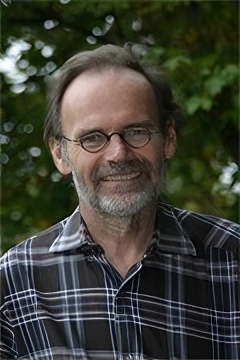 James F. Allen合作论文数Department of Computer Science, Hajim School of Engineering & Applied Sciences, University of Rochester1
 Philip Resnik合作论文数Department of Linguistics, College of Arts & Humanities, University of Maryland;Department of Computer Science, University of Maryland;Institute for Advanced Computer Studies, University of Maryland1
 ChengXiang (Cheng) Zhai (翟成祥)合作论文数Department of Computer Science, Siebel School of Computing and Data Science, The Grainger College of Engineering, University of Illinois at Urbana-Champaign;Carl R. Woese Institute for Genomic Biology, Department of Statistics, School of Information Sciences, University of Illinois at Urbana-Champaign1Bradley A. Goodman合作论文数The MITRE Corporation1
 Bradford W Miller合作论文数University of Rochester1Natesa S. Sridharan合作论文数1
 Remko Scha合作论文数University of Amsterdam1Jim Schmolze合作论文数1
 Michael Crystal合作论文数BBN Technologies1
 Michael Kohlhase合作论文数Computer Science;Jacobs University1
 Fusun Yaman合作论文数Distributed Systems Group, BBN Technologies1Boanie Webber合作论文数1




