When designing new protected areas, conservation managers often use bioclimatic models to anticipate the effects of climate change on species distributions. Recent studies have shown that the outputs of such models frequently differ in direction and magnitude, generating uncertainties that compromise their value for guiding conservation plans. Traditional approaches tend to minimise this uncertainty by designing adaptive strategies or by complexifying predictive models. However, these approaches may prove inadequate when uncertainty grows too large, as is the case with climate change. Here, rather than attempting to reduce uncertainty, we propose to embrace and value it in order to seek conservation measures that are as robust as possible to many plausible futures. By adapting this "Robust Decision Making" framework to conservation, we stress tested five generic conservation strategies against hundreds of plausible futures, for each of 22 species of concern. Our conceptual study seeks the strengths and vulnerabilities of each strategy across many possible future directions, facilitating both decision-making amongst strategies and emergence of robust and adaptive conservation plans. We anticipate our approach to offer an innovative framework to complement classic species conservation planning methods by reducing sensitivity to climate change uncertainty and improving the overall performance of conservation actions.
The Intergovernmental Panel on Climate Change (IPCC) exists to provide policy-relevant assessments of the science related to climate change. As such, the IPCC has long grappled with characterizing and communicating uncertainty in its assessments. Decision Making under Deep Uncertainty (DMDU) is a set of concepts, methods, and tools to inform decisions when there exist substantial and significant limitations on what is and can be known about policy-relevant questions. Over the last twenty-five years, the IPCC has drawn increasingly on DMDU concepts to more effectively include policy-relevant, but lower-confidence scientific information in its assessments. This paper traces the history of the IPCC’s use of DMDU and explains the intersection with key IPCC concepts such as risk, scenarios, treatment of uncertainty, storylines and high-impact, low-likelihood outcomes, and both adaptation and climate resilient development pathways. The paper suggests how the IPCC might benefit from enhanced use of DMDU in its current (7th) assessment cycle.
Media narratives employed in contemporary journalism, including data journalism, are critical in shaping public understanding of the complex systems that affect our lives. Depicting a chain of events in a “story” format, narratives are constructed with detailed, precise, and well-researched information based on character identification, human emotions, and real social problems. In many ways, they are indispensable intermediaries of practiced judgment and expertise that guide the public to meaningfully engage with evidence-based understanding of our world and how we can act upon it. DMDU narratives suggest that we can act to shape the future toward our liking even when we cannot predict what that future will be, that we need to simultaneously consider multiple rather than a single future, and that the quest for prediction can interfere with the task of identifying the best actions. DMDU practice relies on substantive stakeholder interaction, and it is supported by vast amounts of empirical evidence. This perspective discusses how media narratives intersect with DMDU to inform and to leverage the complexities of modern contemporary public challenges. We first explore how uncertainty might be actionable, as opposed to fearful. Next, while acknowledging limitations on transference of information during the journalistic process, we address the challenges and best strategies to distill information to the public to maintain and build trust about uncertainty. Next, we discuss how journalistic practices could be useful for disseminating more broadly findings of DMDU analyses.
Standardized and/or centralized proactive research governance can lessen tensions
Transitioning a large city such as Los Angeles to 100% carbon-free electricity requires collaboration among multiple actors with different and sometimes conflicting objectives. In this Cell Reports Sustainability article, Arent and colleagues describe a pioneering multi-scenario, multi-objective decision support effort, identifying specific pathways for Los Angeles to achieve its carbon-free goals that satisfy both day-to-day and transformational requirements. Here, we describe these pathways and the innovative, collaborative process that produced them.
This paper reports on a stakeholder engagement process to inform research to improve public health officials' responses to future pandemics. Three workshops convened decisionmakers, modelers, and researchers to envision a future with improved pandemic response, demonstrate means for co-producing research plans to pursue that vision, and inform the design of information products to support robust public health decisions in such a future.
Rising global temperatures and the urban heat island effect can amplify heat-related health risks to urban residents. Cities are considering various heat adaptation actions to improve public health, enhance social equity, and cope with future conditions beyond past experience. We present the City-Heat Equity Adaptation Tool (City-HEAT), which suggests optimal investments for mitigating urban heat and reducing health impacts through modifications of built (cool roofs/pavements) and natural (urban afforestation) environments and reductions of people's heat exposure (cooling centers). The optimization considers multiple public health and social objectives under a wide range of future scenarios. An application to Baltimore, MD (USA) demonstrates how City-HEAT can generate Pareto-efficient multi-year heat adaptation plans. We quantify effectiveness-efficiency-equity tradeoffs among alternative plans and show the advantages of flexible decision-making. City-HEAT can be adapted to the natural, built, and social environments of other cities to support their urban heat adaptation planning, recognizing local objectives and uncertainty.
Our plans to tackle climate change could be thrown off-track by shocks such as the coronavirus pandemic, the energy supply crisis driven by the Russian invasion of Ukraine, financial crises and other such disruptions. We should therefore identify plans which are as resilient as possible to future risks, by systematically understanding the range of risks to which mitigation plans are vulnerable and how best to reduce such vulnerabilities. Here, we use electricity system decarbonization as a focus area, to highlight the different types of technological solutions, the different risks that may be associated with them, and the approaches, situated in a decision-making under deep uncertainty (DMDU) paradigm, that would allow the identification and enhanced resilience of mitigation pathways.
Inclusive, participatory governance is a key enabler of effective responses to natural hazard risks exacerbated by climate change. This paper describes a community-level co-design process among academic, state, and federal scientists and the community of Sitka, Alaska to develop a novel landslide warning system for this small coastal town. The decentralized system features an online dashboard which displays current and forecast risk levels to help residents make their own risk management decisions. The system and associated risk communications are informed by new geoscience, social, and information science generated during the course of the project. This case study focuses on our project team's activities and addresses questions including: what activities did the project team conduct, what did these activities intend to accomplish, and did these activities accomplish what they intended? The paper describes the co-design process, the associated changes in system design and research activities, and formal and informal evaluations of the system and process. Overall, the co-design process appears to have generated a warning system the Sitka community finds valuable, helped to align system design with local knowledge and community values, significantly modified the scientists' research agendas, and helped navigate sensitivities such as the effect of landslide exposure maps on property values. Other communities in SE Alaska are now adopting this engagement approach. The paper concludes with broader implications for the role of community-level, participatory co-design and risk governance for climate services.
Green Infrastructure (GI) measures are increasingly used for climate adaptation in urban areas, but it remains a challenge to evaluate their effectiveness and strategically allocate investment. Planning GI is subject to deep uncertainties and requires navigating tradeoffs between multiple objectives. Many-Objective Robust Decision Making (MORDM) can be useful in addressing these modeling challenges. Thus far, MORDM has been used sparsely for GI planning. To help mainstream MORDM applications in GI planning, we developed an open-source Python library: Rhodium-SWMM. Rhodium-SWMM connects the USEPA's Stormwater Management Model (SWMM) to Rhodium, a Python library for MORDM. Rhodium-SWMM provides a generalizable and flexible interface for taking SWMM input files and setting up a multi-objective optimization problem with the ability to define a wide range of parameters in the SWMM input file as uncertainties or levers. This opens opportunities to more conveniently analyze new research questions in multi-scale GI placement under deep uncertainty.
The coronavirus disease 2019 pandemic required significant public health interventions from local governments. Early in the pandemic, RAND researchers developed a decision support tool to provide policymakers with insight into the trade-offs they might face when choosing among nonpharmaceutical intervention levels. Using an updated version of the model, the researchers performed a stress-test of a variety of alternative reopening plans, using California as an example. This article presents the general lessons learned from these experiments and discusses four characteristics of the best reopening strategies.
The management of climate-related risks have become increasingly important and more frequently practised across many sectors of society. Concurrently, there has been a proliferation of guidance documents designed to help public, private, and civil society organisations conduct these activities. This study compares the UKCIP climate risk management framework and the implementations of climate risk management embodied in CCRA2, TE2100, and Oasis LMF to the new ISO 14091 standard, published in February 2021. We find general consistency among ISO 14091, UKCIP, and the three implementations, but also important differences in focus largely explainable by variations in context and the time at which the approaches were developed. Based on this analysis, the study provides recommendations for various stakeholders. All the approaches could benefit from providing more explicit guidance in certain areas highlighted by the analysis, a suggestion for their respective authoring organisations to consider. Climate risk practitioners may use the findings to determine which approach to use and how depending on their objectives. In addition, UK and other government officials might develop guidance documents to aid practitioners when making these decisions. Finally, the typology of key elements of climate risk approaches developed in our study can help scholars with future research.
Risk AnalysisVolume 41, Issue 6 p. 874-877 Response On Model Pluralism and the Utility of Quantitative Decision Support Robert Lempert, Corresponding Author Robert Lempert lempert@rand.org Pardee Center on Longer Range Global Policy, RAND, Santa Monica, CA, USA Address correspondence to Robert Lempert, Pardee Center on Longer Range Global Policy, RAND, 1776 Main St, Santa Monica, CA, 90407, USA; lempert@rand.orgSearch for more papers by this authorSara Turner, Sara Turner Pardee RAND Graduate School, RAND, Santa Monica, CA, USASearch for more papers by this author Robert Lempert, Corresponding Author Robert Lempert lempert@rand.org Pardee Center on Longer Range Global Policy, RAND, Santa Monica, CA, USA Address correspondence to Robert Lempert, Pardee Center on Longer Range Global Policy, RAND, 1776 Main St, Santa Monica, CA, 90407, USA; lempert@rand.orgSearch for more papers by this authorSara Turner, Sara Turner Pardee RAND Graduate School, RAND, Santa Monica, CA, USASearch for more papers by this author First published: 25 June 2021 https://doi.org/10.1111/risa.13747Read the full textAboutPDF ToolsRequest permissionExport citationAdd to favoritesTrack citation ShareShare Give accessShare full text accessShare full-text accessPlease review our Terms and Conditions of Use and check box below to share full-text version of article.I have read and accept the Wiley Online Library Terms and Conditions of UseShareable LinkUse the link below to share a full-text version of this article with your friends and colleagues. Learn more.Copy URL Share a linkShare onFacebookTwitterLinkedInRedditWechat Volume41, Issue6June 2021Pages 874-877 RelatedInformation
Lustick and Tetlock (2021) present a distinctive, persuasive case for theory-guided simulation and its use in the intelligence community (IC). The usefulness of their insight can be expanded by recognizing the relationship between the , the - , and the . We point out further issues for consideration with theory-guided simulation and the foresight project. We argue that when uncertainty prevails to the extent that forecasting becomes challenged, the real measures of merit should be better decisions, not better predictions. Recent advances in decision-making under deep uncertainty (DMDU) offer the prospect of providing just such aid to planning and decision. This, in turn, suggests a reconsideration of the IC (and other knowledge project endeavors’) roles in supporting policy deliberations. Potential intersection and cross-fertilization between DMDU concepts and methods and forecasting technique might prove to be to the mutual benefit of both the forecasting and decision-aiding projects and transformative to conceptualization of the nature of the knowledge project.
Climate change generates multifaceted and difficult-to-measure risks to human and natural systems. Now, research offers a composite indicator of global climate risk that may help track progress in addressing climate change.
Amid global scarcity of COVID-19 vaccines and the threat of new variant strains, California and other jurisdictions face the question of when and how to implement and relax COVID-19 Nonpharmaceutical Interventions (NPIs). While policymakers have attempted to balance the health and economic impacts of the pandemic, decentralized decision-making, deep uncertainty, and the lack of widespread use of comprehensive decision support methods can lead to the choice of fragile or inefficient strategies. This paper uses simulation models and the Robust Decision Making (RDM) approach to stress-test California's reopening strategy and other alternatives over a wide range of futures. We find that plans which respond aggressively to initial outbreaks are required to robustly control the pandemic. Further, the best plans adapt to changing circumstances, lowering their stringent requirements to reopen over time or as more constituents are vaccinated. While we use California as an example, our results are particularly relevant for jurisdictions where vaccination roll-out has been slower.
The COVID-19 pandemic required significant public health interventions from local governments. Although nonpharmaceutical interventions often were implemented as decision rules, few studies evaluated the robustness of those reopening plans under a wide range of uncertainties. This paper uses the Robust Decision Making approach to stress-test 78 alternative reopening strategies, using California as an example. This study uniquely considers a wide range of uncertainties and demonstrates that seemingly sensible reopening plans can lead to both unnecessary COVID-19 deaths and days of interventions. We find that plans using fixed COVID-19 case thresholds might be less effective than strategies with time-varying reopening thresholds. While we use California as an example, our results are particularly relevant for jurisdictions where vaccination roll-out has been slower. The approach used in this paper could also prove useful for other public health policy problems in which policymakers need to make robust decisions in the face of deep uncertainty.
Real-world experience underscores the complexity of interactions among multiple drivers of climate change risk and of how multiple risks compound or cascade. However, a holistic framework for assessing such complex climate change risks has not yet been achieved. Clarity is needed regarding the interactions that generate risk, including the role of adaptation and mitigation responses. In this perspective, we present a framework for three categories of increasingly complex climate change risk that focus on interactions among the multiple drivers of risk, as well as among multiple risks. A significant innovation is recognizing that risks can arise both from potential impacts due to climate change and from responses to climate change. This approach encourages thinking that traverses sectoral and regional boundaries and links physical and socio-economic drivers of risk. Advancing climate change risk assessment in these ways is essential for more informed decision making that reduces negative climate change impacts.
 Steven W. Popper合作论文数RAND School of Public Policy;School of Government and Public Transformation, Tecnológico de Monterrey27
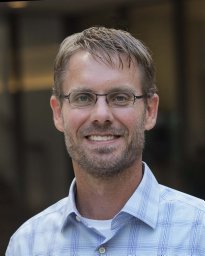 David G. Groves合作论文数National Refractory Angina Centre, Royal Liverpool University Hospital Trust24
 Steven C. Bankes合作论文数21
 Debra Knopman合作论文数15
 Klaus Keller合作论文数Thayer School of Engineering, Thayer School of Engineering14
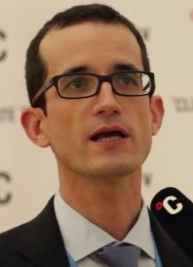 Stephane Hallegatte合作论文数World Bank Group13Jordan R. Fischbach合作论文数COLUMBIA UNIVERSITY12
 Michael Schlesinger合作论文数Department of Atmospheric Sciences, School of Earth, Society, and Environment, College of Liberal Arts and Sciences, University of Illinois at Urbana-Champaign10Hackbarth Andrew D合作论文数9Robert T. Reville合作论文数7
 Lloyd Dixon合作论文数RAND CENTER FOR TERRORISM RISK MANAGEMENT POLICY7
 Tom LaTourrette合作论文数7Benjamin P. Bryant合作论文数RAND7
 Raffaele Vardavas合作论文数6Casey Brown合作论文数6Judy Lawrence合作论文数6David McInerney合作论文数Department of the Geophysical Sciences and6Mijere Christophe合作论文数6Sara Turner合作论文数5
 James K. Hammitt合作论文数School of Public Health, Harvard University5
 Suraje Dessai合作论文数Sustainability Research Institute, School of Earth and Environment, Faculty of Environment, University of Leeds5
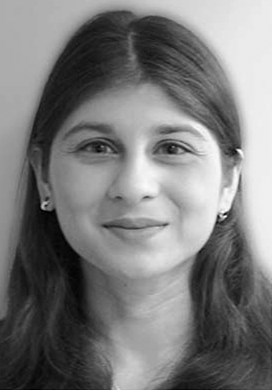 Nidhi Kalra合作论文数Carnegie Mellon University5
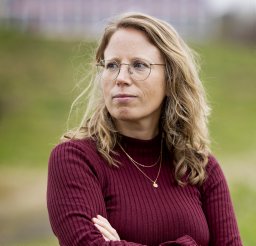 Marjolijn Haasnoot合作论文数University of Twente;Water Engineering and Management;Water Engineering and Management, University of Twente5Mark A. Bernstein合作论文数5
 Celine Guivarch合作论文数CIRED5david a robalino合作论文数4Sandra McBride合作论文数4Evan Bloom合作论文数4scott hassell合作论文数4horacio r trujillo合作论文数4
 Neeraj Sood合作论文数4Thomas Wilbanks合作论文数4
 Pedro Nascimento de Lima合作论文数4Ze Cong合作论文数4ankur shah合作论文数4
 David Vladimir Budescu合作论文数Department of Psychology, Fordham University4Popper, S.合作论文数4
 Dana Goldman合作论文数Leonard D. Schaeffer Center for Health Policy and Economics, University of Southern California4
 David Keith合作论文数Kennedy School, Harvard University;John A.Paulson School of Engineering and Applied Sciences, Harvard University;Carbon Engineering4
 Italo Gutierrez合作论文数4Alexander Lotsch合作论文数4Tom Kram合作论文数4
 Darius Lakdawalla合作论文数Leonard D. Schaeffer Institute for Public Policy & Government Service, University of Southern California;Schaeffer Center for Health Policy and Economics, University of Southern California4Gregory F. Treverton合作论文数4
 Brian C. O'Neill (Brian O'Neill)合作论文数Joint Global Change Research Institute;University of Maryland, College Park;Pacific Northwest National Laboratory4Beth E. Lachman合作论文数4
 Stephen Broomell合作论文数Department of Psychological Sciences, College of Health and Human Sciences, Purdue University4
 Kenneth Strzepek合作论文数Department of Civil;Architectural Engineering , and Environment and Behavior Program;Institute for Behavioral Science;University of Colorado;Institute for Behavioral Science, University of Colorado4
 Hadi Dowlatabadi合作论文数University of British Columbia4




