This chapter gives an overview of the tidal flat and coastal wetland restoration efforts in Europe as well as other parts of the world. It also explains various environmental policies, international agendas and initiatives that have encouraged natural restoration. This chapter also introduces some of the statistics related to the drive for restoration activities; for example, since 1900, 63% of all natural coastal wetlands have been destroyed, and the rate of loss in the twenty-first century is 4.2 times faster than long-term rates of loss. The discussion then leads into the current international agreements on coastal environment protection and conservation, such as those in the Sustainable Development Goals, the Convention on Biological Diversities and the Paris Climate Change Agreement.This chapter reviews the status and trends of coastal wetland loss and describes some of the restoration efforts that have been implemented in response to this loss. It places wetland restoration, and the potential to deliver multiple benefits and outcomes, within the context of various international agendas and initiatives. The barriers to uptake are reviewed and suggestions are presented on how coastal wetland restoration can become more widespread in the future.
This chapter explores the perceptions of local citizens through face-to-face interviews and questionnaire responses from the Steart Coastal Management Project in Somerset, UK. Both sampling approaches reveal interesting disconnects between how environmental organisations explained the benefits of the project to the public and how local people perceived the project from their perspectives.
Substantial amounts of money have been invested in peatland restoration over the last decades to address the current challenges of global changes and to enhance biodiversity. Given the magnitude of financial investments and the pressing societal needs, it is essential that appropriate decisions are made about the restoration techniques employed to avoid negative consequences and to optimise the benefits to human society. Based on the knowledge and expertise that has been developed over recent decades, three approaches to peatland restoration are discussed regarding their implications for climate change, nutrient fluxes and biodiversity: peatland inundation, topsoil removal and slow rewetting. Considered over the long term, for instance tens or hundreds of years, rewetted peatlands have the potential to fulfil multiple restoration goals, including those targeting climate change mitigation, water quality protection and species conservation. In short term, ill-informed decisions on the approach to peatland restoration can generate negative impacts, for instance on the downstream water quality or radiative forcing gas emissions. Synthesis and application. The restoration of peatlands, and the trajectory that any restorative action may take, is a matter of societal choice; however, it is essential that society understands the broad potential benefits and disadvantages that such restoration may have so that evidence-based choices can be made.
Integrated Constructed Wetlands (ICWs) are potentially effective tools in the effort to restore aquatic ecosystems, and also they incorporate multiple co-benefits. An ICW was constructed in Norfolk, UK, to address the degradation of a stream and lake receiving treated effluent from a small Sewage Treatment Works (STW). Results demonstrated that: (1) nutrient concentrations significantly reduced from the ICW influent to the effluent (percentage reductions: total phosphorus [TP]: 78%, orthophosphate: 80%, total oxidised nitrogen [TON]: 65%, nitrate: 65%, nitrite: 67%, ammoniacal nitrogen: 62%), and mean dissolved oxygen concentrations increased (influent mean: 6.4 ± 1.4 mg l −1 effluent mean: 17.8 ± 3.3 mg l −1 ), (2) there were non-significant reductions in nutrient concentrations in the receiving stream (percentage reductions: TP: 23%, orthophosphate: 23%, TON: 26%, nitrate: 26%), with the exception of ammoniacal nitrogen (127% increase) and nitrite (76%) after ICW commissioning, and (3) mean in situ avian species richness increased from 10 to 27 species. Thus, the ICW substantially reduced nutrient concentrations, and had in situ conservation benefits. It is recommended that appropriately designed ICWs should be implemented widely and statutory authorities should ensure: 1) best-practice maintenance and 2) final effluent monitoring at both the STW and at the ICW outflows.
However strong the scientific and ethical case for the conservation of wetlands and their associated biodiversity and capacities to support human livelihoods, practical conservation and management depends upon a number of drivers. In this regard, “regulation”Regulation has a far broader meaning than purely the enactment of legislation. Indeed, statutory obligations may be poorly observed or poorly enforced, or may be practically unenforceable, in many territories, particularly in the developing world. The wider formal and informal policy environment, referred to collectively as societal levers, comprises statutory legislation, common/civil law, markets, market-based instruments, and both formal and informal protocols evolved as a fragmented policy environment of incentives and constraints influencing the freedoms of and rewards to resource owners and managers. Harmonisation of these societal levers with higher level sustainable aspirations is necessary to influence landowner or land manager decision-making at a local scale.
A Resolution agreed in October 20918 at CoP of the Ramsar Convention on Wetlands - Resolution XIII.17: Rapidly assessing wetland ecosystem services - on a method for the rapid assessment of wetland ecosystem services
Historical fluvial flood management practices have largely focused on reducing flooding and reducing the susceptibility to flood damage. Traditional flood management has employed structural and nonstructural interventions as well as physical and institutional interventions. However, increasingly the potential to apply land management options, and in particular the management of wetlands, is being investigated as part of flood risk management practices.
The Ramsar Convention promotes the wise use of wetlands as a fundamental tenet behind the desire to stop and reverse the loss and degradation of wetlands. The concept of wise use has been formally defined as the maintenance of ecological character, of which ecosystem services form an integrated element. The Contracting Parties to the Convention submit formal National Reports (NRs) before the triennial Conference of Parties in order to report on progress towards implementation. The information contained in the National Reports submitted for the eleventh Conference of Parties (Bucharest, 2012) has been reviewed in order to assess progress made on understanding of and reporting on wetland ecosystem services. Notwithstanding concerns regarding the pedigree and utility of the information reported through the NRs, the review has demonstrated reporting on the benefits provided by Ramsar Sites is limited, that regional differences exist in the reporting on ecosystem services and that some ecosystem services are more frequently reported than others. Based on this evaluation recommendations for the future development of guidance for integrating assessment of wetland ecosystem services are proposed.
 Mark Everard合作论文数Westfield College, The University of London7
 Nick C Davidson合作论文数3
 Sasha Alexander合作论文数2
 Hiromi Yamashita (山下弘巳)合作论文数Division of Materials and Manufacturing Science, Graduate School of Engineering, Osaka University2
 Max Finlayson合作论文数AEnvironmental Research Institute;BInternational Water Management Institute2
 Anis Guelmami合作论文数1Christian Perennou合作论文数1Rory Harrington合作论文数1Jonah Tosney合作论文数1
 Elie Gaget合作论文数Univ Turku, Univ Hill1
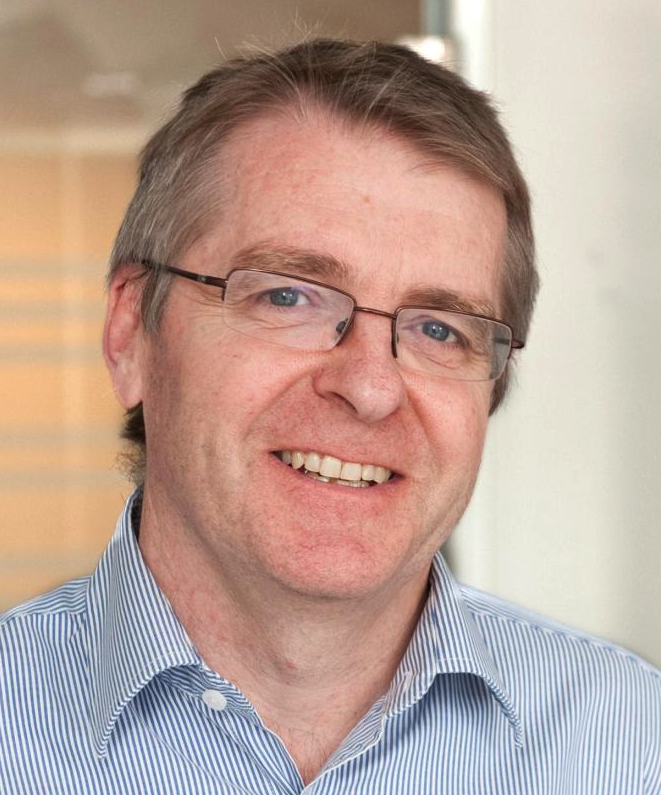 Ken Irvine合作论文数Department of Water Resources and Ecosystems, IHE Delft1
 Edward Maltby合作论文数1
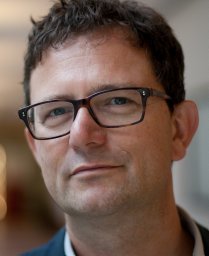 Anne van Dam合作论文数Brown University1
 Dominik Zak合作论文数Leibniz-Institute of Freshwater;Ecology and Inland Fisheries;Ecology and Inland Fisheries, Leibniz-Institute of Freshwater1Hazem Gouda合作论文数Pennine Water group;University of Sheffield;Pennine Water group, University of Sheffield1
 Matthew Simpson合作论文数1
 Thomas Galewski合作论文数1
 I.R. Geijzendorffer合作论文数Alterra, Wageningen UR1
 Royal Gardner合作论文数1
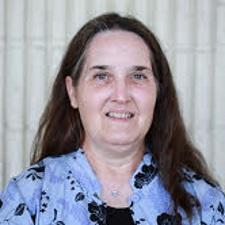 Beth A Middleton合作论文数US Geological Survey1




