For at least the past half-century, Americans have been committed to a "free speech principle," holding that speech is to be encouraged because it serves to produce knowledge, to enable the development of personal autonomy, and to facilitate the self-governance of the nation. In this essay, I argue that any such abstract free speech principle is fundamentally misguided. The value of speech is instead the value of the social practice within which speech occurs. Speech is to be encouraged when it advances the purpose of the social practice in which it is embedded. For constitutional purposes, the most important social practice established by communication is the public sphere, whose development in the eighteenth century made possible democratic self-governance. The health of a democracy depends upon whether its public sphere can produce a public opinion capable of legitimating the state. This turns on the quality of a nation's politics, not on the quantity of its speech. Americans who conceptualize the current crisis as requiring rededication to the free speech principle thus essentially misdiagnose the nature of our contemporary emergency. We need to repair our politics, not our speech.
Courts and commentators write as if the speech of K-12 students were endowed with full First Amendment protection, save in narrow circumstances when it is reasonably foreseeable that the speech will cause substantially disruption or materially interfere with the rights of others, when it is vulgar or lewd, when it involves school sponsored communication, or when it advocates for illegal drug use. But even the most superficial observation of student classroom expression reveals the fictional nature of this perspective. Student speech in classrooms is comprehensively and routinely subject to forms of regulation that violate the most elementary rules of what the Court has called “ordinary First Amendment standards.” Student classroom speech is controlled by official discretion; it is compelled; it is constrained by content and viewpoint discrimination; it is subject to prior restraints.The goal of this article is to offer a constitutional account of student speech that can explain the contours of its actual regulation. Ordinary First Amendment standards are designed to protect participation in what the Court has called “the market of public opinion.” This market must remain perpetually free from state control so that, in the Court’s words, government authority can “be controlled by public opinion, not public opinion by authority.” The goal is to ensure that the state remain continuously responsive to “that public opinion which is the final source of government in a democratic state.”Often government responds to popular will by creating institutions charged with implementing specific tasks. Government creates courts to apply justice or agencies to administer the social security system. It would be counterproductive in such circumstances to insist on the open-endedness that ordinary First Amendment standards are designed to protect. Instead mission-driven state institutions must effectively control the speech of those within the scope of their authority so that they can achieve their assigned objectives.K-12 schools are mission-driven institutions of this kind. They are created to educate students. They are therefore empowered to regulate student speech to achieve the objective of education. Courts debate the nature of this objective. Case law reveals at least three different conceptions of the constitutional objective of education. The paper denominates these as democratic education, civic education, and critical education. Each distinct account of the educational mission of schools implies a different structure for the regulation of student speech. Courts also differ about whether courts should defer to school regulation of student speech or instead whether they should scrutinize it using independent judicial review. Much can be learned about the actual geography of student speech rights by systematically exploring the implications of these basic distinctions.The article also evaluates how courts conceive the nature, scope, and force of school managerial authority. That authority receives highly deferential review insofar as students seek to speak qua students. But insofar as students seek to speak qua citizens, the paper assesses the variables and doctrine used by courts to weigh the prerogatives of school managerial authority against the free speech rights of students. Of particular concern in the past several years has been the efforts of schools to control off-campus student speech that might potentially undermine school functioning.The paper argues that the general framework of speech regulation within managerial government organizations offers a coherent, consistent, and convincing way to explain the complexities of our actual constitutional jurisprudence of student speech. It seeks to substitute that cogent perspective for the fictional appeals to fictional rights that too often dominate contemporary scholarly and judicial discussion of student speech.
In this academic interview, Yale law professor Robert C. Post elucidates the distinction between freedom of expression and academic freedom, emphasizing that universities are communities guided by the twin missions of education and knowledge production. At their best, universities function as ‘disciplinary communities’ who must act in professionally competent ways. Post characterizes academic freedom as a ‘two-faced coin’. On the one hand, academic freedom embodies the values and principles essential for the governance of a healthy university community; on the other hand, it shields universities from external regulations that might hinder their mission of advancing education and research. Post also addresses the significant challenges to freedom of expression posed by the cosmopolitan public sphere, particularly in the age of social media and AI. As a trustee of Meta’s Oversight Board, Post highlights the complex issue of harmful speech online, noting that it is not only a matter of scale but also of scale, producing harms that are stochastic in nature.
In the recent case of 303 Creative v. Elenis, the Court held that the First Amendment precludes the application of a Colorado public accommodations statute to a potential designer of wedding websites (Lorie Smith) who proactively objected to working for clients involved in same-sex weddings. At stake in the opinion is the important question of how antidiscrimination statutes can be reconciled with the First Amendment. Gorsuch structured his opinion for the Court on the basis of a simple syllogism. The major premise of the syllogism is that the Smith’s websites would be “pure speech”; the minor premise is that the First Amendment forbids the compulsion of “pure speech.” The conclusion is that Colorado could not apply an antidiscrimination statute to compel Smith to work for clients who would require her to produce websites that she would rather not construct.Although “pure speech” is not a well-defined First Amendment concept, Gorsuch seeks to establish the major premise of his syllogism on the basis of stipulations to which the parties in 303 Creative agreed. These stipulations are both tendentious and extensive, taken almost verbatim from Smith’s complaint. The article closely examines these stipulations to show that in 303 Creative Gorsuch defines “pure speech” to consist of bespoke words, images or symbols that are designed to communicate and that reflect a vendor’s own speech. It argues that, absent the parties’ stipulations, Smith’s websites likely should not have been characterized as this kind of pure speech.The article then examines the minor premise of the 303 Creative syllogism. It shows that (1) The premise inaccurately summarizes First Amendment doctrine; (2) The premise effectively undermines all public accommodation laws, which can be enforced only if vendors are required to offer equal treatment to customers regardless of race, sex or sexual orientation. This requirement will inevitably compel vendors to engage in “pure speech”; (3) Pure speech is routinely compelled if it is commercial speech; (4) Pure speech cannot be compelled if it is public discourse; and (5) 303 Creative should thus have turned on the question of whether Smith’s websites are properly characterized as commercial speech or as public discourse. As written, 303 Creative is so abstract and overreaching that it will empower lower courts to mutilate public accommodations laws at will. The likely outcome is that 303 Creative will be erratically applied in ways that reflect the antecedent political ideology of courts. The Supreme Court itself exemplified this problem by not applying the reasoning of 303 Creative to its own decision in Students for Fair Admissions (“SFA”) v. President and Fellows of Harvard, where it used an antidiscrimination statute (Title VI) to alter educational messages that an expressive association (Harvard University) sought to communicate. Much of the confusion of 303 Creative likely stems from the Court’s implicit transfer of concepts applicable to Free Exercise claims to the distinct and inappropriate context of free speech jurisprudence.
This paper addresses the unique dangers posed to democracy by the emergence of digital information and the internet. It argues that the distribution of digital information over the internet is distinct from all prior forms of mass communication in three ways: (1) Digital information is disseminated with virtually zero marginal cost. It has thus created a virtual public sphere whose scale, virality, and cosmopolitanism differs from the traditional public sphere. (2) Digital information is distributed through phones and hence has become integrated into the practices of everyday life in unprecedented ways. (3) Mass communication in the past featured one-way communication, but the internet created forms of communication (like Meta) that are interactive. Communication on the internet is frequently akin to forms of traditional gossip that stress the distinction between insiders and outsiders. The paper argues that, taken together, these three differences pose six novel dangers to democracy: 1. Epistemological Authority. The easy availability of cheap information has democratized epistemological authority. In the 15th Century, the invention of printing undermined religious epistemological authority, producing the Reformation and a century of political instability. In the 21st Century, the democratization of epistemological authority undermines the ability of society to establish common facts. 2. Public Reason: The virality of the internet threatens to convert publics into crowds, which undermines the potential for the kind of public reason required for democracy to function.3. Stochastic Harm. The scale of the internet means that harms can no longer be determined by any simple model of linear causality. Harms are now stochastic in nature. We lack any jurisprudential model of how to avoid such harms without drastically over-regulating speech.4. The Public/Private Distinction. Because democracy requires freedom to participate in the formation of public opinion, most modern legal systems offer greater protections to speech about public matters than to purely private speech. The internet unsettles the basic architecture of most received models of freedom of speech by obscuring the distinction between public and private speech. 5. Cosmopolitanism. Most legal systems protect freedom of speech so that government can be responsive to national public opinion. By potentially substituting a cosmopolitan public sphere for a national public sphere, the internet undermines this form of analysis.6. Law and AI. The scale of the internet precludes regulation according to law, yet we presently lack the means politically to legitimate regulation by AI. No democracy can cede the governance of its public sphere to forms of control that lack legitimacy.
The Taft Court offers the definitive history of the Supreme Court from 1921 to 1930 when William Howard Taft was Chief Justice. Using untapped archival material, Robert C. Post engagingly recounts the ambivalent effort to create a modern American administrative state out of the institutional innovations of World War I. He shows how the Court sought to establish authoritative forms of constitutional interpretation despite the culture wars that enveloped prohibition and pervasive labor unrest. He explores in great detail how constitutional law responds to altered circumstances. The work provides comprehensive portraits of seminal figures such as Oliver Wendell Holmes Jr. and Louis Dembitz Brandeis. It describes William Howard Taft's many judicial reforms and his profound alteration of the role of Chief Justice. A critical and timely contribution, The Taft Court sheds light on jurisprudential debates that are just as relevant today as they were a century ago.
First Amendment doctrine disfavoring compelled speech originated in 1943 in West Virginia State Board of Education v. Barnette. There are good and convincing explanations for the Court's decision in Barnette, but the Court's recent expansion of the doctrine, culminating in National Institute of Family & Life Advocates (NIFLA) v. Becerra, holds that compelled speech is in most instances "content-based" regulation requiring heightened judicial scrutiny. Using examples ranging from professional malpractice to compulsory tax returns, this Article argues that the doctrinal rule of NIFLA is demonstrably incorrect. It suggests that the doctrinal category of "compelled speech" may itself be confused insofar as it imagines that all legal obligations to communicate are equally disfavored under the Constitution. Courts should scrutinize instances of compelled speech as necessary to protect threatened constitutional values, but the presence of these values will vary depending upon social context. Courts must learn to read the constitutional geography implicit in distinct social landscapes. This Article offers some hints for how this might be done. Applying these insights to NIFLA, the Article argues that the outcome of the case actually depended upon preconscious and undefended suppositions about social context. Constitutional decisions like NIFLA can be made persuasive only if such suppositions are made explicit and justified.
The right of publicity protects persons against unauthorized uses of their identity, most typically their names, images, or voices. The right is in obvious tension with freedom of speech. Yet courts seeking to reconcile the right with the First Amendment have to date produced only a notoriously confused muddle of inconsistent constitutional doctrine. In this Article, we suggest a way out of the maze. We propose a relatively straightforward framework for analyzing how the right of publicity should be squared with First Amendment principles. At the root of contemporary constitutional confusion lies a failure to articulate the precise state interests advanced by the right of publicity. We seek to remedy this deficiency by disaggregating four distinct state interests that the right of publicity is typically invoked to protect. We argue that in any given case the right of publicity is characteristically invoked to protect (one or more) of these four interests: the value of a plaintiff's performance, the commercial value of a plaintiff's identity, the dignity of a plaintiff, or the autonomous personality of a plaintiff. Plaintiffs' interests in their identity must always be weighed against defendants' constitutional interests in their speech. We therefore isolate three constitutional kinds of communication, each with a distinct form of First Amendment protection. A defendant's misappropriation of a plaintiff's identity can occur in public discourse, in commercial speech, or in what we call "commodities." We then discuss how constitutional protections for these three kinds of speech should intersect with the four different interests that right of publicity claims are typically invoked to protect. The upshot is not a mechanical algorithm for producing correct constitutional outcomes, but an illumination of the constitutional stakes at issue in any given right of publicity action. We hope that by carefully surfacing the constitutional and policy stakes that beset the conflict between right(s) of publicity and the First Amendment, we have sketched a map that might substantially assist those who must navigate this tumultuous terrain.
Journal of Supreme Court HistoryVolume 45, Issue 3 p. 287-307 ARTICLE Willis Van Devanter: Chancellor of the Taft Court ROBERT POST, ROBERT POSTSearch for more papers by this author ROBERT POST, ROBERT POSTSearch for more papers by this author First published: 08 December 2020 https://doi.org/10.1111/jsch.12248Read the full textAboutPDF ToolsRequest permissionExport citationAdd to favoritesTrack citation ShareShare Give accessShare full text accessShare full-text accessPlease review our Terms and Conditions of Use and check box below to share full-text version of article.I have read and accept the Wiley Online Library Terms and Conditions of UseShareable LinkUse the link below to share a full-text version of this article with your friends and colleagues. Learn more.Copy URL Share a linkShare onFacebookTwitterLinked InRedditWechat Volume45, Issue3November 2020Pages 287-307 RelatedInformation
This article is excerpted from the forthcoming Volume X of the Oliver Wendell Holmes Devise History of the Supreme Court of the United States, which covers the period 1921-1930 when William Howard Taft was Chief Justice. The article will be published in an upcoming issue of the Journal of Supreme Court History. The article offers for the first time a detailed account of the process by which William Howard Taft authored his pathbreaking opinion in Myers v. United States, the first Supreme Court decision ever to hold a statute of Congress unconstitutional because incompatible with Article II prerogatives of the President. The decision was six to three, featuring strong dissents by Brandeis, McReynolds, and Holmes. Using archival sources, the article discusses competing views within Taft’s majority coalition of six, as well as Taft’s own independent views about the question of the presidential power of removal. Analyzing the reasoning of Myers in detail, the article argues that the decision is neither an example of originalism, as Justice Antonin Scalia has claimed, nor is it compatible with contemporary understandings of the “unitary” executive.
Norms of privacy are grounded in social practices. When social practices are unsettled and rapidly evolving, as they are in digital space, these norms are subject to confusion and uncertainty. A good example is the recent decision of Court of Justice of the European Union (CJEU) in Google Spain SL v. Agencia Española de Protección de Datos (AEPD) (“Google Spain”), which created the “right to be forgotten.” The CJEU derived the right to be forgotten from Directive 95/46/EC (“Directive”), which is arguably the most influential privacy document in the world. The Directive imagines digital data as stored in a space of instrumental reason, as it is when data is compiled and processed by large bureaucratic organizations. The Directive protects data privacy in order to maximize the control of data by data subjects. But the CJEU applied the right to be forgotten to public discourse in the public sphere. The instrumental logic of data privacy is inappropriate to the communicative action of the public sphere, as is the value of “control.” Instead the CJEU should have conceptualized the right to be forgotten to safeguard the dignitary privacy that courts have applied to public discourse for more than a century. Dignitary privacy ensures civility within public debate. It focuses on communicative acts, rather than data. And it requires an assessment of harm to public discourse. All of these concepts are foreign to the analytic framework of data privacy. The CJEU’s confusion between data privacy and dignitary privacy leads to inconsistencies and logical deficiencies in its opinion, which are unlikely to have occurred were the court to have focused on the ordinary print media of the public sphere.
 Reva Siegel合作论文数Law, Yale Law School3
 Jennifer E. Rothman合作论文数1
 Jordi Pujol合作论文数1Reva B. Siegel合作论文数1K. Sullivan合作论文数1Amanda Shanor合作论文数Wharton Sch, Univ Penn1
 Neil S. Siegel合作论文数Department of Political Science, Trinity College of Arts & Sciences, Duke University1
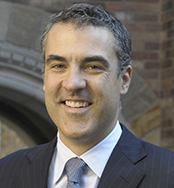 John Fabian Witt合作论文数Yale Law School, Yale University1
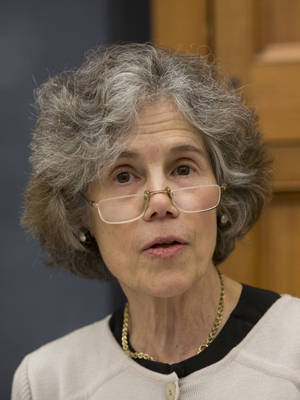 Judith Resnik合作论文数Yale Law School, Yale University;Arthur Liman Center for Public Interest Law1
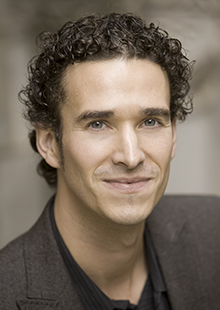 Douglas Kysar合作论文数Yale Law School, Yale University1
 Harold Hongju Koh合作论文数Yale Law School, Yale University1
 Amy Kapczynski合作论文数Yale Law School, Yale University1
 Will Kymlicka合作论文数Department of Philosophy, Queen's University1Marta Cartabia合作论文数1Eric Barendt合作论文数1
 Seyla Benhabib合作论文数Department of Political Science , Yale University;Columbia Law School1
 Bonnie Honig合作论文数Department of Religious Studies, Brown University;Department of Theatre Arts and Performance Studies, Brown University;Department of Political Science, Brown University;Department of Modern Culture and Media, Brown University1
 Douglas Nejaime合作论文数1
 Andras Sajo合作论文数1




