The development of digital linguistic resources is essential for enhancing the inclusion of indigenous and marginalized languages in the digital domain. Indigenous languages of Mexico, despite representing vast typological diversity and millions of speakers, have largely been overlooked in NLP until recently. In this paper, we present a corpus of audio and annotated transcriptions of Western Sierra Puebla Nahuatl, an endangered variety of Nahuatl spoken in Puebla, Mexico. The data made available in this corpus are useful for ASR, spelling normalization, and word-level language identification. We detail the corpus-creation process, and describe experiments to report benchmark results for each of these important NLP tasks. The corpus audio and text is made freely available.(1)
This paper presents the findings of the AmericasNLP 2025 Shared Tasks: (1) machine translation for truly low-resource languages, (2) morphological adaptation for generating educational examples, and (3) developing metrics for machine translation in Indigenous languages. The shared tasks cover 14 diverse Indigenous languages of the Americas. A total of 12 teams participated, submitting 27 systems across all tasks, languages, and models. We describe the shared tasks, introduce the datasets and evaluation metrics used, summarize the baselines and submitted systems, and report our findings.
We introduce the first dependency treebank containing Universal Dependencies (UD) annotations for Spanish learner writing from the UC Davis COWSL2H corpus. Our annotations include lemmatization, POS tagging, and syntactic dependencies. We adapt the existing UD framework for Spanish L1 to account forlearner-specific features such as code-switching and non-canonical syntax. A suite of parsing evaluation experiments shows that parsers trained on learner data together with moderate sizes of Spanish L1 data can yield reasonable performance. Our annotations are openly accessible to motivate future development of learner-oriented language technologies.
This work presents Py-Elotl, a suite of tools and resources in Python for processing text in several indigenous languages spoken in Mexico. These resources include parallel corpora, linguistic taggers/analyzers, and orthographic normalization tools. This work aims to develop essential resources to support language pre-processing and linguistic research, and the future creation of more complete downstream applications that could be useful for the speakers and enhance the visibility of these languages. The current version supports language groups such as Nahuatl, Otomi, Mixtec, and Huave. This project is open-source and freely available for use and collaboration(1).
Linguistic variation is a complicating factor for digital language technologies. This is particularly true for languages that lack an official "standard" variety, including many regional and minoritized languages. In this paper, we describe a set of experiments focused on multivariant natural language processing for Nahuatl, an indigenous Mexican language with a high degree of linguistic variation and no single recognized standard variant. Using small (10k tokens), recently-published annotated datasets for two Nahuatl variants, we compare the performance of single-variant, cross-variant, and joint training, and explore how different models perform on a third Nahuatl variant, unseen in training. These results and the subsequent discussion contribute to efforts of developing low-resource NLP that is robust to diatopic variation. We share all code used to process the data and run the experiments.
We present a Universal Dependencies (UD) treebank for Highland Puebla Nahuatl1. The treebank is only the second such UD corpus for a Mexican language, and supplements an existing treebank for another Nahuatl variant. We describe the process of data collection, annotation decisions and interesting syntactic constructions, and discuss some similarities and differences between the Highland Puebla Nahuatl treebank and the existing Western Sierra Puebla Nahuatl treebank.
This paper describes an ongoing effort to create, from the original hand-written text, a machine-readable, linguistically-annotated, and easily-searchable corpus of the Nahuatl portion of the Florentine Codex, a 16 th century Mesoamerican manuscript written in Nahuatl and Spanish.The Codex consists of 12 books and over 300,000 tokens.We describe the process of annotating 3 of these books, the steps of text preprocessing undertaken, our approach to efficient manual processing and annotation, and some of the challenges faced along the way.We also report on a set of experiments evaluating our ability to automate the text processing tasks to aid in the remaining annotation effort, and find the results promising despite the relatively low volume of training data.Finally, we briefly present a real use case from the humanities that would benefit from the searchable, linguistically annotated corpus we describe.
This paper describes the development of a free/open-source finite-state morphological transducer for Highland Puebla Nahuatl, a Uto-Aztecan language spoken in the state of Puebla in Mexico. 1 The finite-state toolkit used for the work is the Helsinki Finite-State Toolkit (HFST); we use the lexc formalism for modelling the morphotactics and twol formalism for modelling morphophonological alternations.An evaluation is presented which shows that the transducer has a reasonable coverage-around 90%-on freely-available corpora of the language, and high precisionover 95%-on a manually verified test set.
We describe a suite of finite-state language technologies for Maya, a Mayan language spoken in Mexico.At the core is a computational model of Maya morphology and phonology using a finite-state transducer. 1 This model results in a morphological analyzer and a morphologically-informed spell-checker.All of these technologies are designed for use as both a pedagogical reading/writing aid for L2 learners and as a general language processing tool capable of supporting much of the natural variation in written Maya.We discuss the relevant features of Maya morphosyntax and orthography, and then outline the implementation details of the analyzer.To conclude, we present a longer-term vision for these tools and their use by both native speakers and learners.
Orthographical standardization is a milestone in a language’s documentation and the development of its resources. However, texts written in former orthographies remain relevant to the language’s history and development and therefore must be converted to the standardized orthography. Ensuring a language has access to the orthographically standardized version of all of its recorded texts is important in the development of resources as it provides additional textual resources for training, supports contribution of authors using former writing systems, and provides information about the development of the language. This paper evaluates the performance of natural language processing methods, specifically Finite State Transducers and Long Short-term Memory networks, for the orthographical conversion of Bàsàá texts from the Protestant missionary orthography to the now-standard AGLC orthography, with the conclusion that LSTMs are somewhat more effective in the absence of explicit lexical information.
We present a morpho-syntactically-annotated corpus of Western Sierra Puebla Nahuatl that conforms to the annotation guidelines of the Universal Dependencies project. We describe the sources of the texts that make up the corpus, the annotation process, and important annotation decisions made throughout the development of the corpus. As the first indigenous language of Mexico to be added to the Universal Dependencies project, this corpus offers a good opportunity to test and more clearly define annotation guidelines for the Mesoamerican linguistic area, spontaneous and elicited spoken data, and code-switching.
In this paper, we describe an in-progress, free and open-source Finite-State Transducer morphological analyzer for an understudied Nahuatl variant. We discuss our general approach, some of the technical implementation details, the challenges that accompany building such a system for a low-resource language variant, the current status and performance of the system, and directions for future work.
We describe experiments with character-based language modeling for written variants of Nahuatl. Using a standard LSTM model and publicly available Bible translations, we explore how character language models can be applied to the tasks of estimating mutual intelligibility, identifying genetic similarity, and distinguishing written variants. We demonstrate that these simple language models are able to capture similarities and differences that have been described in the linguistic literature.
 Francis M. Tyers合作论文数Department of Linguistics, College of Arts and Sciences, Indiana University14
 Yao Qian合作论文数Microsoft5
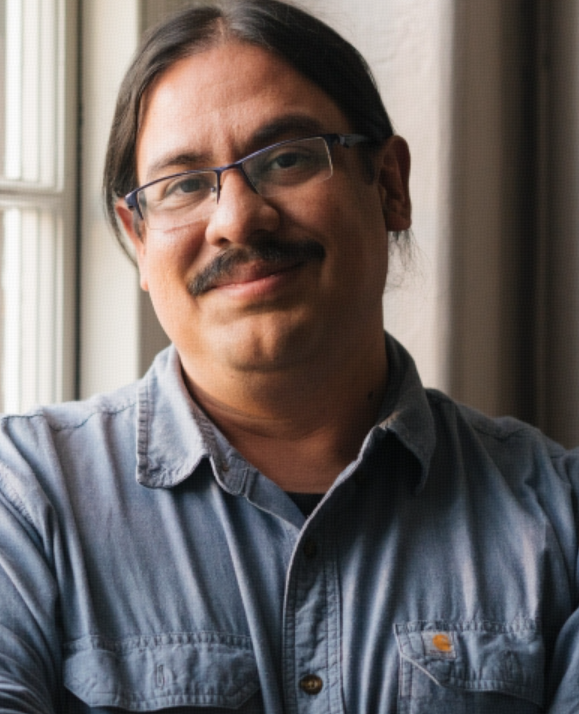 Rolando Coto-Solano合作论文数Department of Linguistics, Dartmouth College4
 Manuel Mager合作论文数Amazon Web Services4
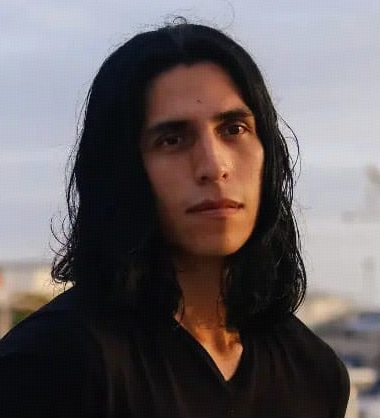 Arturo Oncevay合作论文数JPMorgan Chase & Co.4
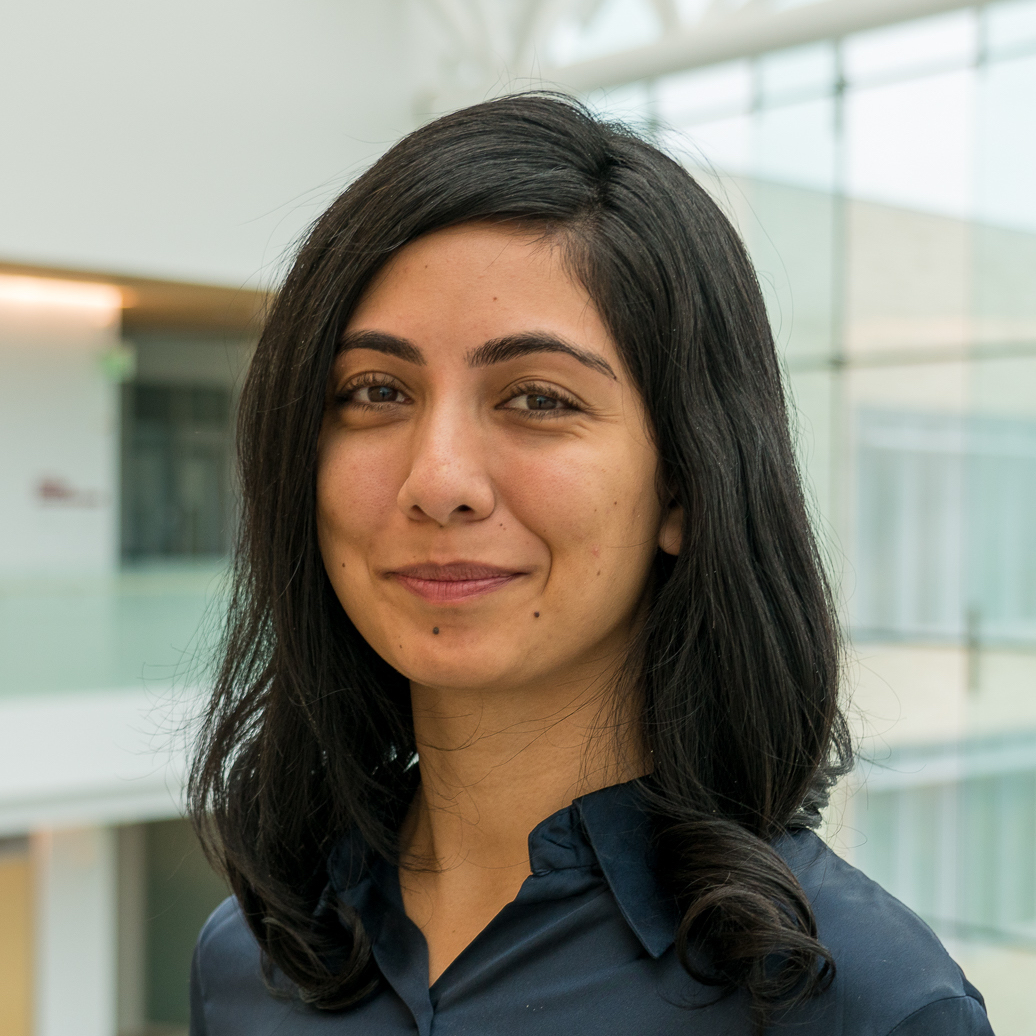 Shruti Rijhwani合作论文数Google DeepMind4
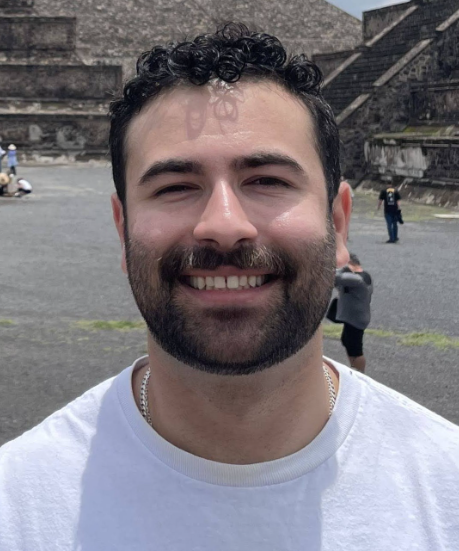 Abteen Ebrahimi合作论文数University of Colorado Boulder4Keelan Evanini合作论文数ETS Research4
 Rutuja Ubale合作论文数Educ Testing Serv Res, Princeton, NJ 08541 USA3
 Luis Hernán Chiruzzo Alonso合作论文数Instituto de Computación, Facultad de Ingeniería, Universidad de la República3
 Patrick Lange合作论文数Educational Testing Service3
 Pavel Denisov合作论文数Fraunhofer IAIS3
 Vikram Ramanarayanan合作论文数Educ Testing Serv R&D3Katharina von der Wense合作论文数2
 David Suendermann-Oeft合作论文数Educational Testing Service San Francisco CA2
 Ona de Gibert Bonet合作论文数Department of Digital Humanities, Faculty of Arts, University of Helsinki2
 Matthew Mulholland合作论文数Princeton University2
 Marvin Matías Agüero-Torales合作论文数Fujitsu;Cidit2
 Frank K. Soong合作论文数Microsoft Research Asia2
 Raúl Vázquez合作论文数Department of Languages, University of Helsinki2Angeles Marquez Hernandez合作论文数1Maria Ximena Juarez Huerta合作论文数1Cheyenne Wing合作论文数1
 Emiliana Pulido合作论文数Department of Linguistics, University of Florida1
 Enora Rice合作论文数NALA Lab, University of Colorado Boulder;LECS Lab, University of Colorado Boulder1
 Aldo Alvarez合作论文数1Dovid Becker合作论文数1Alexandra O'Neil合作论文数1
 Emmanuel Ngue Um合作论文数1Adam Bacall合作论文数1Daniel G. Swanson合作论文数Swarthmore Coll1
 David Ifeoluwa Adelani合作论文数University College London;School of Computer Science, McGill University1
 Hillary Molloy合作论文数Educational Testing Service San Francisco CA1
 Ruben Manrique合作论文数Univ Los Andes, Syst & Comp Engn Dept, Bogota, Colombia1
 Brian Riordan合作论文数Aptima, Inc.1
 Joseph A. Rios合作论文数University of Massachusetts Amherst (USA).1
 Ximena Gutierrez-Vasques合作论文数Centro de Investigaciones Interdisciplinarias en Ciencias y Humanidades, Universidad Nacional Autónoma de México;Facultad de Ciencias, Universidad Nacional Autónoma de México;Elotl-MX1
 Víctor Mijangos合作论文数Facultad de Ciencias, National Autonomous University of Mexico;Facultad de Ingenieria, National Autonomous University of Mexico1Guangming Ling合作论文数1
 Zoey Liu合作论文数Computational Linguistics Lab, Department of Linguistics, University of Florida1
 Aoife Cahill合作论文数Bloomberg1
 Robert Henderson合作论文数Center for Latin American Studies, College of Social & Behavioral Sciences, The University of Arizona;Department of Linguistics, University of Arizona1
 Michael A. Flor合作论文数Educational Testing Service, Princeton, NJ1
 Xinhao Wang合作论文数School of Planning, University of Cincinnati;The Joint Center of Geographic Information Systems and Spatial Analysis, University of Cincinnati1
 John E. Ortega合作论文数Columbia University in the City of New York;Courant Institute of Mathematical Sciences, New York University;La Universidad de Santiago de Compostela;Lexi;Reulay Inc1




