To achieve equitable performance across languages, multilingual large language models (LLMs) must be able to abstract knowledge beyond the language in which it was acquired. However, the current literature lacks reliable ways to measure LLMs' capability of cross-lingual knowledge transfer. To that end, we present ECLeKTic, a multilingual closed-book QA (CBQA) dataset that Evaluates Cross-Lingual Knowledge Transfer in a simple, black-box manner. We detected information with uneven coverage across languages by controlling for presence and absence of Wikipedia articles in 12 languages. We generated knowledge-seeking questions in a source language, for which the answer appears in a relevant Wikipedia article and translated them to all other 11 languages, for which the respective Wikipedias lack equivalent articles. Assuming that Wikipedia reflects the prominent knowledge in the LLM's training data, to solve ECLeKTic's CBQA task the model is required to transfer knowledge between languages. Experimenting with 8 LLMs, we show that SOTA models struggle to effectively share knowledge across, languages even if they can predict the answer well for queries in the same language the knowledge was acquired in.
This paper presents the findings of the AmericasNLP 2025 Shared Tasks: (1) machine translation for truly low-resource languages, (2) morphological adaptation for generating educational examples, and (3) developing metrics for machine translation in Indigenous languages. The shared tasks cover 14 diverse Indigenous languages of the Americas. A total of 12 teams participated, submitting 27 systems across all tasks, languages, and models. We describe the shared tasks, introduce the datasets and evaluation metrics used, summarize the baselines and submitted systems, and report our findings.
As large language models (LLM) become more and more capable in languages other than English, it is important to collect benchmark datasets in order to evaluate their multilingual performance, including on tasks like machine translation (MT). In this work, we extend the WMT24 dataset to cover 55 languages by collecting new human-written references and post-edits for 46 new languages and dialects in addition to post-edits of the references in 8 out of 9 languages in the original WMT24 dataset. The dataset covers four domains: literary, news, social, and speech. We benchmark a variety of MT providers and LLMs on the collected dataset using automatic metrics and find that LLMs are the best-performing MT systems in all 55 languages. These results should be confirmed using a human-based evaluation, which we leave for future work.
In this report, we introduce the Gemini 1.5 family of models, representing the next generation of highly compute-efficient multimodal models capable of recalling and reasoning over fine-grained information from millions of tokens of context, including multiple long documents and hours of video and audio. The family includes two new models: (1) an updated Gemini 1.5 Pro, which exceeds the February version on the great majority of capabilities and benchmarks; (2) Gemini 1.5 Flash, a more lightweight variant designed for efficiency with minimal regression in quality. Gemini 1.5 models achieve near-perfect recall on long-context retrieval tasks across modalities, improve the state-of-the-art in long-document QA, long-video QA and long-context ASR, and match or surpass Gemini 1.0 Ultra's state-of-the-art performance across a broad set of benchmarks. Studying the limits of Gemini 1.5's long-context ability, we find continued improvement in next-token prediction and near-perfect retrieval (>99 as Claude 3.0 (200k) and GPT-4 Turbo (128k). Finally, we highlight real-world use cases, such as Gemini 1.5 collaborating with professionals on completing their tasks achieving 26 to 75 categories, as well as surprising new capabilities of large language models at the frontier; when given a grammar manual for Kalamang, a language with fewer than 200 speakers worldwide, the model learns to translate English to Kalamang at a similar level to a person who learned from the same content.
Effectively using Natural Language Processing (NLP) tools in under-resourced languages requires a thorough understanding of the language itself, familiarity with the latest models and training methodologies, and technical expertise to deploy these models. This could present a significant obstacle for language community members and linguists to use NLP tools. This paper introduces the CMU Linguistic Annotation Backend, an open-source framework that simplifies model deployment and continuous human-in-the-loop fine-tuning of NLP models. CMULAB enables users to leverage the power of multilingual models to quickly adapt and extend existing tools for speech recognition, OCR, translation, and syntactic analysis to new languages, even with limited training data. We describe various tools and APIs that are currently available and how developers can easily add new models/functionality to the framework. Code is available at https://github.com/neulab/cmulab along with a live demo at https://cmulab.dev
In this work, we present the results of the AmericasNLP 2023 Shared Task on Machine Translation into Indigenous Languages of the Americas. This edition of the shared task featured eleven language pairs, one of which – Chatino-Spanish – uses a newly collected evaluation dataset, consisting of professionally translated text from the legal domain. Seven teams participated in the shared task, with a total of 181 submissions. Additionally, we conduct a human evaluation of the best system outputs, and compare them to the best submissions from the prior shared task. We find that this analysis agrees with the quantitative measures used to rank submissions, which shows further improvements of 9.64 ChrF on average across all languages, when compared to the prior winning system.
Data scarcity is a crucial issue for the development of highly multilingual NLP systems. Yet for many under-represented languages (ULs) -- languages for which NLP re-search is particularly far behind in meeting user needs -- it is feasible to annotate small amounts of data. Motivated by this, we propose XTREME-UP, a benchmark defined by: its focus on the scarce-data scenario rather than zero-shot; its focus on user-centric tasks -- tasks with broad adoption by speakers of high-resource languages; and its focus on under-represented languages where this scarce-data scenario tends to be most realistic. XTREME-UP evaluates the capabilities of language models across 88 under-represented languages over 9 key user-centric technologies including ASR, OCR, MT, and information access tasks that are of general utility. We create new datasets for OCR, autocomplete, semantic parsing, and transliteration, and build on and refine existing datasets for other tasks. XTREME-UP provides methodology for evaluating many modeling scenarios including text-only, multi-modal (vision, audio, and text),supervised parameter tuning, and in-context learning. We evaluate commonly used models on the benchmark. We release all code and scripts to train and evaluate models
Reliable automatic evaluation of summarization systems is challenging due to the multifaceted and subjective nature of the task. This is especially the case for languages other than English, where human evaluations are scarce. In this work, we introduce SEAHORSE, a dataset for multilingual, multifaceted summarization evaluation. SEAHORSE consists of 96K summaries with human ratings along 6 dimensions of text quality: comprehensibility, repetition, grammar, attribution, main ideas, and conciseness, covering 6 languages, 9 systems and 4 datasets. As a result of its size and scope, SEAHORSE can serve both as a benchmark to evaluate learnt metrics, as well as a large-scale resource for training such metrics. We show that metrics trained with SEAHORSE achieve strong performance on the out-of-domain meta-evaluation benchmarks TRUE (Honovich et al., 2022) and mFACE (Aharoni et al., 2022). We make the SEAHORSE dataset and metrics publicly available for future research on multilingual and multifaceted summarization evaluation.
There has been recent interest in improving optical character recognition (OCR) for endangered languages, particularly because a large number of documents and books in these languages are not in machine-readable formats. The performance of OCR systems is typically evaluated using automatic metrics such as character and word error rates. While error rates are useful for the comparison of different models and systems, they do not measure whether and how the transcriptions produced from OCR tools are useful to downstream users. In this paper, we present a human-centric evaluation of OCR systems, focusing on the Kwak'wala language as a case study. With a user study, we show that utilizing OCR reduces the time spent in the manual transcription of culturally valuable documents -- a task that is often undertaken by endangered language community members and researchers -- by over 50%. Our results demonstrate the potential benefits that OCR tools can have on downstream language documentation and revitalization efforts.
This report introduces a new family of multimodal models, Gemini, that exhibit remarkable capabilities across image, audio, video, and text understanding. The Gemini family consists of Ultra, Pro, and Nano sizes, suitable for applications ranging from complex reasoning tasks to on-device memory-constrained use-cases. Evaluation on a broad range of benchmarks shows that our most-capable Gemini Ultra model advances the state of the art in 30 of 32 of these benchmarks - notably being the first model to achieve human-expert performance on the well-studied exam benchmark MMLU, and improving the state of the art in every one of the 20 multimodal benchmarks we examined. We believe that the new capabilities of the Gemini family in cross-modal reasoning and language understanding will enable a wide variety of use cases. We discuss our approach toward post-training and deploying Gemini models responsibly to users through services including Gemini, Gemini Advanced, Google AI Studio, and Cloud Vertex AI.
African languages are spoken by over a billion people, but are underrepresented in NLP research and development. The challenges impeding progress include the limited availability of annotated datasets, as well as a lack of understanding of the settings where current methods are effective. In this paper, we make progress towards solutions for these challenges, focusing on the task of named entity recognition (NER). We create the largest human-annotated NER dataset for 20 African languages, and we study the behavior of state-of-the-art cross-lingual transfer methods in an Africa-centric setting, demonstrating that the choice of source language significantly affects performance. We show that choosing the best transfer language improves zero-shot F1 scores by an average of 14 points across 20 languages compared to using English. Our results highlight the need for benchmark datasets and models that cover typologically-diverse African languages.
Abstract Much of the existing linguistic data in many languages of the world is locked away in non- digitized books and documents. Optical character recognition (OCR) can be used to produce digitized text, and previous work has demonstrated the utility of neural post-correction methods that improve the results of general- purpose OCR systems on recognition of less- well-resourced languages. However, these methods rely on manually curated post- correction data, which are relatively scarce compared to the non-annotated raw images that need to be digitized. In this paper, we present a semi-supervised learning method that makes it possible to utilize these raw images to improve performance, specifically through the use of self-training, a technique where a model is iteratively trained on its own outputs. In addition, to enforce consistency in the recognized vocabulary, we introduce a lexically aware decoding method that augments the neural post-correction model with a count-based language model constructed from the recognized texts, implemented using weighted finite-state automata (WFSA) for efficient and effective decoding. Results on four endangered languages demonstrate the utility of the proposed method, with relative error reductions of 15%–29%, where we find the combination of self-training and lexically aware decoding essential for achieving consistent improvements.1
Text generation systems are ubiquitous in natural language processing applications. However, evaluation of these systems remains a challenge, especially in multilingual settings. In this paper, we propose L’AMBRE – a metric to evaluate the morphosyntactic well-formedness of text using its dependency parse and morphosyntactic rules of the language. We present a way to automatically extract various rules governing morphosyntax directly from dependency treebanks. To tackle the noisy outputs from text generation systems, we propose a simple methodology to train robust parsers. We show the effectiveness of our metric on the task of machine translation through a diachronic study of systems translating into morphologically-rich languages.
Abstract We take a step towards addressing the under- representation of the African continent in NLP research by bringing together different stakeholders to create the first large, publicly available, high-quality dataset for named entity recognition (NER) in ten African languages. We detail the characteristics of these languages to help researchers and practitioners better understand the challenges they pose for NER tasks. We analyze our datasets and conduct an extensive empirical evaluation of state- of-the-art methods across both supervised and transfer learning settings. Finally, we release the data, code, and models to inspire future research on African NLP.1
Most previous work on grammar induction focuses on learning phrasal or dependency structure purely from text. However, because the signal provided by text alone is limited, recently introduced visually grounded syntax models make use of multimodal information leading to improved performance in constituency grammar induction. However, as compared to dependency grammars, constituency grammars do not provide a straightforward way to incorporate visual information without enforcing language-specific heuristics. In this paper, we propose an unsupervised grammar induction model that leverages word concreteness and a structural vision-based heuristic to jointly learn constituency-structure and dependency-structure grammars. Our experiments find that concreteness is a strong indicator for learning dependency grammars, improving the direct attachment score (DAS) by over 50% as compared to state-of-the-art models trained on pure text. Next, we propose an extension of our model that leverages both word concreteness and visual semantic role labels in constituency and dependency parsing. Our experiments show that the proposed extension outperforms the current state-of-the-art visually grounded models in constituency parsing even with a smaller grammar size.
Despite recent advances in natural language processing and other language technology, the application of such technology to language documentation and conservation has been limited. In August 2019, a workshop was held at Carnegie Mellon University in Pittsburgh to attempt to bring together language community members, documentary linguists, and technologists to discuss how to bridge this gap and create prototypes of novel and practical language revitalization technologies. This paper reports the results of this workshop, including issues discussed, and various conceived and implemented technologies for nine languages: Arapaho, Cayuga, Inuktitut, Irish Gaelic, Kidaw'ida, Kwak'wala, Ojibwe, San Juan Quiahije Chatino, and Seneca.
Cross-lingual entity linking (XEL) is the task of finding referents in a target-language knowledge base (KB) for mentions extracted from source-language texts. The first step of (X)EL is candidate generation, which retrieves a list of plausible candidate entities from the target-language KB for each mention. Approaches based on resources from Wikipedia have proven successful in the realm of relatively high-resource languages, but these do not extend well to low-resource languages with few, if any, Wikipedia pages. Recently, transfer learning methods have been shown to reduce the demand for resources in the low-resource languages by utilizing resources in closely related languages, but the performance still lags far behind their high-resource counterparts. In this paper, we first assess the problems faced by current entity candidate generation methods for low-resource XEL, then propose three improvements that (1) reduce the disconnect between entity mentions and KB entries, and (2) improve the robustness of the model to low-resource scenarios. The methods are simple, but effective: We experiment with our approach on seven XEL datasets and find that they yield an average gain of 16.9% in Top-30 gold candidate recall, compared with state-of-the-art baselines. Our improved model also yields an average gain of 7.9% in in-KB accuracy of end-to-end XEL. 1
 Graham Neubig合作论文数Language Technologies Institute, School of Computer Science, Carnegie Mellon University17
 Antonis Anastasopoulos合作论文数Department of Computer Science, George Mason University9
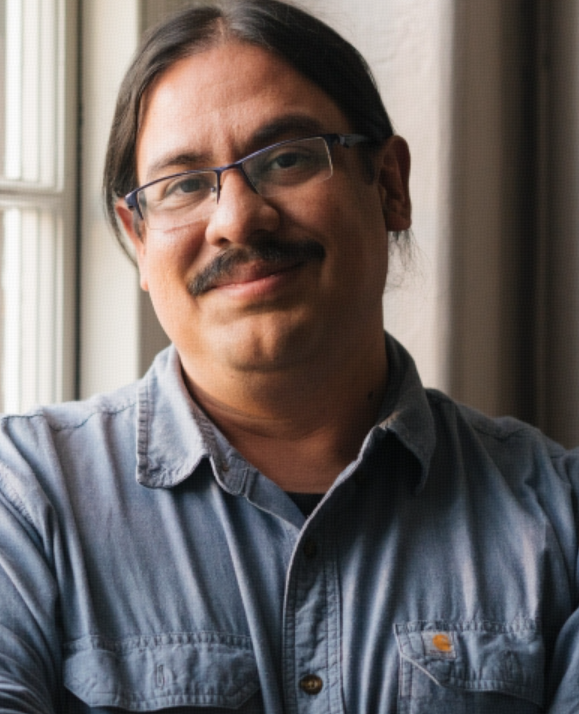 Rolando Coto-Solano合作论文数Department of Linguistics, Dartmouth College5
 Manuel Mager合作论文数Amazon Web Services5
 Arturo Oncevay合作论文数JPMorgan Chase & Co.5
 Abteen Ebrahimi合作论文数University of Colorado Boulder5
 Jason Riesa合作论文数Google Inc4
 Joshua Maynez合作论文数Google DeepMind;Google;YouTube4
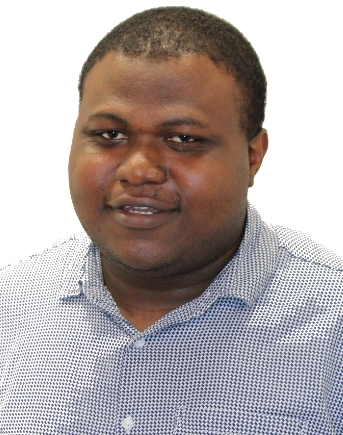 David Ifeoluwa Adelani合作论文数University College London;School of Computer Science, McGill University4
 Robert Pugh合作论文数Indiana University, Bloomington;Mozilla Data Collective4
 David R. Mortensen合作论文数Language Technologies Institute, School of Computer Science, Carnegie Mellon University4Patrick Littell合作论文数Digital Technologies Research Centre, National Research Council Canada4
 Jaime Carbonell合作论文数School of Computer Science, Carnegie Mellon University;Language Technologies Institute, Carnegie Mellon University4
 Aditi Chaudhary合作论文数Google Research3
 Dan Garrette合作论文数Google Research3
 Kalika Bali合作论文数Microsoft Research Laboratory India Private Limited3
 Zaid Sheikh合作论文数Carnegie Mellon University3
 Isaac Caswell合作论文数Google3
 Aditya Siddhant合作论文数Google DeepMind3
 Luis Hernán Chiruzzo Alonso合作论文数Instituto de Computación, Facultad de Ingeniería, Universidad de la República3
 Alan W Black合作论文数Language Technologies Institute, School of Computer Science, Carnegie Mellon University3
 John Wieting合作论文数Toyota Technological Institute, University of Chicago3
 Pavel Denisov合作论文数Fraunhofer IAIS3
 Melvin Johnson合作论文数Google3
 Shuyan Zhou合作论文数Language Technologies Institute, School of Computer Science, Carnegie Mellon University3
 Paul Michel合作论文数DeepMind3
 Xinjian Li合作论文数Carnegie Mellon University3
 Monojit Choudhury合作论文数Mohamed bin Zayed University of Artificial Intelligence3
 Thibault Sellam合作论文数Google DeepMind3
 Dipanjan Das合作论文数Google Deepmind3
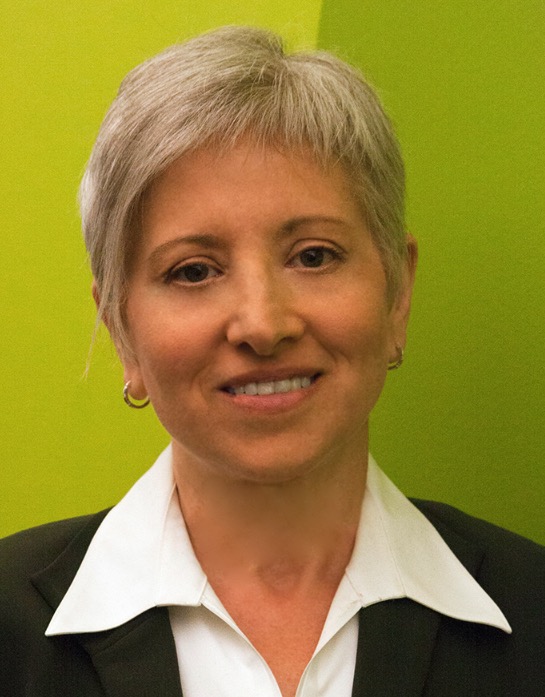 Lori Levin合作论文数Language Technologies Institute, School of Computer Science, Carnegie Mellon University3
 Sebastian Ruder合作论文数Superintelligence Labs, Meta3Katharina von der Wense合作论文数2
 Dan Horgan合作论文数Google DeepMind2
 Enora Rice合作论文数NALA Lab, University of Colorado Boulder;LECS Lab, University of Colorado Boulder2Stephanie Winkler合作论文数2Juliette Love合作论文数2Kate Olszewska合作论文数2Minh Giang合作论文数2Sholto Douglas合作论文数2Geoff Brown合作论文数2Paul Natsev合作论文数2Cosmo Du合作论文数2Jong Lee合作论文数2Daniel Sohn合作论文数2Eli Collins合作论文数2
 Mara Finkelstein合作论文数Google2Anita Gergely合作论文数2
 Ce Zheng (郑策)合作论文数National Key Laboratory for Multimedia Information Processing, Peking University2




