We mechanize a lightweight quantum logic in the Rocq proof assistant to verify Clifford+T quantum programs, particularly those with low T counts. Our tool is lightweight and automation-centric: Hoare triple validation composes simple rules, reduces all obligations to syntactic well-formedness side-conditions, and efficiently discharges those conditions. We demonstrate our tool using several case studies: a standard low-T Toffoli decomposition, graph-state generators, and the 7-qubit Steane encoder. A small empirical study on graph-state families shows near-linear growth in the number of Clifford gates and a slightly super-quadratic trend in the number of qubits, consistent with implementation overheads from list-based tensor representations, while repeated T gates on a single qubit exhibit an exponential blow-up due to additive branching. The results indicate that a rule-driven, syntax-directed approach suffices to verify low-T quantum circuits while keeping the trusted core and user-facing proofs simple.
Symmetric monoidal categories (SMCs) are a common framework for reasoning about computation, focusing on the parallel and sequential compositionality of operations. String diagrams are a ubiquitous and powerful tool for reasoning about equations in SMCs, leveraging eliding the fine details of compositionality to focus on connectivity. However, when working with SMCs in a proof assistant, the rigid equational structure of composition occludes the essential connective information, longer proofs filled with uninformative syntactic manipulation. To address the gap between proof assistants and paper proof, we have developed verified tools for diagrammatic reasoning in Rocq, including inferring term equivalence and rewriting modulo the deformation of string diagrams. This is achieved by converting between syntactic representations of SMC terms and hypergraphs with interfaces, while preserving a common tensor semantics. We provide tools to develop simple SMC theories from generators and relations, and perform equational reasoning these systems. We also enable our tactics to be used in existing verification projects about SMCs which can be given semantics as tensor expressions.
Graphical languages are a convenient shorthand to represent computation, with rewrite rules relating one graph to another. In contrast, proof assistants rely heavily on inductive datatypes, particularly when giving semantics to embedded languages. This creates obstacles to formally reasoning about graphical languages, since imposing an inductive structure obfuscates the diagrammatic nature of graphical languages, along with their corresponding equational theories. To address this gap, we present Vy ZX, a verified library for reasoning about inductively defined graphical languages. These inductive constructs arise naturally from category-theoretic definitions. We developed Vy ZX to V erify the ZX -calculus, a graphical language for reasoning about quantum computation. The ZX-calculus comes with a collection of diagrammatic rewrite rules that preserve the graph’s semantic interpretation. We show how inductive graphs in Vy ZX are used to prove the soundness of the ZX-calculus rewrite rules and apply them in practice using standard proof assistant techniques. We also provide an IDE-integrated visualizer for proof engineers to directly reason about diagrams in graphical form.
We show that Gottesman's (1998) semantics for Clifford circuits based on the Heisenberg representation gives rise to a lightweight Hoare-like logic for efficiently characterizing a common subset of quantum programs. Our applications include (i) certifying whether auxiliary qubits can be safely disposed of, (ii) determining if a system is separable across a given bipartition, (iii) checking the transversality of a gate with respect to a given stabilizer code, and (iv) computing post-measurement states for computational basis measurements. Further, this logic is extended to accommodate universal quantum computing by deriving Hoare triples for the $T$-gate, multiply-controlled unitaries such as the Toffoli gate, and some gate injection circuits that use associated magic states. A number of interesting results emerge from this logic, including a lower bound on the number of $T$ gates necessary to perform a multiply-controlled $Z$ gate.
Quantum networks have capabilities that are impossible to achieve using only classical information. They connect quantum capable nodes, with their fundamental unit of communication being the Bell pair, a pair of entangled quantum bits. Due to the nature of quantum phenomena, Bell pairs are fragile and difficult to transmit over long distances, thus requiring a network of repeaters along with dedicated hardware and software to ensure the desired results. The intrinsic challenges associated with quantum networks, such as competition over shared resources and high probabilities of failure, require quantitative reasoning about quantum network protocols. This paper develops PBKAT, an expressive language for specification, verification and optimization of quantum network protocols for Bell pair distribution. Our language is equipped with primitives for expressing probabilistic and possibilistic behaviors, and with semantics modeling protocol executions. We establish the properties of PBKAT’s semantics, which we use for quantitative analysis of protocol behavior. We further implement a tool to automate PBKAT’s usage, which we evaluated on real-world protocols drawn from the literature. Our results indicate that PBKAT is well suited for both expressing real-world quantum network protocols and reasoning about their quantitative properties.
Most existing quantum programming languages are based on the quantum circuit model of computation, as higher-level abstractions are particularly challenging to implement - especially ones relating to quantum control flow. The Qunity language, proposed by Voichick et al., offered such an abstraction in the form of a quantum control construct, with great care taken to ensure that the resulting language is still realizable. However, Qunity lacked a working implementation, and the originally proposed compilation procedure was very inefficient, with even simple quantum algorithms compiling to unreasonably large circuits. In this work, we focus on the efficient compilation of high-level quantum control flow constructs, using Qunity as our starting point. We introduce a wider range of abstractions on top of Qunity's core language that offer compelling trade-offs compared to its existing control construct. We create a complete implementation of a Qunity compiler, which converts high-level Qunity code into the quantum assembly language OpenQASM 3. We develop optimization techniques for multiple stages of the Qunity compilation procedure, including both low-level circuit optimizations as well as methods that consider the high-level structure of a Qunity program, greatly reducing the number of qubits and gates used by the compiler.
We present ViCAR, a library for working with monoidal categories in the Coq proof assistant. ViCAR provides definitions for categorical structures that users can instantiate with their own verification projects. Upon verifying relevant coherence conditions, ViCAR gives a set of lemmas and tactics for manipulating categorical structures. We also provide a visualizer that can display any composition and tensor product of morphisms as a string diagram, showing its categorical structure. This enables graphical reasoning and automated rewriting for Coq projects with monoidal structures.
Quantum networks connect quantum capable nodes in order to achieve capabilities that are impossible only using classical information. Their fundamental unit of communication is the Bell pair, which consists of two entangled quantum bits. Unfortunately, Bell pairs are fragile and difficult to transmit directly, necessitating a network of repeaters, along with software and hardware that can ensure the desired results. Challenging intrinsic features of quantum networks, such as dealing with resource competition, motivate formal reasoning about quantum network protocols. To this end, we developed BellKAT, a novel specification language for quantum networks based upon Kleene algebra. To cater to the specific needs of quantum networks, we designed an algebraic structure, called BellSKA, which we use as the basis of BellKAT's denotational semantics. BellKAT's constructs describe entanglement distribution rules that allow for modular specification. We give BellKAT a sound and complete equational theory, allowing us to verify network protocols. We provide a prototype tool to showcase the expressiveness of BellKAT and how to optimize and verify networks in practice.
The main attributes of quantum networks are the utilization of quantum phenomena, security guarantees, and availability of their main quantum resource - entanglement. The fundamental differences between classical and quantum information will require joint efforts in physics, engineering and computer science to make quantum networks functional and scalable. A common language must be established between the hardware and software community. We envision a foundational model for quantum network programming languages. Such a model should contain the essential constructs for programming quantum networks, allow for specification and verification of end-to-end entanglement distribution, and provide guidelines for composing network protocols.
We present COGNAC, a novel strategy for compiling quantum circuits based on numerical optimization algorithms from scientific computing. Using a simple noise model informed by the duration of entangling gates, our gradient-based method can quickly converge to a local optimum that closely approximates the target unitary. By iteratively and continuously decreasing a gate's duration to zero, we reduce a circuit's gate count without the need for a large number of explicit elimination rewrite rules. We have implemented this technique as a general-purpose Qiskit compiler plugin and compared performance with state-of-the-art optimizers on a variety of standard 4-qubit benchmarks. COGNAC typically outperforms existing optimizers in reducing 2-qubit gate count, sometimes significantly. Running on a low-end laptop, our plugin takes seconds to optimize a small circuit, making it effective and accessible for a typical quantum programmer.
Quantum computing technology may soon deliver revolutionary improvements in algorithmic performance, but it is useful only if computed answers are correct. While hardware-level decoherence errors have garnered significant attention, a less recognized obstacle to correctness is that of human programming errors-"bugs." Techniques familiar to most programmers from the classical domain for avoiding, discovering, and diagnosing bugs do not easily transfer, at scale, to the quantum domain because of its unique characteristics. To address this problem, we have been working to adapt formal methods to quantum programming. With such methods, a programmer writes a mathematical specification alongside the program and semiautomatically proves the program correct with respect to it. The proof's validity is automatically confirmed-certified-by a "proof assistant." Formal methods have successfully yielded high-assurance classical software artifacts, and the underlying technology has produced certified proofs of major mathematical theorems. As a demonstration of the feasibility of applying formal methods to quantum programming, we present a formally certified end-to-end implementation of Shor's prime factorization algorithm, developed as part of a framework for applying the certified approach to general applications. By leveraging our framework, one can significantly reduce the effects of human errors and obtain a high-assurance implementation of large-scale quantum applications in a principled way.
We present VOQC, the first fully verified optimizer for quantum circuits, written using the Coq proof assistant. Quantum circuits are expressed as programs in a simple, low-level language called SQIR, a simple quantum intermediate representation, which is deeply embedded in Coq. Optimizations and other transformations are expressed as Coq functions, which are proved correct with respect to a semantics of SQIR programs. SQIR uses a semantics of matrices of complex numbers, which is the standard for quantum computation, but treats matrices symbolically in order to reason about programs that use an arbitrary number of quantum bits. SQIR'S careful design and our provided automation make it possible to write and verify a broad range of optimizations in VOQC, including full-circuit transformations from cutting-edge optimizers.
We present COGNAC, a novel strategy for compiling quantum circuits based on numerical optimization algorithms from scientific computing. Using a simple noise model informed by the duration of entangling gates, our gradient-based method can quickly converge to a local optimum that closely approximates the target unitary. By iteratively and continuously decreasing a gate's duration to zero, we reduce a circuit's gate count without the need for a large number of explicit elimination rewrite rules. We have implemented this technique as a general-purpose Qiskit compiler plugin and compared performance with state-of-the-art optimizers on a variety of standard 4-qubit benchmarks. COGNAC typically outperforms existing optimizers in reducing 2-qubit gate count, sometimes significantly. Running on a low-end laptop, our plugin takes seconds to optimize a small circuit, making it effective and accessible for a typical quantum programmer.
Mathematical representations of graphs often resemble adjacency matrices or lists, representations that facilitate whiteboard reasoning and algorithm design. In the realm of proof assistants, inductive representations effectively define semantics for formal reasoning. This highlights a gap where algorithm design and proof assistants require a fundamentally different structure of graphs, particularly for process theories which represent programs using graphs. To address this gap, we present VyZX, a verified library for reasoning about inductively defined graphical languages. These inductive constructs arise naturally from category theory definitions. A key goal for VyZX is to Verify the ZX-calculus, a graphical language for reasoning about quantum computation. The ZX-calculus comes with a collection of diagrammatic rewrite rules that preserve the graph's semantic interpretation. We show how inductive graphs in VyZX are used to prove the correctness of the ZX-calculus rewrite rules and apply them in practice using standard proof assistant techniques. VyZX integrates easily with the proof engineer's workflow through visualization and automation.
Q# is a standalone domain-specific programming language from Microsoft for writing and running quantum programs. Like most industrial languages, it was designed without a formal specification, which can naturally lead to ambiguity in its interpretation. We aim to provide a formal language definition for Q#, placing the language on a solid mathematical foundation and enabling further evolution of its design and type system. This paper presents $\lambda$-Q#, an idealized version of Q# that illustrates how we may view Q# as a quantum Algol (algorithmic language). We show the safety properties enforced by $\lambda$-Q#'s type system and present its equational semantics based on a fully complete algebraic theory by Staton.
We introduce Qunity, a new quantum programming language designed to treat quantum computing as a natural generalization of classical computing. Qunity presents a unified syntax where familiar programming constructs can have both quantum and classical effects. For example, one can use sum types to implement the direct sum of linear operators, exception-handling syntax to implement projective measurements, and aliasing to induce entanglement. Further, Qunity takes advantage of the overlooked bqp subroutine theorem, allowing one to construct reversible subroutines from irreversible quantum algorithms through the uncomputation of "garbage" outputs. Unlike existing languages that enable quantum aspects with separate add-ons (like a classical language with quantum gates bolted on), Qunity provides a unified syntax and a novel denotational semantics that guarantees that programs are quantum mechanically valid. We present Qunity's syntax, type system, and denotational semantics, showing how it can cleanly express several quantum algorithms. We also detail how Qunity can be compiled into a low-level qubit circuit language like OpenQasm, proving the realizability of our design.
This work introduces MCBeth, a quantum programming language that bridges the gap between near-term and non-near-term languages. MCBeth allows users to directly program and simulate measurement-based computation by building upon the measurement calculus. While MCBeth programs are meant to be executed directly on hardware, to take advantage of current machines we also provide a compiler to gate-based instruction sets. We argue that MCBeth is more natural to use than common low-level languages, which are based upon the quantum circuit model, but still easily runnable in practice.
We introduce Qunity, a new quantum programming language designed to treat quantum computing as a natural generalization of classical computing. Qunity presents a unified syntax where familiar programming constructs can have both quantum and classical effects. For example, one can use sum types to implement the direct sum of linear operators, exception-handling syntax to implement projective measurements, and aliasing to induce entanglement. Further, Qunity takes advantage of the overlooked BQP subroutine theorem, allowing one to construct reversible subroutines from irreversible quantum algorithms through the uncomputation of "garbage" outputs. Unlike existing languages that enable quantum aspects with separate add-ons (like a classical language with quantum gates bolted on), Qunity provides a unified syntax and a novel denotational semantics that guarantees that programs are quantum mechanically valid. We present Qunity's syntax, type system, and denotational semantics, showing how it can cleanly express several quantum algorithms. We also detail how Qunity can be compiled into a low-level qubit circuit language like OpenQASM, proving the realizability of our design.
Optimizing quantum circuits is a key challenge for quantum computing. The PyZX compiler broke new ground by optimizing circuits via the ZX calculus, a powerful graphical alternative to the quantum circuit model. Still, it carries no guarantee of its correctness. To address this, we developed VyZX, a verified ZX-calculus in the Coq proof assistant. VyZX provides two distinct representations of ZX diagrams for ease of programming and proof: A graph-based representation for writing high-level functions on diagrams and a block-based representation for proving ZX diagrams equivalent. Through these two different views, VyZX provides the tools necessary to verify properties and transformations of ZX diagrams. This paper explores the proofs and design choices underlying VyZX and its application and the challenges of verifying a graphical programming language.
As quantum computing hardware evolves, it will continue to face four key limitations: low qubit counts, limited connectivity, high error rates, and short coherence times. Quantum compilers play a key role in addressing these issues, reducing the number of qubits needed to perform a computation, mapping those qubits to the desired hardware, and minimizing the number of costly operations, both in terms of error rates and execution time. However, we cannot afford for compilers to become another source of bugs: Quantum computing is an inherently probabilistic and error-prone process and any additional sources of error are unlikely to be properly diagnosed. To address this, we present VOQC, a verified optimizing compiler for quantum circuits. VOQC heavily optimizes quantum programs while guaranteeing that the output is quantum-mechanically indistinguishable from the input program, up to permutation of qubits. This ensures that compilation produces an equivalent program that is executable on the given hardware. In this talk, we will address the key differences between classical and quantum compilation and the challenges unique to the latter. We will discuss the design decisions that underlie VOQC and how they enable its most powerful optimizations. Finally, we will discuss the developments since VOQC was first published, both within the VOQC toolchain and competing compilers, verified and unverified.
 Michael Hicks合作论文数Computer Science Department, University of Maryland;Amazon Web Services9
 Kesha Hietala合作论文数University of Maryland8
 Kartik Singhal合作论文数University of Chicago6
 Liyi Li合作论文数Univ Illinois, Dept Comp Sci, Urbana, IL 61801 USA6
 Aarthi Sundaram合作论文数Microsoft5
 Brad Lackey合作论文数5
 Shih-Han Hung合作论文数University of Maryland4
 Robert Soulé合作论文数Department of Computer Science, Yale University4
 Steve Zdancewic合作论文数Department of Computer and Information Science, School of Engineering and Applied Science, University of Pennsylvania4
 Pavel Chuprikov合作论文数IMDEA Networks Inst, Av Mar Mediterraneo 22, Madrid 28918, Spain3
 Patrick Eugster合作论文数Faculty of Informatics, Università della Svizzera italiana3Xiaodi Wu (伍骁迪)合作论文数3Jennifer Paykin合作论文数Wesleyan University3Anita Buckley合作论文数3Bhakti Shah合作论文数2
 Rodrigo Otoni合作论文数Faculty of Informatics, Università Della Svizzera Italiana, Lugano, Switzerland2
 Finn Voichick合作论文数Washington University in St Louis2Seun Omonije合作论文数1Aidan Evans合作论文数1
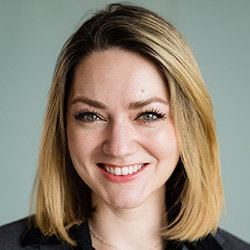 Kate Smith合作论文数McCormick School of Engineering, Northwestern University1Yuxiang Peng合作论文数1Runzhou Tao合作论文数Columbia University1
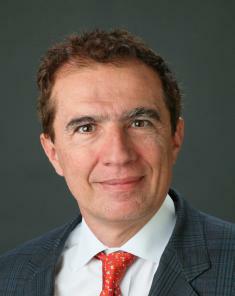 Giovanni De Micheli合作论文数Integrated Systems Laboratory, Institute of Electrical and Micro Engineering, School of Engineering, Ecole Polytechnique Fédérale de Lausanne;Integrated Systems Laboratory, Institute of Computer and Communication Sciences, School of Computer and Communication Sciences, Ecole Polytechnique Fédérale de Lausanne1
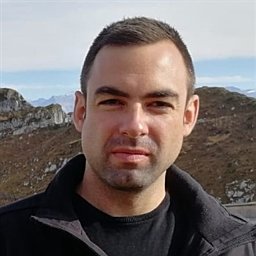 Mathias Soeken合作论文数Microsoft1
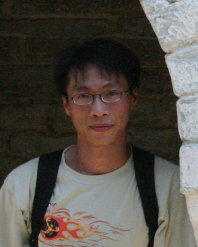 Jie-Hong Roland Jiang (江介宏)合作论文数Department of Electrical Engineering, National Taiwan University;Graduate Institute of Electronics Engineering, National Taiwan University1
 Leonidas Lampropoulos合作论文数University of Pennsylvania1
 Aleks Kissinger合作论文数Department of Computer Science, University of Oxford1




