In this special issue, we selected six of the papers, including one of the invited talks, and asked the authors to expand their conference presentations to provide more explanatory material. We believe these articles are representative of the current state of the art in innovative applications of AI.
In this paper, we provide a practical framework for characterizing, evaluating and selecting reformulation techniques for reasoning about physical systems, with the long-term goal of automating the selection and application of these techniques. We view reformula- tion as a mapping from one encoding of a problem to another. A problem solving task is in turn accom- plished by the application of a sequence of reformula- tions to an initial problem encoding to produce a final encoding that addresses the task. Our framework pro- vides the terminology to specify the conditions under which a particular reformulation technique is applica- ble, the cost associated with performing the reformula- tion, and the effects of the reformulation with respect to the problem encoding. As such it provides the vo- cabulary to characterize the selection of a sequence of reformulation techniques as a planning problem. Our framework is sufficiently flexible to accommodate pre- viously proposed properties and metrics for reformu- lation. We have used the framework to characterize a variety of reformulation techniques, three of which are presented in this paper.
In this paper, we propose a practical framework forcharacterizing, evaluating and selecting reformulationtechniques for reasoning about physical systems, withthe long-term goal of automating the selection andapplication of these techniques. We view reformulationas a mapping from one encoding of a problemto another. A problem-solving task is in turn accomplishedby the application of a sequence of reformulationsto an initial problem encoding to produce a finalencoding that addresses the...
In this paper, we propose a practical framework for characterizing, evaluating and selecting reformulation techniques for reasoning about physical systems, with the long-term goal of automating the selection and application of these techniques. We view reformula-tion as a mapping from one encoding of a problem to another. A problem-solving task is in turn accomplished by the application of a sequence of reformula-tions to an initial problem encoding to produce a nal encoding that addresses the task. Our framework provides the terminology to specify the conditions under which a particular reformulation technique is applicable , the cost associated with performing the reformula-tion, and the eeects of the reformulation with respect to the problem encoding. As such it provides the vocabulary to characterize the selection of a sequence of reformulation techniques as a planning problem. Our framework is suuciently exible to accommodate previously proposed properties and metrics for reformu-lation. We have used the framework to characterize a variety of reformulation techniques, three of which are presented in this paper.
In this paper, we provide a practical framework for characterizing, evaluating and selecting reformulation techniques for reasoning about physical systems, with the long-term goal of automating the selection and application of these techniques. We view reformulation as a mapping from one encoding of a problem to another. A problem solving task is in turn accomplished by the application of a sequence of reformulations to an initial problem encoding to produce a final encoding that addresses the task. Our framework provides the terminology to specify the conditions under which a particular reformulation technique is applicable, the cost associated with performing the reformulation, and the effects of the reformulation with respect to the problem encoding. As such it provides the vocabulary to characterize the selection of a sequence of reformulation techniques as a planning problem. Our framework is sufficiently flexible to accommodate previously proposed properties and metrics for reformulation. We have used the framework to characterize a variety of reformulation techniques, three of which are presented in this paper.
Ontolingua, a language for ontology-based knowledge representation, provides the capability to construct comprehensive characterizations of knowledge bases. While the ability to characterize the content of a knowledge base is not new, Ontolingua includes a number of features that greatly enhance conventional data representation and modeling technologies through the incorporation of semantic context. In addition to supporting object-oriented modeling techniques, Ontolingua enables representation of constraints, definitions, and relationships among terms within ontologies. This facility provides a framework that supports automated translation among knowledge bases with differing data models and physical implementations. The ability to formally describe and unambiguously distinguish between diverse data sources is essential to enabling reuse of intellectual property. This paper presents a high-level view of ontology-based knowledge representation and an approach to solving the intellectual property reuse problem through the application of this technology.
Generating and testing procedures for controlling spacecraft subsystems composed of electro-mechanical and computationally realized elements has become a very difficult task. Before a spacecraft can be flown, mission controllers must envision a great variety of situations the flight crew may encounter during a mission and carefully construct procedures for operating the spacecraft in each possible situation. If, despite extensive pre-compilation of control procedures, an unforeseen situation arises during a mission, the mission controller must generate a new procedure for the flight crew in a limited amount of time. In such situations, the mission controller cannot systematically consider and test alternative procedures against models of the system being controlled, because the available simulator is too large and complex to reconfigure, run, and analyze quickly. A rapidly reconfigurable simulation environment that can execute a control procedure and show its effects on system behavior would greatly facilitate generation and testing of control procedures both before and during a mission. The How Things Work project at Stanford University has developed a system called DME (Device Modeling Environment) for modeling and simulating the behavior of electromechanical devices. DME was designed to facilitate model formulation and behavior simulation of device behavior including both continuous and discrete phenomena. We are currently extending DME for use in testing operator procedures, and we have built a knowledge base for modeling the Reaction Control System (RCS) of the space shuttle as a testbed. We believe that DME can facilitate design of operator procedures by providing mission controllers with a simulation environment that meets all these requirements.
This report summarizes a study of the state-of-the-art in knowledge-based systems technology in Japan, organized by the Japanese Technology Evaluation Center (JTEC) under the sponsorship of the National Science Foundation and the Advanced Research Projects Agency. The panel visited 19 Japanese sites in March 1992. Based on these site visits plus other interactions with Japanese organizations, both before and after the site visits, the panel prepared a draft final report. JTEC sent the draft to the host organizations for their review. The final report was published in May 1993.
The Palo Alto Collaborative Testbed (PACT), a concurrent engineering infrastructure that encompasses multiple sites, subsystems, and disciplines, is discussed. The PACT systems include NVisage, a distributed knowledge-based integration environment for design tools; DME (Device Modeling Environment), a model formulation and simulation environment; Next-Cut, a mechanical design and process planning system; and Designworld, a digital electronics design, simulation, assembly, and testing system. The motivations for PACT and the significance of the approach for concurrent engineering is discussed. Initial experiments in distributed simulation and incremental redesign are reviewed, and PACT's agent-based architecture and lessons learned from the PACT experiments are described.<>
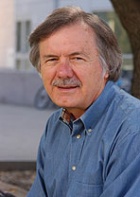 Richard Fikes合作论文数Department of Computer Science, Stanford University6
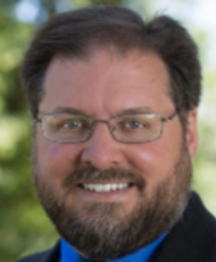 Todd W. Neller合作论文数Department of Computer Science, Gettysburg College4
 Edward A Feigenbaum (爱德华·费根鲍姆)合作论文数Stanford University4
 Sheila McIlraith合作论文数Department of Computer Science, University of Toronto;Vector Institute for Artificial Intelligence;Schwartz Reisman Institute for Technology and Society4
 Yumi Iwasaki合作论文数3Tony Loeser合作论文数3
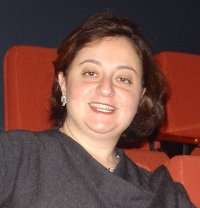 Berthe Y. Choueiry合作论文数Department of Computer Science & Engineering, University of Nebraska-Lincoln3
 Adam Farquhar合作论文数Digital Lifecycle Management LLP2james h alexander合作论文数1peter friedland合作论文数1James S. Bennett合作论文数1James P. Rice合作论文数1H. P. Nii合作论文数1Elisa Finnie合作论文数1Edward A. Feigenbaum合作论文数1H. Penny Nii合作论文数1Jay C. Weber合作论文数1Eric Lai合作论文数1
 Michael Genesereth合作论文数Computer Science Department, Stanford University;Law School, Stanford University1
 Wanda Pratt合作论文数Information School, University of Washington;Division of Biomedical & Health Informatics, Medical School, University of Washington1
 Haym Hirsh合作论文数Department of Computer Science, Cornell University;Department of Information Science, Cornell University1Bruce B. Johnson合作论文数1Allan Terry合作论文数1H. P Nii合作论文数1
 Howard E. Shrobe合作论文数Computer Science and Artificial Intelligence Laboratory, Schwarzman College of Computing, Massachusetts Institute of Technology;Defense Advanced Research Projects Agency1
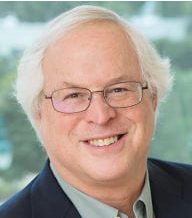 Paul S. Rosenbloom合作论文数Thomas Lord Department of Computer Science, Viterbi School of Engineering, University of Southern California;Henry Salvatori Computer Science Center, University of Southern California1
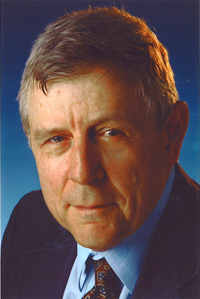 Herbert Schorr合作论文数Department of of Computer Science, Viterbi School of Engineering, University of Southern California1
 Thomas R. Gruber合作论文数Sherpa.ai;TRU LUV;Video.io;Cognixion;Deep HOPE;Humanistic AI;Center for Humane Technology;LifeScore Music;Ocean Elders;Robin Healthcare;Mindstrong 1William S. Mark合作论文数1




