Alfred Marshall, the founder of modern economics, once described economics as ‘the study of mankind in the ordinary business of earning a living’. In Economics for the Curious, 12 Nobel Laureates show that ‘the ordinary business of earning a living’ covers a wide range of activities, as they take readers on an engaging tour of some of the everyday issues that can be explored using basic economic principles. Written in the plainest possible language, Nobel Laureates including Paul Krugman, Robert Solow and Vernon Smith confront some of the key issues challenging society today — challenges that claim attention in any phase of the business cycle. The range of topics includes how economic tools can be used to rebuild nations in the aftermath of a war; financing retirement as longevity increases; the sustainable use of natural resources and what governments should really be doing to boost the economy. Economics for the Curious is an accessible but informative display of the kinds of questions economics can illuminate. It will appeal to anyone who has an interest in economics and the world around them, and we hope it will encourage further interest and study in the topic from readers everywhere.
Criminology & Public PolicyVolume 14, Issue 4 p. 639-646 COMMENTARY Comments on Domínguez and Raphael Dan A. Black, Corresponding Author Dan A. Black University of ChicagoDirect correspondence to Dan A. Black, University of Chicago, 1155 E. 60th Street, Suite 193, Chicago, IL 60637 (e-mail: danblack@uchicago.edu).Search for more papers by this authorRobert M. Solow, Robert M. Solow Massachusetts Institute of TechnologySearch for more papers by this authorLowell J. Taylor, Lowell J. Taylor Carnegie Mellon UniversitySearch for more papers by this author Dan A. Black, Corresponding Author Dan A. Black University of ChicagoDirect correspondence to Dan A. Black, University of Chicago, 1155 E. 60th Street, Suite 193, Chicago, IL 60637 (e-mail: danblack@uchicago.edu).Search for more papers by this authorRobert M. Solow, Robert M. Solow Massachusetts Institute of TechnologySearch for more papers by this authorLowell J. Taylor, Lowell J. Taylor Carnegie Mellon UniversitySearch for more papers by this author First published: 21 October 2015 https://doi.org/10.1111/1745-9133.12169Citations: 8Read the full textAboutPDF ToolsExport citationAdd to favoritesTrack citation ShareShare Give accessShare full text accessShare full-text accessPlease review our Terms and Conditions of Use and check box below to share full-text version of article.I have read and accept the Wiley Online Library Terms and Conditions of UseShareable LinkUse the link below to share a full-text version of this article with your friends and colleagues. Learn more.Copy URL Share a linkShare onFacebookTwitterLinkedInRedditWechat Citing Literature Volume14, Issue4November 2015Pages 639-646 RelatedInformation
I suggest that the historical Milton Friedman arose as the rare conjunction of a special person and a very favorable environment. So a successor is unlikely. This is a good thing. The dominance of a Milton Friedman type, right or left, is bad for economics and for society. It attracts resources toward fruitless debates and away from possibly productive research and discussion.
The idea of the book, In 100 Years: Leading Economists Predict the Future, edited by Ignacio Palacios-Huerta (MIT Press, 2013), is to demonstrate the predicting powers of economics. Relying on practical experience, theoretical knowledge about mechanics of the economy, and professional intuition, distinguished economists make their century-ahead forecast. The book contains ten essays, including ones written by Nobel Memorial Prize Laureates Angus Deaton (2015), Robert J. Shiller (2013), Alvin E. Roth (2012), and Robert M. Solow (1987). Prominent social scientists try to predict what kind of future awaits labor, inequality, world economy lineup, technology, etc.The Journal of Economic Sociology publishes the Russian translation of the essay "Stray Thoughts on How It Might Go" by Robert M. Solow. The author sounds modestly pessimistic, expecting the coming decades to be far more troubling and difficult than the twentieth century. The main sources of uncertainty and future changes are the evolution of decisions about work and leisure, relative growth of developed countries and emerging economies, the impact of climate change on economic growth, changes in proportion in which income is divided between labor income and capital, and the overall political environment.
A major figure in international economics laid the foundation for modern economics and transformed the atmosphere of economic study.
 Dan Black合作论文数Harris School of Public Policy Studies, The University of Chicago1
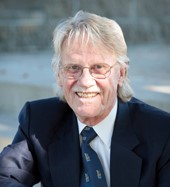 Vernon Smith合作论文数Economic Science Institute, Chapman University;Dale E. Fowler School of Law, Chapman University;The George L. Argyros College of Business and Economics, Chapman University1
 Michael Szenberg合作论文数1
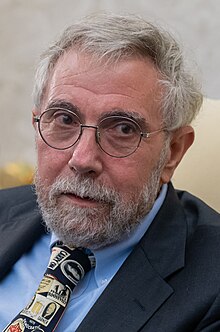 Paul R. Krugman合作论文数Princeton School of Public and International Affairs, Princeton University;London School of Economics and Political Science;Graduate Center, City University of New York1
 Lowell J. Taylor合作论文数Business Technologies Faculty, Tepper School of Business, Carnegie Mellon University/Heinz College of Information Systems and Public Policy, Carnegie Mellon University1




