Racism-related stress has detrimental effects on the health of Black women. However, there is a gap in understanding of how this stress manifests in the lives of Black women at the intersection of gender, age, and motherhood identity. Using a constructivist research paradigm, we employed a phenomenological approach to examine how a sample of 24 Black mothers aged 46-71 from a large, urban Midwestern city reacted to the 2020 racial unrest as a specific yet universal macro-level racist event in the USA. Descriptive and thematic analysis of in-depth semi-structured interviews suggests this event was associated with the experience of racism-related vigilance. These results provide first-hand evidence of racism-related vigilance among older Black mothers, further depicted by two distinct subthemes: gendered racism-related vigilance and mind-body distress. The findings fill an important gap in the extant literature on the experience of racism-related vigilance specific to older Black mothers. These data suggest that the phenomenon of racism-related vigilance is experienced as gendered, shaped by motherhood identity, and is experienced as mind-body distress. These findings expand theory on the embodied experience of racism among Black mothers and have implications for Black mothers' health and psychological well-being.
Life satisfaction is a primary indicator of subjective well-being and is associated with positive psychological status and an overall sense of well-being. This study examined the association between life satisfaction and four dimensions of religion (i.e., organizational religion, nonorganizational religion, subjective religion, and religious coping). The sample consisted of 3,570 African Americans and 1,621 Blacks of Caribbean descent drawn from the National Survey of American Life (2001-2003). Separate linear regression models were constructed for each group to investigate the relationship between life satisfaction and eight measures of religion used to operationalize the four dimensions. All analyses controlled for demographic characteristics, family income, and number of chronic physical health problems. The results indicate organized religious involvement (i.e., service attendance) and subjective religiousness (i.e., self-rating of religiousness) are positively associated with life satisfaction for both groups, while nonorganizational religious activities and religious coping are unrelated to life satisfaction. The results underscore the significance of the organizational and subjective dimensions of religion for life satisfaction among both African Americans and Black Caribbeans. Accordingly, practitioners should conduct a spiritual assessment to identify the potential role that various religious dimensions may play in enhancing wellness in the lives of their Black clients.
OBJECTIVES:The 2020 racial uprisings surrounding the murders of George Floyd and Breonna Taylor impacted Black families in distinct yet diverse ways. Several factors conceivably shaped individual responses to this critical period, including one's age, gender, and familial roles. Guided by the phenomenological variant of ecological systems theory, this study specifically examined how a sample of Black mothers from a large urban Midwestern city constructed meaning of the racial unrest of 2020 in relation to their intersectional identities as women who are Black and who are also mothers of adult children. METHOD:This qualitative study utilized a phenomenological approach to examine how a sample of 24 Black mothers aged 46-71 experienced the 2020 racial unrest. Descriptive and thematic analysis of in-depth semistructured interviews suggests the 2020 racial uprisings were a precursor for a resurgence of "The Talk" in Black families. RESULTS:Findings from this study provide first-hand evidence of older age Black mothers providing racial socialization to their adult children, further explained by three distinct subthemes including: (a) remembrance of the first "talk," (b) gendered socialization, and (c) insistence of faith. CONCLUSIONS:Study findings fill an important gap in the extant literature on racial socialization that assumes these specific parental practices stop once children enter adolescence or young adulthood, when in fact these data suggest parental racial socialization occurs across the life course, with adult children, and may be shaped by interactions between multiple ecological systems. These findings have important implications for the psychological well-being of older Black mothers. (PsycInfo Database Record (c) 2026 APA, all rights reserved).
As interventionists and policymakers aim to strengthen marriages and families, research on the nuances of romantic relationships, particularly among historically disadvantaged populations, grows more important. In its simplest form, the dynamics of a marriage consist of a combination of emotional highs and lows. Spousal support is generally a relational boon, capable of contributing to stability and happiness. On the other hand, negative interactions (e.g., criticism, unmet demands) can damage relationships and lead to instability or divorce. Although research has studied various correlates of spousal support and negative interactions, relatively little knowledge exists on these constructs among African Americans in long‐term marriages. To understand the correlates of spousal support and negative interactions among African Americans in long‐term (≥20 years) marriages, this study used data ( n = 200) from The National Survey of American Life Adult Reinterview (NSAL‐RIW). Our emphasis on long‐term marriages contributed to a sample that consists largely of older adults. Data analyses revealed that African Americans in long‐term marriages report high levels of emotional and instrumental spousal support and relatively low levels of negative interactions with their spouses. Gender, education, family income, and length of marriage were significantly associated with emotional and instrumental spousal support. Spousal negative interactions were associated with gender, family income, and marriage duration. Grounding policies and interventions in research that considers what strong couples have done well is an important first step toward building more strong, healthy relationships in underserved communities.
Although obsessive-compulsive disorder (OCD) is associated with clinically significant distress, many OCD patients do not seek treatment. Studies show that Black Americans with OCD are even less likely to obtain treatment due to differences in access. This study explored demographic and symptom outcomes associated with mental health service use for obsessions and compulsions among a nationally representative sample of African American adults (n = 3,570). The analytic sample for this analysis is African Americans who endorsed either obsessions (n = 435) or compulsions (n = 543). Few respondents sought care from their doctor for obsessions (14.25%, n = 62) and even fewer sought care for compulsions (7.55%, n = 36). Respondents were significantly more likely to seek care for obsessions if they had poorer self-rated mental health and perceived impairment due to obsessions; however, they were significantly less likely to seek care for obsessions if they had a high school education or less. Additionally, respondents were more likely to seek care for compulsions if they had poorer self-rated mental health. Our findings suggest that demographic factors such as level of education can impact care-seeking behaviors and, therefore, treatment outcomes for African Americans with obsessive-compulsive symptoms. Knowledge of factors associated with OCD care-seeking behavior can help inform potential barriers to treatment and strategies to ensure equity in access to mental health care for this population. Clinical implications and future directions are discussed.
ObjectivesThis article examines a conceptual model of receiving and providing social support among older African Americans, Black Caribbean, and non-Latino Whites.BackgroundSupportive exchanges are an important aspect of family relationships. This is especially true among older adults. Despite their importance, the mechanisms of extended family support are largely neglected in the research literature.MethodThe analysis is based on the older African American, Black Caribbean, and non-Latino White subsample of the 2001-2003 National Survey of American Life (n = 1,439). Multiple group structural equation modeling in Mplus was conducted to test direct and indirect effects of demographic and familial support variables on the receiving and providing social support with extended family members.ResultsWe found that people who are emotionally close to their family invested more time in their family relationships, resulting in more frequent social interactions with family members. These frequent social interactions strengthen family ties and contribute to more frequent giving and providing support. Our analysis also indicated that these relationships were consistent across the three race/ethnicity populations, except for some differences among older Black Caribbeans.ConclusionOur findings support the family solidarity model. This work provides important information concerning how familial involvement is associated with extended family social support networks. Our analysis also shows the importance of examining ethnic differences within the Black American population.ImplicationsIt is important for practitioners to recognize that although African Americans and Black Caribbeans have many similarities, there are also important differences that are consequential for family support.
Spirituality is a significant cultural strength and resource for Black emerging adults. Numerous studies show that increasing numbers of emerging adults tend to identify themselves as being spiritual but not religious. However, no studies to date have identified the demographic correlates of spirituality for Black emerging adults from different ethnic groups (i.e., African American and Black Caribbean). Data from the National Survey of American Life were used to identify the demographic correlates of two indicators of spirituality (e.g., self-rated spirituality and subjective spirituality) among African American and Black Caribbean emerging adults using linear regression. For African Americans, being a woman predicted both greater self-rated spirituality and subjective spirituality. However, among Black Caribbeans, men rated spirituality higher in importance than women. African Americans who reported higher educational attainment tended to report higher levels of self-rated spirituality and subjective spirituality. Romantic status for Black Caribbeans, whether they had no romantic involvement or a current romantic partner, was associated with lower self-ratings of spirituality. Unmarried cohabitating individuals in both ethnic groups tended to report lower levels of self-related spirituality. Unemployment for Black Caribbeans was associated with lower subjective spirituality. Findings are of interest to those who serve and work with Black emerging adults.
Background Anxiety disorders are among the most prevalent psychiatric conditions worldwide, and the incidence of anxiety disorders among adults in the U.S. have increased over the last decade. Anxiety disorders can have debilitating effects on multiple areas of functioning and quality of life. Recently, social isolation has emerged as an important public health problem associated with worse health and well-being outcomes. Research on the connection between social isolation and mental health has found that multiple dimensions of social isolation may negatively impact mental health, but few inquiries have focused on the association between social isolation and anxiety. This study examined the relationships between multiple dimensions of social isolation and anxiety disorders in a nationally representative sample of adults aged 18 and older. Methods The sample includes 6082 individuals from the National Survey of American Life. This study examined whether three different dimensions of social isolation—subjective, interpersonal, and structural—were associated with 12-month and lifetime anxiety disorders (any anxiety disorder, posttraumatic stress disorder (PTSD), generalized anxiety disorder (GAD), panic disorder (PD), social anxiety disorder (SAD), and agoraphobia (AG). Logistic regressions were used to test the associations between the three social isolation variables and the anxiety outcomes. Results This study found that of the three dimensions of social isolation, subjective isolation was most consistently related to both lifetime and 12-month anxiety disorders. Those who were subjectively isolated had increased odds of meeting criteria for any anxiety disorder, PTSD, GAD, PD, and AG over the past 12 months and throughout their lifetimes. Structural isolation was negatively associated with lifetime and 12-month AG. Conclusions Public health approaches should include mental health and primary care providers and need to target social isolation, especially subjective isolation, which may be key in preventing anxiety disorders and the worsening of anxiety disorders. Future public health research is needed on how and in what ways the differing dimensions of social isolation impact mental health.
Abstract Social support networks are an integral component of an individual’s life. This presentation investigates the complementary roles of family and church members as sources of informal social support among African Americans. The analysis utilizes the African American sub-sample of the National Survey of American Life. A pattern variable was constructed that describes four types of church and family networks: 1) received support from both family and church members, 2) received support from family members only, 3) received support from church members only, and 4) never received support from family nor church members. Overall the findings indicated 1) the majority of African Americans received support from both groups, 2) a small group of respondents were socially isolated in that they did not receive assistance from either family or church members, 3) for some African Americans who were estranged from their family members, church members were an alternative source of social support. Part of a symposium sponsored by the Religion, Spirituality and Aging Interest Group.
Research on social isolation and mental health among Black populations is underdeveloped. Using a nationally representative sample, our study examined the association between social isolation, depressive symptoms and psychological distress among African Americans (AAs) and Black Caribbeans (BCs). For both AAs and BCs, we found interpersonal and subjective isolation were associated with greater depressive symptoms. Greater distress was associated with greater subjective isolation and lower structural isolation for AAs; however, greater interpersonal isolation was associated with greater distress for BCs. Findings from this study may inform evidence-based interventions to mitigate isolation and improve mental health among AAs and BCs.
For 50 years, the National Institute on Aging (NIA) has supported and promoted research on religious involvement among older adult populations. NIA funding of research on religious involvement has (i) broadened our understanding of how religious involvement is conceptualized and measured; (ii) explored the important role of social networks and interactions within religious communities in relation to congregants' health; (iii) supported research on national samples of the U.S. population that explore demographic variability in religious practices and beliefs, as well as their social correlates; and (iv) examined health-relevant frameworks and topics in relation to religion's association with physical and mental health and well-being. This article focuses on research on African Americans and Mexican Americans as well as comparative work involving non-Latino Whites. Selected topics in religion and aging include Conceptualization and Measurement of Religious Participation; Religious Participation; Religion and Mental Health; Religion and Physical Health, Church-Based Informal Support, Church Support, and Mental and Physical Health; Religious Coping; and the Use of Clergy for serious problems. NIA's long record of support for scholarship and research has significantly enriched our understanding of why and how religion matters for the health and social well-being of diverse populations of older adults.
Life satisfaction and happiness are related but distinct assessments of life quality with established links to sociodemographic and health factors. Despite a rich literature on quality of life, there remains a paucity of research on this topic among African Americans. This investigation explored (1) the sociodemographic correlates of life satisfaction and happiness and (2) how life satisfaction and happiness are related to health factors and adversity-relevant life circumstances. Ordinary least squares regression was used to identify correlates of life satisfaction and happiness among a nationally representative sample of African American adults (National Survey of American Life). Findings confirmed several sociodemographic and health correlates, as well as unique differences. Regional differences indicated that residents in the Northeast had lower life satisfaction ratings, while those in the West had higher happiness ratings. Education was negatively related to both life satisfaction and happiness. Self-rated physical health and oral health and adversity-relevant life circumstances were associated with both life satisfaction and happiness. In contrast, self-rated childhood health and experiences of everyday racial discrimination were only associated with happiness, while being a parent was only associated with lower life satisfaction. Noted differences suggest that, while related, satisfaction and happiness represent distinct assessments of life quality.
Increasingly, bullying research has focused on identifying protective factors associated with bullying involvement (e.g., victim, perpetrator) and adverse outcomes. In this study, religiosity was examined as a protective factor in the relationship between bullying involvement and friends' delinquency among a large sample of low-income urban African American adolescents (N = 753). Analysis of the cross-sectional data indicated that bullying perpetration, victimization, and victimization/perpetration were positively associated with greater friends' delinquency. Further, adolescents who bullied others were less likely to report having friends engaging in delinquency when they reported attending church or other religious services. Also, adolescents who reported both victimization and perpetration of bullying, who placed great importance on religious or spiritual beliefs, were less likely to associate with friends engaging in delinquency. This study demonstrates how religiosity should be considered in bullying prevention and intervention efforts.
 Linda M. Chatters合作论文数School of Social Work, University of Michigan;Department of Health Behavior and Health Education, School of Public Health, University of Michigan162
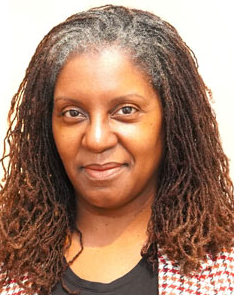 Karen Lincoln合作论文数Department of Environmental and Occupational Health, Joe C. Wen School of Population & Public Health, University of California, Irvine;Center for Environmental Health Disparities Research, University of California, Irvine29
 Amanda Toler Woodward合作论文数24
 James C. Jackson合作论文数22
 Taylor Harry Owen合作论文数Washington University in St. Louis18
 Joseph A. Himle合作论文数Department of Psychiatry, University of Michigan;School of Social Work, University of Michigan16
 Neighbors Harold W合作论文数Sch Publ Hlth, Univ Michigan16Dawne M Mouzon合作论文数15
 Michael Charles Thornton合作论文数Center for Public Service;Morgridge Center;Morgridge Center, Center for Public Service11Bullard Kai McKeever合作论文数10
 Jeff Levin合作论文数Medical Humanities Program, Baylor University/Program on Religion and Population Health, Institute for Studies of Religion, Baylor University/Center for Medical Ethics and Health Policy, Baylor College of Medicine9
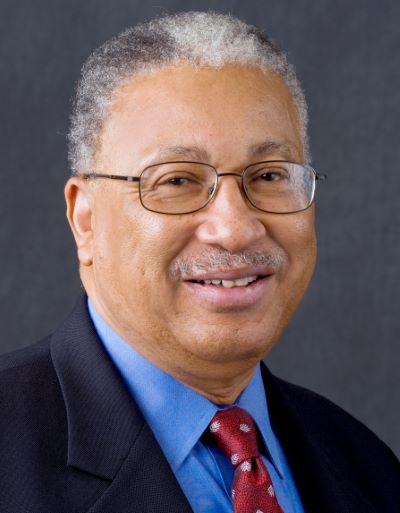 James S. Jackson合作论文数Department of Psychology, College of Literature, Science & the Arts, University of Michigan9
 Nicklett Emily J合作论文数Sch Social Work, Univ Michigan8Abelson Jamie M合作论文数8Verna M Keith合作论文数7
 David H Chae合作论文数Rollins School of Public Health, Emory University7Js Levin合作论文数6
 Monnica T Williams合作论文数6Matusko Niki合作论文数Institute for Social Research, University of Michigan6
 R. Khari Brown合作论文数6
 Christina Cross合作论文数Department of Sociology, Harvard University6
 Sean Joe合作论文数School of Social Work, University of Michigan6Celeste Walker合作论文数5
 Brian E. Perron合作论文数School of Social Work, University of Michigan-Ann Arbor5
 Jacqueline Mattis合作论文数Center for the Study of Black Youth in Context, College of Literature, Science, and the Arts, University of Michigan-Ann Arbor5
 Ivy Forsythe-Brown合作论文数5Gregg L. Lint合作论文数5
 Mosi Ifatunji合作论文数Department of Sociology, College of Letters & Science, University of Wisconsin-Madison4
 Debra Levine合作论文数Anxiety and OCD Treatment Center of Ann Arbor4
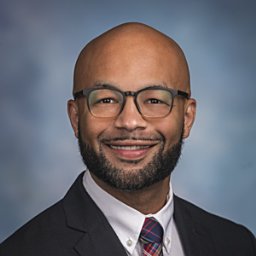 Skipper Antonius合作论文数Georgia State University4
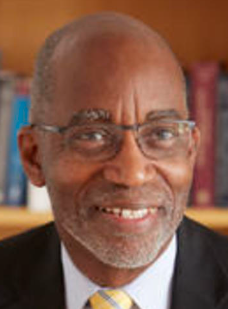 David R. Williams合作论文数Department of Social and Behavioral Sciences, Harvard T. H. Chan School of Public Health, Harvard University4
 Randolph Nesse合作论文数Research Center for Group Dynamics, Institute for Social Research, University of Michigan;Center for Evolution and Medicine, School of Life Sciences, Arizona State University;Department of Psychiatry, Medical School, Mayo Clinic;Department of Psychiatry, University of Michigan;Department of Psychology, University of Michigan4Raymond E. Baser合作论文数4
 Kazumi Tsuchiya合作论文数Univ Toronto3
 Belinda Tucker合作论文数Department of Gender Studies, College of Social Sciences, University of California, Los Angeles3
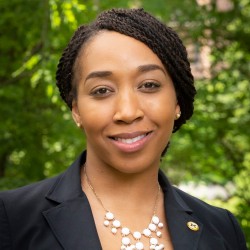 Daphne C. Watkins合作论文数School of Social Work, University of Michigan-Ann Arbor3
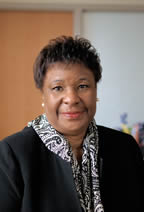 Cleopatra Howard Caldwell合作论文数Department of Health Behavior and Health Education, School of Public Health, University of Michigan-Ann Arbor3
 Reuben Jonathan Miller合作论文数School of Social Service Administration, The University of Chicago3
 Christopher Ellison合作论文数Department of Sociology, University of Texas at San Antonio3
 David R. Hodge合作论文数School of Social Work, Arizona State University3
 Meredith O. Hope合作论文数3Peterson Tina合作论文数3K. D. Lincoln合作论文数3
 Edna Brown合作论文数3
 Maria P Aranda合作论文数3Jordana Muroff合作论文数3Briggett C. Ford合作论文数3
 Vickie M. Mays合作论文数Department of Psychology, College of Letters and Sciences, University of California, Los Angeles;Department of Health Services, University of California, Los Angeles3




