The study focuses on optimizing a Laser Ablation Source (LAS) for use in mass spectrometry, particularly aiming to enhance transmission of ions and and determination of isotopic compositions in diverse matrices at TRIUMF’s Ion Trap for Atomic and Nuclear Science (TITAN). Critical variables affecting mass spectrometer resolution, such as ion kinetic energy distribution and ion transport are optimized through LAS. The paper explores the importance of consistent initial conditions, ion transport efficiency, and ion capture for accurate and reproducible measurements. Using SIMION software, we optimized ion optical design to tackle challenges like collimating ions travelling off-axis and mass filtering. A significant part of the study is dedicated to ion optic design to enable low abundance measurement of ions of interest (e.g., 10 ions of interest out of 10 14 total ions). Techniques like high voltage switching and beam shaping were explored, and the final design aims for high transport efficiency and a 4 mm effective target scan area with maximum transport efficiency. The integration of LAS with a Multiple-Reflection Time-Of-Flight Mass Spectrometer (MR-TOF-MS) is expected to yield an analytical tool with high spatial resolution and transport efficiency for isotope abundance measurement.
High-accuracy mass measurements of neutron-deficient Yb isotopes have been performed at TRIUMF using TITAN's multiple-reflection time-of-flight mass spectrometer (MR-TOF-MS). For the first time, an MR-TOF-MS was used on line simultaneously as an isobar separator and as a mass spectrometer, extending the measurements to two isotopes further away from stability than otherwise possible. The ground state masses of ^{150,153}Yb and the excitation energy of ^{151}Yb^{m} were measured for the first time. As a result, the persistence of the N=82 shell with almost unmodified shell gap energies is established up to the proton drip line. Furthermore, the puzzling systematics of the h_{11/2}-excited isomeric states of the N=81 isotones are unraveled using state-of-the-art mean field calculations.
The controlled focusing and transport of ion beams is of paramount importance in particle accelerators, high energy beamlines, and detector systems, as it determines the sensitivity and resolution of the instruments. Therefore, it is essential to model the beam dynamics before the commissioning of new instruments in order to optimise properties such as transmission and energy spread. In this paper, a commercial Plasma Ion Source (PIS), comprised of a heated filament and anode followed by its collimating optics, was modelled using Monte Carlo simulations run with the commercial software SIMION. The simulations were performed for the integration of the source within the existing ion transport optics of TRIUMF's Ion Trap for Atomic and Nuclear science (TITAN). Optimising the voltage configurations using these simulations proved successful in the commissioning of the PIS operated in surface ionisation mode at the TITAN experiment. A Time-of-Flight (TOF) mass spectroscopy method was developed which allowed for the identification of species ionised by the source. The integration of a flexible ion source into the TITAN experiment will open up new opportunities to perform Isotopic Ratios Mass Spectrometry (IRMS) measurements at TITAN.
Transformation optics asks, using Maxwell's equations, what kind of electromagnetic medium recreates some smooth deformation of space? The guiding principle is Einstein's principle of covariance: that any physical theory must take the same form in any coordinate system. This requirement fixes very precisely the required electromagnetic medium. The impact of this insight cannot be overestimated. Many practitioners were used to thinking that only a few analytic solutions to Maxwell's equations existed, such as the monochromatic plane wave in a homogeneous, isotropic medium. At a stroke, transformation optics increases that landscape from 'few' to 'infinity', and to each of the infinitude of analytic solutions dreamt up by the researcher, there corresponds an electromagnetic medium capable of reproducing that solution precisely. The most striking example is the electromagnetic cloak, thought to be an unreachable dream of science fiction writers, but realised in the laboratory a few months after the papers proposing the possibility were published. But the practical challenges are considerable, requiring meta-media that are at once electrically and magnetically inhomogeneous and anisotropic. How far have we come since the first demonstrations over a decade ago? And what does the future hold? If the wizardry of perfect macroscopic optical invisibility still eludes us in practice, then what compromises still enable us to create interesting, useful, devices? While three-dimensional (3D) cloaking remains a significant technical challenge, much progress has been made in two dimensions. Carpet cloaking, wherein an object is hidden under a surface that appears optically flat, relaxes the constraints of extreme electromagnetic parameters. Surface wave cloaking guides sub-wavelength surface waves, making uneven surfaces appear flat. Two dimensions is also the setting in which conformal and complex coordinate transformations are realisable, and the possibilities in this restricted domain do not appear to have been exhausted yet. Beyond cloaking, the enhanced electromagnetic landscape provided by transformation optics has shown how fully analytic solutions can be found to a number of physical scenarios such as plasmonic systems used in electron energy loss spectroscopy and cathodoluminescence. Are there further fields to be enriched? A new twist to transformation optics was the extension to the spacetime domain. By applying transformations to spacetime, rather than just space, it was shown that events rather than objects could be hidden from view; transformation optics had provided a means of effectively redacting events from history. The hype quickly settled into serious nonlinear optical experiments that demonstrated the soundness of the idea, and it is now possible to consider the practical implications, particularly in optical signal processing, of having an 'interrupt-without-interrupt' facility that the so-called temporal cloak provides. Inevitable issues of dispersion in actual systems have only begun to be addressed. Now that time is included in the programme of transformation optics, it is natural to ask what role ideas from general relativity can play in shaping the future of transformation optics. Indeed, one of the earliest papers on transformation optics was provocatively titled 'General Relativity in Electrical Engineering'. The answer that curvature does not enter directly into transformation optics merely encourages us to speculate on the role of transformation optics in defining laboratory analogues. Quite why Maxwell's theory defines a 'perfect' transformation theory, while other areas of physics such as acoustics are not apparently quite so amenable, is a deep question whose precise, mathematical answer will help inform us of the extent to which similar ideas can be extended to other fields. The contributors to this Roadmap, who are all renowned practitioners or inventors of transformation optics, will give their perspectives into the field's status and future development.
While the postulate of covariance of Maxwell's equations for all inertial observers led Einstein to special relativity, it was the further demand of general covariance---form invariance under general coordinate transformations, including between accelerating frames---that led to general relativity. Several lines of inquiry over the past two decades, notably the development of metamaterial-based transformation optics, has spurred a greater interest in the role of geometry and space-time covariance for electrodynamics in ponderable media. I develop a generally covariant, coordinate-free framework for electrodynamics in general dielectric media residing in curved background space-times. In particular, I derive a relation for the spatial medium parameters measured by an arbitrary timelike observer. In terms of those medium parameters I derive an explicit expression for the pseudo-Finslerian optical metric of birefringent media and show how it reduces to a pseudo-Riemannian optical metric for nonbirefringent media. This formulation provides a basis for a unified approach to ray and congruence tracing through media in curved space-times that may smoothly vary among positively refracting, negatively refracting, and vacuum.
While the postulate of covariance of Maxwell’s equations for all inertial observers led Einstein to special relativity, it was the further demand of general covariance – form invariance under general coordinate transformations, including between accelerating frames – that led to general relativity. Several lines of inquiry over the past two decades, notably the development of metamaterial-based transformation optics, has spurred a greater interest in the role of geometry and space-time covariance for electrodynamics in ponderable media. I develop a generally covariant, coordinate-free framework for electrodynamics in general dielectric media residing in curved background space-times. In particular, I derive a relation for the spatial medium parameters measured by an arbitrary timelike observer. In terms of those medium parameters I derive an explicit expression for the pseudoFinslerian optical metric of birefringent media and show how it reduces to a pseudo-Riemannian optical metric for nonbirefringent media. This formulation provides a basis for a unified approach to ray and congruence tracing through media in curved space-times that may smoothly vary among positively refracting, negatively refracting, and vacuum.
There is ongoing interest in adopting various tools and ideas from general relativity for optical applications and the study of light propagation through natural or engineered media. Here, the covariant kinematics of light propagating through arbitrary dielectric media in curved space-times are derived, allowing for analysis and tracing of congruences of light through media that may smoothly vary in character between vacuum, positively refracting, and negatively refracting; or null, timelike, and spacelike with respect to the background metric. The kinematics are then used to generalize the Raychaudhuri equation-an important tool in general relativity that describes the focus of a congruence. These results will be useful for the analysis of optical devices, particularly those designed using transformation optics, and serve as theoretical tools to study generalized concepts in general relativity.
Developments in Transformation Optics (TO) have drawn heavily on ideas from general relativity. This motivates a line of inquiry that seeks a deeper, more rigorous understanding of the spacetime covariant formulation of electrodynamics in media, and generalized ideas from general relativity that can further enhance TO. We show that basing TO on the idea of metric transformations is not covariant and introduces distortions to the desired behaviour of a light beam, but that these issues can be resolved by keeping the metric fixed.
The electromagnetic implementation of cloaking, the hiding of objects from sight by diverting and reassembling illuminating electromagnetic fields has now been with us ten years, while the notion of hiding events is now five. Both schemes as initially presented neglected the inevitable dispersion that arises when a designed medium replaces vacuum under transformation. Here we define a transformation design protocol that incorporates both spacetime transformations and dispersive material responses in a natural and rigorous way. We show how this methodology is applied to an event cloak designed to appear as a homogeneous and isotropic but dispersive medium. The consequences for spacetime transformation design in dispersive materials are discussed, and some parameter and bandwidth constraints identified.
It is commonly assumed that if the optical metric of a dielectric medium is identical to the metric of a vacuum space-time then light propagation through the dielectric mimics light propagation in the vacuum. However, just as the curved surface of the Earth cannot be mapped into a flat plane without distortion of some surface features, so too is it impossible to project the behavior of light from the vacuum into a dielectric analog residing in Minkowski space-time without introducing distortions. We study the covariance properties of dielectric analog space-times and the kinematics of a congruence of light in the analog, and show how certain features can be faithfully emulated in the analog depending on the choice of projection, but that not all features can be simultaneously emulated without distortion. These findings indicate conceptual weaknesses in the idea of using analog space-times as a basis for transformation optics, and we show that a certain formulation of transformation optics closely related to analog space-times resolves these issues.
It is commonly assumed that if the optical metric of a dielectric medium is identical to the metric of a vacuum space-time then light propagation through the dielectric mimics light propagation in the vacuum. However, just as the curved surface of the Earth cannot be mapped into a flat plane without distortion of some surface features, so too is it impossible to project the behavior of light from the vacuum into a dielectric analog residing in Minkowski space-time without introducing distortions. We study the covariance properties of dielectric analog space-times and the kinematics of a congruence of light in the analog, and show how certain features can be faithfully emulated in the analog depending on the choice of projection, but that not all features can be simultaneously emulated without distortion. These findings indicate conceptual weaknesses in the idea of using analog space-times as a basis for transformation optics, and we show that a certain formulation of transformation optics closely related to analog space-times resolves these issues.
The use of spacetime cloaking to hide events is an intriguing trick, but the unavoidable presence of dispersion limits the performance of any implementation, and needs to be accounted for. We show how the dispersion changes under transformation.
It was recently shown [J. C. Halimeh et al., Phys. Rev. A 93, 013850 (2016)] that as a result of the Doppler effect, inherently dispersive single-frequency ideal free-space invisibility cloaks in relative motion to an observer can only cloak light whose frequency in the cloak frame coincides with the operational frequency of the cloak, although an infinite number of such rays exist for any cloak motion. In this article, we show analytically and through ray-tracing simulations that even though this relationship can be relaxed by simplifying the ideal invisibility cloak into a broadband amplitude cloak, Fresnel-Fizeau drag uncloaks the phase of light in the inertial frame of the cloak thereby compromising its amplitude cloaking in all other inertial frames. In other words, only an invisibility device that perfectly cloaks both the amplitude and the phase of light in its own inertial frame will also (perfectly) cloak this light in any other inertial frame. The same conclusion lends itself to invisible objects that are not cloaks, such as the invisible sphere.
We consider an ideal invisibility cloak which is illuminated by monochromatic light and which moves in vacuum at constant relativistic velocity with respect to the common inertial frame of light source and observer. We show that, in general, the moving cloak becomes detectable by image distortions and by generating a broad frequency spectrum of the scattered light. However, for many special combinations of incident light frequency, wave vector of light, and cloak velocity, ideal cloaking remains possible. It becomes nonreciprocal though. This means that light rays emitted by the light source arrive at the observer as though they have traveled through vacuum, but they take completely different paths after being retroreflected at the observer position.
It is commonly assumed that if the optical metric of a dielectric medium is identical to the metric of a vacuum space-time then light propagation through the dielectric mimics light propagation in the vacuum. However, just as the curved surface of the Earth cannot be mapped into a flat plane without distortion of some surface features, so too is it impossible to project the behavior of light from the vacuum into a dielectric analog residing in Minkowski space-time without introducing distortions. We study the covariance properties of dielectric analog space-times and the kinematics of a congruence of light in the analog, and show how certain features can be faithfully emulated in the analog depending on the choice of projection, but that not all features can be simultaneously emulated without distortion. These findings indicate conceptual weaknesses in the idea of using analog space-times as a basis for transformation optics, and we show that a certain formulation of transformation optics closely related to analog space-times resolves these issues.
Transformation optics can involve multiple transformation operations, creating confusion as to the meaning and character of these different transformations. We use an example of cloaking in curved spacetime to elucidate the difference between cloak, coordinate, and frame transformations.
The fully covariant formulation of transformation optics is used to find the configuration of a cloaking device operating in an expanding universe modelled by a Friedmann-Lema\^itre-Robertson-Walker spacetime. This spacetime cloak is used as a platform for probing the covariant formulation of transformation optics, thereby rigorously enhancing the conceptual understanding of the theory. By studying the problem in both comoving and physical coordinates we explicitly demonstrate the preservation of general covariance of electrodynamics under the transformation optics procedure. This platform also enables a detailed study of the various transformations that arise in transformation optics. We define a corporeal transformation as the "transformation" of transformation optics, and distinguish it from coordinate and frame transformations. We find that corporeal transformations considered in the literature have generally been restricted to a subset of all possible corporeal transformations, providing a potential mechanism for increased functionality of transformation optics.
Most invisibility cloaks designed with the transformation optics approach have used purely spatial transformations. When viewed from a 4-dimensional perspective it becomes obvious that purely spatial cloak transformations introduce unwanted effects such as space-like trajectories of light. By considering time transformations in conjunctions with spatial transformations, it may be possible to mitigate these unwanted effects. This demonstrates the importance of 4-dimensional thinking for transformation optics.
Transformation optics shows great promise as a new way of designing novel optical and electromagnetic devices based on the idea of using coordinate transformations to generate descriptions of dielectric media. It allows for essentially complete control over the behavior of electromagnetic fields through a suitable choice of medium, determined by a transformation that can specify the trajectories of light rays, the orientation of phase fronts, or other geometrical features of the fields. Although the requisite parameters of the medium may be unnatural for a particular transformation, recent advances in metamaterials—that even allow for a negative effective index of refraction—optics–designed devices. The transformation approach has also been shown to be applicable to non-electromagnetic wave systems such as acoustic and elastic waves. Here we review the current state of transformation optics and its extensions to other wave systems, the construction of transformation optics devices using electromagnetic metamaterials, and provide an introduction to the important theoretical aspects of transformation optics, covering the coordinate transformation and covariant approaches, as well as the conformal and quasiconformal methods.
One potentially realistic specification for devices designed with transformation optics is that they operate with high precision in curved space-time, such as Earth orbit. This raises the question of what, if any, role does space-time curvature play in determining transformation media? Transformation optics has been based on a three-vector representation of Maxwell's equations in flat Minkowski space-time. I discuss a completely covariant, manifestly four-dimensional approach that enables transformations in arbitrary space-times, and demonstrate this approach for stable circular orbits in the spherically symmetric Schwarzschild geometry. Finally, I estimate the magnitude of curvature induced contributions to satellite-borne transformation media in Earth orbit and comment on the level of precision required for metamaterial fabrication before such contributions become important.
 Steven A. Cummer合作论文数Electrical and Computer Engineering Department, Pratt School of Engineering, Duke University8
 Mohsen Fathi合作论文数Universidad de Valparaíso7
 Larry Ford合作论文数Department of Physics and Astronomy, School of Arts and Sciences, Tufts University4
 Paul Kinsler合作论文数Department of Physics, Faculty of Natural Sciences, Imperial College London3
 Jonathan Gratus合作论文数Laboratoire de Gravitation et Cosmologie Relativistes3
 Martin W. Mccall合作论文数Department of Physcs, Faculty of Natural Sciences, Imperial College London3
 Michael E. Wieser合作论文数Department of Physics and Astronomy, University of Calgary3
 Jörg Frauendiener合作论文数Department of Mathematics and Statistics, University of Otago3Joerg Frauendiener合作论文数2
 J. Flowerdew合作论文数Department of Physics and Astronomy, University of Calgary2
 Ish Mukul合作论文数TRIUMF2
 Martin Wegener合作论文数Institute of Applied Physics, Karlsruhe Institute of Technology;Institute of Nanotechnology, Karlsruhe Institute of Technology2
 Jens Dilling合作论文数Oak Ridge National Laboratory;Duke University;The University of British Columbia2
 José Pizarro de Sande e Lemos合作论文数CENTRA2
 Jad C. Halimeh合作论文数Arnold Sommerfeld Center for Theoretical Physics, Ludwig Maximilian University of Munich;Department of Physics, Ludwig Maximilian University of Munich2Eleanor Dunling合作论文数1R Klawitter合作论文数1Eleni Marina Lykiardopoulou合作论文数1
 stefano maci合作论文数1S. F. Paul合作论文数1Andrew Jacobs合作论文数Dept Phys & Astron, Univ British Columbia1Abdelghafar Gaamouci合作论文数1Brian Kootte合作论文数TRIUMF1Anna A. Kwiatkowski合作论文数1Moritz P. Reiter合作论文数Sch Phys & Astron, Univ Edinburgh1Jie Yang合作论文数1E. Leistenschneider合作论文数1Christian Will合作论文数1
 Irene Dedes合作论文数1
 Mahsa Ebrahimpouri合作论文数School of Electrical Engineering and Computer Science, KTH Royal Institute of Technology1
 Julian Bergmann合作论文数Phys Inst, Justus Liebig Univ1
 Jerzy Dudek合作论文数1
 Hualei Wang (王华磊)合作论文数School of Physics, Zhengzhou University1Brunner T合作论文数TRIUMF1Kwiatkowski A A合作论文数1
 Mitchell-Thomas, R.C.合作论文数Dept. of Electron. Eng. & Comput. Sci., Queen Mary Univ. of London;c;Dept. of Electron. Eng. & Comput. Sci., Queen Mary Univ. of London1
 Gabriele Minatti合作论文数Dept. of Inf. Eng., Univ. of Siena;c;Dept. of Inf. Eng., Univ. of Siena1
 Vincent Ginis合作论文数Appl. Phys. Res. Group, Vrije Univ. Brussel;c;Appl. Phys. Res. Group, Vrije Univ. Brussel1
 Joseph M. Lukens合作论文数Sch. of Electr. & Comput. Eng., Purdue Univ.;c;Sch. of Electr. & Comput. Eng., Purdue Univ.1
 Ulf Leonhardt合作论文数Department of Physics of Complex Systems, Weizmann Institute of Science1
 Ashrafkhani Behnam合作论文数1
 Jensen Tsan Hang Li合作论文数Department of Engineering, University of Exeter1
 Igor I. Smolyaninov合作论文数Department of Electrical & Computer Engineering, A. James Clark School of Engineering, University of Maryland1
 Corina Andreoiu合作论文数Department of Physics, University of Guelph1
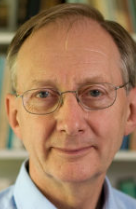 John Pendry合作论文数Department of Physics, Faculty of Natural Sciences, Imperial College London1
 Hao Yang合作论文数School of Electronic Engineering and Computer Science, Queen Mary University of London1
 Andrew M. Weiner合作论文数Purdue University1Gerald P. Gwinner合作论文数University of Manitoba1
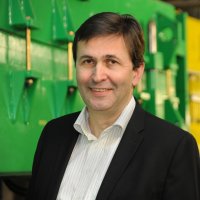 Christoph Scheidenberger合作论文数II. Physikalisches Institut, Justus-Liebig-University of Giessen;Helmholtz Research Academy Hesse for FAIR1




