Experimental implementations of quantum simulation must balance control‐field‐induced decoherence with the controllability of the quantum system. The ratio of coherent interaction strength to decoherence induced by stimulated emission in atomic systems is typically determined by hardware constraints, limiting the flexibility needed to explore different operating regimes. Here, an optomechanical system is presented for in situ tuning of the coherent spin‐motion and spin‐spin interaction strength in 2D ion crystals in a Penning trap. Enabled by precision closed‐loop piezo‐actuated positioners integrated into the confined space of a superconducting magnet's bore, the system allows tuning of the angle‐of‐incidence of Raman laser beams up to , governing the ratio of coherent to incoherent light‐matter interaction for fixed optical power. System characterization involves measurements of the induced mean‐field spin precession under the application of an optical dipole force in ion crystals cooled below the Doppler limit through electromagnetically induced transparency cooling. These experiments show approximately a variation in the coherent to incoherent interaction ratio with changing , consistent with theoretical predictions. The system stability is characterized over 6000 s, resulting in a drift rate of h–1. These technical developments will be crucial in future quantum simulations and sensing applications.
Resolving the locations and discriminating the spin states of individual trapped ions with high fidelity is critical for a large class of applications in quantum computing, simulation, and sensing. We report on a method for high-fidelity state discrimination in large two-dimensional (2D) crystals with over 100 trapped ions in a single trapping region, combining a hardware detector and an artificial neural network. A highdata -rate, spatially resolving, single -photon sensitive timestamping detector performs efficient single -shot detection of 2D crystals in a Penning trap, exhibiting rotation at about 25 kHz. We then train an artificial neural network to process the fluorescence photon data in the rest frame of the rotating crystal in order to identify ion locations with a success rate of 90%, accounting for substantial illumination inhomogeneity across the crystal. Finally, employing a time -binned state detection method, we arrive at an average spinstate detection fidelity of 94 (2 )%. This technique can be used to analyze spatial and temporal correlations in arrays of hundreds of trapped -ion qubits.
The changes in mean-squared charge radii of neutron-deficient gold nuclei have been determined using the in-source, resonance-ionization laser spectroscopy technique, at the ISOLDE facility (CERN). From these new data, nuclear deformations are inferred, revealing a competition between deformed and spherical configurations. The isotopes ^{180,181,182}Au are observed to possess well-deformed ground states and, when moving to lighter masses, a sudden transition to near-spherical shapes is seen in the extremely neutron-deficient nuclides, ^{176,177,179}Au. A case of shape coexistence and shape staggering is identified in ^{178}Au which has a ground and isomeric state with different deformations. These new data reveal a pattern in ground-state deformation unique to the gold isotopes, whereby, when moving from the heavy to light masses, a plateau of well-deformed isotopes exists around the neutron midshell, flanked by near-spherical shapes in the heavier and lighter isotopes-a trend hitherto unseen elsewhere in the nuclear chart. The experimental charge radii are compared to those from Hartree-Fock-Bogoliubov calculations using the D1M Gogny interaction and configuration mixing between states of different deformation. The calculations are constrained by the known spins, parities, and magnetic moments of the ground states in gold nuclei and show a good agreement with the experimental results.
The yield of 18 ion beams of radioactive gold nuclei produced in the thick uranium target at ISOLDE (CERN) by 1.4-GeV protons was measured. The production-efficiency dependence on the half-life (efficiency curve) was derived using the in-target production calculations by the FLUKA-CERN code. The irregularities in the efficiency curve for long-lived high-spin gold isomers (187,191,193Aum) were found. Three release models were tested for the efficiency-curve description.
Using the example of metal clusters, an experimental setup and procedure is presented, which allows for the generation of size and charge-state selected polyanions from monoanions in a molecular beam. As a characteristic feature of this modular setup, the further charging process via sequential electron attachment within a three-state digital trap takes place after mass-selection. In contrast to other approaches, the rf-based concept permits access to heavy particles. The procedure is highly flexible with respect to the preparation process and potentially suitable for a wide variety of anionic species. By adjusting the storage conditions, i.e., the radio frequency, to the change in the mass-to-charge ratio, we succeeded in producing clusters in highly negative charge states, i.e., Ag8007-. The capabilities of the setup are demonstrated by experiments extracting electronic and optical properties of polyanionic metal clusters by analyzing the corresponding photoelectron spectra.
In rare cases, the removal of a single proton (Z) or neutron (N) from an atomic nucleus leads to a dramatic shape change. These instances are crucial for understanding the components of the nuclear interactions that drive deformation. The mercury isotopes (Z = 80) are a striking example1,2: their close neighbours, the lead isotopes (Z = 82), are spherical and steadily shrink with decreasing N. The even-mass (A = N + Z) mercury isotopes follow this trend. The odd-mass mercury isotopes 181,183,185Hg, however, exhibit noticeably larger charge radii. Due to the experimental difficulties of probing extremely neutron-deficient systems, and the computational complexity of modelling such heavy nuclides, the microscopic origin of this unique shape staggering has remained unclear. Here, by applying resonance ionization spectroscopy, mass spectrometry and nuclear spectroscopy as far as 177Hg, we determine 181Hg as the shape-staggering endpoint. By combining our experimental measurements with Monte Carlo shell model calculations, we conclude that this phenomenon results from the interplay between monopole and quadrupole interactions driving a quantum phase transition, for which we identify the participating orbitals. Although shape staggering in the mercury isotopes is a unique and localized feature in the nuclear chart, it nicely illustrates the concurrence of single-particle and collective degrees of freedom at play in atomic nuclei. Spectroscopy and shell model calculations reveal the 181Hg isotope as the endpoint of the shape-staggering of Hg nuclei, a consequence of neutron removal which arises from the interplay of single-particle and collective degrees of freedom.
At radioactive ion beam (RIB) facilities, ions of short-lived radionuclides are cooled and bunched in buffer-gas-filled Paul traps to improve the ion-beam quality for subsequent experiments. To deliver even colder ions, beneficial to RIB experiments' sensitivity or accuracy, we employ Doppler and sympathetic cooling in a Paul trap cooler-buncher. The improved emittance of Mg^{+}, K^{+}, and O_{2}^{+} ion beams is demonstrated by a reduced time-of-flight spread of the extracted ion bunches with respect to room-temperature buffer-gas cooling. Cooling externally-produced hot ions with energies of at least 7 eV down to a few Kelvin is achieved in a timescale of O(100 ms) by combining a low-pressure helium background gas with laser cooling. This is sufficiently short to cool short-lived radioactive ions. As an example of this technique's use for RIB research, the mass-resolving power in a multireflection time-of-flight mass spectrometer is shown to increase by up to a factor of 4.6 with respect to buffer-gas cooling. Simulations show good agreement with the experimental results and guide further improvements and applications. These results open a path to a significant emittance improvement and, thus, unprecedented ion-beam qualities at RIB facilities, achievable with standard equipment readily available. The same method provides opportunities for future high-precision experiments with radioactive cold trapped ions.
In article number 2100029, Bingsheng Tu and co-workers present a novel scheme that allows to efficiently cool arbitrary ions by coupling them to a directly laser cooled ion in a separate Penning trap. The authors' results demonstrate how a common tank circuit can drastically enhance the coupling, resulting in the expected avoided-crossing behavior of the two ions. This technique holds promise to enable millikelvin cooling of arbitrary ions in Penning traps.
The tin isotope 100Sn is of singular interest for nuclear structure due to its closed-shell proton and neutron configurations. It is also the heaviest nucleus comprising protons and neutrons in equal numbers—a feature that enhances the contribution of the short-range proton–neutron pairing interaction and strongly influences its decay via the weak interaction. Decay studies in the region of 100Sn have attempted to prove its doubly magic character1 but few have studied it from an ab initio theoretical perspective2,3, and none of these has addressed the odd-proton neighbours, which are inherently more difficult to describe but crucial for a complete test of nuclear forces. Here we present direct mass measurements of the exotic odd-proton nuclide 100In, the beta-decay daughter of 100Sn, and of 99In, with one proton less than 100Sn. We use advanced mass spectrometry techniques to measure 99In, which is produced at a rate of only a few ions per second, and to resolve the ground and isomeric states in 101In. The experimental results are compared with ab initio many-body calculations. The 100-fold improvement in precision of the 100In mass value highlights a discrepancy in the atomic-mass values of 100Sn deduced from recent beta-decay results4,5.
T. Day Goodacre,1, 2, 3, ∗ A.V. Afanasjev,4 A.E. Barzakh,5 L. Nies,2, 6 B.A. Marsh,2 S. Sels,2, 7 U.C. Perera,4 P. Ring,8 F. Wienholtz,2, 6, † A.N. Andreyev,9, 10 P. Van Duppen,7 N.A. Althubiti,1, 11 B. Andel,7, 12 D. Atanasov,13, ‡ R.S. Augusto,3 J. Billowes,1 K. Blaum,13 T.E. Cocolios,1, 7 J.G. Cubiss,9 G.J. Farooq-Smith,1, 7, § D.V. Fedorov,5 V.N. Fedosseev,2 K.T. Flanagan,1, 14 L.P. Gaffney,7, 15, L. Ghys,7, 16 A. Gottberg,3, 17 M. Huyse,7 S. Kreim,13, 2 P. Kunz,3, 18 D. Lunney,19, ∗∗ K.M. Lynch,1, 2 V. Manea,13, ∗∗ Y. Martinez Palenzuela,7, 2 T.M. Medonca,2 P.L. Molkanov,5 M. Mougeot,2 J.P. Ramos,2 M. Rosenbusch,6, †† R.E. Rossel,2, 20 S. Rothe,2 L. Schweikhard,6 M.D. Seliverstov,5 P. Spagnoletti,15 C. Van Beveren,7 M. Veinhard,2 E. Verstraelen,7 A. Welker,2, 21 K. Wendt,20 R.N. Wolf,13, 6, ‡‡ A. Zadvornaya,7 and K. Zuber21 1Department of Physics and Astronomy, School of Natural Science, The University of Manchester, Manchester, M13 9PL, United Kingdom 2CERN, CH-1211 Geneva 23, Switzerland 3TRIUMF, Vancouver V6T 2A3, Canada 4Department of Physics and Astronomy, Mississippi State University, MS 39762, USA 5Petersburg Nuclear Physics Institute, NRC Kurchatov Institute, Gatchina 188300, Russia 6Universität Greifswald, Institut für Physik, 17487 Greifswald, Germany 7KU Leuven, Instituut voor Kernen Stralingsfysica, B-3001 Leuven, Belgium 8Fakultät für Physik, Technische Universität München, D-85748 Garching, Germany 9Department of Physics, University of York, York, YO10 5DD, United Kingdom 10Advanced Science Research Center (ASRC), Japan Atomic Energy Agency (JAEA), Tokai-mura, Japan 11Physics Department, Faculty of Science, Jouf University, Aljouf, Saudi Arabia 12Department of Nuclear Physics and Biophysics, Comenius University in Bratislava, 84248 Bratislava, Slovakia 13Max-Planck-Institut für Kernphysik, Saupfercheckweg 1, 69117 Heidelberg, Germany 14The Photon Science Institute, The University of Manchester, Manchester, M13 9PL, United Kingdom 15School of Computing, Engineering, and Physical Sciences, University of the West of Scotland, Paisley PA1 2BE, United Kingdom 16Belgian Nuclear Research Center SCK•CEN, Boeretang 200, B-2400 Mol, Belgium 17University of Victoria, Department of Physics and Astronomy, Victoria, BC V8W 2Y2, Canada 18Department of Physics, Simon Fraser University, Burnaby, BC, V5A 1S6, Canada 19CSNSM-IN2P3, Université de Paris Sud, Orsay, France 20Institut für Physik, Johannes Gutenberg-Universität, D-55099 Mainz, Germany 21Institut für Kernund Teilchenphysik, Technische Universität Dresden, Dresden 01069, Germany (Dated: November 23, 2021)
The coupling of the motion of two ion species in separate Penning traps via a common tank circuit is discussed. The enhancement of the coupling assisted by the tank circuit is demonstrated by an avoided crossing behavior measurement of the motional modes of two coupled ions. An intermittent laser cooling method for sympathetic cooling is proposed and a theoretical description is provided. The technique enables tuning of the coupling strength between two ion species in separate traps and thus allows for efficient sympathetic cooling of an arbitrary type of single ion for high‐precision Penning‐trap experiments.
The mean-square charge radii of ^{207,208}Hg (Z=80, N=127, 128) have been studied for the first time and those of ^{202,203,206}Hg (N=122, 123, 126) remeasured by the application of in-source resonance-ionization laser spectroscopy at ISOLDE (CERN). The characteristic kink in the charge radii at the N=126 neutron shell closure has been revealed, providing the first information on its behavior below the Z=82 proton shell closure. A theoretical analysis has been performed within relativistic Hartree-Bogoliubov and nonrelativistic Hartree-Fock-Bogoliubov approaches, considering both the new mercury results and existing lead data. Contrary to previous interpretations, it is demonstrated that both the kink at N=126 and the odd-even staggering (OES) in its vicinity can be described predominately at the mean-field level and that pairing does not need to play a crucial role in their origin. A new OES mechanism is suggested, related to the staggering in the occupation of the different neutron orbitals in odd- and even-A nuclei, facilitated by particle-vibration coupling for odd-A nuclei.
Combining laser spectroscopy in a Versatile Arc Discharge and Laser Ion Source, with Penning-trap mass spectrometry at the CERN-ISOLDE facility, this work reports on mean-square charge radii of neutron-rich mercury isotopes across the $N = 126$ shell closure, the electromagnetic moments of $^{207}$Hg and more precise mass values of $^{206-208}$Hg. The odd-even staggering (OES) of the mean square charge radii and the kink at $N = 126$ are analyzed within the framework of covariant density functional theory (CDFT), with comparisons between different functionals to investigate the dependence of the results on the underlying single-particle structure. The observed features are defined predominantly in the particle-hole channel in CDFT, since both are present in the calculations without pairing. However, the magnitude of the kink is still affected by the occupation of the $1i_{11/2}$ and $2g_{9/2}$ orbitals with a dependence on the relative energies as well as pairing.
Collinear laser spectroscopy (CLS) has been performed in a multi-reflection time-of-flight (MR-ToF) device operated in single-pass mode, i.e., without confining the ions in the ion trap. While our Multi Ion Reflection Apparatus for Collinear Laser Spectroscopy (MIRACLS) aims to increase the CLS sensitivity by storing ions in the MR-ToF device, the present work characterises conventional single-passage CLS as a preparatory step for the upcoming comparison with MIRACLS' multi-pass mode. To this end, the isotope shift in the 3s2S1/2→3p2P3/2 transition (D2 line) between ions of the magnesium isotopes 24Mg and 26Mg has been measured under varying experimental conditions. Our result agrees with the precise literature value. Associated studies of systematic uncertainties demonstrate a measurement accuracy of better than 20 MHz in this new apparatus. This value will serve as the reference for analogous studies to be performed in the MIRACLS approach in which ions are trapped in the MR-ToF device for thousands of revolutions and probed by the spectroscopy laser during each passage.
An experimental realization of a compact, high-power spectral beamsplitter for nearly equal frequencies and identical polarization based on two-beam interference in a free-space Mach-Zehnder interferometer is presented. We demonstrate the power- and cost-efficient generation and subsequent spatial separation of two laser tones from a single sum-frequency-generation stage using double-sideband suppressed-carrier modulation in the infrared, and beam splitting in the visible at high power. The interferometer spectrally splits >98 % of the incident power when accounting for bulk absorption. The beamsplitter can be constructed identically for any power or spectral range required for which suitable optics are available.
The strength of the N = 28 magic number in neutron-rich argon isotopes is examined through high-precision mass measurements of Ar46-48, performed with the ISOLTRAP mass spectrometer at ISOLDE/CERN. The new mass values are up to 90 times more precise than previous measurements. While they suggest the persistence of the N = 28 shell closure for argon, we show that this conclusion has to be nuanced in light of the wealth of spectroscopic data and theoretical investigations performed with the SDPF-U phenomenological shell model interaction. Our results are also compared with ab initio calculations using the valence space in-medium similarity renormalization group and the self-consistent Green's function approaches. Both calculations provide a very good account of mass systematics at and around Z = 18 and, generally, a consistent description of the physics in this region. This combined analysis indicates that Ar-46 is the transition between the closed-shell Ca-48 and collective S-44.
Collinear laser spectroscopy (CLS) has been combined with the multi-reflection time-of-flight (MR-ToF) technique. To this end, a photodetection system has been implemented at the drift region of a MR-ToF apparatus and a laser beam has been sent along the path of the ions that are stored between the two ion-optical mirrors. The main goal of the present proof-of-principle (PoP) experiments, is the confirmation of the expected increase in sensitivity compared to conventional fluorescence-based CLS due to the repeated probing of the trapped ion bunches. The novel method will be used for the precise measurement of nuclear ground- and isomeric-state properties of exotic nuclei with low production yields at radioactive ion-beam facilities. A significant sensitivity improvement of CLS is expected, depending on the half-life and mass of the nuclide of interest. The status of the PoP setup and future improvements are discussed.
Multi-reflection time-of-flight (MR-ToF) spectrometers are devices in which ions are reflected between two electrostatic mirrors to prolong their flight path. The performance of the apparatus relies on the stability of the voltages that are used to define the mirror potentials. Especially the voltage of the mirror electrodes at the point where the ions reverse the direction of their axial motion needs to be stable in order to minimize fluctuations of their total flight time. Here we present a method to increase the short- and long-term stability of suitable voltage supplies for enhanced performance of the spectrometer.
Hyperfine-structure parameters and isotope shift of the 9/2(-) isomeric state in Au-187 relative to Au-197 for the 267.6-nm atomic transition have been measured for the first time using the in-source resonance-ionization spectroscopy technique. The magnetic dipole moment and change in the mean-square charge radius for this 9/2(-) isomer have been deduced. The observed large isomer shift relative to the 1/2(+) ground state in Au-187 confirms the occurrence of the shape coexistence in Au-187 proposed earlier from the analysis of the nuclear spectroscopic data and particle plus triaxial rotor calculations. The analysis of the magnetic moment supports the previously proposed 9/2(-), 1/2(-)[541] assignment at moderate prolate deformation for Au-187(m).
 Lutz Schweikhard合作论文数Institut fur Physik, Universitat Greifswald81
 Wienholtz F合作论文数Institut für Physik, Ernst-Moritz-Arndt Universität Greifswald71
 Klaus Blaum合作论文数Max Planck Institute for Nuclear Physics;Department of Physics and Astronomy, Ruprecht-Karls-University Heidelberg70
 Vladimir Manea合作论文数64D. Lunney合作论文数59Marco Rosenbusch合作论文数59Susanne Kreim合作论文数58
 Kai Zuber合作论文数Institute of Nuclear and Particle Physics, Faculty of Physics, Technische Universität Dresden55Dinko Atanasov合作论文数54Dennis Neidherr合作论文数45
 Frank Herfurth合作论文数GSI Helmholtzzentrum fur Schwerionenforschung GmbH44Magdalena Kowalska合作论文数35
 Andree Welker合作论文数CERN34D. Beck合作论文数26Christopher Borgmann合作论文数26
 Simon Sels合作论文数Katholieke Univ Leuven, Inst Kern Stralingsfys, B-3001 Leuven, Belgium21
 Sebastian Rothe合作论文数Engineering Department, CERN21
 Martin Breitenfeldt合作论文数21
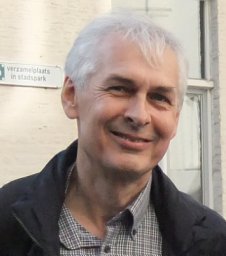 Valentin Fedosseev合作论文数European Organization for Nuclear Research21
 T. Day Goodacre合作论文数Cancer Research20D. M. Seliverstov合作论文数18
 Ralf Erik Rossel合作论文数18
 N. A. Althubiti合作论文数Phys Dept, Jouf Univ18Sserunjaba George合作论文数18Anatoly Barzakh合作论文数18
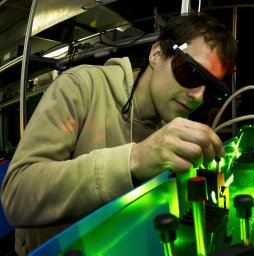 B. A. Marsh合作论文数CERN18L. Ghys合作论文数Katholieke Univ Leuven, Inst Kern Stralingsfys, B-3001 Leuven, Belgium17B. Andel合作论文数17
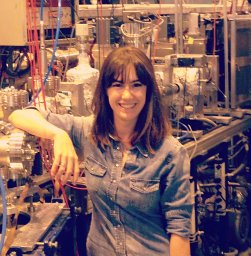 Kara M Lynch合作论文数ISOLDE, CERN17
 Alexander Herlert合作论文数Physics Department, CERN17
 Andrei Andreyev合作论文数School of Physics, Engineering and Technology, University of York17C. Van Beveren合作论文数Katholieke Univ Leuven, Inst Kern Stralingsfys, B-3001 Leuven, Belgium16J. G. Cubiss合作论文数University of York16
 Gaffney L P合作论文数16
 Pieter Van Duppen合作论文数Department of Physics and Astronomy, Faculty of Science, KU Leuven16Marc Huyse合作论文数16P. L. Molkanov合作论文数16j stanja合作论文数15Burcu R Cakirli合作论文数15
 M. Mougeot合作论文数Max Planck Inst Kernphys14A. de Roubin合作论文数Centre d'Etudes Nucléaires de Bordeaux Gradignan, UMR 5797 CNRS/IN2P3-Université de Bordeaux, 19 Chemin du Solarium, CS 10120, F-33175 Gradignan Cedex, France.14
 Thomas Elias Cocolios合作论文数Department of Physics and Astronomy, Faculty of Architecture, KU Leuven;Institute for Nuclear and Radiation Physics, KU Leuven;Faculty of Science, KU Leuven14
 Yisel Martinez合作论文数Instituut voor Kern- en Stralingsfysica13
 S. Naimi合作论文数13P. Ascher合作论文数13E. Verstraelen合作论文数12
 Nobuaki Imai合作论文数12
 Andre Prevot合作论文数Laboratory of Atmospheric Chemistry, Paul Scherrer Institut12
 Stanislav Antalic合作论文数12




