The paper presents the results of the ParlaMint II project, which comprise comparable corpora of parliamentary debates of 29 European countries and autonomous regions, covering at least the period from 2015 to 2022, and containing over 1 billion words. The corpora are uniformly encoded, contain rich metadata about their 24 thousand speakers, and are linguistically annotated up to the level of Universal Dependencies syntax and named entities. The paper focuses on the enhancement made since the ParlaMint I project and presents the compilation of the corpora, including the encoding infrastructure, use of GitHub, the production of individual corpora, the common pipeline for producing their distribution, and use of CLARIN services for dissemination. It then gives a quantitative overview of the produced corpora, followed by the qualitative additions made within the ParlaMint II project, namely metadata localisation, the addition of new metadata, such as the political orientation of political parties, the machine translation of the corpora to English and its tagging with semantic classes, and the production of pilot speech corpora. Finally, outreach activities and further work are discussed.
This paper describes the process of acquisition, cleaning, interpretation, coding and linguistic annotation of a collection of parliamentary debates from the Senate of the Italian Republic covering the COVID-19 period and a former period for reference and comparison according to the CLARIN ParlaMint guidelines and prescriptions. The corpus contains 1199 sessions and 79,373 speeches, for a total of about 31 million words and was encoded according to the ParlaCLARIN TEI XML format, as well as in CoNLL-UD format. It includes extensive metadata about the speakers, the sessions, the political parties and Parliamentary groups. As required by the ParlaMint initiative, the corpus was also linguistically annotated for sentences, tokens, POS tags, lemmas and dependency syntax according to the universal dependencies guidelines. Named entity classification was also included. All linguistic annotation was performed automatically using state-of-the-art NLP technology with no manual revision. The Italian dataset is freely available as part of the larger ParlaMint 2.1 corpus deposited and archived in CLARIN repository together with all other national corpora. It is also available for direct analysis and inspection via various CLARIN services and has already been used both for research and educational purposes.
ParlaMint 2.1 is a multilingual set of 17 comparable corpora containing parliamentary debates mostly starting in 2015 and extending to mid-2020, with each corpus being about 20 million words in size. The sessions in the corpora are marked as belonging to the COVID-19 period (from November 1st 2019), or being reference (before that date). The corpora have extensive metadata, including aspects of the parliament; the speakers (name, gender, MP status, party affiliation, party coalition/opposition); are structured into time-stamped terms, sessions and meetings; with speeches being marked by the speaker and their role (e.g. chair, regular speaker). The speeches also contain marked-up transcriber comments, such as gaps in the transcription, interruptions, applause, etc. Note that some corpora have further information, e.g. the year of birth of the speakers, links to their Wikipedia articles, their membership in various committees, etc. The corpora are encoded according to the Parla-CLARIN TEI recommendation (https://clarin-eric.github.io/parla-clarin/), but have been validated against the compatible, but much stricter ParlaMint schemas. This entry contains the linguistically marked-up version of the corpus, while the text version is available at http://hdl.handle.net/11356/1432. The ParlaMint.ana linguistic annotation includes tokenization, sentence segmentation, lemmatisation, Universal Dependencies part-of-speech, morphological features, and syntactic dependencies, and the 4-class CoNLL-2003 named entities. Some corpora also have further linguistic annotations, such as PoS tagging or named entities according to language-specific schemes, with their corpus TEI headers giving further details on the annotation vocabularies and tools. The compressed files include the ParlaMint.ana XML TEI-encoded linguistically annotated corpus; the derived corpus in CoNLL-U with TSV speech metadata; and the vertical files (with registry file), suitable for use with CQP-based concordancers, such as CWB, noSketch Engine or KonText. Also included is the 2.1 release of the data and scripts available at the GitHub repository of the ParlaMint project. As opposed to the previous version 2.0, this version corrects some errors in various corpora and adds the information on upper / lower house for bicameral parliaments. The vertical files have also been changed to make them easier to use in the concordancers.
ParlaMint is a multilingual set of comparable corpora containing parliamentary debates mostly starting in 2015 and extending to mid-2020, with each corpus being about 20 million words in size. The sessions in the corpora are marked as belonging to the COVID-19 period (after October 2019), or being reference (before that date). The corpora have extensive metadata, including aspects of the parliament; the speakers (name, gender, MP status, party affiliation, party coalition/opposition); are structured into time-stamped terms, sessions and meetings; with speeches being marked by the speaker and their role (e.g. chair, regular speaker). The speeches also contain marked-up transcriber comments, such as gaps in the transcription, interruptions, applause, etc. Note that some corpora have further information, e.g. the year of birth of the speakers, links to their Wikipedia articles, their membership in various committees, etc. The corpora are encoded according to the Parla-CLARIN TEI recommendation (https://clarin-eric.github.io/parla-clarin/), but have been validated against the compatible, but much stricter ParlaMint schemas. This entry contains the linguistically marked-up version of the corpus, while the text version is available at http://hdl.handle.net/11356/1388. The ParlaMint.ana linguistic annotation includes tokenization, sentence segmentation, lemmatisation, Universal Dependencies part-of-speech, morphological features, and syntactic dependencies, and the 4-class CoNLL-2003 named entities. Some corpora also have further linguistic annotations, such as PoS tagging or named entities according to language-specific schemes, with their corpus TEI headers giving further details on the annotation vocabularies and tools. The compressed files include the ParlaMint.ana XML TEI-encoded linguistically annotated corpus; the derived corpus in CoNLL-U with TSV speech metadata; and the vertical files (with registry file), suitable for use with CQP-based concordancers, such as CWB, noSketch Engine or KonText. Also included is the 2.0 release of the data and scripts available at the GitHub repository of the ParlaMint project.
The aim of this work is to present an overview of the research presented at the LREC workshops over the years 1998-2016 with the aim to shed light on the community represented by workshop participants in terms of country of origin, type of affiliation, gender. There has been also an effort towards the identification of the major topics dealt with as well as of the terminological variations noticed in this time span. Data has been retrieved from the portal of the European Language Resources Association (ELRA) which organizes the conference and the resulting corpus made up of workshops titles and of the related presentations has then been processed using a term extraction tool developed at ILC-CNR.
This chapter presents a computer platform supporting a Marine Information and Knowledge System based on a repository that gathers, classify and structures marine scientific literature and data, guaranteeing their accessibility by means of standard protocols. This requires the access to quality controlled data and to information that is provided in grey literature and/or in relevant scientific literature. There exist efforts to develop search engines to find author's contributions to scientific literature or publications. This implies the use of persistent identifiers. However very few efforts are dedicated to link publications to data that was used, or cited in them or that can be of importance for the published studies. Full-text technologies are often unsuccessful since they assume the presence of specific keywords in the text; to fix this problem, it is suggested to use different semantic technologies for retrieving the text and data and thus getting much more complying results.
This proposal describes a new way to visualise resources in the LREMap, a community-built repository of language resource descriptions and uses. The LREMap is represented as a force-directed graph, where resources, papers and authors are nodes. The analysis of the visual representation of the underlying graph is used to study how the community gathers around LRs and how LRs are used in research.
This paper aims to provide a first snapshot of Italian Language Resources (LRs) and their uses by the community, as documented by the papers presented at two different conferences, LREC2014 and CLiC-it 2014. The data of the former were drawn from the LOD version of the LRE Map, while those of the latter come from manually analyzing the proceedings. The results are presented in the form of visual graphs and confirm the initial hypothesis that Italian LRs require concrete actions to enhance their visibility.
D7.4 reports on the evaluation of the different components integrated in the PANACEA third cycle of development as well as the final validation of the platform itself. All validation and evaluation experiments follow the evaluation criteria already described in D7.1. The main goal of WP7 tasks was to test the (technical) functionalities and capabilities of the middleware that allows the integration of the various resource-creation components into an interoperable distributed environment (WP3) and to evaluate the quality of the components developed in WP5 and WP6. The content of this deliverable is thus complementary to D8.2 and D8.3 that tackle advantages and usability in industrial scenarios. It has to be noted that the PANACEA third cycle of development addressed many components that are still under research. The main goal for this evaluation cycle thus is to assess the methods experimented with and their potentials for becoming actual production tools to be exploited outside research labs.
The paper describes the multimodal enrichment of ItalWordNet action verbs entries by means of an automatic mapping with an ontology of action types instantiated by video scenes (ImagAct). The two resources present important differences as well as interesting complementary features, such that a mapping of these two resources can lead to a an enrichment of IWN, through the connection between synsets and videos apt to illustrate the meaning described by glosses. Here, we describe an approach inspired by ontology matching methods for the automatic mapping of ImagAct video scened onto ItalWordNet sense. The experiments described in the paper are conducted on Italian, but the same methodology can be extended to other languages for which WordNets have been created, since ImagAct is done also for English, Chinese and Spanish. This source of multimodal information can be exploited to design second language learning tools, as well as for language grounding in video action recognition and potentially for robotics.
The objectives of the Corpus Acquisition and Annotation (CAA) subsystem are the acquisition and processing of monolingual and bilingual language resources (LRs) required in the PANACEA context. Therefore, the CAA subsystem includes: i) a Corpus Acquisition Component (CAC) for extracting monolingual and bilingual data from the web, ii) a component for cleanup and normalization (CNC) of these data and iii) a text processing component (TPC) which consists of NLP tools including modules for sentence splitting, POS tagging, lemmatization, parsing and named entity recognition. This report presents the terminology used in this document in Section 2. The report explaines state-of-the-art and existing tools for corpus acquisition, corpus normalization, and text processing in Sections 3, 4 and 5 respectively. The resources to be produced in the context of WP4 are discussed in Section 6. In Section 7 it presents the solution path we aim to explore for generating these resources.
This paper describes the conversion of ItalwordNet and of a domain WordNet into RDF and their linking to the (L)LOD cloud and to other existing resources. A brief presentation of the resources is given, and the conversion and resulting datasets are described.
This document describes an open text-mining system that was developed for the Asian-European project KYOTO. The KYOTO system uses an open text representation format and a central ontology to enable extraction of knowledge and facts from large volumes of text in many different languages. We implemented a semantic tagging approach that performs off-line reasoning. Mining of facts and knowledge is achieved through a flexible pattern matching module that can work in much the same way for different languages, can handle efficiently large volumes of documents and is not restricted to a specific domain. We applied the system to an English database on estuaries.
The present paper describes a large-scale lexical resource for the biology domain designed both for human and for machine use. This lexicon aims at semantic interoperability and extendability, through the adoption of ISO-LMF standard for lexical representation and through a granular and distributed encoding of relevant information. The first part of this contribution focuses on three aspects of the model that are of particular interest to the biology community: the treatment of term variants, the representation on bio events and the alignment with a domain ontology. The second part of the paper describes the physical implementation of the model: a relational database equipped with a set of automatic uploading procedures. Peculiarity of the BioLexicon is that, it combines features of both terminologies and lexicons. A set verbs relevant for the domain is also represented with full details on their syntactic and semantic argument structure.
In this paper we present a Web Service Architecture for managing high level interoperability of Language Resources (LRs) by means of a Service Oriented Architecture (SOA) and the use of ISO standards, such as ISO LMF. We propose a layered architecture which separates the management of legacy resources (data collection) from data aggregation (workflow) and data access (user re-quests). We provide a case study to demonstrate how the proposed architecture is capable of managing data exchange among different lexical services in a coherent way and show how the use of a lexical standard be-comes of primary importance when a pro-tocol of interoperability is defined. Such frameworks
In this paper we address the issue of developing an interoperable infrastructure for language resources and technologies. In our approach, called UFRA, we extend the Federate Database Architecture System adding typical functionalities coming from UIMA. In this way, we capitalize the advantages of a federated architecture, such as autonomy, heterogeneity and distribution of components, monitored by a central authority responsible for checking both the integration of components and user rights on performing different tasks. We use the UIMA approach to manage and define one common front-end, enabling users and clients to query, retrieve and use language resources and technologies.The purpose of this paper is to show how UIMA leads from a FEDERATED DATABASE ARCHITECTURE to a FEDERATED RESOURCE ARCHITECTURE, adding to a registry of available components both static resources such as lexicons and corpora and dynamic ones such as tools and general purpose language technologies.At the end of the paper, we present a case-study that adopts this framework to integrate the SIMPLE lexicon and TIMEML annotation guidelines to tag natural language texts.
 Simonetta Montemagni合作论文数Istituto di Linguistica10
 Monica Monachini合作论文数CNR, Inst Computat Linguist A Zampolli9Valeria Quochi合作论文数Istituto di Linguistica9Francesca Frontini合作论文数Dipartimento di Linguistica;Universita degli Studi di Pavia;Dipartimento di Linguistica, Universita degli Studi di Pavia9
 Alessandro Lenci合作论文数Department of Philology, Literature, and Linguistics, University of Pisa;Computational Liguistics Laboratory, University of Pisa8
 Vito Pirrelli合作论文数ILC-CNR7
 Núria Bel合作论文数Universitat Pompeu Fabra7
 Claudia Soria合作论文数National Research Council6Olivier Hamon合作论文数Evaluations and Language Distribution Agency, Université Paris 13 & CNRS6Marc Poch合作论文数Centro de Investigación6Gregor Thurmair合作论文数6
 Antonio Toral合作论文数Departamento de Lenguajes y Sistemas Informáticos, University of Alicante5
 Nicoletta Calzolari合作论文数Institute of Computational Linguistics, Consiglio Nazionale delle Ricerche;European Language Resources Association5
 Riccardo Del Gratta合作论文数Istituto di Linguistica5Prokopis Prokopidis合作论文数4
 T. (Tommaso) Caselli合作论文数Center for Language and Cognition Groningen, Faculty of Arts, University of Groningen4
 Tommaso Agnoloni合作论文数ITTIG-CNR4Vassilis Papavassiliou合作论文数School of Electrical and Computer Eng ..., National Technical University of Athens4
 Irene Russo合作论文数ILC "A.Zampolli" -- CNR4Starkaður Barkarson合作论文数3
 Costanza Navarretta合作论文数Department of Nordic Studies and Linguistics, Faculty of Humanities, University of Copenhagen3
 Ruben van Heusden合作论文数Informat Retrieval Lab, Univ Amsterdam3Matyáš Kopp合作论文数3
 Roberts Dargis合作论文数3
 Maria Calzada Perez合作论文数3Çağri Çöltekin合作论文数Seminar für Sprachwissenschaft, Universität Tübingen3
 Emiliano Giovannetti合作论文数Istituto di Linguistica3
 Nikola Ljubesic合作论文数Faculty of Humanities;Social Sciences;Faculty of Humanities|Social Sciences3
 Kiril Ivanov Simov合作论文数 Linguistic Modelling Laboratory, CLPP, Bulgarian Academy of Sciences3
 Maciej Ogrodniczuk合作论文数Institute of Computer Science, Polish Academy of Sciences3Tomaž Erjavec合作论文数Jozef Stefan Institute3
 Gabriella Pardelli合作论文数Istituto di Linguistica3
 Giulia Venturi合作论文数The ItaliaNLP Lab, Istituto di Linguistica Computazionale "Antonio Zampolli", CNR3
 Simone Marchi合作论文数Istituto di Linguistica3
 Petya Osenova合作论文数Sofia University St. Kliment Ohridski;Institute of Information and Communication Technologies, Bulgarian Academy of Sciences3Luciana D. de Macedo合作论文数2
 Steinþór Steingrímsson合作论文数The Árni Magnússon Institute for Icelandic Studies, University of Iceland2
 Vera Aleksic合作论文数2
 Dorte Haltrup Hansen合作论文数Department of Nordic Studies and Linguistics, Faculty of Humanities, University of Copenhagen2Andrej Pančur合作论文数Institute of Contemporary History2
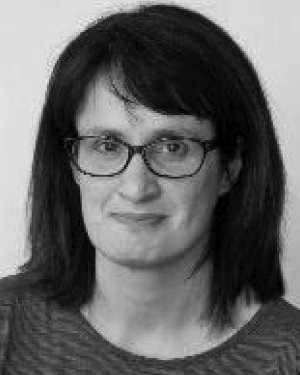 Orsolya Ring合作论文数Computat Social Sci Res Ctr Educ & Network Studie, Ctr Social Sci2Sascha Diwersy合作论文数2Matthew Coole合作论文数Univ Lancaster2Jesse de Does合作论文数2
 Monika Briediene合作论文数2
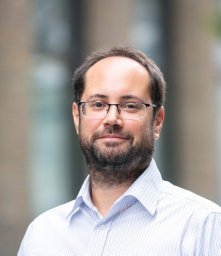 Miklos Sebok合作论文数Inst Polit Sci, Ctr Social Sci Budapest2
 Tomas Krilavicius合作论文数Vytautas Magnus Univ2
 Carlo Marchetti合作论文数Dipartimento di Informatica e Sistemistica, Università di Roma “La Sapienza”,2
 Roberto Battistoni合作论文数Dipartimento di Informatica, Università di Roma ”La Sapienza”,2




