We develop a framework to construct worldvolume gauge theories on D2-branes probing compound Du Val (cDV) Calabi-Yau threefold singularities. By viewing these singularities as ADE surface fibrations over the complex w-plane, we encode their geometry in a Higgs field Φ(w). A D2-brane probe perceives Φ(w) as an 𝒩=2 deformation of its 3d 𝒩=4 affine Dynkin quiver gauge theory via polynomial and monopole superpotential terms. By exploiting 3d mirror symmetry, we obtain an effective theory that correctly reproduces the quiver-collapsing mechanism known in the mathematical literature. We present several examples, including non-toric and non-resolvable cases.
Abstract We construct new families of non-toric 5d SCFTs via abelian orbifolds of the Reid Pagoda, including a surprising infinite family of rank-1 theories, that evade all known classifications. Using the McKay correspondence, we derive their BPS quivers and superpotentials. The hallmark of these theories is a novel sector we dub Pagoda matter, whose vacuum expectation values obstruct the Kähler moduli. This mechanism freezes the gauge coupling to infinite value, precluding a weak-coupling limit and rendering the theories intrinsically strongly coupled. Finally, we interpret these results as 5d SCFTs deformed by non-constant flavor backgrounds.
M-theory geometric engineering on non-compact Calabi-Yau fourfolds (CY4) produces 3d theories with 4 supercharges. Carefully establishing a dictionary between the geometry of the CY4 and the QFT in the transverse directions remains, to a large extent, an unresolved challenge, complicated by subtleties arising from M5-brane instanton corrections. Such difficulties can be circumvented in the restricted and yet controlled setting offered by CY4 with terminal singularities, as they do not admit crepant resolutions with compact exceptional divisors. After a general review of their properties and partial classifications, we focus on a subclass of terminal CY4 constructed as deformed Du Val singularities, that admit crepant resolutions with at most exceptional 2-cycles. We extract the corresponding 3d 𝒩=2 supersymmetric theory descendant in an unambiguous fashion, as the absence of compact 4-cycles leaves no room for a choice of background G_4 flux. These turn out to be theories of chiral multiplets with no gauge group and at most abelian flavor factors: we argue that they serve as the simplest building blocks to substantiate a rigorous CY4/3d QFT geometric engineering mapping.
Abstract We study families of deformed ADE surfaces by probing them with a D2-brane in Type IIA string theory. The geometry of the total space X of such a family can be encoded in a scalar field Φ, which lives in the corresponding ADE algebra and depends on the deformation parameters. The superpotential of the probe three dimensional (3d) theory incorporates a term that depends on the field Φ. By varying the parameters on which Φ depends, one generates a family of 3d theories whose moduli space always includes a geometric branch, isomorphic to the deformed surface. By fibering this geometric branch over the parameter space, the total space X of the family of ADE surfaces is reconstructed. We explore various cases, including when X is the universal flop of length ℓ = 1, 2. The effective theory, obtained after the introduction of Φ, provides valuable insights into the geometric features of X, such as the loci in parameter space where the fiber becomes singular and, more notably, the conditions under which this induces a singularity in the total space. By analyzing the monopole operators in the 3d theory, we determine the charges of certain M2-brane states arising in M-theory compactifications on X.
We show that supersymmetry can be used to compute the BCFT one-point function coefficients for chiral primary operators, in 4d 𝒩 = 2 SCFTs with 1/2 -BPS boundary conditions. The main ingredient is the hemisphere partition function, with the boundary condition on the equatorial S3. A supersymmetric Ward identity relates derivatives with respect to the chiral coupling constants to the insertion of the primaries at the pole of the hemisphere. Exact results for the one-point functions can be then obtained in terms of the localization matrix model. We discuss in detail the example of the super Maxwell theory in the bulk, interacting with 3d 𝒩 = 2 SCFTs on the boundary. In particular we derive the action of the SL(2,ℤ) duality on the one-point functions.
A bstract The classification of 4D reflexive polytopes by Kreuzer and Skarke allows for a systematic construction of Calabi-Yau hypersurfaces as fine, regular, star triangulations (FRSTs). Until now, the vastness of this geometric landscape remains largely unexplored. In this paper, we construct Calabi-Yau orientifolds from holomorphic reflection involutions of such hypersurfaces with Hodge numbers h 1,1 ≤ 12. In particular, we compute orientifold configurations for all favourable FRSTs for h 1,1 ≤ 7, while randomly sampling triangulations for each pair of Hodge numbers up to h 1,1 = 12. We find explicit string compactifications on these orientifolded Calabi-Yaus for which the D3-charge contribution coming from O p -planes grows linearly with the number of complex structure and Kähler moduli. We further consider non-local D7-tadpole cancellation through Whitney branes. We argue that this leads to a significant enhancement of the total D3-tadpole as compared to conventional SO(8) stacks with (4 + 4) D7-branes on top of O7-planes. In particular, before turning-on worldvolume fluxes, we find that the largest D3-tadpole in this class occurs for Calabi-Yau threefolds with $$ \left({h}_{+}^{1,1},{h}_{-}^{1,2}\right) $$ h + 1 , 1 h − 1 , 2 = (11 , 491) with D3-brane charges |Q D3 | = 504 for the local D7 case and |Q D3 | = 6 , 664 for the non-local Whitney branes case, which appears to be large enough to cancel tadpoles and allow fluxes to stabilise all complex structure moduli. Our data is publicly available under the following link https://github.com/AndreasSchachner/CY_Orientifold_database .
A bstract The conifold is a basic example of a noncompact Calabi-Yau threefold that admits a simple flop, and in M-theory, gives rise to a 5d hypermultiplet at low energies, realized by an M2-brane wrapped on the vanishing sphere. We develop a novel gauge-theoretic method to construct new classes of examples that generalize the simple flop to so-called length ℓ = 1, . . . , 6. The method allows us to naturally read off the Gopakumar-Vafa invariants. Although they share similar properties to the beloved conifold, these threefolds are expected to admit M2-bound states of higher degree ℓ . We demonstrate this through our computations of the GV invariants. Furthermore we characterize the associated Higgs branches by computing their dimensions and flavor groups. With our techniques we extract more refined data such as the charges of the hypers under the flavor group.
We classify rank zero 5d SCFTs geometrically engineered from M-theory on quasi-homogeneous compound Du Val isolated threefold singularities. For all such theories, we characterize the Higgs Branch, by computing the dimension, the continuous and discrete symmetry groups, as well as more refined details such as the charges of the hypermultiplets under these groups. We derive these data by means of a gauge-theoretic method, that we have recently introduced, based on establishing a correspondence between an adjoint Higgs field and the M-theory geometry. As a byproduct, this further allows us to construct several T-brane backgrounds, that yield inequivalent 5d spectra but are associated with the same geometry.
We propose a new way to compute the genus zero Gopakumar-Vafa invariants for two families of non-toric non-compact Calabi-Yau threefolds that admit simple flops: Reid's Pagodas, and Laufer's examples. We exploit the duality between M-theory on these threefolds, and IIA string theory with D6-branes and O6-planes. From this perspective, the GV invariants are detected as five-dimensional open string zero modes. We propose a definition for genus zero GV invariants for threefolds that do not admit small crepant resolutions. We find that in most cases, non-geometric T-brane data is required in order to fully specify the invariants.
Abstract We argue that the Standard Model quiver can be embedded into compact Calabi-Yau geometries through orientifolded D3-branes at del Pezzo singularities dPn with n ≥ 5 in a framework including moduli stabilisation. To illustrate our approach, we explicitly construct a local dP5 model via a combination of Higgsing and orientifolding. This procedure reduces the original dP5 quiver gauge theory to the Left-Right symmetric model with three families of quarks and leptons as well as a Higgs sector to further break the symmetries to the Standard Model gauge group. We embed this local model in a globally consistent Calabi-Yau flux compactification with tadpole and Freed-Witten anomaly cancellations. The model features closed string moduli stabilisation with a de Sitter minimum from T-branes, supersymmetry broken by the Kähler moduli, and the MSSM as the low energy spectrum. We further discuss phenomenological and cosmological implications of this construction.
Abstract Extracting reliable low-energy information from string compactifications notoriously requires a detailed understanding of the UV sensitivity of the corresponding effective field theories. Despite past efforts in computing perturbative string corrections to the tree-level action, neither a systematic approach nor a unified framework has emerged yet. We make progress in this direction, focusing on the moduli dependence of perturbative corrections to the 4D scalar potential of type IIB Calabi-Yau orientifold compactifications. We proceed by employing two strategies. First, we use two rescaling symmetries of type IIB string theory to infer the dependence of any perturbative correction on both the dilaton and the Calabi-Yau volume. Second, we use F/M-theory duality to conclude that KK reductions on elliptically-fibred Calabi-Yau fourfolds of the M-theory action at any order in the derivative expansion can only generate (α′)even corrections to the 4D scalar potential, which, moreover, all vanish for trivial fibrations. We finally give evidence that (α′)odd effects arise from integrating out KK and winding modes on the elliptic fibration and argue that the leading no-scale breaking effects at string tree-level arise from (α′)3 effects, modulo potential logarithmic corrections.
We consider de Sitter vacua realised in concrete type IIB Calabi-Yau compactifications with an anti D3-brane at the tip of a warped throat of Klebanov-Strassler type. The Kähler moduli are stabilised together with the complex structure modulus of the warped throat. The volume is exponentially large as in the large volume scenario (LVS). We analyse the conditions on the parameters of the EFT such that they are in the region of validity of our approximations, there are no runaway problems and the vacua satisfy all consistency constraints, such as tadpole cancellation. We illustrate our results with an explicit Calabi-Yau orientifold with two Kähler moduli and one antibrane on top of an O3-plane in a warped throat, that has the goldstino as its only massless state. The moduli are stabilised with g s ∼ 0 . 2 and volume 𝒱 ∼ 10 4 in string units, justifying the approximation used to derive the corresponding EFT. Although the model lacks chiral matter, it is presented as a proof of concept, chosen to be the simplest realisation of antibrane uplift.
We study the Higgs branches of five-dimensional N=1 rank-zero theories obtained from M-theory on two classes non-toric non-compact Calabi-Yau threefolds: Reid's pagodas, and Laufer's examples. Our approach consists in reducing to IIA with D6-branes and O6-planes, and computing the open-string spectra giving rise to hypermultiplets. Starting with the seven-dimensional worldvolume theories, we switch on T-brane backgrounds to give rise to bound states with angles. We observe that the resulting partially Higgsed 5d theories have discrete gauge groups, from which we readily deduce the geometry of the Higgs branches as orbifolds of quaternionic varieties.
A bstract We construct G 4 fluxes that stabilize all of the 426 complex structure moduli of the sextic Calabi-Yau fourfold at the Fermat point. Studying flux stabilization usually requires solving Picard-Fuchs equations, which becomes unfeasible for models with many moduli. Here, we instead start by considering a specific point in the complex structure moduli space, and look for a flux that fixes us there. We show how to construct such fluxes by using algebraic cycles and analyze flat directions. This is discussed in detail for the sextic Calabi-Yau fourfold at the Fermat point, and we observe that there appears to be tension between M2-tadpole cancellation and the requirement of stabilizing all moduli. Finally, we apply our results to show that even though symmetric fluxes allow to automatically solve several F-term equations, they typically lead to flat directions.
We describe a class of compact G2 orbifolds constructed from non-symplectic involutions of K3 surfaces. Within this class, we identify a model for which there are infinitely many associative submanifolds contributing to the effective superpotential of M-theory compactifications. Under a chain of dualities, these can be mapped to F-theory on a Calabi-Yau fourfold, and we find that they are dual to an example studied by Donagi, Grassi and Witten. Finally, we give two different descriptions of our main example and the associative submanifolds as a twisted connected sum.
We construct models with U(1) gauge group and matter with charges up to 6, in the context of type IIB compactifications. We show explicitly that models with charges up to 4 can be derived from corresponding models in F-theory by applying the Sen weak coupling limit. We derive which type IIB models should be the limit of charge 5 and 6 F-theory models. Explicit six dimensional type IIB models with maximal charge 5 and 6 are constructed on an algebraic K3 surface that is the double cover of ℂℙ2. By using type IIB results we are also able to rediscover the F-theory charge 4 model in a straightforward way.
Type IIA on the conifold is a prototype example for engineering QED with one charged hypermultiplet. The geometry admits a flop of length one. In this paper, we study the next generation of geometric engineering on singular geometries, namely flops of length two such as Laufer’s example, which we affectionately think of as the conifold 2.0. Type IIA on the latter geometry gives QED with higher-charge states. In type IIB, even a single D3-probe gives rise to a nonabelian quiver gauge theory. We study this class of geometries explicitly by leveraging their quiver description, showing how to parametrize the exceptional curve, how to see the flop transition, and how to find the noncompact divisors intersecting the curve. With a view towards F-theory applications, we show how these divisors contribute to the enhancement of the Mordell-Weil group of the local elliptic fibration defined by Laufer’s example.
We consider the Sen limit of several global F-theory compactifications, some of which exhibit an MSSM-like spectrum. We show that these indeed have a consistent limit where they can be viewed as resulting from an intersecting brane configuration in type IIB. We discuss the match of the fluxes and the chiral spectrum in detail. We find that some D5-tadpole canceling gauge fluxes do not lift to harmonic vertical four-form fluxes in the resolved F-theory manifold. We discuss the connection between splitting of curves at weak coupling and remnant discrete symmetries.
M2 branes probing T-brane backgrounds in M-theory with ADE surface singularities perceive deformations on their worldvolume superpotentials by monopole operators. The dynamics and moduli spaces of the resulting theories can be studied using a dual description involving conventional superpotential terms and (the dimensional reduction of) class S trinion theories. By using the S-dual description of N=2 SU(N) SQCD with 2N flavors in four dimensions, we are able to study T-branes corresponding to all minimal nilpotent orbits for the whole ADE series.
A bstract We describe global embeddings of fractional D3 branes at orientifolded singularities in type IIB flux compactifications. We present an explicit Calabi-Yau example where the chiral visible sector lives on a local orientifolded quiver while non-perturbative effects, α ′ corrections and a T-brane hidden sector lead to full closed string moduli stabilisation in a de Sitter vacuum. The same model can also successfully give rise to inflation driven by a del Pezzo divisor. Our model represents the first explicit Calabi-Yau example featuring both an inflationary and a chiral visible sector.
 Andres Collinucci合作论文数12
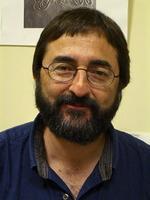 Fernando Quevedo合作论文数Department of Applied Mathematics and Theoretical Physics, University of Cambridge11Michele Cicoli合作论文数Centre for Mathematical Sciences10
 Andreas Braun合作论文数9Jan Louis合作论文数7Christoph Mayrhofer合作论文数Fraunhofer Institut für Kurzzeitdynamik, Ernst-Mach-Institut6
 Andrea Sangiovanni合作论文数Department of Philosophy, Faculty of Arts & Humanities, King’s College London5
 Bobby Acharya合作论文数Department of Physics, Faculty of Natural, Mathematical & Engineering Sciences, King’s College London4
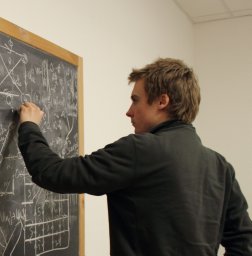 Sven Krippendorf合作论文数University of Cambridge4Mario De Marco合作论文数3Iñaki García Etxebarria合作论文数3Andreas Schachner合作论文数3damian kaloni mayorga pena合作论文数2Chiara Crinò合作论文数2
 Markus Rummel合作论文数Department of Physics & Astronomy, McMaster University2
 Simone Giacomelli合作论文数Dipartimento di Fisica, Università di Milano-Bicocca2
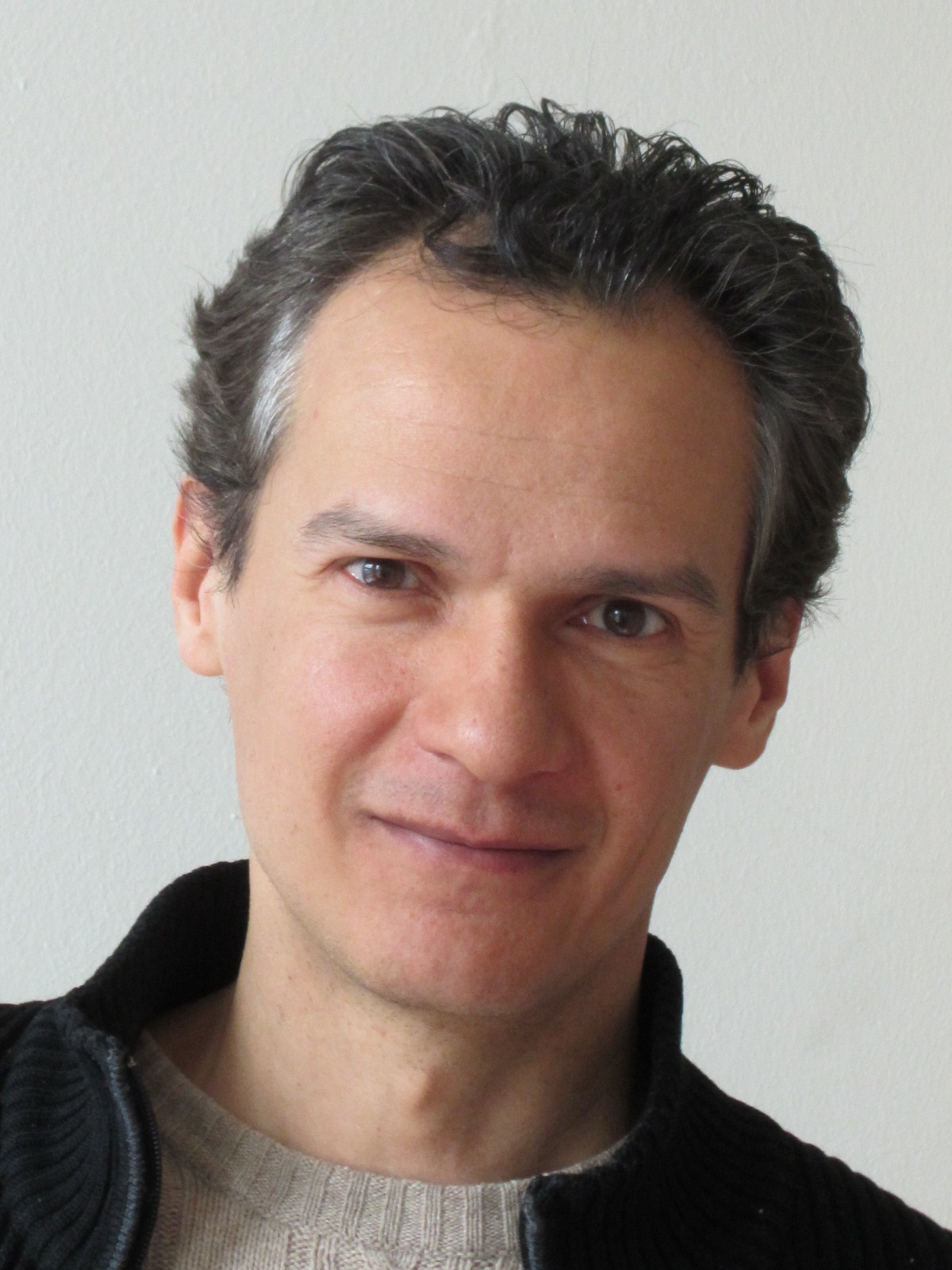 Arthur Hebecker合作论文数Institute for Theoretical Physics, University of Heidelberg2
 Francesco Benini合作论文数SISSA2
 Bobby E. Gunara合作论文数Theoretical Physics Lab., ITB2
 Pramod Shukla合作论文数Department of Physics, Indian Institute of Technology2
 Paul Smyth合作论文数Trinity College, University of Dublin2Raffaele Savelli合作论文数2Davide Bason合作论文数1luca tripodi合作论文数1
 Jesse van Muiden合作论文数1
 Marco Fazzi合作论文数Dipartimento Fis, Univ Milano Bicocca1
 Lorenzo Di Pietro合作论文数Università di Trieste1
 Boris Pioline合作论文数Laboratoire de Physique Théorique et Hautes Energies1Sergei Alexandrov合作论文数1Antonio Bassetto合作论文数1
 Abdus Salam合作论文数Imperial College1
 Giuseppe Milanesi合作论文数1Denis Klevers合作论文数1Luis M Aparicio合作论文数Departamento de F ´ õsica;Instituto de F ´ õsica;noma de Madrid, Universidad Auto;Instituto de F ´ õsica, Universidad Autonoma de Madrid1
 Buchmüller, Wilfried合作论文数Universität Hamburg;Deutsches Elektronen-Synchrotron DESY1
 Senarath P. De Alwis (Shanta)合作论文数Department of Physics, College of Arts and Sciences, University of Colorado, Boulder1
 Eirik E. Svanes合作论文数Department of Physics;Norwegian University of Science and Technology;Department of Physics, Norwegian University of Science and Technology1
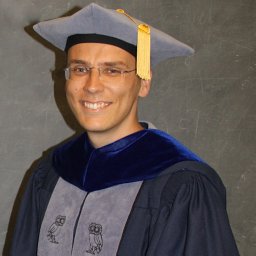 Rainer Ebert合作论文数Institut fur Theoretische;Universitat Heidelberg;Institut fur Theoretische, Universitat Heidelberg1Yoske Sumitomo合作论文数Institute for Advanced Study, Hong Kong University of Science and Technology1
 Frederik Denef合作论文数Department of Mathematics;Columbia University;Department of Mathematics, Columbia University1Alessandro Torrielli合作论文数Center for Theoretical Physics;Massachusetts Institute of Technology;Center for Theoretical Physics, Massachusetts Institute of Technology1
 Rajesh Gupta合作论文数ICTP1
 Alexander Westphal合作论文数Department of Physics;Stanford University;Department of Physics, Stanford University1




