For the rest of this century, humankind will be building cities at an unprecedented pace. World population is projected to increase from 7.9 billion to more than 10 billion, and much of that increase will occur in parts of the world that lag in infrastructure. Everywhere, people will expect to catch up, and then surpass. China is an example of how this can happen in just 30 years.
In 1997, Harvard Business School professor Clayton Christensen created a sensation among venture capitalists and entrepreneurs with his book The Innovator's Dilemma. The lesson that most people remember from it is that a well-run business can't afford to switch to a new approach—one that ultimately will replace its current business model—until it is too late.
In September 2016, Stanford's "One Hundred Year Study on Artificial Intelligence" project (AI100) issued the first report of its planned long-term periodic assessment of artificial intelligence (AI) and its impact on society. It was written by a panel of 17 study authors, each of whom is deeply rooted in AI research, chaired by Peter Stone of the University of Texas at Austin. The report, entitled "Artificial Intelligence and Life in 2030," examines eight domains of typical urban settings on which AI is likely to have impact over the coming years: transportation, home and service robots, healthcare, education, public safety and security, low-resource communities, employment and workplace, and entertainment. It aims to provide the general public with a scientifically and technologically accurate portrayal of the current state of AI and its potential and to help guide decisions in industry and governments, as well as to inform research and development in the field. The charge for this report was given to the panel by the AI100 Standing Committee, chaired by Barbara Grosz of Harvard University.
We are well into the third wave of major investment in artificial intelligence. So it's a fine time to take a historical perspective on the current success of AI. In the 1960s, the early AI researchers often breathlessly predicted that human-level intelligent machines were only 10 years away. That form of AI was based on logical reasoning with symbols, and was carried out with what today seem like ludicrously slow digital computers. Those same researchers considered and rejected neural networks. • In the 1980s, AI's second age was based on two technologies: rule-based expert systems—a more heuristic form of symbol-based logical reasoning—and a resurgence in neural networks triggered by the emergence of new training algorithms. Again, there were breathless predictions about the end of human dominance in intelligence.
editorial Open AccessA Brave, Creative, and Happy HRI Share on Author: Rodney Brooks MIT Computer Science and Artificial Intelligence Lab, USA MIT Computer Science and Artificial Intelligence Lab, USAView Profile Authors Info & Affiliations ACM Transactions on Human-Robot InteractionVolume 7Issue 1May 2018 Article No.: 1pp 1–3https://doi.org/10.1145/3209540Published:16 May 2018 3citation900DownloadsMetricsTotal Citations3Total Downloads900Last 12 Months125Last 6 weeks30 Get Citation AlertsNew Citation Alert added!This alert has been successfully added and will be sent to:You will be notified whenever a record that you have chosen has been cited.To manage your alert preferences, click on the button below.Manage my AlertsNew Citation Alert!Please log in to your account Save to BinderSave to BinderCreate a New BinderNameCancelCreateExport CitationPublisher SiteeReaderPDF
There are, of course, a wide variety of research questions examined by the Artificial Life community. However at their core there are some common philosophical assumptions that span the field. Almo...
The engineers who built routers for the fledgling ARPANET in 1969 never dreamed that networking technology would upend journalism. Nor did anyone guess that cellular communication would make people ignore one another at the dinner table. Early users of email had no idea of spam. Henry Ford did not foresee the traffic jam. . Technology has unintended consequences. Sometimes they are large and tumultuous. It is often well worth the trouble of trying to figure them out ahead of time.
Artificial Intelligence as a discipline has gotten bogged down in subproblems of intelligence. These subproblems are the result of applying reductionist methods to the goal of creating a complete artificial thinking mind. In Brooks (1987) 1 have argued that these methods will lead us to solving irrelevant problems; interesting as intellectual puzzles, but useless in the long run for creating an artificial being.
 Anita M. Flynn合作论文数18
 Cynthia Breazeal合作论文数Massachusetts Institute of Technology8
 Thomas O. Binford合作论文数Read-Ink Technologies Pvt. Ltd.6
 Tomás Lozano-Pérez合作论文数Department of Electrical Engineering and Computer Science, School of Engineering, Massachusetts Institute of Technology;Computer Science and Artificial Intelligence Laboratory, Massachusetts Institute of Technology6
 Richard P. Gabriel合作论文数IBM Research6
 Brian Scassellati合作论文数Social Robotics Lab, Yale University6V Zue合作论文数5M Brady合作论文数5
 Richard C. Waters合作论文数Mitsubishi Electr. Res. Labs.5Berwick Robert C合作论文数5
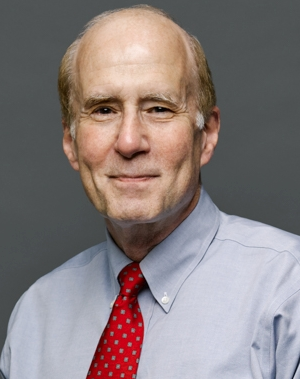 Randall Davis合作论文数Department of Electrical Engineering and Computer Science, Massachusetts Institute of Technology5
 Maja J Matarić合作论文数Department of Computer Science, Viterbi School of Engineering, University of Southern California;Embodied5Matthew M. Williamson合作论文数HP Labs Bristol5
 Charles Rich合作论文数Computer Science Department, Worcester Polytechnic Institute5Tavrow, Lee S.合作论文数4
 Bart, Stephen F.合作论文数4
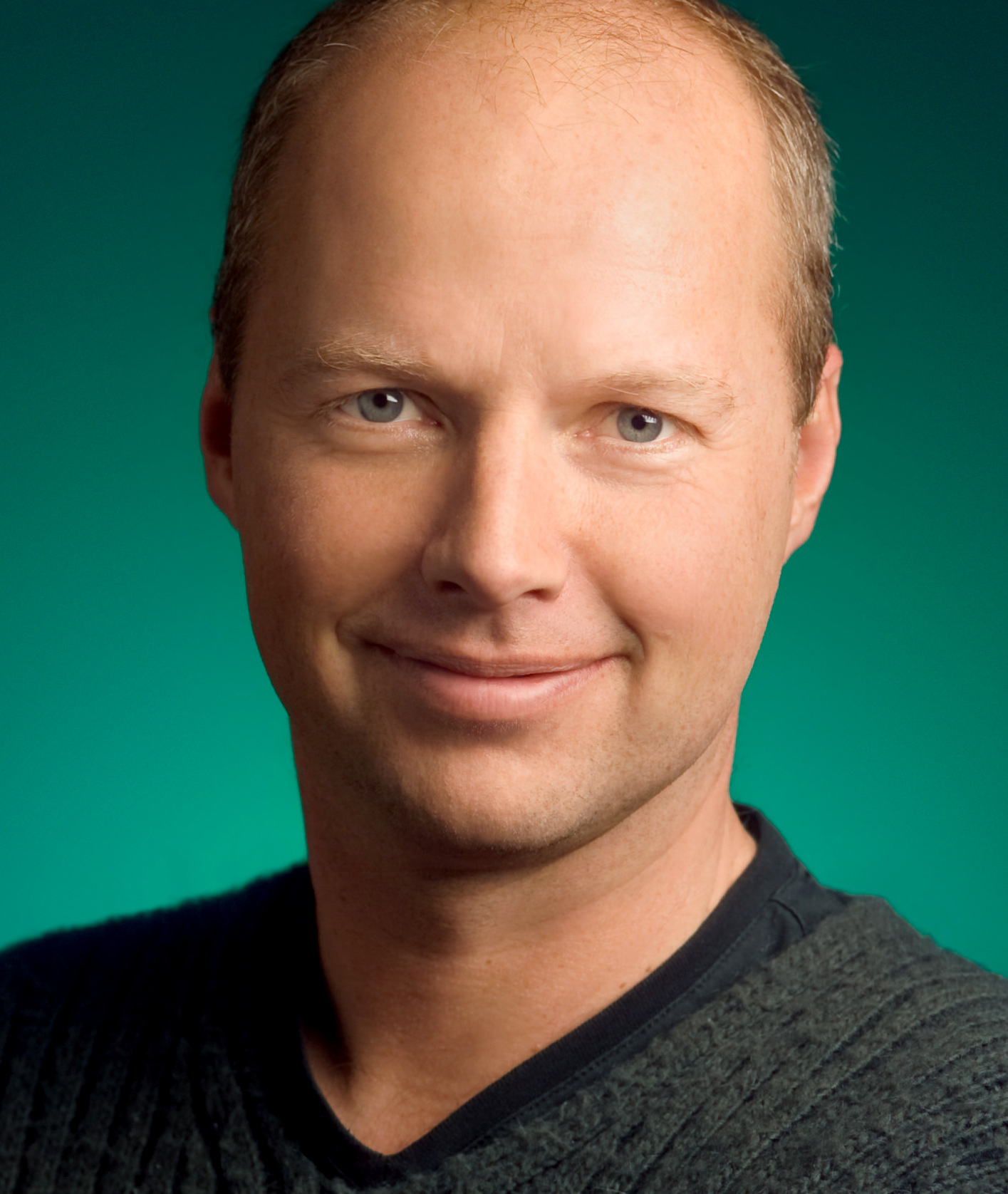 Sebastian Thrun合作论文数Stanford University;Kitty Hawk Corporation;Udacity4Lee S. Tavrow合作论文数4noelle dye合作论文数3William Press合作论文数3bruce blumberg合作论文数3
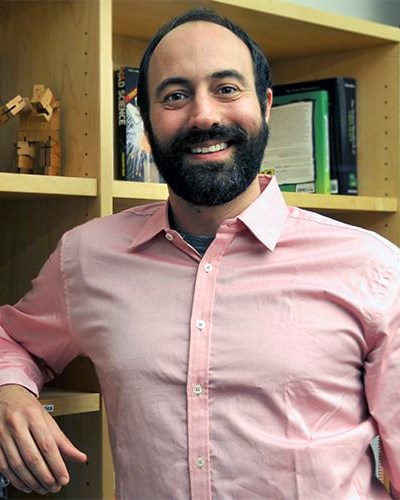 Ryan Calo合作论文数School of Law, University of Washington3
 Gregory D. Hager合作论文数Malone Center for Engineering in Healthcare, The Johns Hopkins University;Department of Computer Science, The Johns Hopkins University3
 Guy L. Steele Jr. (小盖伊·史提尔)合作论文数Oracle Labs3
 David C. Parkes合作论文数John A. Paulson School of Engineering and Applied Sciences, Harvard University3
 L. Eric Cross合作论文数Electrical Engineering Department, Pennsylvania State University3
 Charlie Kemp合作论文数Hello Robot Inc.3
 Erik Brynjolfsson合作论文数Institute for Human-Centered AI, Stanford University;Digital Economy Lab, Stanford University;Institute for Economic Policy Research, Stanford University;Department of Economics, Stanford University;Graduate School of Business, Stanford University3
 Takeo Kanade合作论文数Robotics Institute, Carnegie Mellon University3
 Paul M. Fitzpatrick合作论文数Artificial Intelligence Lab., MIT, Cambridge, MA
3Aaron Edsinger合作论文数3
Paul M. Fitzpatrick合作论文数Artificial Intelligence Lab., MIT, Cambridge, MA
3Aaron Edsinger合作论文数3 D. J. Ehrlich合作论文数M. I. T. Lincoln Laboratory3
 Annalee Saxenian合作论文数UC Berkeley School of Information3K. R. Udayakumar合作论文数3
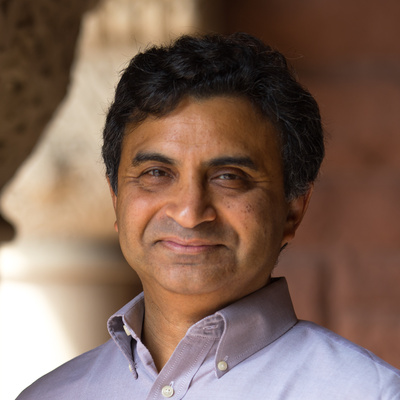 Milind Tambe合作论文数Center for Research in Computation and Society, Harvard University;John A Paulson School of Engineering and Applied Sciences, Harvard University;Google Research3
 Oren Etzioni合作论文数The Allen Institute for Artificial Intelligence;Paul G. Allen School of Computer Science & Engineering, University of Washington;TrueMedia.org3David S. Barrett合作论文数3
 Shivaram Kalyanakrishnan合作论文数Department of Computer Science and Engineering, Indian Institute of Technology Bombay3
 Ece Kamar合作论文数AI Frontiers Lab, Microsoft Research3
 Julie Shah合作论文数Computer Science and Artificial Intelligence Lab, Department of Aeronautics and Astronautics, Massachusetts Institute of Technology3
 Peter Stone合作论文数Department of Computer Science, College of Natural Sciences, The University of Texas at Austin;Sony AI;Sony Research3
 Hugh Durrant-Whyte合作论文数Faculty of Engineering, University of Sydney3
 Julia Hirschberg合作论文数Department of Computer Science, Columbia University3Eric Benson合作论文数2AJ TALBERT合作论文数2
 Jeff Weber合作论文数2AS Jules合作论文数2Astro Teller合作论文数2
 Demis Hassabis (戴密斯·哈萨比斯)合作论文数DeepMind;Isomorphic Labs2




