This paper replicates the analysis conducted in Burkhart and Lewis-Beck (1994), using current statistical software, where economic development demonstrates a causal relationship to democracy in an extensive cross-national dataset from 1972-1989, even in the face of strong control variables such as regime history and world-system position. It extends those findings with a dataset of approximately 120 countries from 1972-2014, largely confirming the previously published findings.
This paper investigates the Canada–US borderlands relationship along the two geographic corridors as bounded by Lake Superior: Sault Ste. Marie, Ontario–Sault Ste. Marie, Michigan and Thunder Bay, Ontario–Duluth, Minnesota. Borderland communities—driven by their shared cultural characteristics (ethnicity, language, religion)—are said to challenge the border as a dividing device and undermine the very essence of international borders. Moreover, borderlands regions are dynamic and overlapping, providing the first point of contact and interaction between nations. Our results depict inherent differences between these particular border regions, with each illustrating characteristics that both connect and divide. Despite the passage of time and both countries' determined efforts to make the passage safe and less demanding, the peoples in these border regions perceive a continuing frustration with crossing the border and connecting to the people on the other side of the border.
This paper investigates the Canada-U.S. borderlands relationship along the two geographic corridors as bounded by Lake Superior: Sault Ste. Marie, Ontario–Sault Ste. Marie, Michigan and Thunder Bay, Ontario–Duluth, Minnesota. Borderland communities—driven by their shared cultural characteristics (ethnicity, language, religion)—are said to challenge the border as a dividing device and undermine the very essence of international borders. Moreover, borderlands regions are dynamic and overlapping, providing the first point of contact and interaction between nations. We use interviews of over 200 people living in these borderlands regions to investigate the cross-border relationships of Canada-U.S. border communities. We find that despite the challenges of crossing the border, these communities retain a strong sense of shared values.
What is our understanding of the relationship between democracy and income inequality in the Western Hemisphere? This paper specifies a nonlinear relationship between democracy and income inequality in multivariate non-linear models across different regions and time points of the Western Hemisphere as well as the hemisphere based on a common literature (Acemoglu and Robinson 2006, Barro 1999, Boix 2003, Burkhart 1997, Houle 2009). While the literature has rigorously tested these relationships within Latin America (Huber et al. 2006), there has not been a similar test of all of the Western Hemispheric countries, including the industrialized economies of Canada and the United States. This paper will utilize the best extant income inequality measure, the Solt (2009) corrections to the UNU-WIDER project. This comparative exercise should be instructive in both a modeling sense and a better understanding of consequences of using income inequality measures across hemispheric subregions.
This book explores the intricacies of the science-policy linkage that pervades environmental policymaking in a democracy.These are the key questions that this primary textbook for courses on American public policymaking and environmental policymaking addresses and attempts to answer. Turmoil in American Public Policy: Science, Democracy, and the Environment first lays out the basics of the policymaking process in the United States in relation to the substantive issues of environmental policymaking. Drawing on hundreds of interviews, the authors highlight the views and experiences of scientists, especially natural scientists, in their interactions with policymakers and their efforts to harness the findings of their science to rational public policy.The proper role of science and scientists in relation to environmental policymaking hinges on fundamental questions at the intersection of political philosophy and scientific epistemology. How can the experimental nature of the scientific method and the probabilistic expression of scientific results be squared with the normative language of legislation and regulation? If scientists undertake to square the circle by hardening the tentative truths of their scientific models into positive truths to underpin public policy, at what point may they be judged to have exceeded the proper limits of scientific knowledge, relinquished their role as impartial experts, and become partisan advocates demanding too much say in a democratic setting? Providing students—and secondarily policymakers, scientists, and citizen activists—a theoretical and practical knowledge of the means availed by modern American democracy for resolving this tension is the object of this progressively structured textbook.
This book explores the intricacies of the science-policy linkage that pervades environmental policymaking in a democracy. * Includes excerpts from 100 interviews with natural scientists and social scientists conducted over the past several years * Provides two figures illustrating the concepts of pluralism and elitism in the United States public policymaking process * Offers end-of-chapter reflection questions and suggested readings for students
It is appropriate to take stock of extant measures of income inequality as they pertain to their utility in cross-national models of political and economic performance. Are some measures more reliable and valid than others? What about data coverage, conceptual mapping of similar indicators, functional form specification matters? This paper specifies models of cross-national democratic and economic performance, with common, industry-standard variables such as economic growth and development level, globalization, political culture (colonialism, ethnicity, religion), and economic type (world-system), and insert various measures of income inequality (Hoover, Deininger and Squire, Galbraith, and UNU-WIDER). The intent is to compare and contrast model robustness under conditions of variable country coverage, inequality definitions, and measurement strategies. With both practical and conceptual matters in mind, the hope is to become better acquainted with the consequences of variable choice in income inequality data usage and modeling techniques.
 Leslie R. Alm合作论文数13les alm合作论文数2Hyer Andrew M合作论文数2W.David Patton合作论文数2
 Indra De Soysa合作论文数Institute for Sociology and Political Science, Norwegian University of Science and Technology2James B. Weatherby合作论文数2Steven J. Rosen合作论文数1richard haass合作论文数1Leslie H. Gelb合作论文数1Samuel F. Wells合作论文数1James R. Kurth合作论文数1Samuel P. Huntington合作论文数1Richard Betts合作论文数1Robert Art合作论文数1robert gilpin合作论文数1Barry Blechman合作论文数1Max Boot合作论文数1Peter J. Katzenstein合作论文数1Robert Powell合作论文数1Loch K. Johnson合作论文数1Sarah E Toevs合作论文数1
 timothy hibbard合作论文数1
 Maria Chavez合作论文数Polit Sci, Pacific Lutheran Univ1thomas carothers合作论文数1alexander hamilton合作论文数Ctr Hlth Innovat, Queens Univ1John Gaddis合作论文数1Patrick M.A. James合作论文数John H. Daniels Faculty of Architecture, Landscape, and Design, University of Toronto1
 Joseph Grieco合作论文数Department of Political Science, Trinity College of Arts & Sciences, Duke University1Robert Axelrod合作论文数1
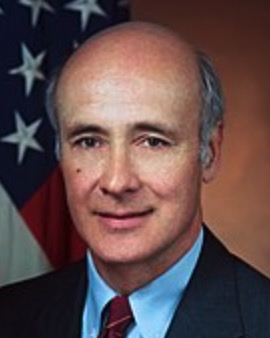 Joseph S. Nye合作论文数John F. Kennedy School of Government, Harvard University1
 Robert O. Keohane合作论文数Princeton University,Woodrow Wilson School of Public and International Affairs1
 Michael Brecher合作论文数Department of Political Science, McGill University1
 Michael S. Lewis Beck合作论文数Department of Political Science, College of Liberal Arts and Sciences, University of Iowa1Alexander L. George合作论文数Stanford University1
 Christopher Gelpi合作论文数Duke University1James Meernik合作论文数University of North Texas;California State University;University of North Texas, California State University1Joseph M. Grieco合作论文数Department of Political Science;Duke University;Department of Political Science, Duke University1
 Bruce Bueno De Mesquita合作论文数Department of Politics, Ares & Science, New York University1
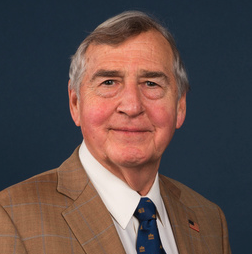 Graham Allison合作论文数Belfer Center for Science & International Affairs, Harvard Kennedy School, Harvard University1
 Kimi Lynn King合作论文数University of North Texas1
 Duncan Snidal合作论文数Nuffield College, University Of Oxford1Christopher C. Sarver合作论文数1Kenneth N. Waltz合作论文数1
 John R. Oneal合作论文数Department of Political Science, College of Arts & Sciences, The University of Alabama1Philip Zelikow合作论文数1Robert Jervis合作论文数1Charles W. Kegley合作论文数1Regina Werum合作论文数1Daryl G. Press合作论文数1




