How do independent media affect the support of the regime in an autocracy? We carried out two complementary field experiments in Russia at the city and individual levels, randomising access to the country’s only independent TV channel before the 2016 parliamentary elections. In both experiments, we find that independent media foster polarisation. They increase turnout and pro-government votes among regime supporters. However, this effect only applies to voters who rely on news from social media. Among consumers of traditional media, the independent channel uniformly decreases regime support. Our results highlight how social media can condition the effect of traditional media.
We exploit a randomized controlled trial conducted between 2007 and 2011 to identify the effect of Afghanistan's largest local governance and development program on the strength of the insurgency. We find that the program reduced violence, improved economic outcomes, and increased government support in interior regions of the country, but increased violence in villages close to the Pakistani border, where foreign insurgents were more numerous. The results suggest that development programs can be effective in suppressing locally driven insurgencies, but may be counterproductive where insurgents are not reliant on the local population for support. (JEL C93, D74, F35, O15, O17, O18)
We examine the long-run effect of homophily in online social networks on interpersonal interactions in local communities. We measure online homophily across counties in the US using Facebook data. For identification, we exploit a conflict between Facebook and Google over data sharing of user information during the early expansion phase of Facebook. We find evidence that homophilic connections led to increased social media usage but reduced offline socialization. This shift was accompanied by deterioration of local social cohesion, as individuals became less connected across income strata and less likely to share the same political opinions with others in their counties.
We study the impact of hiring former government officials on firms’ tax evasion using a unique administrative employee-employer matched data from Moscow, Russia. We find that firms hiring former top-level city government officials experience increased tax evasion: reported salaries of the firms’ employees decrease, while the actual compensation increases. Using instrumental variables based on local reorganizations in Moscow government, we show that these effects have causal interpretation. Importantly, the “benefits” of tax evasion accrue not only to the top-managers but are widely shared among other firms’ employees, which likely makes those practices difficult to uproot.
Do new communication technologies, such as social media, alleviate the collective action problem? This paper provides evidence that penetration of VK, the dominant Russian online social network, led to more protest activity during a wave of protests in Russia in 2011. As a source of exogenous variation in network penetration, we use the information on the city of origin of the students who studied with the founder of VK, controlling for the city of origin of the students who studied at the same university several years earlier or later. We find that a 10% increase in VK penetration increased the probability of a protest by 4.6% and the number of protesters by 19%. Additional results suggest that social media induced protest activity by reducing the costs of coordination rather than by spreading information critical of the government. We observe that VK penetration increased pro‐governmental support, with no evidence of increased polarization. We also find that cities with higher fractionalization of network users between VK and Facebook experienced fewer protests, and the effect of VK on protests exhibits threshold behavior.
This paper studies the effect of different ballot structures in proportional representation systems on the educational attainment of elected politicians as a proxy for their “ability”. By exploiting the Italian electoral reform that switched from open to blocked lists of candidates, the difference-in-differences analysis shows that the reform lowered the educational attainment of national politicians compared to the counterfactual (regional politicians). The dynamic impact of the reform is persistent over time, and it is robust to several concerns. The estimates account for the changes in the party system due to the “Clean hands” judicial inquiry against political corruption that began in 1992. The voters’ choice of better politicians than political parties seems to be the most likely mechanism behind the results.
How do independent media affect regime support in an autocracy? We carry out two field experiments in Russia by promoting the country’s only independent online TV channel to a randomized sample of cities and individuals before the 2016 parliamentary elections. In both experiments, we find that independent media foster polarization, increasing turnout and progovernment votes among regime supporters, and reducing it for nonsupporters. The effect, however, holds only for voters who rely on news from social media; among consumers of traditional media, our treatment uniformly decreases regime support. Our results highlight how social media can mediate the effect of independent media in autocracies.
Homogeneous societies usually provide more public goods. Voluntary social distancing in a pandemic is also a public good, but it has private benefits, too. Theoretically, we show that presence of population groups with different rationales for social distancing can lead to stricter observance of social distancing in more diverse societies. Empirically, we find that mobility reduction following the first local COVID-19 case was stronger in Russian cities with higher ethnic fractionalization and xenophobia. For identification, we predict the timing of the first case using historical patterns of internal migration. Using the United States data on mobility produces similar results.
The 2019 Nobel Memorial Prize in Economic Sciences was awarded to Abhijit Banerjee, Esther Duflo, and Michael Kremer for developing experimental approach to studying the problem of reducing world inequality. The works of laureates combine detailed microeconomic analysis of practical problems related to development economics with careful empirical estimation of the effects of particular development programs through the use of field experiments. The paper discusses methodological contribution of the laureates, their influence on changing economists' approach to working on practical issues related to development economics. The paper also provides a short survey of the results of their research in areas of economics of education, health and behavioral economics, microcredit, and gender inequality.
How do the Internet and social media affect political outcomes? We review empirical evidence from the recent political economy literature, focusing primarily on work that considers traits that distinguish the Internet and social media from traditional off-line media, such as low barriers to entry and reliance on user-generated content. We discuss the main results about the effects of the Internet in general, and social media in particular, on voting, street protests, attitudes toward government, political polarization, xenophobia, and politicians’ behavior. We also review evidence on the role of social media in the dissemination of fake news, and we summarize results about the strategies employed by autocratic regimes to censor the Internet and to use social media for surveillance and propaganda. We conclude by highlighting open questions about how the Internet and social media shape politics in democracies and autocracies.
Can bombs and broadcasts instigate resistance against a foreign regime? In this paper, we examine the canonical case of bombing designed to undermine enemy morale - the Allied bomber offensive against Germany during World War II. Our evidence shows that air power and the airwaves indeed undermined regime support. We collect data on treason trials and combine it with information on the bombing of over 900 German towns and cities. Using plausibly exogenous variation in weather, we show that places that suffered more bombardment saw noticeably more opposition. Bombing also reduced the combat motivation of soldiers: fighter pilots from bombed-out cities performed markedly less well after raids. We also provide evidence that exposure to BBC radio, especially together with bombing, increased the number of resistance cases. We corroborate these findings with the evidence on people’s opinions and behavior using unique survey data collected in 1945.
We study the causal effect of social media on ethnic hate crimes and xenophobic attitudes in Russia using quasi-exogenous variation in social media penetration across cities. Higher penetration of social media led to more ethnic hate crimes, but only in cities with a high preexisting level of nationalist sentiment. Consistent with a mechanism of coordination of crimes, the effects are stronger for crimes with multiple perpetrators. We implement a national survey experiment and show that social media persuaded young and low-educated individuals to hold more xenophobic attitudes, but did not increase respondents’ openness to expressing these views. Our results are consistent with a simple model of social learning where penetration of social networks increases individuals’ propensity to meet like-minded people.
Does new media promote accountability in nondemocratic countries, where offline media is often suppressed? We show that blog posts, which exposed corruption in Russian state-controlled companies, had a negative causal impact on their market returns. For identification, we exploit the precise timing of blog posts by looking at within-day results with company-day fixed effects. Furthermore, we show that the posts are ultimately associated with higher management turnover and less minority shareholder conflicts. Taken together, our results suggest that social media can discipline corruption even in a country with limited political competition and heavily censored traditional media. (JEL G14, G34, L82, P23, P26, P34, Z13)
Direct democracy is designed to better align policy outcomes with citizen preferences. To test this proposition, we randomized whether 250 villages across Afghanistan selected projects by secret-ballot referenda or by consultation meetings. We find that referenda reduce the influence of local elites over both project type and location. Consistent with previous experimental results, we also find that referenda improve villagers' perceptions of the local economy and of the quality of local governance. However, we find no systematic evidence that selecting projects via referenda increases the average impact of such projects.
Social motivation plays a vital role in electoral participation and other forms of civic engagement. We examine the role of social image concerns in the decision to participate in political protests. We develop a dynamic model of protest participation, where socially-minded individuals use protest participation to signal their type. We then test predictions of the model using individual and city-level data from 2011-2012 political protests in Russia. List experiment results from a specially conducted survey imply that social signaling motives indeed were important for the decision to participate in protests, which makes the theory applicable. We report several findings, consistent with the theory. First, protest participation declined over time. Second, participation in online protest groups increased offline protest participation. Finally, the importance of both online social networks and offline social capital evolves over time in a manner predicted by the theory.
 Maria Petrova合作论文数Harvard University, Harvard University24
 Fotini Christia合作论文数MIT Institute for Data, Systems, and Society/Department of Political Science, MIT19
 andrew beath合作论文数World Bank18
 Ekaterina Zhuravskaya合作论文数Economic School, New12
 Georgy Egorov合作论文数Russian, Eurasian, and East European Studies, Weinberg College of Arts and Sciences, Northwestern University5
 Konstantin Sonin合作论文数Harris School of Public Policy Studies, The University of Chicago5
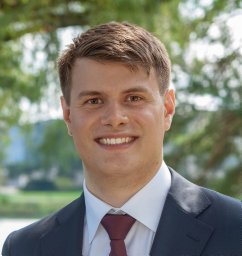 Alexey Makarin合作论文数CEPR, Einaudi Institute for Economics and Finance (EIEF)4
 Timur Kuran合作论文数Department of Economics, Trinity College of Arts & Sciences, Duke University4
 Maja Adena合作论文数Wissenschaftszentrum Berlin für Sozialforschung, WZB Berlin3
 Hongbin Li (李宏彬)合作论文数School of Economics and Management, Tsinghua University;Institute of Labor Economics;Institute of Economic Policy Research, Peking University3
 Koen Schoors合作论文数University of Ghent and Sa?d Business School, University of Oxford3
 Vera Mironova合作论文数Middle East Inst2
 Veronica Aoki Santarosa合作论文数Law School, University of Michigan2
 Stefano DellaVigna合作论文数Department of Economics, University of California, Berkeley;National Bureau of Economic Research;CESifo2
 Ben Olken合作论文数1Veronica Santarosa合作论文数1Oded Galor合作论文数1
 Matthew Maguire合作论文数1John J. Shim合作论文数College of Business, Mendoza1
 David Yanagizawa-Drott合作论文数Univ Zurich1
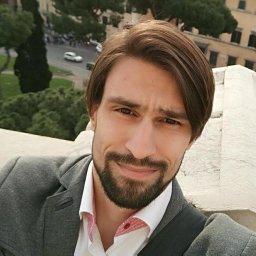 Nikita Zakharov合作论文数Department of Economics, Freiburg University1ingvil gaarder合作论文数1
 Mara P. Squicciarini合作论文数Principal corresponding author.1
 Michael Rochlitz合作论文数Fac Business Studies & Econ, Univ Bremen1
 Nico Voigtländer合作论文数Department of Economics, Anderson School of Management, University of California1
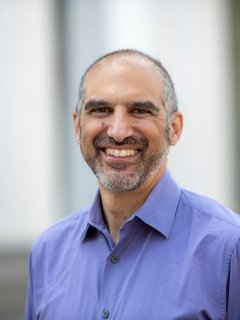 Mark Aguiar合作论文数Department of Economics, School of Public and International Affairs, Princeton University1
 Katherine Baicker合作论文数Harris School of Public Policy, University of Chicago;National Bureau of Economic Research1
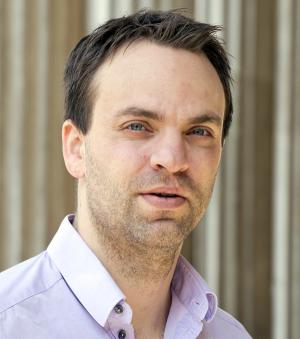 Magne Mogstad合作论文数Department of Economics, The University of Chicago1
 Leonardo Bursztyn合作论文数Kenneth C. Griffin Department of Economics, The University of Chicago1
 Alexei Zakharov合作论文数Max IV Laboratory, Lund University1
 Vasily Korovkin合作论文数New Economic School, Moscow 117418, Russia;Anderson School of Management, University of California at Los Angeles;Anderson School of Management, University of California at Los Angeles1
 Jesse M. Shapiro合作论文数Department of Economics, Faculty of Arts and Sciences, Harvard University;Harvard Business School;National Bureau of Economic Research1
 Bart Bronnenberg合作论文数Tilburg School of Economics and Management, Tilburg University1
 Alberto Alesina合作论文数Minda de Gunzburg Center for European Studies, Harvard University1
 Julian Arevalo合作论文数1
 Torsten Persson合作论文数Institute for International Economic Studies, Stockholm University1
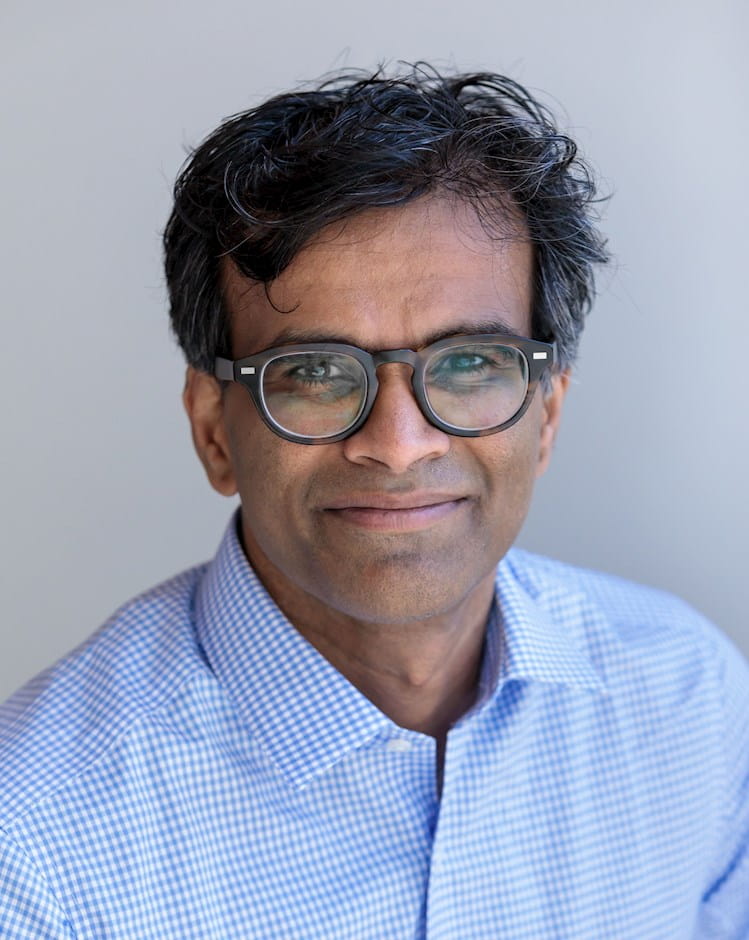 Sendhil Mullainathan合作论文数Department of Economics, Massachusetts Institute of Technology;Dandelion Health AI1
 Peter Cramton合作论文数Department of Economics, University of Maryland1
 Daron Acemoglu合作论文数Department of Economics, Massachusetts Institute of Technology1
 Art Durnev合作论文数Business School, University of Michigan1
 Sergey Mityakov合作论文数1
 Randall Lewis合作论文数Yahoo! Labs1
 Emmanuel Farhi合作论文数Department of Economics, Harvard University1Suresh Naidu合作论文数1
 Marianna Belloc合作论文数1
 Sergey Stepanov合作论文数Department of Physics, University of Bath1
 Nathan Nunn合作论文数Vancouver School of Economics, University of British Columbia;Canadian Institute for Advanced Research;National Bureau of Economic Research;Bureau for Research and Economic Analysis of Development;Center for Effective Global Action1
 Jose L. Fillat合作论文数1




