OBJECTIVE:To assess sample size calculation reporting in randomized controlled trials (RCTs) investigating prehabilitation interventions in oncological surgery patients. DATA SOURCES:A systematic literature search was performed in multiple medical databases from inception to April 2023, including MEDLINE, Embase, The Cochrane Library, CINHAL, AMED, and PsychINFO. STUDY SELECTION:The inclusion criteria used were RCTs evaluating effectiveness of exercise, nutrition, and/or psychological interventions on postoperative outcomes of adult patients undergoing oncological surgery. DATA EXTRACTION:Two authors (DS and SV) extracted information on the sample size calculation parameters, including type I error (α), power (1-β), mean (or mean difference between randomization arms), and variance (eg, standard deviation) for continuous outcomes, and event rates or event rate difference between randomization arms for dichotomous outcomes. When possible, we recalculated the sample size required using the collected data, given a 10% margin of error. DATA SYNTHESIS:Of the 59 included publications (58 RCTs), 26 (44%) reported sufficient information to complete sample size recalculation. Of those that provided sufficient information allowing us to recalculate the required sample size, 11 (42%) were within a 10% margin of the reported sample size, whereas 9 (35%) were >10% higher than reported sample size and 6 (23%) were >10% lower than reported sample size. CONCLUSIONS:Over half of the published RCTs in this field exhibit poor sample size calculation reporting. Most RCTs that report sufficient sample size information were underpowered. More stringent reporting requirements are necessary.
Postoperative morbidity in patients undergoing curative colorectal cancer surgery is high. Prehabilitation has been suggested to reduce postoperative morbidity, however its effectiveness is still lacking. The aim of this study was to investigate the effectiveness of prehabilitation in reducing postoperative morbidity and length of hospital stay in patients undergoing colorectal cancer surgery. A comprehensive electronic search was conducted in the CINAHL, Cochrane Library, Medline, PsychINFO, AMED, and Embase databases from inception to April 2023. Randomised controlled trials testing the effectiveness of prehabilitation, including exercise, nutrition, and/or psychological interventions, compared with usual care in patients undergoing colorectal cancer surgery were included. Two independent review authors extracted relevant information and assessed the risk of bias. Random-effect meta-analyses were used to pool outcomes, and the quality of evidence was assessed using Grading of Recommendations, Assessment, Development, and Evaluations (GRADE) guidelines. A total of 23 trials were identified (N = 2475 patients), including multimodal (3 trials), exercise (3 trials), nutrition (16 trials), and psychological (1 trial) prehabilitation. There was moderate-quality evidence that preoperative nutrition significantly reduced postoperative infectious complications (relative risk 0.65, 95 https://doi.org/10.17605/OSF.IO/VW72N ).
INTRODUCTION:The evidence on the effectiveness of prehabilitation in patients undergoing bladder cancer surgery remains lacking. Thus, the aim of this study is to determine the effectiveness of prehabilitation on reducing postoperative morbidity and length of hospital stay in patients undergoing bladder cancer surgery. MATERIALS AND METHODS:This systematic review included randomized controlled trials investigating the effect of prehabilitation on postoperative outcomes in patients undergoing bladder cancer surgery. A comprehensive search was conducted, with two reviewers independently screening articles and extracting data. The Cochrane Collaboration's tool was used to assess risk of bias, and GRADE to rate the quality of evidence. When possible, a random effects meta-analysis was conducted. Estimates were presented as risk ratios or mean differences with their 95% confidence intervals. RESULTS:Of the 2764 articles identified, five trials comprising 282 patients met the eligibility criteria. Prehabilitation modalities included preoperative exercise (3), preoperative nutrition (1), and multimodal (1). The mean age of patients ranged from 66.0 to 72.1 years. All included trials presented some or high risk of bias. Pooled analyses according to the different prehabilitation modalities demonstrated low to very low quality of evidence of no effect on postoperative complications and length of hospital stay. CONCLUSION:This study revealed a small number of trials investigating the effectiveness of prehabilitation on patients undergoing bladder cancer surgery. Whether prehabilitation, including preoperative exercise, nutrition and multimodal interventions reduce postoperative morbidity and length of hospital stay following bladder cancer surgery is uncertain, as the quality of evidence is very low.
IntroductionOver the last decade, the number of prehabilitation randomised controlled trials (RCTs) has increased significantly. Therefore, this review aimed to describe the outcomes reported in prehabilitation RCTs in patients undergoing cancer surgery.MethodsA search was conducted in Embase, Allied and Complementary Medicine Database, The Cochrane Library, PsycINFO, MEDLINE, and Cumulated Index to Nursing and Allied Health Literature from inception to July 2021. We included RCTs evaluating the effectiveness of preoperative exercise, nutrition, and psychological interventions on postoperative complications and length of hospital stay in adult oncology patients who underwent thoracic and gastrointestinal cancer surgery. The verbatim outcomes reported in each article were extracted, and each outcome was assessed to determine whether it was defined and measured using a validated tool. Verbatim outcomes were grouped into standardized outcomes and categorized into domains. The quality of outcome reporting in each identified article was assessed using the Harman tool (score range 0-6, where 0 indicated the poorest quality).ResultsA total of 74 RCTs were included, from which 601 verbatim outcomes were extracted. Only 110 (18.3%) of the verbatim outcomes were defined and 270 (44.9%) were labeled as either “primary” or “secondary” outcomes. Verbatim outcomes were categorized into 119 standardized outcomes and assigned into one of five domains (patient-reported outcomes, surgical outcomes, physical/functional outcomes, disease activity, and intervention delivery). Surgical outcomes were the most common outcomes reported (n = 71 trials, 95.9%). The overall quality of the reported outcomes was poor across trials (median score: 2.0 [IQR = 0.00-3.75]).ConclusionsPrehabilitation RCTs display considerable heterogeneity in outcome reporting, and low outcome reporting quality. The development of standardized core outcome sets may help improve article quality and enhance the clinical utility of prehabilitation following cancer surgery.
Introduction The views of patients and carers are important for the development of research priorities. This study aimed to determine and compare the top research priorities of cancer patients and carers with those of multidisciplinary clinicians with expertise in prehabilitation. Materials and methods This cross-sectional study surveyed patients recovering from cancer surgery at a major tertiary hospital in Sydney, Australia, and/or their carers between March and July 2023. Consenting patients and carers were provided a list of research priorities according to clinicians with expertise in prehabilitation, as determined in a recent International Delphi study. Participants were asked to rate the importance of each research priority using a 5-item Likert scale (ranging from 1 = very high research priority to 5 = very low research priority). Results A total of 101 patients and 50 carers participated in this study. Four areas were identified as research priorities, achieving consensus of highest importance (> 70% rated as "high" or "very high" priority) by patients, carers, and clinical experts. These were "optimal composition of prehabilitation programs" (77% vs. 82% vs. 88%), "effect of prehabilitation on surgical outcomes" (85% vs. 90% vs. 95%), "effect of prehabilitation on functional outcomes" (83% vs. 86% vs. 79%), and "effect of prehabilitation on patient reported outcomes" (78% vs. 84% vs. 79%). Priorities that did not reach consensus of high importance by patients despite reaching consensus of highest importance by experts included "identifying populations most likely to benefit from prehabilitation" (70% vs. 76% vs. 90%) and "defining prehabilitation core outcome measures" (66% vs. 74% vs. 87%). "Prehabilitation during neoadjuvant therapies" reached consensus of high importance by patients but not by experts or carers (81% vs. 68% vs. 69%). Conclusion This study delineated the primary prehabilitation research priorities as determined by patients and carers, against those previously identified by clinicians with expertise in prehabilitation. It is recommended that subsequent high-quality research and resource allocation be directed towards these highlighted areas of importance.
 Cherry Koh合作论文数School of Medicine, Faculty of Medicine and Health, The University of Sydney5
 Michael Solomon合作论文数Faculty of Medicine and Health, The University of Sydney;Central Clinical School, The University of Sydney;National University of Singapore;Surgical Outcomes Research Centre, The University of Sydney5
 Daniel Steffens合作论文数School of Medicine, Faculty of Medicine and Health, The University of Sydney4
 Nicholas Hirst合作论文数3Sascha Karunaratne合作论文数3Wilson Jiang合作论文数2
 Kilian Brown合作论文数2Jennifer Vu合作论文数1Pratik Raichurkar合作论文数1
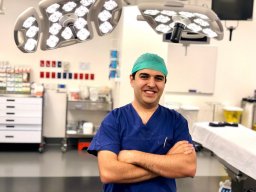 Nariman Ahmadi合作论文数Department of Urology, Chris O'Brien Lifehouse1Ruban Thanigasalam合作论文数Faculty of Medicine and Health, The University of Sydney1
 Linda Denehy合作论文数Department of Physiotherapy, Melbourne School of Health Sciences, Faculty of Medicine, Dentistry and Health Sciences, The University of Melbourne1
 Malcolm West合作论文数Institute of Developmental Sciences, University of Southampton1
 Beckenkamp Paula R合作论文数Musculoskeletal Division, The George Institute for Global Health1
 Leslie Scott合作论文数1
 Liu Xiaoqiu合作论文数1
 Bernhard Riedel合作论文数1Sandy Jack合作论文数Research Scientist and Christopher, Liverpool, UK1




