With the combination of vehicle information and communication technology, there is a new opportunity to solve the problem of rear-end collision in the field of transportation. Based on 802.11p, vehicles equipped with the WAVE (Wireless access in Vehicular Environment) standard can communicate each other in real time. When an accident occurs, vehicles within range can receive warning information quickly through inter-vehicle communication. The drivers will have enough time to calmly brake to stop and also reduce the risk of secondary collision. In order to prevent secondary collisions, we propose an algorithm that includes vehicle accident identification and rear-end collision warning. If it is calculated that the vehicle will collide, the system will notify the driver to take brake. The algorithm is based on the historical path of the vehicle and is primarily used for curved road conditions. The results show that the algorithm has good performance and the false alarm rate does not exceed 1%.
The flexibility and adaptability of traditional robots are pretty poor.This paper focuses on the key techniques of visual robots and puts forward a complete set of recognition,location and grasping algorithms.To solve the problem of target recognition and tracking,an improved method of dynamic target recognition and tracking based on Camshift is designed.In order to improve the success rate of grabbing target,the monocular visual ranging and visual navigation theory are used to measure the target center's spatial position.Then,a robot arm model is established using modified D-H parameters.The forward and inverse kinematics are used to get the control scheme of mechanical arm.The final test shows that the recognition rate of the algorithm is 100%,the relative error between the measured and actual coordinates is less than 5%,and the overall assembly success rate is 96.7%.The results prove that the present key techniques of visual robot can satisfy the application requirements.
Objective: Finding relevant datasets is an important step for promoting data reuse in the biomedical domain; but it is very challenging given the volume and complexity of biomedical data. DataMed (https://datamed.org) is a biomedical data discovery index search engine developed by the NIH-funded biomedical and healthCAre Data Discovery Index Ecosystem (bioCADDIE) consortium. Materials and Methods: DataMed enables users to efficiently find existing heterogeneous datasets that are distributed across a wide range of biomedical repositories. We describe the technical details of developing DataMed, including the data ingestion and indexing processes, as well as the search engine functionality and implementation. Results & Conclusion: As of May 2017, DataMed has released its version 2.0 and ingested 66 repositories comprising of 1,375,977 datasets across 15 datatypes. Within a year, DataMed has attracted 9452 users from 121 countries and areas, and 15 organizations have requested DataMed to index their repositories.
Abstract Objective Finding relevant datasets is important for promoting data reuse in the biomedical domain, but it is challenging given the volume and complexity of biomedical data. Here we describe the development of an open source biomedical data discovery system called DataMed, with the goal of promoting the building of additional data indexes in the biomedical domain. Materials and Methods DataMed, which can efficiently index and search diverse types of biomedical datasets across repositories, is developed through the National Institutes of Health–funded biomedical and healthCAre Data Discovery Index Ecosystem (bioCADDIE) consortium. It consists of 2 main components: (1) a data ingestion pipeline that collects and transforms original metadata information to a unified metadata model, called DatA Tag Suite (DATS), and (2) a search engine that finds relevant datasets based on user-entered queries. In addition to describing its architecture and techniques, we evaluated individual components within DataMed, including the accuracy of the ingestion pipeline, the prevalence of the DATS model across repositories, and the overall performance of the dataset retrieval engine. Results and Conclusion Our manual review shows that the ingestion pipeline could achieve an accuracy of 90% and core elements of DATS had varied frequency across repositories. On a manually curated benchmark dataset, the DataMed search engine achieved an inferred average precision of 0.2033 and a precision at 10 (P@10, the number of relevant results in the top 10 search results) of 0.6022, by implementing advanced natural language processing and terminology services. Currently, we have made the DataMed system publically available as an open source package for the biomedical community.
Regulatory single nucleotide polymorphisms (rSNPs), kind of functional noncoding genetic variants, can affect gene expression in a regulatory way, and they are thought to be associated with increased susceptibilities to complex diseases. Here a novel computational approach to identify potential rSNPs is presented. Different from most other rSNPs finding methods which based on hypothesis that SNPs causing large allele-specific changes in transcription factor binding affinities are more likely to play regulatory functions, we use a set of documented experimentally verified rSNPs and nonfunctional background SNPs to train classifiers, so the discriminating features are found. To characterize variants, an extensive range of characteristics, such as sequence context, DNA structure and evolutionary conservation etc. are analyzed. Support vector machine is adopted to build the classifier model together with an ensemble method to deal with unbalanced data. 10-fold cross-validation result shows that our method can achieve accuracy with sensitivity of ~78% and specificity of ~82%. Furthermore, our method performances better than some other algorithms based on aforementioned hypothesis in handling false positives. The original data and the source matlab codes involved are available at https://sourceforge.net/projects/rsnppredict/.
Transmembrane region (TR) is a conserved region of transmembrane (TM) subunit in envelope (env) glycoprotein of retrovirus. Evidences have shown that TR is responsible for anchoring the env glycoprotein on the lipid bilayer and substitution of the TR for a covalently linked lipid anchor abrogates fusion. However, universal software could not achieve sufficient accuracy as TM in env also has several motifs such as signal peptide, fusion peptide and immunosuppressive domain composed largely of hydrophobic residues. In this paper, a support vector machine-based (SVM) model is proposed to identify TRs in retroviruses. Firstly, physicochemical and evolutionary information properties were extracted as original features. And then, the feature importance was analyzed by minimum Redundancy Maximum Relevance (mRMR) feature selection criterion. Our model achieved an Sn of 0.955, Sp of 0.998, ACC of 0.995, MCC of 0.954 using 10-fold cross-validation on the training dataset. These results suggest that the proposed model can be used to predict TRs in non-annotation retroviruses and 11917, 3344, 2, 289 and 6 new putative TRs were found in HERV, HIV, HTLV, SIV, MLV, respectively.
Integrase catalytic domain (ICD) is an essential part in the retrovirus for integration reaction, which enables its newly synthesized DNA to be incorporated into the DNA of infected cells. Owing to the crucial role of ICD for the retroviral replication and the absence of an equivalent of integrase in host cells, it is comprehensible that ICD is a promising drug target for therapeutic intervention. However, annotated ICDs in UniProtKB database have still been insufficient for a good understanding of their statistical characteristics so far. Accordingly, it is of great importance to put forward a computational ICD model in this work to annotate these domains in the retroviruses. The proposed model then discovered 11,660 new putative ICDs after scanning sequences without ICD annotations. Subsequently in order to provide much confidence in ICD prediction, it was tested under different cross-validation methods, compared with other database search tools, and verified on independent datasets. Furthermore, an evolutionary analysis performed on the annotated ICDs of retroviruses revealed a tight connection between ICD and retroviral classification. All the datasets involved in this paper and the application software tool of this model can be available for free download at https://sourceforge.net/projects/icdtool/files/?source=navbar.
Human endogenous retroviruses (HERVs) encode active retroviral proteins, which may be involved in the progression of cancer and other diseases. Matrix protein (MA), in group-specific antigen genes (gag) of retroviruses, is associated with the virus envelope glycoproteins in most mammalian retroviruses and may be involved in virus particle assembly, transport and budding. However, the amount of annotated MAs in ERVs is still at a low level so far. No computational method to predict the exact start and end coordinates of MAs in gags has been proposed yet. In this paper, a computational method to identify MAs in ERVs is proposed. A divide and conquer technique was designed and applied to the conventional prediction model to acquire better results when dealing with gene sequences with various lengths. Initiation sites and termination sites were predicted separately and then combined according to their intervals. Three different algorithms were applied and compared: weighted support vector machine (WSVM), weighted extreme learning machine (WELM) and random forest (RF). G - mean (geometric mean of sensitivity and specificity) values of initiation sites and termination sites under 5-fold cross validation generated by random forest models are 0.9869 and 0.9755 respectively, highest among the algorithms applied. Our prediction models combine RF & WSVM algorithms to achieve the best prediction results. 98.4% of all the collected ERV sequences with complete MAs (125 in total) could be predicted exactly correct by the models. 94,671 HERV sequences from 118 families were scanned by the model, 104 new putative MAs were predicted in human chromosomes. Distributions of the putative MAs and optimizations of model parameters were also analyzed. The usage of our predicting method was also expanded to other retroviruses and satisfying results were acquired.
随着基因序列分析研究的深入,中短基因片段的快速准确测序已经成为生物信息研究的瓶颈。本文针对第二代基因测序仪的硬件设计问题,在深入研究第二代基因测序原理和流程的基础上完成了硬件总体方案设计。此方案采用自上而下逐步分解的方法,设计了流动槽、PCR、边合成边测序、控制与数据传输等硬件模块,继续分解设计了温度控制、试剂控制、激光触发、光学采集、扫描控制等硬件子模块,并根据各个子模块的功能和厂商的产品说明书完成了部分关键器件的选型。为后续基因测序仪的机械结构设计和硬件组装奠定了基础。
A filter feature selection technique has been widely used to mine biomedical data. Recently, in the classical filter method minimal-Redundancy-Maximal-Relevance (mRMR), a risk has been revealed that a specific part of the redundancy, called irrelevant redundancy, may be involved in the minimal-redundancy component of this method. Thus, a few attempts to eliminate the irrelevant redundancy by attaching additional procedures to mRMR, such as Kernel Canonical Correlation Analysis based mRMR (KCCAmRMR), have been made. In the present study, a novel filter feature selection method based on the Maximal Information Coefficient (MIC) and Gram-Schmidt Orthogonalization (GSO), named Orthogonal MIC Feature Selection (OMICFS), was proposed to solve this problem. Different from other improved approaches under the max-relevance and min-redundancy criterion, in the proposed method, the MIC is used to quantify the degree of relevance between feature variables and target variable, the GSO is devoted to calculating the orthogonalized variable of a candidate feature with respect to previously selected features, and the max-relevance and min-redundancy can be indirectly optimized by maximizing the MIC relevance between the GSO orthogonalized variable and target. This orthogonalization strategy allows OMICFS to exclude the irrelevant redundancy without any additional procedures. To verify the performance, OMICFS was compared with other filter feature selection methods in terms of both classification accuracy and computational efficiency by conducting classification experiments on two types of biomedical datasets. The results showed that OMICFS outperforms the other methods in most cases. In addition, differences between these methods were analyzed, and the application of OMICFS in the mining of high-dimensional biomedical data was discussed. The Matlab code for the proposed method is available at https://github.com/lhqxinghun/bioinformatics/tree/master/OMICFS/.
Today’s science increasingly requires effective ways to find and access existing datasets that are distributed across a range of repositories. For researchers in the life sciences, discoverability of datasets may soon become as essential as identifying the latest publications via PubMed. Through an international collaborative effort funded by the National Institutes of Health (NIH)’s Big Data to Knowledge (BD2K) initiative, we have designed and implemented the DAta Tag Suite (DATS) model to support the DataMed data discovery index. DataMed’s goal is to be for data what PubMed has been for the scientific literature. Akin to the Journal Article Tag Suite (JATS) used in PubMed, the DATS model enables submission of metadata on datasets to DataMed. DATS has a core set of elements, which are generic and applicable to any type of dataset, and an extended set that can accommodate more specialized data types. DATS is a platform-independent model also available as an annotated serialization in schema.org, which in turn is widely used by major search engines like Google, Microsoft, Yahoo and Yandex.
Circular RNAs (circRNAs) were found more than 30 years ago, but have been treated as molecular flukes in a long time. Combining deep sequencing studies with bioinformatics technique, thousands of endogenous circRNAs have been found in mammalian cells, and some researchers have proved that several circRNAs act as competing endogenous RNAs (ceRNAs) to regulate gene expression. However, the mechanism by which the precursor mRNA to be transformed into a circular RNA or a linear mRNA is largely unknown. In this paper, we attempted to bioinformatically identify shared genomic features that might further elucidate the mechanism of formation and proposed a SVM-based model to distinguish circRNAs from non-circularized, expressed exons. Firstly, conformational and thermodynamic dinucleotide properties in the flanking introns were extracted as potential features. Secondly, two feature selection methods were applied to gain the optimal feature subset. Our 10-fold cross-validation results showed that the model can be used to distinguish circRNAs from non-circularized, expressed exons with an Sn of 0.884, Sp of 0.900, ACC of 0.892, MCC of 0.784, respectively. The identification results suggest that conformational and thermodynamic properties in the flanking introns are closely related to the formation of circRNAs. Datasets and the tool involved in this paper are all available at https://sourceforge.net/projects/predicircrnatool/files/.
As a pivotal domain within envelope protein, fusion peptide (FP) plays a crucial role in pathogenicity and therapeutic intervention. Taken into account the limited FP annotations in NCBI database and absence of FP prediction software, it is urgent and desirable to develop a bioinformatics tool to predict new putative FPs (np-FPs) in retroviruses. In this work, a sequence-based FP model was proposed by combining Hidden Markov Method with similarity comparison. The classification accuracies are 91.97% and 92.31% corresponding to 10-fold and leave-one-out cross-validation. After scanning sequences without FP annotations, this model discovered 53,946 np-FPs. The statistical results on FPs or np-FPs reveal that FP is a conserved and hydrophobic domain. The FP software programmed for windows environment is available at https://sourceforge.net/projects/fptool/files/?source=navbar.
Objective: Delayed diagnosis of Kawasaki disease (KD) may lead to serious cardiac complications. We sought to create and test the performance of a natural language processing (NLP) tool, the KD-NLP, in the identification of emergency department (ED) patients for whom the diagnosis of KD should be
Regulatory single nucleotide polymorphisms (rSNPs) in human genomes are thought to be responsible for phenotypic differences, including susceptibility to diseases and treatment outcomes, even they do not change any gene product. However, a genome-wide search for rSNPs has not been properly addressed so far. In this work, a computational method for rSNP identification is proposed. As background SNPs far outnumber rSNPs, an ensemble method is applied to handle imbalanced data, which firstly converts an unbalanced dataset into several balanced ones and then models for every balanced dataset. Two major types of features are extracted, that are sequence based features and allele-specific based features. Then random forest is applied to build the recognition model for each balanced dataset. Finally, ensemble strategies are adopted to combine the result of each model together. We have tested our method on a set of experimentally verified rSNPs, and leave-one-out cross-validation results showed that our method can achieve accuracy with sensitivity of 73.8%, specificity of 71.8% and the area under ROC curve (AUC) is 0.756. In addition, our method is threshold free and doesn't rely on data of regulatory elements, thus it will have better adaptability when facing different data scenarios. The original data and the source matlab codes involved are available at https://sourceforge.net/projects/rsnpdect/.
OBJECTIVE Delayed diagnosis of Kawasaki disease (KD) may lead to serious cardiac complications. We sought to create and test the performance of a natural language processing (NLP) tool, the KD-NLP, in the identification of emergency department (ED) patients for whom the diagnosis of KD should be considered. METHODS We developed an NLP tool that recognizes the KD diagnostic criteria based on standard clinical terms and medical word usage using 22 pediatric ED notes augmented by Unified Medical Language System vocabulary. With high suspicion for KD defined as fever and three or more KD clinical signs, KD-NLP was applied to 253 ED notes from children ultimately diagnosed with either KD or another febrile illness. We evaluated KD-NLP performance against ED notes manually reviewed by clinicians and compared the results to a simple keyword search. RESULTS KD-NLP identified high-suspicion patients with a sensitivity of 93.6% and specificity of 77.5% compared to notes manually reviewed by clinicians. The tool outperformed a simple keyword search (sensitivity = 41.0%; specificity = 76.3%). CONCLUSIONS KD-NLP showed comparable performance to clinician manual chart review for identification of pediatric ED patients with a high suspicion for KD. This tool could be incorporated into the ED electronic health record system to alert providers to consider the diagnosis of KD. KD-NLP could serve as a model for decision support for other conditions in the ED.
 Jiuqiang Han (韩九强)合作论文数Xi'an Jiaotong University20
 Dexing Zhong (钟德星)合作论文数School of Automation Science and Engineering, Xi'an Jiaotong University15
 Hongqiang Lv (吕红强)合作论文数Xi'an Jiaotong University;Xi'an University of Architecture and Technology11
 Jun Liu (刘均)合作论文数Department of Computer Science, School of Electronic and Information Engineering, Xi'an Jiaotong University8
 Ralph M. Garruto合作论文数Binghamton University6
 Jiguang Zheng (郑辑光)合作论文数Faculty of Electronic and Information Engineering, Xi'an Jiaotong University6
 Lucila Ohno-Machado合作论文数Department of Biomedical Informatics and Data Science, Yale University;School of Medicine, Yale University;Center for Neurocomputation and Machine Intelligence, Wu Tsai Institute, Yale University6
 Charles A. Weitz合作论文数6Chen-Ting Chin合作论文数6Xiaoling Chen合作论文数The University of Texas Health Science Center at Houston5Xing He合作论文数5
 Susanna-Assunta Sansone合作论文数Department of Engineering Science, University of Oxford;Oxford e-Research Centre, University of Oxford5
 Anupama E. Gururaj合作论文数Department of Applied Botany and Biotechnology, University of Mysore5Li Yueling合作论文数4
 Todd R. Johnson合作论文数College of P ..., The University of Texas School of Biomedical Informatics at Houston4
 Philippe Rocca-Serra合作论文数Oxford e-Research Centre, University of Oxford;Department of Engineering Science, University of Oxford;Kellogg College, University of Oxford4
 Hyeoneui Kim合作论文数4Ian Fore合作论文数4
 Jeffrey Grethe合作论文数SPARC.Science;Center for Research in Biological Systems, University of California, San Diego;SciCrunch Inc4
 Claudiu Farcas合作论文数University of California, San Diego4Mandana Salimi合作论文数3
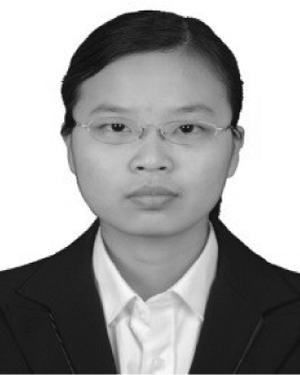 Sijia Wu合作论文数3
 Ronald N Margolis合作论文数Div Diabet Endocrinol & Metab Dis, NIH3Shanxin Zhang (张善新)合作论文数School of Internet of Things Engineering, Jiangnan University3
 Hua Xu合作论文数Vanderbilt University, Nashville, TN, USA3Ibrahim Burak Ozyurt合作论文数University of California, San Diego3
 Trevor Cohen合作论文数Department of Biomedical Informatics and Medical Education, School of Medicine, University of Washington;The University of Texas Health Science Center at Houston3Jichuan Liu合作论文数3
 Ergin Soysal合作论文数Dept. of Medical Education and Informatics, Ankara University3
 Xinman Zhang (张新曼)合作论文数Xi'an Jiaotong University3Alejandra N. Gonzalez-Beltran合作论文数2JZ Liu合作论文数2Sisi Lu合作论文数2
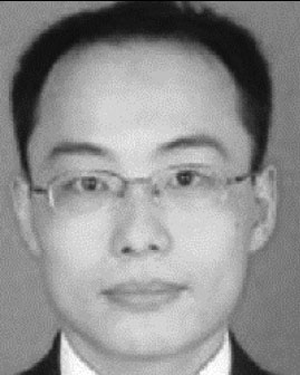 Hongqiang Lyu合作论文数2Muhamamd F. Amith合作论文数2
 Saeid Pournejati合作论文数Univ Texas Hlth Sci Ctr Houston, Sch Biomed Informat, 7000 Fannin St Suite 600, Houston, TX 77030 USA2
 Firat Tiryaki合作论文数Univ Texas Hlth Sci Ctr Houston, Sch Biomed Informat, Houston, TX 77030 USA2Meiqin Liu合作论文数2
 George C. Alter合作论文数African Studies Center, College of Literature, Science, and the Arts, University of Michigan-Ann Arbor2Kanegaye John T合作论文数2
 Deevakar Rogith合作论文数2
 Cunfu Lu (卢存福)合作论文数School of Biological Sciences and Technology, Beijing Forestry University2
 Chaparro Juan D合作论文数Department of Pediatrics, University of California, San Diego2
 Ze Liu (刘泽)合作论文数College of Water Resources and Architectural Engineering, Northwest A&F University2Maehara Cleo K合作论文数2
 Min Jiang (江敏)合作论文数Department of Artificial Intelligence, School of Informatics, Xiamen University2
 Yuzhen Chen (陈玉珍)合作论文数College of Biological Sciences and Technology, Beijing Forestry University2
 Cui Tao合作论文数University of Texas Health Science Center at Houston;Mayo Clinic2




