In the motor-imagery (MI) based brain computer interface (BCI), multi-channel electroencephalogram (EEG) is often used to ensure the complete capture of physiological phenomena. With the redundant information and noise, EEG signals cannot be easily converted into separable features through feature extraction algorithms. Channel selection algorithms are proposed to address the issue, in which the filtering technique is widely used with the advantages of low computational cost and strong practicability. In this study, we proposed several improved methods for filtering channel selection algorithm. Specifically, based on the coefficient of variation and inter-class distance, a novel channel classification method was designed, which divided channels into different categories based on their contribution to feature extraction process. Then a filtering channel selection algorithm was proposed according to the previous classification method. Moreover, a new testing framework for filtering channel selection algorithms was proposed, which can better reflect the generalization ability of the algorithm. Experimental results indicated that the proposed channel classification method is effective, and the proposed testing framework is better than the original one. Meanwhile, the proposed channel selection algorithm achieved the accuracy of 87.7% and 81.7% in two BCI competition datasets, respectively, which was superior to competing algorithms.
The common spatial patterns (CSP) algorithm is one of the most frequently used and effective spatial filtering methods for extracting relevant features for use in motor imagery brain-computer interfaces (MI-BCIs). However, the inherent defect of the traditional CSP algorithm is that it is highly sensitive to potential outliers, which adversely affects its performance in practical applications. In this work, we propose a novel feature optimization and outlier detection method for the CSP algorithm. Specifically, we use the minimum covariance determinant (MCD) to detect and remove outliers in the dataset, then we use the Fisher score to evaluate and select features. In addition, in order to prevent the emergence of new outliers, we propose an iterative minimum covariance determinant (IMCD) algorithm. We evaluate our proposed algorithm in terms of iteration times, classification accuracy and feature distribution using two BCI competition datasets. The experimental results show that the average classification performance of our proposed method is 12% and 22.9% higher than that of the traditional CSP method in two datasets ([Formula: see text]), and our proposed method obtains better performance in comparison with other competing methods. The results show that our method improves the performance of MI-BCI systems.
The common spatial pattern (CSP) algorithm is a well-recognized spatial filtering method for feature extraction in motor imagery (MI)-based brain-computer interfaces (BCIs). However, due to the influence of nonstationary in electroencephalography (EEG) and inherent defects of the CSP objective function, the spatial filters, and their corresponding features are not necessarily optimal in the feature space used within CSP. In this work, we design a new feature selection method to address this issue by selecting features based on an improved objective function. Especially, improvements are made in suppressing outliers and discovering features with larger interclass distances. Moreover, a fusion algorithm based on the Dempster-Shafer theory is proposed, which takes into consideration the distribution of features. With two competition data sets, we first evaluate the performance of the improved objective functions in terms of classification accuracy, feature distribution, and embeddability. Then, a comparison with other feature selection methods is carried out in both accuracy and computational time. Experimental results show that the proposed methods consume less additional computational cost and result in a significant increase in the performance of MI-based BCI systems.
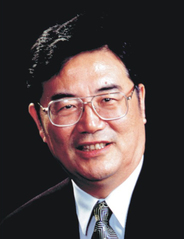 Xingyu Wang (王行愚)合作论文数East China University of Science and Technology3
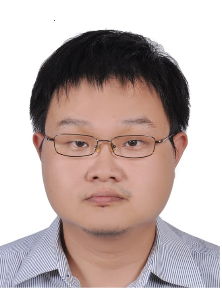 Jing Jin (金晶)合作论文数Department of Automation, School of information Science and Engineering, East China University of Science and Technology;Key Laboratory of Smart Manufacturing in Energy Chemical Process, Ministry of Education, School of information Science and Engineering, East China University of Science and Technology3
 YangYang Miao (苗阳阳)合作论文数2
 Ian Daly合作论文数University of Reading2
 Andrzej Cichocki合作论文数Peraton Labs;Systems Research Institute Polish Academy of Sciences2Yitao Huang合作论文数1Hua Fang合作论文数1
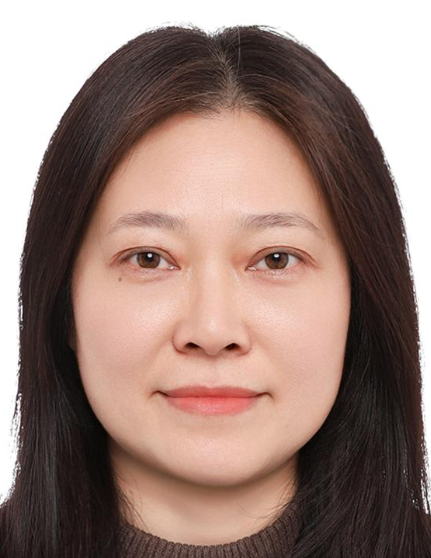 Bei Wang (王蓓)合作论文数School of Information Science and Engineering, East China University of Science and Technology;Key Laboratory of Smart Manufacturing in Energy Chemical Process, Ministry of Education, East China University of Science and Technology1
 Ren Xu合作论文数1




