The aim of this review is to study the methods of steganography using the video file as a cover carrier. The steganography is the art of protecting the information through embedding data in medium carrier, for instants this study illustrate historically this art, as well as the study describes methods as a review for this art in the video file. The video based steganography can be used as one video file, separated images in frames or images and audio files. Since that, the use of the video based steganography can be more eligible than other multimedia files. As a result of this study, the video based steganography has been discussed and the advantages of using the video file as a cover carrier for steganography have been proposed.
Image segmentation is the crucial step in automatic image distress detection and classification (e.g., types and severities) and has important applications for automatic crack sealing. Although many researchers have developed pavement distress detection and recognition algorithms, full automation has remained a challenge. This is the first paper that uses a scoring measure to quantitatively and objectively evaluate the performance of six different segmentation algorithms. Up-to-date research on pavement distress detection and segmentation is comprehensively reviewed to identify the research need. Six segmentation methods are then tested using a diverse set of actual pavement images taken on interstate highway 1-75/I-85 near Atlanta and provided by the Georgia Department of Transportation with varying lighting conditions, shadows, and crack positions to differentiate their performance. The dynamic optimization-based method, which was previously used for segmenting low signal-to-noise ratio (SNR) digital radiography images, outperforms the other five methods based on our scoring measure. It is robust to image variations in our data set but the computation time required is high. By critically assessing the strengths and limitations of the existing algorithms, the paper provides valuable insight and guideline for future algorithm development that are important in automating image distress detection and classification.
Algorithms for pavement distress image segmentation are crucial to developing an automatic pavement distress detection and classification system. Many algorithms for pavement distress segmentation have been developed in the past decade; however, the lack of good methods to evaluate their performance quantitatively hinders the focused development of better segmentation algorithms. In this paper, a novel method is developed to quantitatively evaluate the performance of different pavement distress segmentation algorithms. This method uses the buffered Hausdorff distance to estimate the deviation of the cracks in the automatically segmented image from the ground truth cracks. The proposed method captures the local effectiveness of segmentation methods around the crack region without compromising its robustness to isolated pixel deviations caused by noise. Besides real pavement images, synthetic images simulating extreme pavement distress conditions are used to evaluate the capability of the proposed method and show its merits. The proposed method outperforms four other possible quantification methods and demonstrates its superior capability in providing a better score separation to distinguish the performance of different segmentation algorithms.
Magnetic resonance imaging (MRI) is the preferred imaging modality for visualization of intracranial soft tissues. Surgical planning, and increasingly surgical navigation, use high resolution 3-D patient-specific structural maps of the brain. However, the process of MRI is a multi-parameter tomographic technique where high resolution imagery competes against high contrast and reasonable acquisition times. Resolution enhancement techniques based on super-resolution are particularly well-suited in solving the problems of resolution when high contrast with reasonable times for MRI acquisitions are needed. Super-resolution is the concept of reconstructing a high resolution image from a set of low-resolution images taken at different viewpoints or foci. The MRI encoding techniques that produce high resolution imagery are often sub-optimal for the desired contrast needed for visualization of some structures in the brain. A novel super-resolution reconstruction framework for MRI is proposed in this thesis. Its purpose is to produce images of both high resolution and high contrast desirable for image-guided minimally invasive brain surgery. The input data are multiple 2-D multi-slice Inversion Recovery MRI scans acquired at orientations with regular angular spacing rotated around a common axis. Inspired by the computed tomography domain, the reconstruction is a 3-D volume of isotropic high resolution, where the inversion process resembles a projection reconstruction problem. Iterative algorithms for reconstruction are based on the projection onto convex sets formalism. Results demonstrate resolution enhancement in simulated phantom studies, and in ex- and in-vivo human brain scans, carried out on clinical scanners. In addition, a novel motion correction method is applied to volume registration using an iterative technique in which super-resolution reconstruction is estimated in a given iteration following motion correction in the preceding iteration. A comparison study of our method with previously published methods in super-resolution shows favorable characteristics of the proposed approach.
In this paper, we present a data association algorithm for people tracking in a 3D world using multiple cameras. Our approach expands an independent partitioned particle filter with a data association vector. For the association parameter, we propose a proposal function using likelihood functions based on color and distance. This proposed algorithm solves the data association problem without dramatically increasing the computational complexity even in the case of trajectories that cross.
Subband/Wavelet filter analysis-synthesis filters are a major component in many compression algorithms. Such compression algorithms have been applied to images, voice, and video. These algorithms have achieved high performance. Typically, the configuration for such compression algorithms involves a bank of analysis filters whose coefficients have been designed in advance to enable high quality reconstruction. The analysis system is then followed by subband quantization and decoding on the synthesis side. Decoding is performed using a corresponding set of synthesis filters and the subbands are merged together.For many years, there has been interest in improving the analysis-synthesis filters in order to achieve better coding quality. Adaptive filter banks have been explored by a number of authors where by the analysis filters and synthesis filters coefficients are changed dynamically in response to the input. A degree of performance improvement has been reported but this approach does require that the analysis system dynamically maintain synchronization with the synthesis system in order to perform reconstruction.In this paper, we explore a variant of the adaptive filter bank idea. We will refer to this approach as fixed analysis adaptive synthesis filter banks. Unlike the adaptive filter banks proposed previously, there is no analysis-synthesis synchronization issue involved. This implies less coder complexity and more coder flexibility. Such an approach can be compatible with existing subband wavelet encoders. The design methodology and a performance analysis are presented.
The objective of the research is to design a general blind deconvolution framework that can effectively utilize all available information, tackle severe degradations and be applicable to a wide-range of applications, degradations, signal types and dimensionality with small adaptation. The particular application of greatest interest is the problem of autofocusing in synthetic aperture radar (SAR) and in inverse SAR (ISAR). The motivation comes from the awareness that most of the blind deconvolution schemes available in the literature can only deal with relatively mild degradations [1-8]. This limitation arises from the fact that most schemes cannot easily incorporate all of the information that is available to them. Furthermore, most can guarantee convergence only to a locally optimal solution. For more severe degradations, there are more unknowns and more locally optimal solutions exist; therefore, converging to a globally optimal solution becomes much more difficult. A common remedy to ease the problem is to incorporate known information about the point spread function causing the degradation. Unfortunately, in most cases only very limited information of the point spread function is available, which is not enough to steer the solution to the global optimum. In this work, we have identified the potential of the Bussgang blind deconvolution framework [1-4] to converge to the globally optimal solution despite its other limitations. As shown by the Benveniste-Goursat-Ruget theorem [2], the Bussgang blind deconvolution framework converges to a globally optimal solution as long as the probability density function of the input signal is non-Gaussian and the support size of the equalization filter size tends to infinity. While it is not possible to have an infinitively long equalization filter support, intuitively, if the signal can be processed in frames instead of in an infinite stream, the support size of the equalization filter should not need to be greater than the frame size. In addition, in the multi-channel case, the attribute of the deconvolution noise on which the Bussgang blind deconvolution framework relies becomes easier to realize. Unlike the requirement of an infinite support size for the equalization filter, the multi-channel implementation is, in fact, both practical and feasible. For example, in the optical imaging case, multiple degraded shots can result from the motion of the targeted subject, or in the synthetic aperture radar (SAR) imaging case, multiple similar flight paths can result in similar, but differently degraded, SAR images. Furthermore, the Bussgang blind deconvolution framework also achieves the goal of having one framework that is applicable to multiple applications. A different application with a different probability density function (pdf) only changes the nonlinearity in the Bussgang blind deconvolution framework. Therefore, we utilize the multi-channel Bussgang blind deconvolution framework as our fundamental building block for the design of a blind deconvolution procedure that can cope with severe degradations and a wide variety of applications. To achieve our goal, two obstacles associated with the Bussgang blind deconvolution procedure need to be overcome. These are the requirement that the probability density function (pdf) of the original signal be known and that the original signal be white, which can greatly limit the applicability of the technique. In this research, we relax the iid requirement and modify the multi-channel Bussgang blind deconvolution framework to allow the pdf of the original signal to be estimated iteratively. We call our proposed modification of the multi-channel Bussgang blind deconvolution framework the self-correcting multi-channel Bussgang (SCMB) blind deconvolution framework. The modifications include a non-conventional feedback mechanism, parameterization of the pdf utilizing a Gaussian mixture model, and parameter estimation using the expectation maximization (EM) algorithm that iterates simultaneously with the original multi-channel Bussgang estimator. In the dissertation, we demonstrate the effectiveness of the proposed SCMB blind deconvolution framework on two very different problem: the binary image restoration problem and the SAR/ISAR autofocus problem. In the binary image restoration case, our approach recovers severely blurred binary images flawlessly. In the SAR/ISAR autofocus case, our approach outperforms popular autofocus algorithms including phase gradient algorithm (PGA) and minimum entropy autofocus consistently, especially in the ground moving-target ISAR autofocus scenario with both significant translational and rotational motion.
Most video watermarking algorithms embed the watermark in I-frames, but refrain from embedding in P- and B-frames, which are highly compressed by motion compensation. However, P-frames appear more frequently in the compressed video and their watermarking capacity should be exploited, despite the fact that embedding the watermark in P-frames can increase the video bit rate significantly. This paper gives a detailed overview of a common approach for embedding the watermark in I-frames. This common approach is adopted to use P-frames for video watermarking. We show that by limiting the watermark to nonzero-quantized AC residuals in P-frames, the video bit-rate increase can be held to reasonable values. Since the nonzero-quantized AC residuals in P-frames correspond to nonflat areas that are in motion, temporal and texture masking are exploited at the same time. We also propose embedding the watermark in nonzero quantized AC residuals with spatial masking capacity in I-frames. Since the locations of the nonzero-quantized AC residuals is lost after decoding, we develop a watermark detection algorithm that does not depend on this knowledge. Our video watermark detection algorithm has controllable performance. We demonstrate the robustness of our proposed algorithm to several different attacks.
A novel super-resolution reconstruction (SRR) framework in magnetic resonance imaging (MRI) is proposed. Its purpose is to produce images of both high resolution and high contrast desirable for image-guided minimally invasive brain surgery. The input data are multiple 2-D multislice inversion recovery MRI scans acquired at orientations with regular angular spacing rotated around a common frequency encoding axis. The output is a 3-D volume of isotropic high resolution. The inversion process resembles a localized projection reconstruction problem. Iterative algorithms for reconstruction are based on the projection onto convex sets (POCS) formalism. Results demonstrate resolution enhancement in simulated phantom studies, and ex vivo and in vivo human brain scans, carried out on clinical scanners. A comparison with previously published SRR methods shows favorable characteristics in the proposed approach.
Geo-registration is the technique of mapping the pixel co-ordinates from images to geocoordinates. Generally, this is achieved by adjusting and aligning the input images with a standard reference image. Geo-registration helps aerial systems in target detection, target tracking as well as exploration. For aerial systems, the information from the cameras may be inaccurate as the parameters of registration between them may not be known precisely. So, simultaneously reflning the registration parameters and performing geo-registration is a huge challenge. In this paper, we propose a solution based on image segmentation and image registration in order to automatically perform pixel geo-registration. The solution is generic and can be applied to any form of image-based sensing across a variety of modalities. In our approach, images are flrst segmented using the active contour methodology and geometric partial difierential equations (PDEs) based on curve and surface evolution theory. Region-based active contours are the preferred model for registration applications as they are able to utilize more image data in the simultaneous registration and segmentation process. The features extracted after the segmentation are more robust to scene changes than the traditional pixel-to-pixel image registration techniques. Since segmentation may be aided by the solution of registration and vice-versa, it is natural to couple the problems and solve them jointly. Our focus has been to combine segmentation speciflcally with image registration in a joint, simultaneous framework where both problems are solved together with continuous and constant feedback rather than solving one problem in isolation and then using the results of the flrst solution to solve the second problem. We develop an integrated iterative approach to unify the techniques of image registration and image segmentation to provide a robust solution for pixel geo-registration. The geo-registration algorithm is currently being incorporated into a simulator framework with visualization for depicting the terrain using 3D graphics.
As H.264 digital video becomes more prevalent, the need for copyright protection and authentication methods that are appropriate for this standard will emerge. This paper proposes a robust watermarking algorithm for H.264. We employ a human visual model adapted for a 4 times 4 discrete cosine transform block to increase the payload and robustness while limiting visual distortion. A key-dependent algorithm is used to select a subset of the coefficients that have visual watermarking capacity. Furthermore, the watermark is spread over frequencies and within blocks to avoid error pooling. This increases the payload and robustness without noticeably changing the perceptual quality. We embed the watermark in the coded residuals to avoid decompressing the video; however, we detect the watermark from the decoded video sequence in order to make the algorithm robust to intraprediction mode changes. We build a theoretical framework for watermark detection based on a likelihood ratio test. This framework is used to obtain optimal video watermark detection with controllable detection performance. Our simulation results show that we achieve the desired detection performance in Monte Carlo trials. We demonstrate the robustness of our proposed algorithm to several different attacks
In this paper, we consider the problem of tracking multiple people in a 3D world domain using a microphone array and multiple cameras. The data fusion is done using a particle filter. To support 3D tracking, we propose a new video data likelihood model using a camera calibration matrix that can be used for a moving camera without continuous camera calibration. Then we apply an independent partition particle filter for multiple objects in order to generate particles efficiently. To detect the current speaker, we use a simple cost function using the generated particles. Finally we implement this tracking algorithm as a real-time system.
This paper presents an analysis for data embedding in two-dimensional signals based on DCT phase modulation. A communication system model for this data embedding scheme is developed. Closed form expressions for estimating the number of bits that can be embedded given a specific distortion measure and the probability of bit error are developed. The data embedding process is viewed as transmitting data through a binary symmetric channel with crossover error probabilities, which depends only on the power in the selected coefficients and the noise created by the signal processing operations undergone by the image.
The conventional run-level variable length coding (RL-VLC), commonly adopted in block-based image and video compression to code quantized transform coefficients, is not efficient in coding consecutive nonzero coefficients. To overcome the deficiency, hybrid variable length coding (HVLC) is proposed in this paper. HVLC takes advantage of the clustered nature of nonzero transform coefficients in the low-frequency (LF) region and the scattered nature of nonzero transform coefficients in the high-frequency (HF) region by employing two types of VLC schemes. A novel two-dimensional position and one-dimensional amplitude coding scheme is proposed to code the LF coefficients while RL-VLC or an equivalent VLC scheme is retained to code the HF coefficients. Experimental results show that HVLC greatly favors the coding of high-resolution, high-complexity scenes, while it preserves low computational complexity.
Motivated by the success of support vector regression (SVR) in blind image deconvolution, we apply SVR to single-frame super-resolution. Initial results show that even when trained on as little as a single image, SVR is able to learn a generally applicable model that can super-resolve dissimilar images.
 Ronald W. Schafer合作论文数School of Electrical and Computer Engineering, College of Engineering, Georgia Institute of Technology34
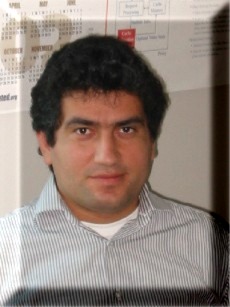 Yucel Altunbasak合作论文数School of Electrical and Computer Engineering
Georgia Institute of Technology34
Yucel Altunbasak合作论文数School of Electrical and Computer Engineering
Georgia Institute of Technology34 Faramarz Fekri合作论文数School of Electrical and Computer Engineering, College of Engineering, Georgia Institute of Technology12
 Bahadir K. Gunturk合作论文数Department of Electrical and Computer Engineering
Louisiana State University12
Bahadir K. Gunturk合作论文数Department of Electrical and Computer Engineering
Louisiana State University12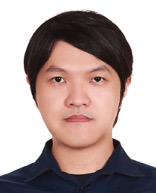 Yen-Chi Lee合作论文数Quantum Computing Research Center, Hon Hai (Foxconn) Research Institute12
 Mjt Smith合作论文数11
 Joohee Kim合作论文数Department of Electrical and Computer Engineering, Armour College of Engineering, Illinois Institute of Technology11Dalong Li合作论文数8
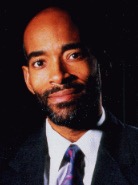 Mark J.T. Smith合作论文数Georgia Institute of Technology7
 Mark A Clements合作论文数Interactive Media Technology Center, School of Electrical and Computer Engineering, College of Engineering, Georgia Institute of Technology7
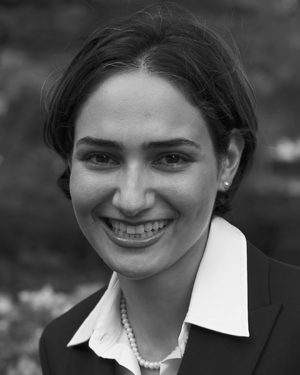 Maneli Noorkami合作论文数Sch. of Electr. & Comput. Eng., Georgia Inst. of Technol.7M. D. Farrell合作论文数6Coban, M.Z.合作论文数5cheung auyeung合作论文数5
 Thomas F. Quatieri合作论文数Lincoln Laboratory, Massachusetts Institute of Technology5
 Aggelos K. Katsaggelos合作论文数Department of Electrical and Computer Engineering, McCormick School of Engineering, Northwestern University;Department of Linguistics, Northwestern University;Argonne National Laboratory;Department of Medicine, Division of Cardiology, NorthShore University HealthCare System5
 Xiaozheng Zhang合作论文数Hefei University of Technology, Hefei University of Technology5
 Steve Simske合作论文数Department of Systems Engineering, Walter Scott, Jr. College of Engineering, Colorado State University5Theresa C. Speake合作论文数5F. Alturki合作论文数5
 Monson H. Hayes合作论文数Department of Electrical and Computer Engineering, Volgenau School of Engineering, George Mason University;School of Electrical and Computer Engineering, Georgia Institute of Technology5
 Steven W McLaughlin合作论文数School of Electrical and Computer Engineering, College of Engineering, Georgia Institute of Technology5Wfg Mecklenbrauker合作论文数4Dl Robie合作论文数4
 Jan Biemond合作论文数Delft University of Technology4
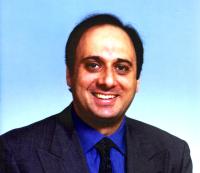 Petros Maragos合作论文数Division of Signals, Control and Robotics, School of Electrical and Computer Engineering, National Technical University of Athens;Hellenic Robotics Center of Excellence;Athena Research Center4
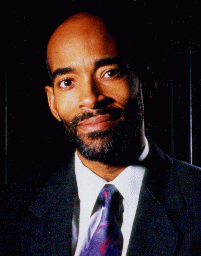 Mark J. T. Smith合作论文数Electrical and Computer Engineering, The University of Texas at Austin4
 Osama K. Al-Shaykh合作论文数4Faisal Alturki合作论文数Georgia Institute of Technology
Russell Mersereau, Georgia Institute of Technology4Tp Barnwell合作论文数3Rr Rao合作论文数3KK TRUONG合作论文数3Doug Young Suh合作论文数3suhow lim合作论文数3
Osama K. Al-Shaykh合作论文数4Faisal Alturki合作论文数Georgia Institute of Technology
Russell Mersereau, Georgia Institute of Technology4Tp Barnwell合作论文数3Rr Rao合作论文数3KK TRUONG合作论文数3Doug Young Suh合作论文数3suhow lim合作论文数3 Jonathan Su合作论文数MIT Lincoln Laboratory3Speake, T.合作论文数3Linares, I.合作论文数3Quoc H. Pham合作论文数3
 Vivek Kaul合作论文数SUNY Upstate Medical University, University of Rochester Medical Center (V.K.),3C.S. Kim合作论文数3
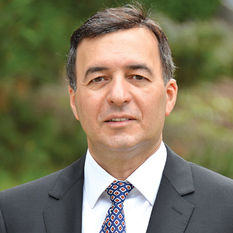 Nasser M. Nasrabadi合作论文数College of Engineering and Mineral Resources, West Virginia University;Lane Department of Computer Science and Electrical Engineering, West Virginia University3
 Tsuhan Chen合作论文数National University of Singapore3Roderic I Pettigrew合作论文数3S. A. Martucci合作论文数3
 Abderrezak Guessoum合作论文数LATSI Laboratory, University Saad Dahlab of Blida3Jonathan K Su合作论文数3
 Stanley J. Reeves合作论文数Electrical and Computer Engineering Dept, Auburn University3S. D. Bayrakeri合作论文数3




