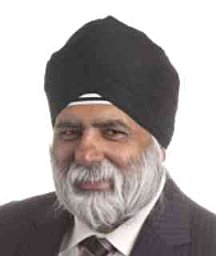
Joshua Cole’s fascinating and extremely well-researched and well-written Lethal Provocation: The Constantine Murders and the Politics of French Algeria is like a strong wind in the sails of the microhistorical method. It examines in depth the well-known Constantine riots of August 1934 and manages to present them in a much different light. It also employs this historical event as a prism through which it addresses much greater questions related to colonial relations in French Algeria and the history of the Third Republic. The idea behind the method of microhistory is that by putting a well-established phenomenon or historical event under a microscope one can retrieve new meanings, better and more nuanced understanding, and engage in a deeper discussion. As the Italian historian Francesca Trivellato noted, the motto of microhistorians is: “Why make things simple, when we can make them complex?” It seems that Cole could not have agreed more. Cole...
This article examines the practice of autopsies in French-ruled West Africa in the interwar era. It contributes to the discussion of medical knowledge and its employment in the colonies and raises a set of questions regarding the administration's motives for performing autopsies and the African responses to this practice. In order to answer these questions, I briefly examine the practice of autopsies in France and move to the colonies to look at the problematic ways in which they were performed under colonial conditions. I then delve into local practices of ritual autopsies that also aim to explain death, but in different ways. Finally, I demonstrate what the differences and similarities between practices of colonial and ritual autopsies can teach us about the idea of the Civilising Mission and its perception by African colonial subjects.
Three cases of re-opened murder investigations in French West Africa are at the heart of this article. My aim is to examine these cases as a lens into everyday colonial policing that was not directly linked to major anti-colonial protests. All three inquiries into low-ranking colonial officers and the way they conducted their investigations took place during the 1930s, in Mauritania, Senegal, and Dahomey. While their circumstances were different, the cases reflect the flawed and unprofessional character of colonial investigations. They also demonstrate that murder investigations-as well as criticism of them were powered by two crucial French colonial notions: the maintenance of public order and the ideology of the civilizing mission.
The existing literature on the Tirailleurs Sénégalais focuses mainly on the participation of African colonial soldiers in the two world wars, on the discrimination they suffered in the army, and on French ingratitude towards them after independence. While all of these issues are important, my aim in this article is to examine the tirailleurs’ struggles for rights in the aftermath of WWII, with a particular focus on their agency and ability to shape their own destiny. I begin by discussing the tirailleurs’ spontaneous revolts and protests that erupted at demobilization. I then examine the much more calculated struggle of the main veterans’ journal in French West Africa, La Voix des combattants, to advance the veterans’ aims in the post-war decades. Lastly, I explore a particular case of struggle for equality waged by African veterans: the district guards’ fight for better conditions in Ivory Coast and Senegal in the mid-1950s. With these three examples, I demonstrate that the tirailleurs were not just helpless victims of an exploitative colonial system, but also managed to win equality within the army by invoking the sacrifices they had made for France during the two world wars.
One of the most consequential events of the Vichy period in French West Africa was the “defection” of the Abron King and a large entourage of court members from Côte-d’Ivoire to the British-ruled Gold Coast. This article uses this “affair” as a case study for a broader issue—the relationship between ethnographic research and French colonial policy. According to the testimony of the Governor of Côte-d’Ivoire at that time, Hubert Deschamps, he was inspired to offer suggestions as to how to act following the ‘defection’ after reading an ethnographic study written twenty years earlier. The comparison between his suggestions and the study in question allows us to examine in detail the way ethnography could influence colonial policy. At the same time, the reaction of Governor-General Pierre Boisson to Deschamps’ ideas underscores the fact that although such ethnographic studies had a potential influence, especially over Governors who were attracted to this science, they also had their limits when in conflict with political considerations.
Ruth Ginio’s The French Army and its African Soldiers: The Years of Decolonization explores the complicated position of African soldiers in France’s military in the middle of the twentieth century. Until now, there has been no single work in the field of French or African history that focused exclusively on the role of African soldiers in the French army during these years of decolonization. Scholars such as Gregory Mann have helped us understand the role of African soldiers and veterans in the twentieth-century French military. Yet the question remained: what specifically came after World War II for these servicemen? Ginio’s book answers this question, providing a much-needed assessment of the role of African soldiers in the decolonization process. She not only considers the part that African soldiers played in Afrique Occidentale Française (AOF), but she also looks at their service in the French army during two of the most harrowing wars of decolonization: Indochina and Algeria. In addition, she situates the French army as “a political agent of AOF” (xxi). As such, the army was often in conflict with civilian, French, and African authorities. While reflecting on the military’s position, Ginio refrains from presenting African soldiers solely as “unsung heroes” of the French army” (xx). Their lives and their military service were complicated by multiple factors, from their family’s social status to the racism they endured both in and beyond the army. One of Ginio’s key findings overall is that “the African soldiers represented for the French military authorities a space in which French colonialism could still hope for support if they only managed to protect it from external hostile influences” (140). Through this story, Ginio explores how authorities hoped to retain the colonies in AOF even as the French empire faced serious and violent challenges from many corners of the empire. In Chapter 1, Ginio illustrates how colonial soldiers from Sub-Saharan Africa became critical figures in the French imperial army. She highlights the service of African soldiers in World War I and World War II. Ginio sets up the role that colonial soldiers played across these global conflicts and establishes their critical contributions to the decolonization process that followed. Chapter 2 expands further on the impact of World War II. She argues that this conflict “naturally affected the relations between the French army and its