Hamiltonian simulation is one of the most promising candidates for the demonstration of quantum advantage within the next ten years, and several studies have proposed end-to-end resource estimates for executing such algorithms on fault-tolerant quantum processors. Usually, these resource estimates are based upon the assumption that quantum error correction is implemented using the surface code, and that the best surface code compilation scheme involves serializing input circuits by eliminating all Clifford gates. This transformation is thought to make best use of the native multi-body measurement (lattice surgery) instruction set available to surface codes. Some work, however, has suggested that direct compilation from Clifford+T to lattice surgery operations may be beneficial for circuits that have high degrees of logical parallelism. In this study, we analyze the resource costs for implementing Hamiltonian simulation using example approaches from each of these leading surface code compilation families. The Hamiltonians whose dynamics we consider are those of the transverse-field Ising model in several geometries, the Kitaev honeycomb model, and the $\mathrm{\alpha-RuCl_3}$ complex under a time-varying magnetic field. We show, among other things, that the optimal scheme depends on whether Hamiltonian simulation is implemented using the quantum signal processing or Trotter-Suzuki algorithms, with Trotterization benefiting by orders of magnitude from direct Clifford+T compilation for these applications. Our results suggest that surface code quantum computers should not have a one-size-fits-all compilation scheme, but that smart compilers should predict the optimal scheme based upon high-level quantities from logical circuits such as average circuit density, numbers of logical qubits, and T fraction.
With fault-tolerant quantum computing (FTQC) on the horizon, it is critical to understand sources of logical errors in plausible hardware implementations of quantum error-correcting codes. Detailed error modeling of computational instructions on particular FTQC architectures will enable the better prediction of error propagation in FT-encoded quantum circuits while revealing where greater attention is needed in hardware design. In this work, we consider logical error rates for the surface code implemented on a hypothetical grid-based trapped-ion quantum charge-coupled device architecture. Specifically, we construct logical channels for the idling surface code and examine its diamond error under a mixed coherent and stochastic circuit-level noise model inspired by trapped ions. We include the coherent dephasing noise that is known to accumulate during physical qubit idling and transport in these systems, determining idling and transport durations using the time-resolved output of an open-source trapped-ion surface code compiler. To estimate expectation values of logical Pauli observables following hardware circuits containing non-Clifford sources of noise, we utilize a Monte Carlo technique to sample from an underlying quasiprobability distribution of Clifford circuits that we independently simulate in a phase-sensitive fashion. We verify error suppression up to code distance d=11 at coherent dephasing rates near and below those of current-generation trapped-ion quantum computers and find that logical error rates align with those of analogous fully stochastic simulations in this regime. Exploring higher dephasing rates at d=3−5, we find evidence for growing coherent rotations about all three logical Pauli axes, increased diagonal logical error process matrix elements relative to those of stochastic simulations, and a reduced dephasing rate threshold. Overall, our work paves a way toward realistic hardware emulation of small fault-tolerant quantum processes, e.g., members of an FTQC instruction set.
The execution of quantum algorithms on modern hardware is often constrained by noise and qubit decoherence, limiting the circuit depth and the number of gates that can be executed. Circuit optimization techniques help mitigate these limitations, enhancing algorithm feasibility. In this work, we implement, optimize, and execute a variational quantum regression algorithm using a novel state preparation method. By leveraging ZX-calculus-based optimization techniques, such as Pauli pushing, phase folding, and Hadamard pushing, we achieve a more efficient circuit design. Our results demonstrate that these optimizations enable the successful execution of the quantum regression algorithm on current hardware. Furthermore, the techniques presented are broadly applicable to other quantum circuits requiring arbitrary real-valued state preparation, advancing the practical implementation of quantum algorithms.
Quantum Computing (QC) offers significant potential to enhance scientific discovery in fields such as quantum chemistry, optimization, and artificial intelligence. Yet QC faces challenges due to the noisy intermediate-scale quantum era’s inherent external noise issues. This paper discusses the integration of QC as a computational accelerator within classical scientific high-performance computing (HPC) systems. By leveraging a broad spectrum of simulators and hardware technologies, we propose a hardware-agnostic framework for augmenting classical HPC with QC capabilities. Drawing on the HPC expertise of the Oak Ridge National Laboratory (ORNL) and the HPC lifecycle management of the Department of Energy (DOE), our approach focuses on the strategic incorporation of QC capabilities and acceleration into existing scientific HPC workflows. This includes detailed analyses, benchmarks, and code optimization driven by the needs of the DOE and ORNL missions. Our comprehensive framework integrates hardware, software, workflows, and user interfaces to foster a synergistic environment for quantum and classical computing research. This paper outlines plans to unlock new computational possibilities, driving forward scientific inquiry and innovation in a wide array of research domains.
We report a resource estimation pipeline that explicitly compiles quantum circuits expressed using the Clifford+T gate set into a surface code lattice surgery instruction set. The cadence of magic state requests from the compiled circuit enables the optimization of magic state distillation and storage requirements in a post-hoc analysis. To compile logical circuits into lattice surgery operations, we build upon the open-source Lattice Surgery Compiler. The revised compiler operates in two stages: the first translates logical gates into an abstract, layout-independent instruction set; the second compiles these into local lattice surgery instructions that are allocated to hardware tiles according to a specified resource layout. The second stage retains logical parallelism while avoiding resource contention in the fault-tolerant layer, aiding realism. Additionally, users can specify dedicated tiles at which magic states are replenished, enabling resource costs from the logical computation to be considered independently from magic state distillation and storage. We demonstrate the applicability of our pipeline to large, practical quantum circuits by providing resource estimates for the ground state estimation of molecules. We find that variable magic state consumption rates in real circuits can cause the resource costs of magic state storage to dominate unless production is varied to suit.
In this position paper, we posit that a major Department of Energy (DOE)-funded open-source quantum compilation platform is needed to facilitate: (a) resource optimization at the fault-tolerant layer of the quantum computing software stack, and (b) co-design of that layer of the stack with other layers, and that this platform needs to be extensible and include verification.
This study investigates the frame potential and expressiveness of commutative quantum circuits. Based on the Fourier series representation of these circuits, we express quantum expectation and pairwise fidelity as characteristic functions of random variables, and expressiveness as the recurrence probability of a random walk on a lattice. A central outcome of our work includes formulas to approximate the frame potential and expressiveness for any commutative quantum circuit, underpinned by convergence theorems in probability theory. We identify the lattice volume of the random walk as means to approximate expressiveness based on circuit architecture. In the specific case of commutative circuits involving Pauli- $Z$ rotations, we provide theoretical results relating expressiveness and circuit structure. Our probabilistic representation also provide means for bounding and approximately calculating the frame potential of a circuit through sampling methods.
In the early fault-tolerant quantum computing era, it is desirable to accurately capture resource estimates for practical quantum circuit execution on future fault-tolerant quantum processors. While several open-source resource estimation tools currently exist, they fall short of realism in multiple facets: first, they do not rely on explicit compilation, thus necessitating several simplifying assumptions. Second, they rely on one-size-fits-all logical error rate formulae for all members of their logical instruction set. To properly account for the resource overhead of fault-tolerance, a comprehensive strategy for compiling logical circuits into fault-tolerant operations on a hardware-mapped quantum error-correcting code is required. In the case of the surface code, explicit compilation enables resource estimation for schemes that do not assume a constant rate of magic state consumption and the more realistic computation of total logical error based on active hardware tiles. This poster will focus on ORNL's efforts toward developing compiler-based resource estimation for a surface code mapping onto a hypothetical trappedion QCCD architecture. To this end, two open-source compilers and a simulator have been developed. First, we use a significantly-revised Lattice Surgery Compiler (LSC) to compile logical circuits into surface code primitives acting on abstract hardware tiles. Second, the Trapped-Ion Surface Code Compiler (TISCC) compiles these primitives into native trappedion hardware gates acting on trapping zones. Finally, we use the Oak Ridge Quasi-Clifford Simulator (ORQCS) to evaluate the fault-tolerance of TISCC circuits under realistic trappedion QCCD noise assumptions. We describe how this end-to-end fault-tolerance compilation and simulation capability enables advanced resource estimation.
We present and discuss seven different open problems in applied combinatorics. The application areas relevant to this compilation include quantum computing, algorithmic differentiation, topolog-ical data analysis, iterative methods, hypergraph cut algorithms, and power systems.
Hybrid variational quantum algorithms (VQAs) are promising for solving practical problems such as combinatorial optimization, quantum chemistry simulation, quantum machine learning, and quantum error correction on noisy quantum computers. However, with typical random ansatz or quantum alternating operator ansatz, derived variational quantum algorithms become a black box for model interpretation. In this paper we construct a quantum regression algorithm wherein the quantum state directly encodes the classical data table and the variational parameters correspond directly to the regression coefficients which are real numbers by construction, providing a high degree of model interpretability and minimal cost to optimize with the right expressiveness. Instead of assuming the state preparation is given by granted, we discuss the state preparation with different encoders and their time complexity and overall resource cost. We can take advantage of the encoded data structure to cut down the algorithm time complexity. To the best of our knowledge, we show for the first time explicitly how the linkage of the classical data structure can be taken advantage of directly through quantum subroutines by construction. For nonlinear regression, our algorithm can be extended by building nonlinear features into the training data as demonstrated by numerical results. In addition, we demonstrate that the model trainability is achievable only when the number of features $M$ is much less than the number of records $L$ for the encoded data structure to justify $L\gg M$ in our resource estimation.
We introduce QuantumGEP , a scientific computer program that uses gene expression programming (GEP) to find a quantum circuit that either (1) maps a given set of input states to a given set of output states or (2) transforms a fixed initial state to minimize a given physical quantity of the output state. QuantumGEP is a driver program that uses evendim , a generic computational engine for GEP, both of which are free and open source. We apply QuantumGEP as a powerful solver for MaxCut in graphs and for condensed matter quantum many-body Hamiltonians.
As the penetration of power electronics increases in power grids, new computing architectures needed to be evaluated for the simulation of high-fidelity models of power electronics in power grids in operations. In this paper, emerging computing architectures such as quantum processing units are evaluated for the simulation of power electronics in power grids. A hybrid algorithm based on classical computing and quantum computing is developed and tested for different use cases of electromagnetic transient (EMT) simulation of power electronics (PE)-based systems and simple circuits. The algorithms needed to simulate power electronics in emerging computing architectures are discussed and thereafter, simulation results are shown.
We introduce the Trapped-Ion Surface Code Compiler (TISCC), a software tool that generates circuits for a universal set of surface code patch operations in terms of a native trapped-ion gate set. To accomplish this, TISCC manages an internal representation of a trapped-ion system where a repeating pattern of trapping zones and junctions is arranged in an arbitrarily large rectangular grid. Surface code operations are compiled by instantiating surface code patches on the grid and using methods to generate transversal operations over data qubits, rounds of error correction over stabilizer plaquettes, and/or lattice surgery operations between neighboring patches. Beyond the implementation of a basic surface code instruction set, TISCC contains corner movement functionality and a patch translation that is implemented using ion movement alone. Except in the latter case, all TISCC functionality is extensible to alternative grid-like hardware architectures. TISCC output has been verified using the Oak Ridge Quasi-Clifford Simulator (ORQCS).
Owing in large part to the advent of integrated biphoton frequency combs (BFCs), recent years have witnessed increased attention to quantum information processing in the frequency domain for its inherent high dimensionality and entanglement compatible with fiber-optic networks. Quantum state tomography (QST) of such states, however, has required complex and precise engineering of active frequency mixing operations, which are difficult to scale. To address these limitations, we propose a novel solution that employs a pulse shaper and electro-optic phase modulator (EOM) to perform random operations instead of mixing in a prescribed manner. We successfully verify the entanglement and reconstruct the full density matrix of BFCs generated from an on-chip Si$_{3}$N$_{4}$ microring resonator(MRR) in up to an $8\times8$-dimensional two-qudit Hilbert space, the highest dimension to date for frequency bins. More generally, our employed Bayesian statistical model can be tailored to a variety of quantum systems with restricted measurement capabilities, forming an opportunistic tomographic framework that utilizes all available data in an optimal way.
Quantum computing offers a new paradigm for advancing high-energy physics research by enabling novel methods for representing and reasoning about fundamental quantum mechanical phenomena. Realizing these ideals will require the development of novel computational tools for modeling and simulation, detection and classification, data analysis, and forecasting of high-energy physics (HEP) experiments. While the emerging hardware, software, and applications of quantum computing are exciting opportunities, significant gaps remain in integrating such techniques into the HEP community research programs. Here we identify both the challenges and opportunities for developing quantum computing systems and software to advance HEP discovery science. We describe opportunities for the focused development of algorithms, applications, software, hardware, and infrastructure to support both practical and theoretical applications of quantum computing to HEP problems within the next 10 years.
I present a recursive formula for calculating the number of abelian squares of length n+n over an alphabet of size d. The presented formula is similar to a previously known formula but has substantially lower complexity when d≫ n.
The method of classical shadows proposed by Huang, Kueng, and Preskill heralds remarkable opportunities for quantum estimation with limited measurements. Yet its relationship to established quantum tomographic approaches, particularly those based on likelihood models, remains unclear. In this article, we investigate classical shadows through the lens of Bayesian mean estimation (BME). In direct tests on numerical data, BME is found to attain significantly lower error on average, but classical shadows prove remarkably more accurate in specific situations-such as high-fidelity ground truth states-which are improbable in a fully uniform Hilbert space. We then introduce an observable-oriented pseudo-likelihood that successfully emulates the dimension-independence and state-specific optimality of classical shadows, but within a Bayesian framework that ensures only physical states. Our research reveals how classical shadows effect important departures from conventional thinking in quantum state estimation, as well as the utility of Bayesian methods for uncovering and formalizing statistical assumptions.
Abstract I present a method for estimating the fidelity F(μ, τ) between a preparable quantum state μ and a classically specified pure target state $$\tau =\left|\tau \right\rangle \left\langle \tau \right|$$ τ = τ τ , using simple quantum circuits and on-the-fly classical calculation (or lookup) of selected amplitudes of $$\left|\tau \right\rangle$$ τ . The method is sample efficient for anticoncentrated states (including many states that are hard to simulate classically), with approximate cost 4ϵ −2(1 − F)d p coll where ϵ is the desired precision of the estimate, d is the dimension of the Hilbert space, and p coll is the collision probability of the target distribution. This scaling is exponentially better than that of any method based on classical sampling. I also present a more sophisticated version of the method that uses any efficiently preparable and well-characterized quantum state as an importance sampler to further reduce the number of copies of μ needed. Though some challenges remain, this work takes a significant step toward scalable verification of complex states produced by quantum processors.
Hybrid quantum-classical workflows have become standard methods for executing variational algorithms and other quantum simulation techniques, which are key applications for noisy intermediate scale quantum (NISQ) computers. Validating these simulations is an important task which helps gauge the progress of quantum computer development, and classical simulation can serve as a tool to this end. Both exact and more scalable approximate methods with quantifiable error bounds can be used in validation tasks where the applicable metrics include the distance from a calculable ground truth, the quality of an error model fit to data, etc. Here we present a library extension that includes methods for validation of quantum simulations based on scalable hybrid workflows executable on high performance computers. We provide examples that use approximate methods based on tensor networks and stabilizer simulators to bound the error of quantum simulations on NISQ hardware.
Classical shadows enable remarkably efficient estimation of quantum observables, yet their connection to conventional techniques is unclear. In simulated examples we show that Bayesian mean estimation attains lower error on average, whereas classical shadows excel for specific states of interest.
 Robert Boyd合作论文数Department of Physics, Faculty of Science, University of Ottawa;The Institute of Optics, Hajim School of Engineering & Applied Sciences, University of Rochester28
 Travis S Humble合作论文数Quantum Science Center, Oak Ridge National Laboratory;Quantum Computing Institute, Oak Ridge National Laboratory;University of Tennessee22
 Warren P. Grice合作论文数Oak Ridge National Laboratory21
 Raphael Pooser合作论文数QC8210
 Carlos R. Stroud合作论文数The Institute of Optics, Hajim School of Engineering and Applied Sciences, University of Rochester10
 Philip G. Evans合作论文数9
 Sean J Bentley合作论文数Institute of Optics;University of Rochester;Institute of Optics, University of Rochester9
 Victor Wong合作论文数8
 Jason Schaake合作论文数6A. M. Marino合作论文数6
 David L. Aronstein合作论文数6
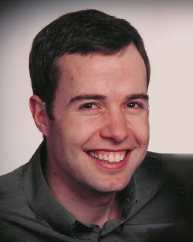 John Charles Howell合作论文数Department of Physics and Astronomy, University of Rochester/Racah Institute of Physics, Hebrew University6
 Alexander McCaskey合作论文数Quantum Computing Institute, Oak Ridge National Laboratory5
 Brian P Williams合作论文数Merck Sharp and Dohme Research Laboratories, Neuroscience Research Centre5Kathleen Hamilton合作论文数Oak Ridge Natl Lab, Quantum Comp Inst4Tony Zijlstra合作论文数3Tyler LeBlond合作论文数3
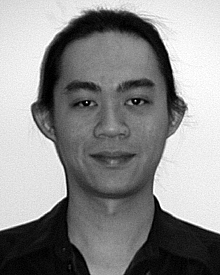 Vincent Wong合作论文数3Christopher M. Seck合作论文数3T. D. Morris合作论文数Michigan State University3
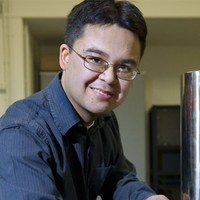 Sander Dorenbos合作论文数Single Quantum3
 Val Zwiller合作论文数3
 Robert Hadfield合作论文数James Watt School of Engineering, University of Glasgow;Centre for Quantum Technology, University of Glasgow;Mazumdar-Shaw Advanced Research Centre, University of Glasgow3
 Joseph M. Lukens合作论文数Sch. of Electr. & Comput. Eng., Purdue Univ.;c;Sch. of Electr. & Comput. Eng., Purdue Univ.3
 C.-C. Joseph Wang合作论文数Georgetown University, Georgetown University3
 Eugene Dumitrescu合作论文数3
 Kody J. H. Law合作论文数School of Mathematics, University of Manchester;Meta Reality Labs3C. Allen Bishop合作论文数3Burm Baek合作论文数National Institute of Standards and Technology3
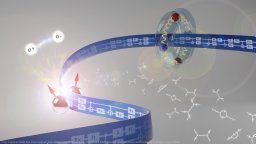 Pavel Lougovski合作论文数Department of Physics;Oregon Center for Optics;Department of Physics, Oregon Center for Optics3
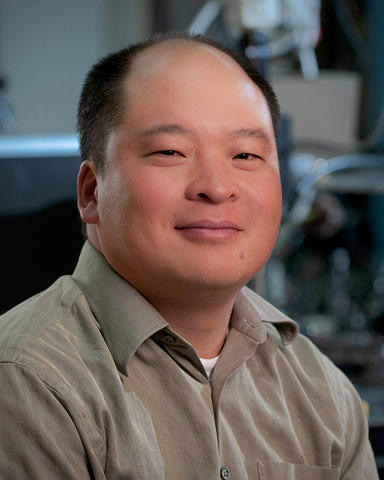 Sae Woo Nam合作论文数University of Colorado Boulder;National Institute of Standards and Technology3
 Svetlana G. Lukishova合作论文数Inst Opt, Univ Rochester3
 Thomas Gerrits合作论文数National Institute of Standards and Technology3Mark G. Pleszkoch合作论文数2Robert A. Fisher合作论文数2
 Dmitry Lyakh合作论文数2
 Vicente Ancelmo Leyton-Ortega合作论文数2
 Tyler Darius Kharazi合作论文数Oak Ridge Natl Lab, POB2j m hickmann合作论文数Opt & Mat Grp, Univ Fed Alagoas2Brice Calkins合作论文数2Gross, A.J.合作论文数2
 Thien Nguyen合作论文数johns hopkins university2
 Charles W Clark合作论文数Institute for Physical Science and Technology, University of Maryland;ScienceCast, Inc;National Institute of Standards and Technology2
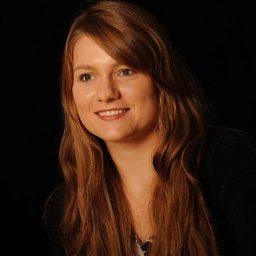 Stelmakh Veronika合作论文数2Douglas Goodman合作论文数2
 William B. Whitten II合作论文数Oak Ridge National Laboratory2
 Teun Klapwijk合作论文数Kavli Institute of Nanoscience, Faculty of Applied Sciences, Delft University of Technology;Triplepoint Research2
 Marty Stevens合作论文数National Institute of Standards and Technology2
 Aaron Schweinsberg合作论文数2




