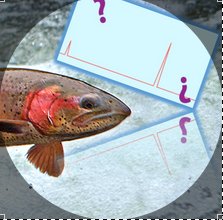
Animal welfare in aquaculture depends on both physical health and the cognitive and emotional states of fish. Predictability of positive events, such as feeding, has been proposed as a form of cognitive enrichment, but its effects remain debated. Rainbow trout (Oncorhynchus mykiss) are a suitable model due to their strong associative learning skills and anticipatory behaviors. Previously, we found that bubble diffusion was a salient cue when associated with feeding. Here, we tested whether bubbles themselves, when predictable, could act as a reinforcing stimulus and improve welfare compared to feeding predictability. Fish were exposed for 26 days to either: (1) predictable bubbles (fixed times, signalled by light), (2) predictable feeding (fixed times, signalled by light), or (3) unpredictable control (random bubbles and feeding). We measured activity, aggression, sudden accelerations, jumps, emotional reactivity (novel-tank test), growth, fin condition, immunity, plasma cortisol, and neurobiological markers in forebrain and myelencephalon. Fish developed anticipatory activity to the light cue associated with feeding, whereas no anticipatory response was detected for the light cue associated with bubble diffusion, even after 120 cue-stimulus pairings. Nevertheless, predictable bubbles increased activity during diffusion and were associated with differences in dopamine-related metabolites (notably increased telencephalic L-DOPA). Together, the behavioural data suggest increased engagement with the stimulus, while neurochemical interpretation remains limited to metabolite-level measures. Predictable bubbles modulated aggression over time, but without clear effects on fear responses, fin erosion, cortisol or immunity. Gene expression analyses indicated modest, region-dependent changes in neuronal markers under predictable conditions. Overall, bubbles did not generate conditioned anticipatory responses comparable to a feeding and may be limited as cognitive enrichment. However, bubbles remain valuable for physical enrichment or as a non-essential cue predicting feeding in aquaculture.
The freshwater prawn Macrobrachium rosenbergii, native to Southeast Asia and widely farmed in tropical regions, is increasingly considered for aquaculture in temperate climates. However, its potential establishment following escape remains uncertain in temperate regions. Although thermal limits under acute stress are relatively well documented, the effects of gradual seasonal temperature changes, which are more representative of natural conditions, remain poorly understood. Here, we assessed the thermal tolerance of M. rosenbergii under both gradual and acute temperature regimes. While individuals tolerated acute cold exposure down to 9 °C, prolonged exposure to gradually decreasing temperatures resulted in mortality at higher thresholds (13 °C), indicating increased sensitivity under realistic seasonal conditions. Similar discrepancies were observed under warming treatments. In addition, gradual thermal stress impaired background colour adaptation, resulting in reduced or even complete loss of pigmentation and potentially increasing vulnerability to visual predators. Thermal tolerance also varied across developmental stages, with post-larvae showing higher lethal temperature to acute stress than adults. These results demonstrate that gradual seasonal cooling, rather than acute thermal extremes, is likely to represent a critical barrier to overwinter survival. Consequently, the establishment of M. rosenbergii in temperate freshwater systems appears unlikely in regions where winter temperatures fall below this threshold. This study highlights the importance of incorporating realistic environmental dynamics when assessing invasion risk and identifies seasonal temperature variation as a key bottleneck in the invasion process.
Environmental enrichment is increasingly recognised as a practical approach to improve the welfare of farmed fish. In rainbow trout (Oncorhynchus mykiss), a species of high economic and scientific relevance, few studies have simultaneously evaluated multiple dimensions of welfare under different enrichment strategies. Here, we investigated the effects of structural and sensory enrichments on growth, physiology, behaviour, neurochemistry, and disease resistance. Female triploid rainbow trout were reared for eight weeks under eight conditions: neutral control, positive stress control (no enrichment with additional handling stress), structural enrichments (rubber hose, rubber wall, floating grass mat, flexible laminaria), and sensory enrichments (continuous gas bubbles, blue light filter). Growth performance, blood markers of stress (cortisol, glucose, lactate), behavioural indicators, enrichment use, and brain monoamine turnover (5-HIAA/5-HT for serotonin; HVA/L-DOPA for dopamine) were assessed at three time points in eight weeks. To evaluate robustness, fish were subsequently challenged with Aeromonas salmonicida subsp. salmonicida. No significant differences in growth were detected across conditions, showed the highest weight gains, raising the hypothesis that they could provide benefits over longer rearing cycles, a question that will require dedicated long-term trials. Behavioural analyses indicated high use of structural enrichments and reduced stress-related behaviours under the blue filter and rubber hose conditions. Stress physiology revealed condition-specific reductions in lactate or cortisol, but no consistent enrichment effect across markers. Neurochemical analyses demonstrated condition-dependent modulation of serotonergic and dopaminergic turnover, with laminaria increasing both systems, blue filter reducing dopaminergic activity, and bubbles strongly decreasing serotonergic turnover. Infection outcomes showed slower disease progression in rubber hose, laminaria, blue filter, and rubber wall conditions, with rubber hose fish exhibiting the slowest mortality kinetics. Overall, our integrative approach highlights that environmental enrichment modulates multiple welfare dimensions in rainbow trout, with laminaria, blue filter, grass mat, and rubber hose emerging as the most promising strategies. These findings support enrichment as a valuable tool to promote fish welfare and resilience, while underlining the need for long-term and context-specific validation before implementation in aquaculture.
The aim of this study was to perform a pharmacokinetic (PK) study of oxytetracycline (OTC) in rainbow trout using different routes of administration and different doses, and to investigate the influence of the bodyweight, the ploidy status (diploid versus triploid) and the water temperature (10 degrees C versus 16 degrees C). A cross-over design was used with 361 trout (median bodyweight: 389 g), each fish receiving OTC intravenously (8-30 mg/kg) and orally (50-150 mg/kg), by gavage or by spontaneous intake via a coating of OTC on the feed to mimic farming practice. Each fish, for each modality, was sampled 3-4 times over a period of 11 days, to establish its individual PK profile. Coated feed and plasma samples were assayed using a sensitive HPLC-MS/MS method. A population PK modelling approach was used to analyse plasma data and estimate key PK parameters and their variability. A bi-compartmental PK model best described the plasma data. The absolute oral bioavailability appeared to be very low (around 3 %) and the elimination of OTC was slow and strongly influenced by temperature (elimination half-life approximately 79 h at 16 degrees C versus 113 h at 10 degrees C). A comparison of spontaneous intake and gavage showed a significant loss of antibiotic due to leaching (about 30 %). Bodyweight and water temperature were the most influential covariates affecting the PK of OTC compared to the effect of ploidy. Pharmacodynamic (PD) studies with OTC against the major trout pathogens are now required to allow a more robust assessment of the expected efficacy thanks to a PK/PD approach.
Enterococci are considered indicators of fecal contamination from mammals and birds and of antimicrobial resistance (AMR) from the environment. This longitudinal observational study assessed the persistence of Enterococcus spp. in a recirculating aquaculture system (RAS), determined AMR phenotypes and compared them with isolates recovered from human infections. Over five monthly sampling events, 95 samples were collected from all compartments of the RAS rearing rainbow trout at a French experimental facility: water (n = 33), biofilm (n = 23), sediment (n = 5), fish feces (n = 30) and commercial fish feed (n = 4). Enterococcus isolates from feed and RAS, in addition to 15 E. faecium from human infections retrieved at Nantes University Hospital, were tested using broth microdilution method against 12 antibiotics of importance for human or animal health. Minimum inhibitory concentrations (MICs) were interpreted using epidemiological cutoff (ECOFF) values and clinical breakpoints reported by the European Committee on Antimicrobial Susceptibility Testing (EUCAST). Clinically important species (E. faecium, E. gallinarum, and E. casseliflavus) were found in commercial fish feed (3/4). However, only environmental Enterococcus species were isolated within the RAS, and at a low overall rate (7/91). The isolation rate of Enterococcus spp. within the RAS was significantly higher (p < 0.05) in May, probably due to both warmer water temperature and higher biomass. For four antibiotics, E. faecium isolates from human infections showed higher resistance rates than E. faecium from fish feed (p < 0.01). Although clinically important enterococci introduced via feed do not appear to persist within a RAS, the potential risk of AMR-gene transfer to environmental Enterococcus spp. and its spread via effluents needs further investigation.
The Gram-negative bacterium Aeromonas salmonicida subsp. salmonicida is a major fish pathogen causing furunculosis, one of the main bacterial diseases affecting salmonids. Since this bacterium leads to significant losses in aquaculture worldwide and frequently displays antimicrobial resistance, this study aimed to isolate bacteriophages targeting A. salmonicida, characterize them in vitro, and evaluate their therapeutic potential using the Galleria mellonella larvae model. Four novel phages presenting a myovirus morphotype were isolated from fish farms and aquatic environments in Belgium and France. Genomic analyses revealed that the three lytic phages vB_AsaM_ULASA2 (170,823 bp), vB_AsaM_ULASA3 (164,381 bp), and vB_AsaM_ULASA4 (171,205 bp) belong to the Straboviridae family, whereas no known family could be assigned to the phage vB_AsaM_ULASA1 (47,813 bp). These isolates displayed valuable functional properties, including activity against a broad panel of contemporary multidrug-resistant A. salmonicida strains, as well as high biochemical tolerance. A single phage administration prolonged the survival of G. mellonella larvae previously infected with A. salmonicida, although it did not result in complete elimination of the bacteria. Overall, this study highlights the therapeutic potential of lytic ULASA phages for the management of furunculosis, with implications for reducing antibiotic use and limiting antimicrobial resistance in aquaculture.
Open aquaculture systems represent a strategic environment for the study of antibiotic resistance dynamics, given the interactions between bacteria from humans, animals and the environment. The genomic investigation of eight Pseudomonas isolated from rainbow trout in a previous study demonstrated that non-wild-type and resistance phenotypes to several antibiotics (oxytetracycline, sulphonamides and florfenicol) were predominantly attributable to the presence of related genes [tet(Y), sul2 and floR]. Phylogenetic analyses revealed that several species of Pseudomonas iridis harboured these genes on mobile genetic elements, including integrative conjugative elements (ICE) on the chromosome or plasmids with a high degree of sequence similarity (>99%) between the genetic structures. Furthermore, comparisons between isolates with low and high MIC values to colistin showed mutations in the amino acid sequences of the PhoP/Q two-component system and a lack of the pmrA/B system. A wide diversity of known LPS-modifying genes involved in colistin resistance was also detected in resistant isolates. This study provided insights into the dynamics of antibiotic resistance in aquaculture systems. It demonstrated the presence of genes located on an ICE inserted into a chromosome or plasmid in P. iridis, which was isolated from healthy rainbow trout in different farms within the same watershed. Our study raises questions about the ability of environmental Pseudomonas bacteria to spread their antibiotic resistance genes to other bacterial species that are of interest in terms of human or animal surveillance.
The article explores the improvement of farming conditions for rainbow trout (Oncorhynchus mykiss), the dominant species in French aquaculture, in the context of growing expectations regarding animal welfare. The AQUA BIEN-ÊTRE project identified 13 health indicators and 12 behavioral indicators to assess their well-being, highlighting their behavioral needs. Environmental enrichments were tested, including bubble diffusion as a feeding predictive signal and the introduction of physical structures (pipes, artificial plants), which reduced aggressive behaviors, enhanced cognitive abilities, and maintained growth performance. The EBENE® tool, partially developed within this framework, offers an innovative method to assess and optimize welfare in farming practices, with potential for adaptation to other economically significant species.
Aeromonas salmonicida subsp. salmonicida (ASS) is a bacterium that can cause opportunistic infections in humans and animals. In farmed rainbow trout it causes furunculosis, with more frequent outbreaks when water temperatures are higher, an additional consequence of global warming. When infections occur, antibiotics are sometimes required. However, data on ASS susceptibility is limited. The aim of this study was to determine the distribution of Minimum Inhibitory Concentrations (MICs) of eight antibiotics commonly used in fish veterinary medicine in a population of pathogenic ASS, and to calculate provisional epidemiological cut-off values (called COEpid). To date, only four epidemiological cut-off values (ECV) have been established by CLSI, and none by EUCAST. In this study, 406 bacterial strains of ASS were collected exclusively from diseased French farmed trout over a 10-year period (2012–2021). A combination of PCR, MALDI-TOF and specific characteristics of the bacterial culture was used to identify each isolate to species level. All MIC data were obtained by the broth dilution method according to CLSI recommendations. Our COEpid meets the CLSI defined ECV for florfenicol (4 mg/L) and oxytetracycline (1 mg/L). In the absence of a defined ECV, we proposed a COEpid of 1 mg/L for doxycycline. For sulfadiazine alone, all strains tested were non-wild-type (NWT) with very high MICs. The COEpid was calculated as 4.8/0.25 mg/L for sulfadiazine + trimethoprim (one two-fold dilution difference from the ECV established by CLSI for ormetoprim + sulfadimethoxine). For quinolones, COEpid were 4 mg/L, 4 mg/L and 0.5 mg/L for oxolinic acid, flumequine and enrofloxacin, respectively, with a cross-resistance mechanism. This COEpid for oxolinic acid far exceeds the CLSI defined ECV (0.125 mg/L). A total of 12 strains (3%) were classified as NWT for all antibiotics tested. Over the period studied, the proportion of bacteria susceptible to the different molecules remained stable, except for the tetracycline family. These data will be available to establish internationally agreed epidemiological cut-off values, which are lacking for some antibiotics. These cut-offs are essential to assess and monitor the emergence of bacterial populations with resistance traits, and to establish clinical breakpoints for better use of antimicrobials in fish.
The development and growth of fish farming are hindered by viral and bacterial infectious diseases, which necessitate effective disease control measures. Furunculosis, primarily caused by Aeromonas salmonicida, stands out as a significant bacterial disease affecting salmonid fish farms, particularly rainbow trout. Vaccination has emerged as a crucial tool in combating this disease. The objective of this experiment was to assess and compare the efficacy and duration of different vaccine protocols against furunculosis in large trout under controlled rearing conditions, utilizing single and booster administrations via intraperitoneal, oral, and immersion routes. Among the various vaccination protocols tested, only those involving intraperitoneal injection, administered at least once, proved truly effective in preventing the expression of clinical signs of furunculosis and reducing mortality rates. A single intraperitoneal administration provided protection for up to 2352°-days, equivalent to approximately 5 months in water at 16 °C. However, intraperitoneal vaccination may lead to reduced growth in the fish due to resultant intraperitoneal adhesions. Additionally, protocols incorporating booster doses via intraperitoneal injection demonstrated efficacy regardless of the administration route of the primary vaccination. Nevertheless, the use of booster vaccinations via the intraperitoneal route did not confer any significant advantage over a single intraperitoneal injection in terms of efficacy.
Furunculosis caused by Aeromonas salmonicida subsp salmonicida (Ass) is a medically and economically important bacterial disease in salmonid farms that requires therapeutic measures to prevent and control the disease. Evaluation of the effectiveness of traditional measures such as antibiotics or vaccines usually requires infecting fish experimentally. The objective of this study is to develop a method of infectious challenge of large (250-g) Rainbow trout by immersion close to natural infection conditions. We compare mortality, morbidity and anti -Ass antibody production of Rainbow trout following different bathing times (2, 4, 8 and 24 h) at a final bacterial concentration of 106 CFU/mL. One hundred sixty fish divided in five groups corresponding to the 4 bathing times and the non-challenged group were studied. The 24 h contact duration resulted in the infection of all fish, with a mortality rate of 53.25%. The challenged fish developed acute infection with symptoms and lesions (inappe-tance, altering of swimming behaviour, presence of boils) similar to those observed in furunculosis, and produced antibodies against the bacterium at 4 weeks after challenging, in contrast with the non-challenged group.
 Hervé Prévost合作论文数SECALIM, INRAE, Oniris, 44307 Nantes, France.15
 Lionel Pineau合作论文数13Catherine Fournel合作论文数12Emmanuelle Moreau合作论文数Biologie, Epidémiologie et Analyse de Risque en Santé Animale, ONIRIS10
 Djamel Drider合作论文数Lille University8Agnès Bouju-Albert合作论文数7Catherine Magras合作论文数7Nicolas Helsens合作论文数Inst Natl Rech Agron, BIOEPAR7Albert Rossero合作论文数6
 Rostang Antoine合作论文数6
 Niki Dourver Hayatgheib合作论文数5
 Eric Duchaud合作论文数5
 Patrick Daniel合作论文数4
 Chantal Thorin合作论文数UPSP 5304 de Physiopathologie Animale et Pharmacologie Fonctionnelle, LUNAM Université4Viel Alexis合作论文数LUNAM Université;INRA;INRA, LUNAM Université4
 Violaine Colson合作论文数4
 Herve Pouliquen合作论文数UMR Chimiothérapie Aquacole et Environnement, Ecole Nationale Vétérinaire de Nantes4Douet Diane-Gaëlle合作论文数3
 Kenny Oberle合作论文数IRESE, Université de Rouen3Sylvain Milla合作论文数3
 Nora Navarro-Gonzalez合作论文数Servei d' Ecopatologia de Fauna Salvatge (SEFaS), Universitat Autònoma de Barcelona (UAB)3
 Aude Kleiber合作论文数2Guillaume Gourmelen合作论文数2Erina Fujiwara-Nagata合作论文数2Aurélie Lunazzi合作论文数2Gladys Maria V. Pangga合作论文数2Pierre-Lo Sudan合作论文数2Cecile Duret合作论文数2Valentin Brunet合作论文数2Lone Galmstrup Madsen合作论文数2
 Vanessa Guesdon合作论文数2Amélie Patinote合作论文数2
 Cecile Heraud合作论文数NUMEA, Univ Pau & Pays Adour2
 Møretrø Trond合作论文数Nofima, Norwegian Inst Food Fisheries & Aquaculture Res2
 Inger Dalsgaard合作论文数National Institute of Aquatic Resources, Danmarks Tekniske Universitet2Sandrine Baron合作论文数2
 Jerome Roy合作论文数2Pierre Nicolas合作论文数Institut Jacques Monod, Université Paris 72
 Stephane Corvec合作论文数2Jean-Francois Bernardet合作论文数2
 Tom Wiklund合作论文数Institute of Parasitology and Department of Biology, Åbo Akademi University2
 Dominique Hurtaud-Pessel合作论文数2
 Eric Batard合作论文数Emergency Department, Centre Hospitalier Universitaire de Nantes2
 Achim Kohler合作论文数Nofima mat2Alexandra Calteau合作论文数Laboratoire de Biométrie et Biologie Évolutive, Université Claude Bernard Lyon 12
 Tatiana Rochat合作论文数Unité d'Ecologie et de Physiologie du Système Digestif, Domaine de Vilvert, 78352 Jouy-en-Josas cedex, France2P. Simier合作论文数1
 Rithy Chrun合作论文数1Aurélien Tocqueville合作论文数1




