We present the first measurement of the D*+ width using 9/fb of e+ e- data collected near the Upsilon(4S) resonance by the CLEO II.V detector. Our method uses advanced tracking techniques and a reconstruction method that takes advantage of the small vertical size of the CESR beam spot to measure the energy release distribution from the D*+ -> D0 pi+ decay. We find Gamma(D*+) = 96 +- 4 (Statistical) +- 22 (Systematic) keV. We also measure the energy release in the decay and compute Delta m = m(D*+) - m(D0) = 145.412 +- 0.002 (Statistical) +- 0.012 (Systematic) MeV/c^2
Using the combined CLEO II and CLEO II.V data sets of 9.1 fb(-1) at the Upsilon(4S), we measure properties of psi mesons produced directly from decays of the B meson, where "B" denotes an admixture of B+, B-, B0, and B;(0), and "psi" denotes either J/psi(1S) or psi(2S). We report first measurements of psi polarization in B-->psi(direct)X: alpha(psi(1S))=-0.30(+0.07)(-0.06)+/-0.04 and alpha(psi(2S))=-0.45(+0.22)(-0.19)+/-0.04. We also report improved measurements of the momentum distributions of psi produced directly from B decays, correcting for measurement smearing. Finally, we report measurements of the inclusive branching fraction for B-->psiX and B-->chi(c1)X.
In e^+e^- collisions using the CLEO detector we have studied the decay of the D^0 to the final state K_S^0 pi^+ pi^- with the initial flavor of the D^0 tagged in charged D^* decay. We use the Dalitz technique to measure the resonant substructure in this final state and clearly observe ten different contributions by fitting for their amplitudes and relative phases. We observe a K^{* +} pi^- component which arises from doubly Cabibbo suppressed decays or D^0 - {D^0}-bar mixing.
We have measured the branching fraction and photon energy spectrum for the radiative penguin process b-->s gamma. We find Beta(b-->s gamma) = (3.21+/-0.43+/-0.27(+0.18)(-0.10))x10(-4), where the errors are statistical, systematic, and from theory corrections. We obtain first and second moments of the photon energy spectrum above 2.0 GeV, = 2.346+/-0.032+/-0.011 GeV, and -(2) = 0.0226+/-0.0066+/-0.0020 GeV(2), where the errors are statistical and systematic. From the first moment, we obtain (in the modified minimal subtraction renormalization scheme, to order 1/M(3)(B) and beta(0)alpha(2)(s)) the heavy quark effective theory parameter Lambda = 0.35+/-0.08+/-0.10 GeV.
Color-suppressed decays of B mesons to final states with $\ensuremath{\psi}(2S)$ mesons have been observed with the CLEO detector. The branching fractions for the decays ${B}^{+}\ensuremath{\rightarrow}\ensuremath{\psi}{(2S)K}^{+},$ ${B}^{+}\ensuremath{\rightarrow}\ensuremath{\psi}{(2S)K}^{*}{(892)}^{+},$ ${B}^{0}\ensuremath{\rightarrow}\ensuremath{\psi}{(2S)K}^{0},$ and ${B}^{0}\ensuremath{\rightarrow}\ensuremath{\psi}{(2S)K}^{*}{(892)}^{0}$ are measured to be $(7.8\ifmmode\pm\else\textpm\fi{}0.7\ifmmode\pm\else\textpm\fi{}0.9)\ifmmode\times\else\texttimes\fi{}{10}^{\ensuremath{-}4},$ $(9.2\ifmmode\pm\else\textpm\fi{}1.9\ifmmode\pm\else\textpm\fi{}1.2)\ifmmode\times\else\texttimes\fi{}{10}^{\ensuremath{-}4},$ $(5.0\ifmmode\pm\else\textpm\fi{}1.1\ifmmode\pm\else\textpm\fi{}0.6)\ifmmode\times\else\texttimes\fi{}{10}^{\ensuremath{-}4},$ and $(7.6\ifmmode\pm\else\textpm\fi{}1.1\ifmmode\pm\else\textpm\fi{}1.0)\ifmmode\times\else\texttimes\fi{}{10}^{\ensuremath{-}4},$ respectively, where the first uncertainty is statistical and the second is systematic. The first measurement of the longitudinal polarization fraction is extracted from the angular analysis of the $\stackrel{\ensuremath{\rightarrow}}{B}\ensuremath{\psi}{(2S)K}^{*}(892)$ candidates: ${\ensuremath{\Gamma}}_{L}/\ensuremath{\Gamma}=0.45\ifmmode\pm\else\textpm\fi{}0.11\ifmmode\pm\else\textpm\fi{}0.04.$ Our measurements of the decays ${B}^{0}\ensuremath{\rightarrow}\ensuremath{\psi}{(2S)K}^{0}$ and ${B}^{+}\ensuremath{\rightarrow}\ensuremath{\psi}{(2S)K}^{*}{(892)}^{+}$ are first observations.
Using the CLEO II detector operating at the CESR e+e- collider, we have measured the structure functions in the decay tau+/- --> pi+/- pi0 pi0 nu, based on a sample corresponding to 4*10E6 produced tau-pair events. We determine the integrated structure functions, which depend only on the three pion invariant mass, as well as the structure functions differential in the Dalitz plot. We extract model independent limits on non-axial-vector contributions from the measured structure functions as less than 16.6% of the total branching fraction, at the 95% confidence level. Separating the non-axial-vector contributions into scalar and vector contributions, we measure that scalars (vectors) contribute with less than 9.4% (7.3%) to the total branching ratio, at the 95% confidence level.
 Yurii Maravin合作论文数Department of Physics, Kansas State University;Abastumani Astrophysical Observatory, Ilia State University9
 Marina Artuso合作论文数Department of Physics, College of Art and Sciences, Syracuse University9
 Giuliana Bonvicini合作论文数CEPRA9
 A. Mahmood合作论文数University at Albany9
 A. Shapiro合作论文数9
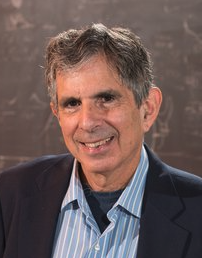 Sheldon Stone合作论文数Department of Physics, College of Arts and Sciences, Syracuse University9
 David Cinabro合作论文数College of Liberal Arts and Sciences, Wayne State University;U.S. Department of Energy9J. Hinson合作论文数9K. Bukin合作论文数8C. Boulahouache合作论文数8V. Pavlunin合作论文数8C. Gwon合作论文数8
 Jean Etienne Duboscq合作论文数Cornell University8Ei Shibata合作论文数8S. P. Pappas合作论文数8
 Horst Severini合作论文数Homer L. Dodge Department of Physics and Astronomy, Dodge Family College of Arts and Sciences, The University of Oklahoma;Oklahoma Center for High Energy Physics8
 K. K. Gan合作论文数Department of Physics, College of Arts and Sciences, The Ohio State University8K. M. Ecklund合作论文数8
 Vladimir Savinov合作论文数Department of Physics & Astronomy, University of Pittsburgh;The Department of Quantum Reality, University of Pittsburgh8
 David G. Cassel合作论文数Department of Physics, College of Arts & Sciences, Cornell University8
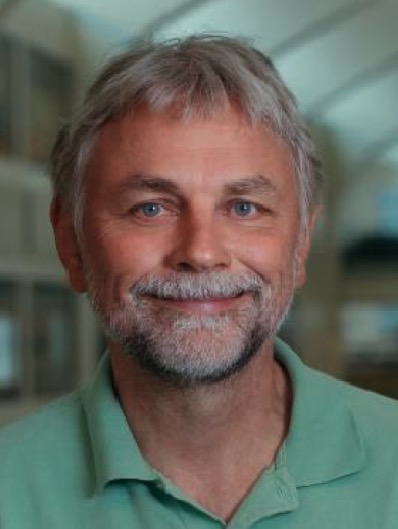 Klaus Honscheid合作论文数Department of Physics, College of Arts and Sciences, The Ohio State University8
 Roy A. Briere合作论文数Department of Physics, Mellon College of Science, Carnegie Mellon University8Jon Urheim合作论文数8Ilya V. Narsky合作论文数MathWorks, Natick8
 Raymond Joseph Mountain合作论文数Department of Physics, College of Arts & Sciences, Syracuse University8A. L. Lyon合作论文数8Vladimir Frolov合作论文数Dzhelepov Laboratory of Nuclear Problems, Joint Institute for Nuclear Research8E. Dambasuren合作论文数8C. Sedlack合作论文数7A. Magerkurth合作论文数7L. Gibbons合作论文数7H. Schwarthoff合作论文数7L. Jian合作论文数7Wm Sun合作论文数7To Meyer合作论文数7
 Persis Drell合作论文数Physics Department, School of Humanities and Sciences, Stanford University;School of Engineering, Stanford University7Dl Kreinick合作论文数7Mm Zoeller合作论文数7S. W. Gray合作论文数7V. Boisvert合作论文数7
 Ryszard Stroynowski合作论文数Department of Physics, Southern Methodist University7M. Marsh合作论文数7
 Tomasz Skwarnicki合作论文数College of Arts & Sciences, Syracuse University7E. Nordberg合作论文数7M. S. Alam合作论文数7d riley合作论文数7
 Muhammad Saleem合作论文数Department of Physics, College of Arts and Sciences, Bellarmine University7Patrick L. Skubic合作论文数7
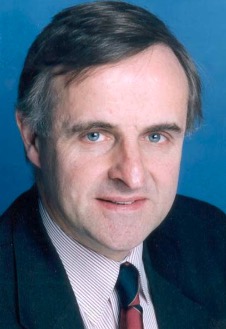 David Miller合作论文数Department of Neuromuscular Diseases, University College London7




