We demonstrate an acetylene-based optical clock that achieves <3×10⁻¹³/τ fractional frequency instability and a flicker floor below 10-14 after 1,000 s. The clock is made entirely from commercially available components, offering a simple setup and environmental robustness. © 2024 Vescent Technologies and DFM.
Gas flaring is used as an alternative to venting when waste gases cannot be captured from industrial processes such as oil and natural gas production, chemical processing, and waste management. In the oil and natural gas production sector alone, an estimated 3.5 % of total global natural gas production is flared. Survey studies have shown that the methane destruction efficiency (DE) of flares is lower than expected due to real-world conditions (weather and equipment malfunction) and estimate that improving flare efficiency is a 0.5 Tg/yr methane emissions reduction opportunity. Continuous monitoring of flare DE would provide the opportunity for feedback to lower emissions; however, there are currently no technologies used at scale that can provide such a measurement. Here we present a method for measuring the operational methane DE from flares by monitoring methane levels in flares using dual-frequency comb spectroscopy. This method leverages the temperature-dependent absorption fingerprint of methane to differentiate heated and ambient methane. We assess the capabilities of this technique through a set of laboratory-based experiments utilizing a partially premixed methane flame. We estimate the limit of detection (LOD) and sensitivity of the measurements for directly monitoring a flame, and monitoring a flame from a distance of 1 km in the presence of ambient methane. For our configuration, a targeted monitoring scenario (direct flame measurement) results in the ability to distinguish methane DE up to 99.9 %; whereas in the presence of a 1 km background methane signal, the approach is able to quantify methane DE to 97.5 %. These performance metrics could be improved through an updated high-temperature spectral absorption database for methane, however the current estimated performance could already substantially impact flare emissions by closing the gap between the flare design specifications and what research studies estimate from actual in-field performance.
Performance levels, increased levels of system integration, and examples of fielded demonstrations of low size, weight, and power optical frequency combs will be discussed for potential next-generation optical clocks and quantum applications.
A novel ultranarrow linewidth laser that can be operated outside the laboratory is discussed. Short-term Allan Deviations of 2E-13 and frequency noise power spectral densities below 10 Hz 2 /Hz at >100 Hz offset are presented.
We phase stabilize a 1 GHz optical frequency comb with a residual phase noise of <270 mrad [1kHz to 1MHz] on both the carrier-envelope offset frequency and the repetition rate, respectively. The SNR of the offset beat signal is 56 dB (100 kHz RBW).
SLAC femtosecond laser timing synchronization system is an FPGA based real time feedback control system that synchronizes laser oscillator to RF reference signal on femtosecond timing scale. The system was first installed on SLAC mega-electron-volt (MeV) ultrafast electron diffraction (UED) instrument in 2019 and has achieved 10 femtosecond laser-RF timing jitter on the UED laser oscillator. Since then, the system has been installed in a few other SLAC laser facilities, such as the LCLS (Linac Coherent Light Source) - II injector laser, LCLS-II pump-probe lasers, etc. These lasers have different tuning ranges from a few Hz per volt to a few hundred Hz per volt and tuning bandwidth from a few kHz to hundreds kHz. We have recently upgraded the firmware design to enable a wider operating range so that the system can be used on various SLAC lasers with different tuning parameters. This presentation describes the system algorithm, its FPGA implementation and test results from various lasers.
The offset frequency from a 1-GHz optical frequency comb has been stabilized using <200 mW of optical power, greater than 40 dB SNR in 100 kHz RBW, and an integrated phase noise of <0.26 radians.
We report a simple and compact design of a dispersion compensated mode-locked Yb:fiber oscillator based on a nonlinear amplifying loop mirror (NALM). The fully polarization maintaining (PM) fiber integrated laser features a chirped fiber Bragg grating (CFBG) for dispersion compensation and a fiber integrated compact non-reciprocal phase bias device, which is alignment-free. Themain design parameters were determined by numerically simulating the pulse evolution in the oscillator and by analyzing their impact on the laser performance. Experimentally, we achieved an 88 fs compressed pulse durationwith sub-fs timing jitter at 54MHz repetition rate and 51 mW of output power with 5.5 x 10(-5) [20 Hz, 1 MHz] integrated relative intensity noise (RIN). Furthermore, we demonstrate tight phase-locking of the laser's carrier-envelope offset frequency (f(ceo)) to a stable radio frequency (RF) reference and of one frequency comb tooth to a stable optical reference at 291 THz.
We develop an Arrival Time Monitor (ATM) achieving high sensitivity for soft X-ray pulses in low-fluence conditions. The ATM cross-correlates ultrashort X-ray with 800nm laser pulses using a new multi-layer target designed and grown in-house to achieve optimal sensitivity.
We present a comparison of two low-noise carrier-envelope offset (CEO) frequency stabilization methods studied using an ytterbium (Yb) fiber laser oscillator based on a nonlinear amplifying loop mirror. We first investigate the phase locking performance achieved with cross-gain modulation (XGM) via injection of an auxiliary low-power continuous-wave (CW) laser into the fiber gain medium. Amplification of the injected CW laser light cross-modulates the gain of the oscillator, resulting in an intra-cavity power modulation, thus providing control of the CEO frequency. The XGM method is then compared with the conventional pump-current modulation scheme. Both stabilization methods provide similar locking performances with sub-200-mrad of integrated residual carrier-envelope-phase (CEP) noise (10 Hz to 1 MHz), suitable for high-resolution comb spectroscopy applications.
A major design goal for femtosecond fiber lasers is to increase the output power but not at the cost of increasing the noise level or narrowing the bandwidth. Here, we perform a computational study to optimize the cavity design of a femtosecond fiber laser that is passively modelocked with a semiconductor saturable absorbing mirror (SESAM). We use dynamical methods that are more than a thousand times faster than standard evolutionary methods. We show that we can obtain higher pulse energies and hence higher output powers by simultaneously increasing the output coupling ratio, the gain, and the anomalous group delay dispersion. We can obtain output pulses that are from 5 to 15 times the energy of the pulse in the current experimental design with no penalty in the noise level or bandwidth.
We design and realize an arrival time diagnostic for ultrashort X-ray pulses achieving unprecedented high sensitivity in the soft X-ray regime via cross-correlation with a ≈1550 nm optical laser. An interferometric detection scheme is combined with a multi-layer sample design to greatly improve the sensitivity of the measurement. We achieve up to 275% of relative signal change when exposed to 1.6 mJ/cm2 of soft X-rays at 530 eV, more than a hundred-fold improvement in sensitivity as compared to previously reported techniques. The resolution of the arrival time measurement is estimated to around 2.8 fs (rms). The demonstrated X-ray arrival time monitor paves the way for sub-10 fs-level timing jitter at high repetition rate X-ray facilities.
We present the new drive laser system for the photo-injector of the LCLS-II XFEL at SLAC, including the first commissioning results and challenges encountered due to high power, high repetition rate ultraviolet laser operation.
We present a flexible figure-9 Yb: fiber-laser and investigate the impact of intra-cavity group delay dispersion on amplitude/phase noise. We show that the free-running carrier-envelope-offset frequency short-term linewidth can range from several MHz to <10 kHz.
We present carrier-envelope phase stabilization of an Er:Yb:glass laser at 1.55 pm via the feed-forward method with 2.9 as (1 Hz - 3 MHz) timing jitter and continuous stabilization over 24 hours.
We present a flexible all-polarization-maintaining (PM) mode-locked ytterbium (Yb):fiber laser based on a nonlinear amplifying loop mirror (NALM). In addition to providing detailed design considerations, we discuss the different operation regimes accessible by this versatile laser architecture and experimentally analyze five representative mode-locking states. These five states were obtained in a 78-MHz configuration at different intracavity group delay dispersion (GDD) values ranging from anomalous (-0.035 ps2) to normal (+0.015 ps2). We put a particular focus on the characterization of the intensity noise as well as the free-running linewidth of the carrier-envelope-offset (CEO) frequency as a function of the different operation regimes. We observe that operation points far from the spontaneous emission peak of Yb (∼1030 nm) and close to zero intracavity dispersion can be found, where the influence of pump noise is strongly suppressed. For such an operation point, we show that a CEO linewidth of less than 10-kHz at 1 s integration can be obtained without any active stabilization.
We present the technical design of the pulsed-optical timing distribution system for LCLS-II and characterize its performance with out-of-loop measurements indicating a long-term timing stability of one femtosecond.
Few-cycle pulsed laser technology highlights the need for control and stabilization of the carrier-envelope phase (CEP) for applications requiring shot-to-shot timing and phase consistency. This general requirement has been achieved successfully in a number of free-space and fiber lasers via feedback and feed-forward (FF) methods. Expanding on existing results, we demonstrate CEP stabilization through the FF method applied to a SESAM mode-locked Er:Yb:glass laser at 1.55 μm with a measured ultralow timing jitter of 2.9 as (1-3 MHz) and long-term stabilization over a duration of 8 h. Single-digit attosecond stabilization at telecom wavelengths opens a new direction in applications requiring ultra-stable frequency and time precision such as high-resolution spectroscopy and fiber timing networks.
We demonstrate a low-noise carrier-envelope-offset frequency stabilized all-PM Yb:fiber oscillator. Two different stabilization methods lead to sub 200 mrad integrated fo phase noise (10 Hz to 1 MHz), suitable for comb spectroscopy applications. © 2019 The Author(s)
We demonstrate dual-comb generation from an all-polarization-maintaining dualcolor ytterbium (Yb) fiber laser.Two pulse trains with center wavelengths at 1030 nm and 1060 nm respectively are generated within the same laser cavity with a repetition rate around 77 MHz.Dual-color operation is induced using a tunable mechanical spectral filter, which cuts the gain spectrum into two spectral regions that can be independently mode-locked.Spectral overlap of the two pulse trains is achieved outside the laser cavity by amplifying the 1030-nm pulses and broadening them in a nonlinear fiber.Spatially overlapping the two arms on a simple photodiode then generates a down-converted radio frequency comb.The difference in repetition rates between the two pulse trains and hence the line spacing of the down-converted comb can easily be tuned in this setup.This feature allows for a flexible adjustment of the tradeoff between non-aliasing bandwidth vs. measurement time in spectroscopy applications.Furthermore, we show that by fine-tuning the center-wavelengths of the two pulse trains, we are able to shift the down-converted frequency comb along the radio-frequency axis.The usability of this dual-comb setup is demonstrated by measuring the transmission of two different etalons while the laser is completely free-running.
 Nathan R Newbury合作论文数National Institute of Standards and Technology9
 Ian Coddington合作论文数National Institute of Standards and Technology, United States Department of Commerce9
 Jakob Fellinger合作论文数Faculty Center for Nano Structure Research, University of Vienna7
 Heckl Oliver H合作论文数eth zurich7Chen Li合作论文数7Mayer Aline S合作论文数Christian Doppler Laboratory for Mid-IR Spectroscopy and Semiconductor Optics, Austria7
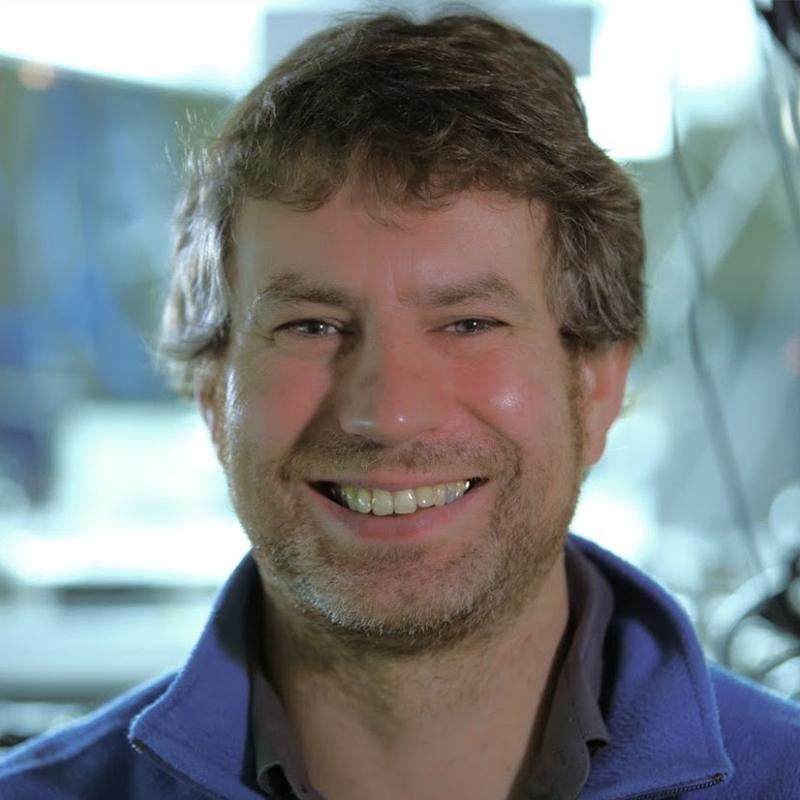 Ingmar Hartl合作论文数Deutsches Elektronen-Synchrotron7
 Christoph Heyl合作论文数6Kevin Knabe合作论文数6Kurt Vogel合作论文数5
 Sarper Haydar Salman合作论文数5
 Laura Sinclair合作论文数Applied Physics Division, National Institute of Standards and Technology5
 Timmers Henry R合作论文数5
 Attar Andrew R合作论文数Department of Chemistry, University of California5
 Gesine Grosche合作论文数5Georg Winkler合作论文数4Bennett Sodergren合作论文数4David R. Carlson合作论文数Coll. of Opt. Sci., Univ. of Arizona;c;Coll. of Opt. Sci., Univ. of Arizona4
 Florian Holsboer合作论文数Max Planck Institute of Psychiatry4
 Ronald Holzwarth合作论文数Menlo Systems GmbH;Max Planck Institute of Quantum Optics4
 Daniel Hickstein合作论文数Octave Photonics4
 Thomas Udem合作论文数Max-Planck-Institut für Quantenoptik;Ludwig-Maximilians-Universität Munich4
 Harald Schnatz合作论文数4Randy Lemons合作论文数3A Bilang-Bleuel合作论文数3A Gesing合作论文数3s m f raupach合作论文数3Wilfrid Grosinger合作论文数3
 Yuxuan Ma合作论文数3Alan Fry合作论文数3
 Shaokang Wang合作论文数Univ. of Maryland Baltimore County;c;Univ. of Maryland Baltimore County3
 Carbajo Sergio合作论文数3
 Robinson Joseph合作论文数Natl Accelerator Lab, SLAC3
 Curtis R. Menyuk合作论文数Department of Computer Science and Electrical Engineering, College of Engineering and Information Technology, University of Maryland3
 Jean-Daniel Deschenes合作论文数3William C. Swann合作论文数National Institute of Standards and Technology3Daniel I. Herman合作论文数2Cole Smith合作论文数2F. Ozimek合作论文数2
 Lukas W. Perner合作论文数2Evan Barnes合作论文数2Irene Fernandez De Fuentes合作论文数2Benjamin Rudin合作论文数2JHMH Reul合作论文数2
 Katharina Predehl合作论文数2Alex Lind合作论文数Dept Phys, Univ Colorado2
 Charles G Durfee合作论文数Stanford Univ2Christoph Mahnke合作论文数2
 Scott Papp合作论文数National Institute of Standards and Technology;College of Arts And Sciences, University of Colorado Boulder2




