The PEP-II e{sup +}e{sup -} collider turned off last year after a very successful 9 years of running. The accelerator achieved a peak luminosity of 12 x 10{sup 33} cm{sup -2} s{sup -1}, 4 times over the design of 3 x 10{sup 33} cm{sup -2} s{sup -1}. The peak beam currents were quite high; over 3 A for the positron beam and over 2 A for the electron beam. The beams were stored in separate storage rings. The PEP-II design called for a head-on collision at the interaction point (IP). This was possible because of the asymmetric beam energies (9 on 3.1 GeV) and was achieved using permanent magnet (PM) dipoles. I describe the actual interaction region (IR) layout including some of the design constraints that led to the final design and discuss operation issues related to the IR design.
The PEP-II B-Factory at SLAC (3.1 GeV e{sup +} x 9.0 GeV e{sup -}) operated from 1999 to 2008, delivering luminosity to the BaBar experiment. The design luminosity was reached after one and a half years of operation. In the end PEP-II surpassed, by four times, its design luminosity reaching 1.21 x 10{sup 34} cm{sup -2}s{sup -1}. It also set world stored beam current records of 2.1 A e{sup -} and 3.2 A e{sup +}. Continuous injection was implemented with BaBar successfully taking data. The total delivered luminosity to the BaBar detector was 557.4 fb{sup -1} spanning five upsilon resonances. PEP-II was constructed by SLAC, LBNL, and LLNL with help from BINP, IHEP, the BaBar collaboration, and the US DOE OHEP.
In order to benefit from further reduction of the vertical IP beta function of the PEP-II high energy ring (HER) the bunch length should be reduced. This will be achieved by changing the phase advance from 60 degree to 90 degree in the four arcs not adjacent to the IR region, thus reducing momentum compaction by about 30% and reducing bunch length from a present 12 mm down to 8.5 mm at low beam current. In preparation to implement the 90 degree lattice the main HER quadrupole and sextupole strings and their power supplies have been reconfigured. The synchrotron tune initially will be lower but can be brought back by raising the rf voltage. Beam emittance is held at 48 nmr by introducing a significant dispersion beat in the arcs. The lattice was successfully commissioned at currents up to 800 mA in August 2007. In this paper we will compare the actual machine with the predicted behaviour, explain the correction strategies used and give an overall assessment of the operation and the benefit of the new lattice configuration.
The PEP-II B-Factory operated at peak and integrated luminosity several times the original design values. Its storage rings operated at world-record beam currents with bunch lengths of about 10 mm. Correspondingly significant heat load was imposed on the vacuum system, both due to synchrotron radiation and by energy loss into higher-order modes. The latter in turn would lead to local heating or discharges wherever such energy got absorbed. Over the course of PEP-II running we experienced numerous such effects, which lead to upgrade programs of significant scope. In the following we will describe the most significant of such effects and their mitigation: (1) Upgrades and repairs of RF seals and shields in both rings; (2) Redesign of overheating stripline kicker electrodes to withstand higher powers; and (3) Redesign and replacement of BPM buttons following failure.
High beam currents in PEP-II have been a challenge for vacuum system and ring components. For the 1c m long bunches peak currents exceed 100 A and modest impedance can give rise to voltage spikes and discharges. During the last two runs, difficulties arose from rf seals at the "flex flanges" in the HER. High temperatures were seen and the seals turned out to be severely damaged by discharges. In the LER, the horizontal stripline kickers of the bunch-by-bunchfeedback system experiences break- down at high bunch current—Macor pins installed for me- chanical stability turned out to be a weak spot causing dis- charges. Finally, in the HER an experiment to shorten the ion-clearing gap in the beam revealed signs of ion-induced instabilityindicating that the HER has been operating quite close to the stability limit. The effects shown here are relevant to future high- intensity electron and positron rings like SuperB(1) and PEP-X(2).
Received 5 December 2008DOI:https://doi.org/10.1103/PhysRevLett.102.029901©2009 American Physical Society
We report e;{+}e;{-}-->bb[over ] cross section measurements by the BABAR experiment performed during an energy scan in the range of 10.54 to 11.20 GeV at the SLAC PEP-II e;{+}e;{-} collider. A total relative error of about 5% is reached in more than 300 center-of-mass energy steps, separated by about 5 MeV. These measurements can be used to derive precise information on the parameters of the Upsilon(10860) and Upsilon(11020) resonances. In particular we show that their widths may be smaller than previously measured.
PEP-II and BaBar have just finished run 7, the last run of the SLAC B-factory. PEP-II was one of the few high-current e+e- colliding accelerators and holds the present world record for stored electrons and stored positrons. It has stored 2.07 A of electrons, nearly 3 times the design current of 0.75 A and it has stored 3.21 A of positrons, 1.5 times more than the design current of 2.14 A. High-current beams require careful design of several systems. The feedback systems that control instabilities, the RF system stability loops, and especially the vacuum systems have to handle the higher power demands. We present here some of the accomplishments of the PEP-II accelerator and some of the problems we encountered while running high-current beams.
We report the results of a search for the bottomonium ground state etab(1S) in the photon energy spectrum with a sample of (109+/-1) million of Upsilon(3S) recorded at the Upsilon(3S) energy with the BABAR detector at the PEP-II B factory at SLAC. We observe a peak in the photon energy spectrum at Egamma=921.2(-2.8)+2.1(stat)+/-2.4(syst) MeV with a significance of 10 standard deviations. We interpret the observed peak as being due to monochromatic photons from the radiative transition Upsilon(3S)-->gammaetab(1S). This photon energy corresponds to an etab(1S) mass of 9388.9(-2.3)+3.1(stat)+/-2.7(syst) MeV/c2. The hyperfine Upsilon(1S)-etab(1S) mass splitting is 71.4(-3.1)+2.3(stat)+/-2.7(syst) MeV/c2. The branching fraction for this radiative Upsilon(3S) decay is estimated to be [4.8+/-0.5(stat)+/-1.2(syst)]x10(-4).
To maximize luminosity, a feedback system adjusts the relative transverse (x, y) position and vertical angle (y) of the electron and positron beams at the interaction point (IP) of PEP-II. The original system sequentially moved ("dithered") the electrons in four steps per coordinate. Communication with DC corrector magnets and field penetration through copper vacuum chambers led to a 9-s cycle time. Machine tuning can shift the beams at the IP, and so must be slowed to wait for the feedback. The new system simultaneously applies a small sinusoidal dither to all three coordinates at three frequencies. Air-core coils around stainless-steel chambers give rapid field penetration. A lock-in amplifier at each frequency detects the magnitude and phase of the luminosity's response. Corrections for all coordinates are applied by the same DC correctors used previously, but with only one adjustment per cycle for an expected nine-fold increase in speed. The commissioning of this system uncovered a sinusoidal vibration of the support for the IP that caused relative motion of the two beams and masked the y dither. Correcting this gave an immediate luminosity gain, and allowed for successful feedback commissioning.
The physics objectives of SuperB, an asymmetric electron-positron collider with a luminosity above 10^36/cm^2/s are described, together with the conceptual design of a novel low emittance design that achieves this performance with wallplug power comparable to that of the current B Factories, and an upgraded detector capable of doing the physics in the SuperB environment.
 Uli Wienands合作论文数38Alexander Novokhatski合作论文数30F.-J. Decker合作论文数28J. Seeman合作论文数20A Kulikov合作论文数20
 J. Fox合作论文数CEA / Saclay20Amnon Fisher合作论文数20r iverson合作论文数15
 D. Teytelman合作论文数Stanford Linear Accelerator Center;Stanford University;Stanford Linear Accelerator Center, Stanford University15
 Gerald Yocky合作论文数Stanford Linear Accelerator Center;Stanford University;Stanford Linear Accelerator Center, Stanford University15M. K. Sullivan合作论文数14S. DeBarger合作论文数13W. Kozanecki合作论文数13R. Erickson合作论文数12
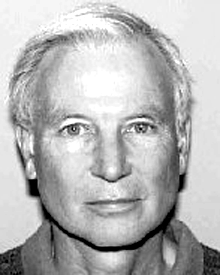 James E. Clendenin合作论文数12D. Van Winkle合作论文数12w wittmer合作论文数11
 Yong Cai (蔡勇)合作论文数中国科学技术大学中国科学院苏州纳米技术与纳米仿生研究所11
 Blair Ratcliff合作论文数SLAC National Accelerator Laboratory;Stanford University10
 w colocho合作论文数SLAC Natl Accelerator Lab10
 Maurizio Pierini合作论文数CERN10A. Roodman合作论文数10
 Mark Sullivan合作论文数School of Physics & Astronomy, University of Southampton10
 Fernando Martinez Vidal合作论文数Department of Atomic, Molecular and Nuclear Physics, University of Valencia;Instituto de Física Corpuscular10Samuel A. Heifets合作论文数10Samuel a Heifets合作论文数10A. Boyarski合作论文数9
 Alberto Lusiani合作论文数Science Department, Scuola Normale Superiore;INFN Sezione di Pisa9Y. Nosochkov合作论文数9
 Giovanni Piredda合作论文数CeSAR, Università di Cagliari9R. Diebold合作论文数9William J. Wisniewski合作论文数9D. W. G. S. Leith合作论文数9M. Donald合作论文数9
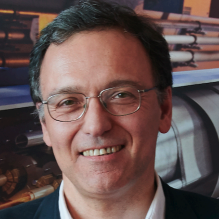 Francesco Forti合作论文数Department of Physics, University of Pisa;Istituto Nazionale di Fisica Nucleare9Stefano Bettarini合作论文数Dipartimento di Fisica, Università di Pisa9
 Joshua J. Turner合作论文数Department of Physics, University of Oregon9M Pelliccioni合作论文数8Francesco Polci合作论文数LPNHE, CNRS8Y. Yan合作论文数8
 Achille Stocchi合作论文数Irène Joliot-Curie Laboratory, CNRS8
 Maurizio Biasini合作论文数Department of Physics and Geology, University of Perugia8
 Fabio Anulli合作论文数Istituto Nazionale di Fisica Nucleare8
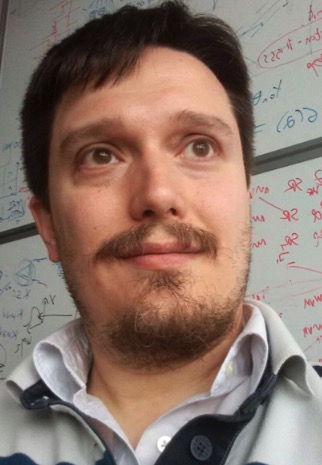 Marco Bomben合作论文数Université Paris Cité8Y. Murata合作论文数8Concetta Cartaro合作论文数SLAC National Accelerator Laboratory, Stanford University8
 Gregory P. Dubois-Felsmann合作论文数SLAC National Accelerator Laboratory8
 Gagan Mohanty合作论文数Department of High Energy Physics, Tata Institute of Fundamental Research8




