The Planck satellite in orbit mission ended in October 2013. Between the end of Low Frequency Instrument (LFI) routine mission operations and the satellite decommissioning, a dedicated test was also performed to measure the Planck telescope emissivity. The scope of the test was twofold: i) to provide, for the first time in flight, a direct measure of the telescope emissivity; and ii) to evaluate the possible degradation of the emissivity by comparing data taken in flight at the end of mission with those taken during the ground telescope characterization. The emissivity was determined by heating the Planck telescope and disentangling the system temperature excess measured by the LFI radiometers. Results show End of Life (EOL) performance in good agreement with the results from the ground optical tests and from in-flight indirect estimations measured during the Commissioning and Performance Verification (CPV) phase. Methods and results are presented and discussed.
A synthetic diagnostic has been developed for the JET lost alpha scintillator probe, based on the ASCOT fast ion orbit following code and the AFSI fusion source code. The synthetic diagnostic models the velocity space distribution of lost fusion products in the scintillator probe. Validation with experimental measurements is presented, where the synthetic diagnostic is shown to predict the gyroradius and pitch angle of lost DD protons and tritons. Additionally, the synthetic diagnostic reproduces relative differences in total loss rates in multiple phases of the discharge, which can be used as a basis for total loss rate predictions.
Convolutional neural networks (CNNs) have found applications in many image processing tasks, such as feature extraction, image classification, and object recognition. It has also been shown that the inverse of CNNs, so-called deconvolutional neural networks, can be used for inverse problems such as plasma tomography. In essence, plasma tomography consists in reconstructing the 2D plasma profile on a poloidal cross-section of a fusion device, based on line-integrated measurements from multiple radiation detectors. Since the reconstruction process is computationally intensive, a deconvolutional neural network trained to produce the same results will yield a significant computational speedup, at the expense of a small error which can be assessed using different metrics. In this work, we discuss the design principles behind such networks, including the use of multiple layers, how they can be stacked, and how their dimensions can be tuned according to the number of detectors and the desired tomographic resolution for a given fusion device. We describe the application of such networks at JET and COMPASS, where at JET we use the bolometer system, and at COMPASS we use the soft X-ray diagnostic based on photodiode arrays.
For many years, machine learning tools have proved to be very powerful disruption predictors in tokamaks.On the other hand, the vast majority of the techniques deployed assume that the input data is independent and is sampled from exactly the same probability distribution for the training set, the test set and the final real time deployment.This hypothesis is certainly not verified in practice, since the experimental programmes evolve quite rapidly, resulting typically in ageing of the predictors and consequent suboptimal performance.This paper describes various adaptive training strategies that have been tested to maintain the performance of disruption predictors in non-stationary conditions.The proposed approaches have been implemented using new ensembles of classifiers, explicitly developed for the present application.The improvements in performance are unquestionable and, given the difficulties encountered so far in translating predictors from one device to another, the proposed adaptive methods from scratch can therefore be considered a useful option in the arsenal of alternatives envisaged for the next generation of devices, particularly at the very beginning of their operation.
The Laser Interferometer Gravitational Wave Observatory (LIGO) consists of two widely separated 4 km laser interferometers designed to detect gravitational waves from distant astrophysical sources in the frequency range from 10 Hz to 10 kHz. The first observation run of the Advanced LIGO detectors started in September 2015 and ended in January 2016. A strain sensitivity of better than $10^{-23}/\sqrt{\text{Hz}}$ was achieved around 100 Hz. Understanding both the fundamental and the technical noise sources was critical for increasing the observable volume in the universe. The average distance at which coalescing binary black hole systems with individual masses of 30 $M_\odot$ could be detected was 1.3 Gpc. Similarly, the range for binary neutron star inspirals was about 75 Mpc. With respect to the initial detectors, the observable volume of Universe increased respectively by a factor 69 and 43. These improvements allowed Advanced LIGO to detect the gravitational wave signal from the binary black hole coalescence, known as GW150914.
The Fermi Gamma-ray Burst Monitor (GBM) has detected over 1400 gamma-ray bursts (GRBs) since it began science operations in 2008 July. We use a subset of over 300 GRBs localized by instruments such as Swift, the Fermi Large Area Telescope, INTEGRAL, and MAXI, or through triangulations from the InterPlanetary Network, to analyze the accuracy of GBM GRB localizations. We find that the reported statistical uncertainties on GBM localizations, which can be as small as 1◦, underestimate the distance of the GBM positions to the true GRB locations and we attribute this to systematic uncertainties. The distribution of systematic uncertainties is well represented (68% confidence level) by a 3. ◦7 Gaussian with a non-Gaussian tail that contains about 10% of GBM-detected GRBs and extends to approximately 14◦. A more complex model suggests that there is a dependence of the systematic uncertainty on the position of the GRB in spacecraft coordinates, with GRBs in the quadrants on the Y axis better localized than those on the X axis.
The Fermi Gamma-ray Burst Monitor (GBM) has detected over 1400 Gamma-Ray Bursts (GRBs) since it began science operations in July, 2008. We use a subset of over 300 GRBs localized by instruments such as Swift, the Fermi Large Area Telescope, INTEGRAL, and MAXI, or through triangulations from the InterPlanetary Network (IPN), to analyze the accuracy of GBM GRB localizations. We find that the reported statistical uncertainties on GBM localizations, which can be as small as 1 degree, underestimate the distance of the GBM positions to the true GRB locations and we attribute this to systematic uncertainties. The distribution of systematic uncertainties is well represented (68% confidence level) by a 3.7 degree Gaussian with a non-Gaussian tail that contains about 10% of GBM-detected GRBs and extends to approximately 14 degrees. A more complex model suggests that there is a dependence of the systematic uncertainty on the position of the GRB in spacecraft coordinates, with GRBs in the quadrants on the Y-axis better localized than those on the X-axis.
New generations of gravity wave detectors require unprecedented levels of vibration isolation. This paper presents the final design of the vibration isolation and positioning platform used in Advanced LIGO to support the interferometers core optics. This five-ton two-and-half-meter wide system operates in ultra-high vacuum. It features two stages of isolation mounted in series. The stages are imbricated to reduce the overall height. Each stage provides isolation in all directions of translation and rotation. The system is instrumented with a unique combination of low noise relative and inertial sensors. The active control provides isolation from 0.1 Hz to 30 Hz. It brings the platform motion down to 10^(-11) m/Hz^(0.5) at 1 Hz. Active and passive isolation combine to bring the platform motion below 10^(-12) m/Hz^(0.5) at 10 Hz. The passive isolation lowers the motion below 10^(-13) m/Hz^(0.5) at 100 Hz. The paper describes how the platform has been engineered not only to meet the isolation requirements, but also to permit the construction, testing, and commissioning process of the fifteen units needed for Advanced LIGO observatories.
The new generation of gravitational waves detectors require unprecedented levels of isolation from seismic noise. This article reviews the seismic isolation strategy and instrumentation developed for the Advanced LIGO observatories. It summarizes over a decade of research on active inertial isolation and shows the performance recently achieved at the Advanced LIGO observatories. The paper emphasizes the scientific and technical challenges of this endeavor and how they have been addressed. An overview of the isolation strategy is given. It combines multiple layers of passive and active inertial isolation to provide suitable rejection of seismic noise at all frequencies. A detailed presentation of the three active platforms that have been developed is given. They are the hydraulic pre-isolator, the single-stage internal isolator and the two-stage internal isolator. The architecture, instrumentation, control scheme and isolation results are presented for each of the three systems. Results show that the seismic isolation sub-system meets Advanced LIGO's stringent requirements and robustly supports the operation of the two detectors.
This paper presents the results of the past seven years of experimental investigation and testing done on the two-stage twelve-axis vibration isolation platform for Advanced LIGO gravity waves observatories. This five-ton two-and-half-meter wide system supports more than a 1000 kg of very sensitive equipment. It provides positioning capability and seismic isolation in all directions of translation and rotation. To meet the very stringent requirements of Advanced LIGO, the system must provide more than three orders of magnitude of isolation over a very large bandwidth. It must bring the motion below 10^(-11) m/(Hz)^0.5 at 1 Hz and 10^(-12) m/(Hz)^0.5 at 10 Hz. A prototype of this system has been built in 2006. It has been extensively tested and analyzed during the following two years. This paper shows how the experimental results obtained with the prototype were used to engineer the final design. It highlights how the engineering solutions implemented not only improved the isolation performance but also greatly simplified the assembly, testing, and commissioning process. During the past two years, five units have been constructed, tested, installed and commissioned at each of the two LIGO observatories. Five other units are being built for an upcoming third observatory. The test results presented show that the system meets the motion requirements, and reach the sensor noise in the control bandwidth.
In 2009-2010, the Laser Interferometer Gravitational-wave Observa- tory (LIGO) operated together with international partners Virgo and GEO600 as a network to search for gravitational waves of astrophysical origin. The sensitiv- ity of these detectors was limited by a combination of noise sources inherent to the instrumental design and its environment, often localized in time or frequency, that couple into the gravitational-wave readout. Here we review the performance of the LIGO instruments during this epoch, the work done to characterize the de- tectors and their data, and the effect that transient and continuous noise artefacts have on the sensitivity of LIGO to a variety of astrophysical sources.
Searches for a stochastic gravitational-wave background (SGWB) using terrestrial detectors typically involve cross-correlating data from pairs of detectors. The sensitivity of such cross-correlation analyses depends, among other things, on the separation between the two detectors: the smaller the separation, the better the sensitivity. Hence, a co-located detector pair is more sensitive to a gravitational-wave background than a non-co-located detector pair. However, co-located detectors are also expected to suffer from correlated noise from instrumental and environmental effects that could contaminate the measurement of the background. Hence, methods to identify and mitigate the effects of correlated noise are necessary to achieve the potential increase in sensitivity of co-located detectors. Here we report on the first SGWB analysis using the two LIGO Hanford detectors and address the complications arising from correlated environmental noise. We apply correlated noise identification and mitigation techniques to data taken by the two LIGO Hanford detectors, H1 and H2, during LIGO's fifth science run. At low frequencies, 40 - 460 Hz, we are unable to sufficiently mitigate the correlated noise to a level where we may confidently measure or bound the stochastic gravitational-wave signal. However, at high frequencies, 460-1000 Hz, these techniques are sufficient to set a $95%$ confidence level (C.L.) upper limit on the gravitational-wave energy density of \Omega(f)<7.7 x 10^{-4} (f/ 900 Hz)^3, which improves on the previous upper limit by a factor of $\sim 180$. In doing so, we demonstrate techniques that will be useful for future searches using advanced detectors, where correlated noise (e.g., from global magnetic fields) may affect even widely separated detectors.
We report on an all-sky search for periodic gravitational waves in the frequency range 50–1000 Hz with the first derivative of frequency in the range −8.9 × 10⁻¹⁰ Hz s−1 to zero in two years of data collected during LIGO's fifth science run. Our results employ a Hough transform technique, introducing a χ2 test and analysis of coincidences between the signal levels in years 1 and 2 of observations that offers a significant improvement in the product of strain sensitivity with compute cycles per data sample compared to previously published searches. Since our search yields no surviving candidates, we present results taking the form of frequency dependent, 95% confidence upper limits on the strain amplitude h0. The most stringent upper limit from year 1 is 1.0 × 10⁻²⁴ in the 158.00–158.25 Hz band. In year 2, the most stringent upper limit is 8.9 × 10⁻²⁵ in the 146.50–146.75 Hz band. This improved detection pipeline, which is computationally efficient by at least two orders of magnitude better than our flagship Einstein@Home search, will be important for 'quick-look' searches in the Advanced LIGO and Virgo detector era.
The Gamma-ray Burst Monitor (GBM) on board the Fermi Gamma-ray Space Telescope has triggered on over 300 terrestrial gamma-ray flashes (TGFs) since its launch in June 2008. With 14 detectors, GBM collects on average ~100 counts per triggered TGF, enabling unprecedented studies of the time profiles of TGFs. Here we present the first rigorous analysis of the temporal properties of a large sample of TGFs (278), including the distributions of the rise and fall times of the individual pulses and their durations. A variety of time profiles are observed with 19 of TGFs having multiple pulses separated in time and 31 clear cases of partially overlapping pulses. The effect of instrumental dead time and pulse pileup on the temporal properties are also presented. As the observed gamma ray pulse structure is representative of the electron flux at the source, TGF pulse parameters are critical to distinguish between relativistic feedback discharge and lightning leader models. We show that at least 67% of TGFs at satellite altitudes are significantly asymmetric. For the asymmetric pulses, the rise times are almost always shorter than the fall times. Those which are not are consistent with statistical fluctuations. The median rise time for asymmetric pulses is ~3 times shorter than for symmetric pulses while their fall times are comparable. The asymmetric shapes observed are consistent with the relativistic feedback discharge model when Compton scattering of photons between the source and Fermi is included, and instrumental effects are taken into account.
The European Space Agency's Planck satellite, dedicated to studying the early Universe and its subsequent evolution, was launched 14 May 2009 and has been scanning the microwave and submillimetre sky continuously since 12 August 2009. In March 2013, ESA and the Planck Collaboration released the initial cosmology products based on the first 15.5 months of Planck data, along with a set of scientific and technical papers and a web-based explanatory supplement. This paper gives an overview of the mission and its performance, the processing, analysis, and characteristics of the data, the scientific results, and the science data products and papers in the release. The science products include maps of the cosmic microwave background (CMB) and diffuse extragalactic foregrounds, a catalogue of compact Galactic and extragalactic sources, and a list of sources detected through the Sunyaev-Zeldovich effect. The likelihood code used to assess cosmological models against the Planck data and a lensing likelihood are described. Scientific results include robust support for the standard six-parameter Lambda CDM model of cosmology and improved measurements of its parameters, including a highly significant deviation from scale invariance of the primordial power spectrum. The Planck values for these parameters and others derived from them are significantly different from those previously determined. Several large-scale anomalies in the temperature distribution of the CMB, first detected by WMAP, are confirmed with higher confidence. Planck sets new limits on the number and mass of neutrinos, and has measured gravitational lensing of CMB anisotropies at greater than 25 sigma. Planck finds no evidence for non-Gaussianity in the CMB. Planck's results agree well with results from the measurements of baryon acoustic oscillations. Planck finds a lower Hubble constant than found in some more local measures. Some tension is also present between the amplitude of matter fluctuations (sigma(8)) derived from CMB data and that derived from Sunyaev-Zeldovich data. The Planck and WMAP power spectra are off set from each other by an average level of about 2% around the first acoustic peak. Analysis of Planck polarization data is not yet mature, therefore polarization results are not released, although the robust detection of E-mode polarization around CMB hot and cold spots is shown graphically.
F. Matichard1,2,*, B. Lantz3, K. Mason1, R. Mittleman1, B. Abbott2, S. Abbott2, E. Allwine5, S. Barnum1, J. Birch4, S. Biscans1, D. Clark3, D. Coyne2, D. DeBra3, R. DeRosa6, S. Foley1, P. Fritschel1, J.A. Giaime4,6, C. Gray5, G. Grabeel5, J. Hanson4, M. Hillard1, J. Kissel5, C. Kucharczyk3, A. Le Roux4, V. Lhuillier5, M. Macinnis2, B. O’Reilly4, D. Ottaway1, H. Paris5, M. Puma4, H. Radkins5, C. Ramet4, M. Robinson5, L. Ruet1, P. Sareen1, D. Shoemaker1, A. Stein1, J. Thomas4, M. Vargas4, J. Warner5.
During the LIGO and Virgo joint science runs in 2009-2010, gravitational wave (GW) data from three interferometer detectors were analyzed within minutes to select GW candidate events and infer their apparent sky positions. Target coordinates were transmitted to several telescopes for follow-up observations aimed at the detection of an associated optical transient. Images were obtained for eight such GW candidates. We present the methods used to analyze the image data as well as the transient search results. No optical transient was identified with a convincing association with any of these candidates, and none of the GW triggers showed strong evidence for being astrophysical in nature. We compare the sensitivities of these observations to several model light curves from possible sources of interest, and discuss prospects for future joint GW-optical observations of this type.
We present the results of searches for gravitational waves from a large selection of pulsars using data from the most recent science runs (S6, VSR2 and VSR4) of the initial generation of interferometric gravitational wave detectors LIGO (Laser Interferometric Gravitational-wave Observatory) and Virgo. We do not see evidence for gravitational wave emission from any of the targeted sources but produce upper limits on the emission amplitude. We highlight the results from seven young pulsars with large spin-down luminosities. We reach within a factor of five of the canonical spin-down limit for all seven of these, whilst for the Crab and Vela pulsars we further surpass their spin-down limits. We present new or updated limits for 172 other pulsars (including both young and millisecond pulsars). Now that the detectors are undergoing major upgrades, and, for completeness, we bring together all of the most up-to-date results from all pulsars searched for during the operations of the first-generation LIGO, Virgo and GEO600 detectors. This gives a total of 195 pulsars including the most recent results described in this paper.
 Peter Fritschel合作论文数Kavli Institute for Astrophysics and Space Research, Massachusetts Institute of Technology;Laser Interferometric Gravitational-wave Observatory54
 J. S. Kissel合作论文数LIGO Hanford Observatory53
 Fabrice Matichard合作论文数Mechanical Engineering Department, Lawrence Berkeley National Laboratory53
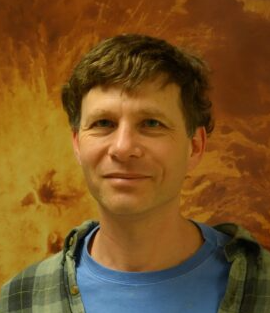 Richard Mittleman合作论文数Kavli Institute for Astrophysics and Space Research, Massachusetts Institute of Technology52
 K. Mason合作论文数52
 Ettore Majorana合作论文数Dipartimento di Fisica, Sapienza Università di Roma52
 Calum Gray合作论文数School of Physics & Astronomy, University of Glasgow51
 Joseph A. Giaime合作论文数Department of Physics & Astronomy, College of Science, Louisiana State University;LIGO Livingston Observatory, California Institute of Technology50B. O’Reilly合作论文数Christopher Newport University50
 Peter Raffai合作论文数Department of Atomic Physics, Institute of Physics and Astronomy, Faculty of Natural Sciences, Eotvos Lorand University50
 Brian Lantz合作论文数Logo Group, Stanford University;Applied Physics Department, School of Humanities and Sciences, Stanford University49
 Andreas Freise合作论文数Department of Physics and Astronomy, Vrije Universiteit Amsterdam49D. Fazi合作论文数48
 Liam Cunningham合作论文数School of Physics & Astronomy, The University of Glasgow;CERN48R. J. S. Greenhalgh合作论文数48J-C. Dumas合作论文数48K. D. Giardina合作论文数48
 Stephen Fairhurst合作论文数Gravity Exploration Institute, School of Physics and Astronomy, Cardiff University48
 Gregory Harry合作论文数Department of Physics, College of Arts & Sciences, American University48J. Heefner合作论文数48
 Brad Abbott合作论文数Homer L. Dodge Department of Physics and Astronomy, Dodge Family College of Arts and Sciences, The University of Oklahoma48
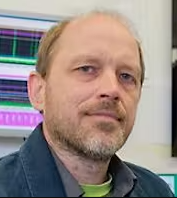 Hartmut Grote合作论文数Gravity Exploration Institute, School of Physics and Astronomy, Cardiff University48
 James Hough合作论文数School of Physics & Astronomy, University of Glasgow48Nickolas Fotopoulos合作论文数48W. Kells合作论文数47B. Daudert合作论文数47P. Ehrens合作论文数47S. Koranda合作论文数47
 Stefanos Giampanis合作论文数47Keita Kawabe合作论文数Laser Interferometer Gravitational-wave Observatory - Hanford Observatory;California Institute of Technology47
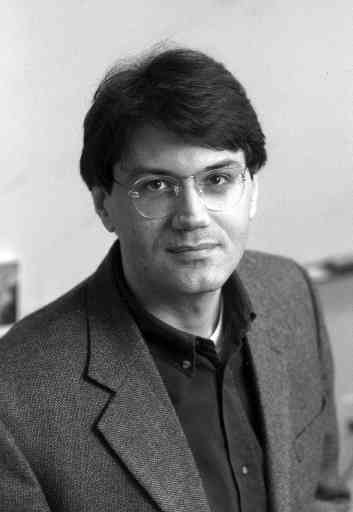 E. C. Katsavounidis合作论文数Department of Physics, Kavli Institute for Astrophysics and Space Research, Massachusetts Institute of Technology;Laser Interferometer Gravitational-wave Observatory, Massachusetts Institute of Technology47M. Fyffe合作论文数47Kazuhiro Hayama (端山和大)合作论文数Department of Applied Physics, Faculty of Science, Fukuoka University47
 Szabolcs Márka合作论文数Department of Physics, Columbia University47F. Kawazoe合作论文数47F. Donovan合作论文数47R. Gustafson合作论文数47D. Cook合作论文数47J. H. Romie合作论文数47
 Thomas Corbitt合作论文数Department of Physics & Astronomy, College of Science, Louisiana State University47J. Brau合作论文数47
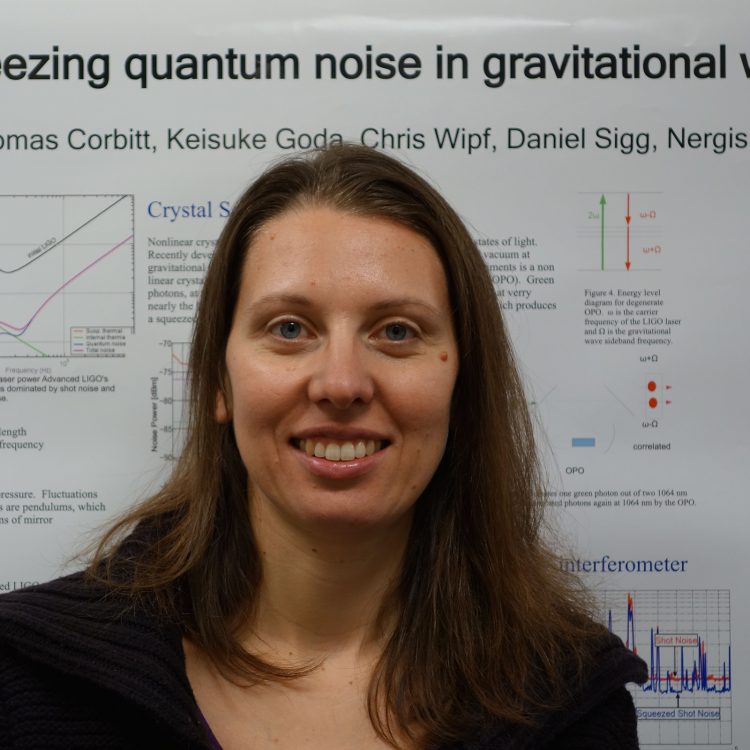 Lisa Barsotti合作论文数Kavli Institute for Astrophysics and Space Research, Massachusetts Institute of Technology47
 Peter Kalmus合作论文数NASA Jet Propulsion Laboratory;University of California, Los Angeles47
 Li Ju (鞠莉)合作论文数Department of Physics, University of Western Australia47
 Vladimir Dergachev合作论文数Altum Rete LLC47
 Stefan Hild合作论文数Faculty of Science and Engineering, Maastricht University47
 Ilya Mandel合作论文数School of Physics and Astronomy, Monash University47
 Patrick Kwee合作论文数Development and Engineering Department, ASML47
 Anamaria Effler合作论文数LIGO Livingston;California Institute of Technology47




