Strathprints is designed to allow users to access the research output of the University of Strathclyde. Unless otherwise explicitly stated on the manuscript, Copyright © and Moral Rights for the papers on this site are retained by the individual authors and/or other copyright owners. Please check the manuscript for details of any other licences that may have been applied. You may not engage in further distribution of the material for any profitmaking activities or any commercial gain. You may freely distribute both the url (https://strathprints.strath.ac.uk/) and the content of this paper for research or private study, educational, or not-for-profit purposes without prior permission or charge.
We present the results of the first joint search for gravitational-wave bursts by the LIGO and GEO600 detectors. We search for bursts with characteristic central frequencies in the band 768 to 2048 Hz in the data acquired between the 22nd of February and the 23rd of March, 2005 (fourth LSC Science Run – S4). We discuss the inclusion of the GEO600 data in the Waveburst-CorrPower pipeline that first searches for coincident excess power events without taking into account differences in the antenna responses or strain sensitivities of the various detectors. We compare the performance of this pipeline to that of the coherent Waveburst pipeline based on the maximum likelihood statistic. This likelihood statistic is LIGO-GEO S4 burst search 6 derived from a coherent sum of the detector data streams that takes into account the antenna patterns and sensitivities of the different detectors in the network. We find that the coherent Waveburst pipeline is sensitive to signals of amplitude 30 − 50% smaller than the Waveburst-CorrPower pipeline. We perform a search for gravitational-wave bursts using both pipelines and find no detection candidates in the S4 data set when all four instruments were operating stably.
The Laser Interferometer Gravitational Wave Observatory (LIGO) consists of two widely sepa-rated 4 km laser interferometers designed to detect gravitational waves from distant astrophysical sources in the frequency range from 10 Hz to 10 kHz. The first observation run of the Advanced LIGO detectors started in September 2015 and ended in January 2016. A strain sensitivity of better than 10 − 23 / √ Hz was achieved around 100 Hz. Understanding both the fundamental and the technical noise sources was critical for increasing the astrophsyical strain sensitivity. The average distance at which coalescing binary black hole systems with individual masses of 30 M (cid:12) could be detected above a signal-to-noise ratio (SNR) of 8 was 1.3 Gpc, and the range for binary neutron star inspirals was about 75 Mpc. With respect to the initial detectors, the observable volume of the Universe increased by a factor 69 and 43, respectively. These improvements helped Advanced LIGO to detect the gravitational wave signal from the binary black hole coalescence, known as GW150914. local sensors on the individual suspensions. Quantum noise in the signal recycling cavity length is signiticantly affected by the differential arm offset below 10 Hz. In addition to coupling to the gravitational wave channel, auxiliary degrees of freedom also couple to each other. For example, beam splitter motion above 10 Hz is caused by the Michelson control loop and dominates the power and signal recycling cavity length fluctuations in the frequency range 10-50 Hz.
Strathprints is designed to allow users to access the research output of the University of Strathclyde. Unless otherwise explicitly stated on the manuscript, Copyright © and Moral Rights for the papers on this site are retained by the individual authors and/or other copyright owners. Please check the manuscript for details of any other licences that may have been applied. You may not engage in further distribution of the material for any profitmaking activities or any commercial gain. You may freely distribute both the url (https://strathprints.strath.ac.uk/) and the content of this paper for research or private study, educational, or not-for-profit purposes without prior permission or charge.
The Laser Interferometer Gravitational Wave Observatory (LIGO) consists of two widely separated 4 km laser interferometers designed to detect gravitational waves from distant astrophysical sources in the frequency range from 10 Hz to 10 kHz. The first observation run of the Advanced LIGO detectors started in September 2015 and ended in January 2016. A strain sensitivity of better than $10^{-23}/\sqrt{\text{Hz}}$ was achieved around 100 Hz. Understanding both the fundamental and the technical noise sources was critical for increasing the observable volume in the universe. The average distance at which coalescing binary black hole systems with individual masses of 30 $M_\odot$ could be detected was 1.3 Gpc. Similarly, the range for binary neutron star inspirals was about 75 Mpc. With respect to the initial detectors, the observable volume of Universe increased respectively by a factor 69 and 43. These improvements allowed Advanced LIGO to detect the gravitational wave signal from the binary black hole coalescence, known as GW150914.
We present the results of the first search for gravitational wave bursts associated with high energy neutrinos. Together, these messengers could reveal new, hidden sources that are not observed by conventional photon astronomy, particularly at high energy. Our search uses neutrinos detected by the underwater neutrino telescope ANTARES in its 5 line configuration during the period January September 2007, which coincided with the fifth and first science runs of LIGO and Virgo, respectively. The LIGO-Virgo data were analysed for candidate gravitational-wave signals coincident in time and direction with the neutrino events. No significant coincident events were observed. We place limits on the density of joint high energy neutrino gravitational wave emission events in the local universe, and compare them with densities of merger and core-collapse events. Subject headings: gravitational waves — high energy neutrinos 1 Institut d’Investigació per a la Gestió Integrada de les Zones Costaneres (IGIC) Universitat Politècnica de València. C/ Paranimf 1 , 46730 Gandia, Spain. 2 CPPM, Aix-Marseille Université, CNRS/IN2P3, Marseille, France 3 GRPHE Institut universitaire de technologie de Colmar, 34 rue du Grillenbreit BP 50568 68008 Colmar, France 4 Technical University of Catalonia, Laboratory of Applied Bioacoustics, Rambla Exposició, 08800 Vilanova i la Geltrú, Barcelona, Spain 5 INFN Sezione di Genova, Via Dodecaneso 33, 16146 Genova, Italy 6 Friedrich-Alexander-Universität Erlangen-Nürnberg, Erlangen Centre for Astroparticle Physics, Erwin-Rommel-Str. 1, 91058 Erlangen, Germany 7 Direction des Sciences de la Matière Institut de recherche sur les lois fondamentales de l’Univers Service d’Electronique des Détecteurs et d’Informatique, CEA Saclay, 91191 Gif-surYvette Cedex, France 8 Nikhef, Science Park, Amsterdam, The Netherlands 9 APC, Université Paris Diderot, CNRS/IN2P3, CEA/IRFU, Observatoire de Paris, Sorbonne Paris Cité, 75205 Paris, France 10 LAM Laboratoire d’Astrophysique de Marseille, Pôle de l’Étoile Site de Château-Gombert, rue Frédéric Joliot-Curie 38, 13388 Marseille Cedex 13, France 11 INFN Sezione di Bologna, Viale C. Berti-Pichat 6/2, 40127 Bologna, Italy 12 Dipartimento di Fisica dell’Università, Viale Berti Pichat 6/2, 40127 Bologna, Italy 13 IFIC Instituto de F́ısica Corpuscular, Edificios Investigación de Paterna, CSIC Universitat de València, Apdo. de Correos 22085, 46071 Valencia, Spain 14 INFN -Sezione di Roma, P.le Aldo Moro 2, 00185 Roma, Italy 15 Dipartimento di Fisica dell’Università La Sapienza, P.le Aldo Moro 2, 00185 Roma, Italy 16 Clermont Université, Université Blaise Pascal, CNRS/IN2P3, Laboratoire de Physique Corpusculaire, BP 10448, 63000 Clermont-Ferrand, France 17 Géoazur Université de Nice Sophia-Antipolis, CNRS/INSU, IRD, Observatoire de la Côte d’Azur and Université Pierre et Marie Curie, BP 48, 06235 Villefranche-surmer, France 18 INFN Sezione di Bari, Via E. Orabona 4, 70126 Bari, Italy 19 INFN Laboratori Nazionali del Sud (LNS), Via S. Sofia 62, 95123 Catania, Italy 20 MIO, Mediterranean Institute of Oceanography, AixMarseille University, 13288, Marseille, Cedex 9, France; Université du Sud Toulon-Var, 83957, La Garde Cedex, France CNRS-INSU/IRD UM 110 21 Univ Paris-Sud , 91405 Orsay Cedex, France 22 Kernfysisch Versneller Instituut (KVI), University of Groningen, Zernikelaan 25, 9747 AA Groningen, The Netherlands 23 Direction des Sciences de la Matière Institut de recherche sur les lois fondamentales de l’Univers Service de Physique des Particules, CEA Saclay, 91191 Gif-sur-Yvette Cedex, France 24 INFN Sezione di Pisa, Largo B. Pontecorvo 3, 56127 Pisa, Italy 25 Dipartimento di Fisica dell’Università di Pisa, Largo B. Pontecorvo 3, 56127 Pisa, Italy 26 University Mohammed I, Laboratory of Physics of Matter and Radiations, B.P.717, Oujda 6000, Morocco 27 Royal Netherlands Institute for Sea Research (NIOZ), Landsdiep 4,1797 SZ ’t Horntje (Texel), The Netherlands 28 Dr. Remeis-Sternwarte and ECAP, Universität ErlangenNürnberg, Sternwartstr. 7, 96049 Bamberg, Germany 29 Universiteit Utrecht, Faculteit Betawetenschappen, Princetonplein 5, 3584 CC Utrecht, The Netherlands 30 Universiteit van Amsterdam, Instituut voor Hoge-Energie Fysica, Science Park 105, 1098 XG Amsterdam, The Netherlands 31 Moscow State University, Skobeltsyn Institute of Nuclear Physics, Leninskie gory, 119991 Moscow, Russia 32 INFN Sezione di Catania, Viale Andrea Doria 6, 95125 Catania, Italy 33 Dipartimento di Fisica ed Astronomia dell’Università, Viale Andrea Doria 6, 95125 Catania, Italy 34 Département de Physique Nucléaire et Corpusculaire, Université de Genève, 1211, Geneva, Switzerland 35 Institute for Space Sciences, R-77125 Bucharest, Măgurele, Romania 36 IPHC-Institut Pluridisciplinaire Hubert Curien Université de Strasbourg et CNRS/IN2P3 23 rue du Loess, BP 28, 67037 Strasbourg Cedex 2, France 37 ITEP Institute for Theoretical and Experimental Physics, B. Cheremushkinskaya 25, 117218 Moscow, Russia 38 Dipartimento di Fisica dell’Università, Via Dodecaneso 33, 16146 Genova, Italy 39 Also at University of Leiden, the Netherlands 40 On leave of absence at the Humboldt-Universität zu Berlin 41 Also at Accademia Navale di Livorno, Livorno, Italy 42 LIGO California Institute of Technology, Pasadena, CA 91125, USA 43 California State University Fullerton, Fullerton CA 92831 USA 44 SUPA, University of Glasgow, Glasgow, G12 8QQ, United Kingdom 45 Laboratoire d’Annecy-le-Vieux de Physique des Particules 4 The ANTARES Collaboration, the LIGO Scientific Collaboration and the Virgo Collaboration (LAPP), Université de Savoie, CNRS/IN2P3, F-74941 AnnecyLe-Vieux, France 46 INFN, Sezione di Napoli, Complesso Universitario di Monte S.Angelo, I-80126 Napoli, Italy 47 Università di Napoli ’Federico II’, Complesso Universitario di Monte S.Angelo, I-80126 Napoli, Italy 48 Università di Salerno, I-84084 Fisciano (Salerno), Italy 49 LIGO Livingston Observatory, Livingston, LA 70754, USA 50 Cardiff University, Cardiff, CF24 3AA, United Kingdom 51 University of Sannio at Benevento, I-82100 Benevento, Italy and INFN (Sezione di Napoli), Italy 52 Albert-Einstein-Institut, Max-Planck-Institut für Gravitationsphysik, D-30167 Hannover, Germany 53 Leibniz Universität Hannover, D-30167 Hannover, Germany 54 VU University Amsterdam, De Boelelaan 1081, 1081 HV Amsterdam, the Netherlands 55 National Astronomical Observatory of Japan, Tokyo 181-8588, Japan 56 University of Wisconsin–Milwaukee, Milwaukee, WI 53201, USA 57 Università di Siena, I-53100 Siena, Italy 58 University of Florida, Gainesville, FL 32611, USA 59 LIGO Hanford Observatory, Richland, WA 99352, USA 60 University of Birmingham, Birmingham, B15 2TT, United Kingdom 61 Albert-Einstein-Institut, Max-Planck-Institut für Gravitationsphysik, D-14476 Golm, Germany 62 Montana State University, Bozeman, MT 59717, USA 63 European Gravitational Observatory (EGO), I-56021 Cascina (PI), Italy 64 Syracuse University, Syracuse, NY 13244, USA 65 LIGO Massachusetts Institute of Technology, Cambridge, MA 02139, USA 66 Columbia University, New York, NY 10027, USA 67 Stanford University, Stanford, CA 94305, USA 68 IM-PAN 00-956 Warsaw, Poland 69 Astronomical Observatory Warsaw University 00-478 Warsaw, Poland 70 CAMK-PAN 00-716 Warsaw, Poland 71 Bia lystok University 15-424 Bia lystok, Poland 72 NCBJ 05-400 Świerk-Otwock, Poland 73 Institute of Astronomy 65-265 Zielona Góra, Poland 74 The University of Texas at Brownsville, Brownsville, TX 78520, USA 75 San Jose State University, San Jose, CA 95192, USA 76 Moscow State University, Moscow, 119992, Russia 77 LAL, Université Paris-Sud, IN2P3/CNRS, F-91898 Orsay, France 78 ESPCI, CNRS, F-75005 Paris, France 79 NASA/Goddard Space Flight Center, Greenbelt, MD 20771, USA 80 University of Western Australia, Crawley, WA 6009, Australia 81 The Pennsylvania State University, University Park, PA 16802, USA 82 Université Nice-Sophia-Antipolis, CNRS, Observatoire de la Côte d’Azur, F-06304 Nice, France 83 Institut de Physique de Rennes, CNRS, Université de Rennes 1, 35042 Rennes, France 84 Laboratoire des Matériaux Avancés (LMA), IN2P3/CNRS, F-69622 Villeurbanne, Lyon, France 85 Washington State University, Pullman, WA 99164, USA 86 INFN, Sezione di Perugia, I-06123 Perugia, Italy 87 Università di Perugia, I-06123 Perugia, Italy 88 INFN, Sezione di Firenze, I-50019 Sesto Fiorentino, Italy 89 Università degli Studi di Urbino ’Carlo Bo’, I-61029 Urbino, Italy 90 University of Oregon, Eugene, OR 97403, USA 91 Laboratoire Kastler Brossel, ENS, CNRS, UPMC, Université Pierre et Marie Curie, 4 Place Jussieu, F-75005 Paris, France 92 University of Maryland, College Park, MD 20742 USA 93 Universitat de les Illes Balears, E-07122 Palma de Mallorca, Spain 94 University of Massachusetts Amherst, Amherst, MA 01003, USA 95 Canadian Institute for Theoretical Astrophysics, University of Toronto, Toronto, Ontario, M5S 3H8, Canada 96 Tsinghua University, Beijing 100084 China 97 University of Michigan, Ann Arbor, MI 48109, USA 98 Louisiana State University, Baton Rouge, LA 70803, USA 99 The University of Mississippi, University, MS 38677, USA 100 Charles Sturt University, Wagga Wagga, NSW 2678, Australia 101 Caltech-CaRT, Pasadena, CA 91125, USA 102 Pusan National University, Busan 609-735, Korea 103 Australian National University, Canberra, ACT 0200, Australia 104 Carleton College, Northfield, MN 55057, USA 105 The University of Melbourne, Parkville, VIC 3010, Australia 106 INFN, Sezione di Roma Tor Vergata, I-00133 Roma, Italy 107 Università di Roma Tor Vergata, I-00133 Roma, Italy 108 Università dell’Aquila, I-67100 L’Aquila, Italy 109 Instituto Nacional de Pesquisas Espaciais, 12227-010 São José dos Campos, SP, Brazil 110 The University of Sheffield, Sheffield S10 2TN, United Kingdom 111 Wigner RCP, RMKI, H-1121 Budapest, Konkoly Thege Miklós út 29-33, Hungary 112 Inter-University Centre for Astronomy and Astrophysics, Pune 411007, India 113 University of Minnesota, M
In 2009-2010, the Laser Interferometer Gravitational-wave Observa- tory (LIGO) operated together with international partners Virgo and GEO600 as a network to search for gravitational waves of astrophysical origin. The sensitiv- ity of these detectors was limited by a combination of noise sources inherent to the instrumental design and its environment, often localized in time or frequency, that couple into the gravitational-wave readout. Here we review the performance of the LIGO instruments during this epoch, the work done to characterize the de- tectors and their data, and the effect that transient and continuous noise artefacts have on the sensitivity of LIGO to a variety of astrophysical sources.
The absorption of light in transmissive optics cause a thermally induced effect known as thermal lensing. This effect provokes an often undesired change of a laser beam transmitted by the optic. In this paper we present a measurement method that allows us to determine thermal lensing in commonly used optical components. The beam influenced by the thermal lens is expanded into the eigenmodes of an optical cavity, and its modal content is analyzed in the eigenbasis of the cavity. The measured quantity depends neither on beam parameters nor on the position of the optical component under investigation. This method allows, to our knowledge, for the first time the direct measurement of the mode conversion coefficient |ε(2)| of the thermal lens.
Searches for a stochastic gravitational-wave background (SGWB) using terrestrial detectors typically involve cross-correlating data from pairs of detectors. The sensitivity of such cross-correlation analyses depends, among other things, on the separation between the two detectors: the smaller the separation, the better the sensitivity. Hence, a co-located detector pair is more sensitive to a gravitational-wave background than a non-co-located detector pair. However, co-located detectors are also expected to suffer from correlated noise from instrumental and environmental effects that could contaminate the measurement of the background. Hence, methods to identify and mitigate the effects of correlated noise are necessary to achieve the potential increase in sensitivity of co-located detectors. Here we report on the first SGWB analysis using the two LIGO Hanford detectors and address the complications arising from correlated environmental noise. We apply correlated noise identification and mitigation techniques to data taken by the two LIGO Hanford detectors, H1 and H2, during LIGO's fifth science run. At low frequencies, 40 - 460 Hz, we are unable to sufficiently mitigate the correlated noise to a level where we may confidently measure or bound the stochastic gravitational-wave signal. However, at high frequencies, 460-1000 Hz, these techniques are sufficient to set a $95%$ confidence level (C.L.) upper limit on the gravitational-wave energy density of \Omega(f)<7.7 x 10^{-4} (f/ 900 Hz)^3, which improves on the previous upper limit by a factor of $\sim 180$. In doing so, we demonstrate techniques that will be useful for future searches using advanced detectors, where correlated noise (e.g., from global magnetic fields) may affect even widely separated detectors.
We present an implementation of the F-statistic to carry out the first search in data from the Virgo laser interferometric gravitational wave detector for periodic gravitational waves from a priori unknown, isolated rotating neutron stars. We searched a frequency f(0) range from 100 Hz to 1 kHz and the frequency dependent spindown f(1) range from -1.6(f(0)/100 Hz) x 10(-9) Hz s(-1) to zero. A large part of this frequency-spindown space was unexplored by any of the all-sky searches published so far. Our method consisted of a coherent search over two-day periods using the F-statistic, followed by a search for coincidences among the candidates from the two-day segments. We have introduced a number of novel techniques and algorithms that allow the use of the fast Fourier transform (FFT) algorithm in the coherent part of the search resulting in a fifty-fold speed-up in computation of the F-statistic with respect to the algorithm used in the other pipelines. No significant gravitational wave signal was found. The sensitivity of the search was estimated by injecting signals into the data. In the most sensitive parts of the detector band more than 90% of signals would have been detected with dimensionless gravitational-wave amplitude greater than 5 x 10(-24).
We report results from a search for gravitational waves produced by perturbed intermediate mass black holes (IMBH) in data collected by LIGO and Virgo between 2005 and 2010. The search was sensitive to astrophysical sources that produced damped sinusoid gravitational wave signals, also known as ringdowns, with frequency $50\le f_{0}/\mathrm{Hz} \le 2000$ and decay timescale $0.0001\lesssim \tau/\mathrm{s} \lesssim 0.1$ characteristic of those produced in mergers of IMBH pairs. No significant gravitational wave candidate was detected. We report upper limits on the astrophysical coalescence rates of IMBHs with total binary mass $50 \le M/\mathrm{M}_\odot \le 450$ and component mass ratios of either 1:1 or 4:1. For systems with total mass $100 \le M/\mathrm{M}_\odot \le 150$, we report a 90%-confidence upper limit on the rate of binary IMBH mergers with non-spinning and equal mass components of $6.9\times10^{-8}\,$Mpc$^{-3}$yr$^{-1}$. We also report a rate upper limit for ringdown waveforms from perturbed IMBHs, radiating 1% of their mass as gravitational waves in the fundamental, $\ell=m=2$, oscillation mode, that is nearly three orders of magnitude more stringent than previous results.
The Amaldi 10 Parallel Session C3 on Advanced Gravitational Wave detectors gave an overview of the status and several specific challenges and solutions relevant to the instruments planned for a mid-decade start of observation. Invited overview talks for the Virgo, LIGO, and KAGRA instruments were complemented by more detailed discussions in presentations and posters of some instrument features and designs.
This paper reports on an unmodeled, all-sky search for gravitational waves from merging intermediate mass black hole binaries (IMBHB). The search was performed on data from the second joint science run of the LIGO and Virgo detectors (July 2009-October 2010) and was sensitive to IMBHBs with a range up to similar to 200 Mpc, averaged over the possible sky positions and inclinations of the binaries with respect to the line of sight. No significant candidate was found. Upper limits on the coalescence-rate density of nonspinning IMBHBs with total masses between 100 and 450 M-circle dot and mass ratios between 0.25 and 1 were placed by combining this analysis with an analogous search performed on data from the first LIGO-Virgo joint science run (November 2005-October 2007). The most stringent limit was set for systems consisting of two 88 M-circle dot black holes and is equal to 0.12 Mpc(-3) Myr(-1) at the 90% confidence level. This paper also presents the first estimate, for the case of an unmodeled analysis, of the impact on the search range of IMBHB spin configurations: the visible volume for IMBHBs with nonspinning components is roughly doubled for a population of IMBHBs with spins aligned with the binary's orbital angular momentum and uniformly distributed in the dimensionless spin parameter up to 0.8, whereas an analogous population with antialigned spins decreases the visible volume by similar to 20%.
We report on an all-sky search for periodic gravitational waves in the frequency range 50–1000 Hz with the first derivative of frequency in the range −8.9 × 10⁻¹⁰ Hz s−1 to zero in two years of data collected during LIGO's fifth science run. Our results employ a Hough transform technique, introducing a χ2 test and analysis of coincidences between the signal levels in years 1 and 2 of observations that offers a significant improvement in the product of strain sensitivity with compute cycles per data sample compared to previously published searches. Since our search yields no surviving candidates, we present results taking the form of frequency dependent, 95% confidence upper limits on the strain amplitude h0. The most stringent upper limit from year 1 is 1.0 × 10⁻²⁴ in the 158.00–158.25 Hz band. In year 2, the most stringent upper limit is 8.9 × 10⁻²⁵ in the 146.50–146.75 Hz band. This improved detection pipeline, which is computationally efficient by at least two orders of magnitude better than our flagship Einstein@Home search, will be important for 'quick-look' searches in the Advanced LIGO and Virgo detector era.
During the LIGO and Virgo joint science runs in 2009-2010, gravitational wave (GW) data from three interferometer detectors were analyzed within minutes to select GW candidate events and infer their apparent sky positions. Target coordinates were transmitted to several telescopes for follow-up observations aimed at the detection of an associated optical transient. Images were obtained for eight such GW candidates. We present the methods used to analyze the image data as well as the transient search results. No optical transient was identified with a convincing association with any of these candidates, and none of the GW triggers showed strong evidence for being astrophysical in nature. We compare the sensitivities of these observations to several model light curves from possible sources of interest, and discuss prospects for future joint GW-optical observations of this type.
We present the results of searches for gravitational waves from a large selection of pulsars using data from the most recent science runs (S6, VSR2 and VSR4) of the initial generation of interferometric gravitational wave detectors LIGO (Laser Interferometric Gravitational-wave Observatory) and Virgo. We do not see evidence for gravitational wave emission from any of the targeted sources but produce upper limits on the emission amplitude. We highlight the results from seven young pulsars with large spin-down luminosities. We reach within a factor of five of the canonical spin-down limit for all seven of these, whilst for the Crab and Vela pulsars we further surpass their spin-down limits. We present new or updated limits for 172 other pulsars (including both young and millisecond pulsars). Now that the detectors are undergoing major upgrades, and, for completeness, we bring together all of the most up-to-date results from all pulsars searched for during the operations of the first-generation LIGO, Virgo and GEO600 detectors. This gives a total of 195 pulsars including the most recent results described in this paper.
Squeezed states of light have been successfully employed in interferometric gravitational-wave detectors to reduce quantum noise, thus becoming one of the most promising options for extending the astrophysical reach of the generation of detectors currently under construction worldwide. In these advanced instruments, quantum noise will limit sensitivity over the entire detection band. Therefore, to obtain the greatest benefit from squeezing, the injected squeezed state must be filtered using a long-storage-time optical resonator, or "filter cavity", so as to realise a frequency dependent rotation of the squeezed quadrature. Whilst the ultimate performance of a filter cavity is determined by its storage time, several practical decoherence and degradation mechanisms limit the experimentally achievable quantum noise reduction. In this paper we develop an analytical model to explore these mechanisms in detail. As an example, we apply our results to the 16 m filter cavity design currently under consideration for the Advanced LIGO interferometers.
The Numerical INJection Analysis (NINJA) project is a collaborative effort between members of the numerical relativity and gravitational-wave astrophysics communities. The purpose of NINJA is to study the ability to detect gravitational waves emitted from merging binary black holes and recover their parameters with next-generation gravitational-wave observatories. We report here on the results of the second NINJA project, NINJA-2, which employs 60 complete binary black hole hybrid waveforms consisting of a numerical portion modelling the late inspiral, merger, and ringdown stitched to a post-Newtonian portion modelling the early inspiral. In a "blind injection challenge" similar to that conducted in recent LIGO and Virgo science runs, we added 7 hybrid waveforms to two months of data recolored to predictions of Advanced LIGO and Advanced Virgo sensitivity curves during their first observing runs. The resulting data was analyzed by gravitational-wave detection algorithms and 6 of the waveforms were recovered with false alarm rates smaller than 1 in a thousand years. Parameter estimation algorithms were run on each of these waveforms to explore the ability to constrain the masses, component angular momenta and sky position of these waveforms. We also perform a large-scale monte-carlo study to assess the ability to recover each of the 60 hybrid waveforms with early Advanced LIGO and Advanced Virgo sensitivity curves. Our results predict that early Advanced LIGO and Advanced Virgo will have a volume-weighted average sensitive distance of 300Mpc (1Gpc) for $10M_{\odot}+10M_{\odot}$ ($50M_{\odot}+50M_{\odot}$) binary black hole coalescences. We demonstrate that neglecting the component angular momenta in the waveform models used in matched-filtering will result in a reduction in sensitivity for systems with large component angular momenta. [Abstract abridged for ArXiv, full version in PDF]
Cosmic strings can give rise to a large variety of interesting astrophysical phenomena. Among them, powerful bursts of gravitational waves (GWs) produced by cusps are a promising observational signature. In this Letter we present a search for GWs from cosmic string cusps in data collected by the LIGO and Virgo gravitational wave detectors between 2005 and 2010, with over 625 days of live time. We find no evidence of GW signals from cosmic strings. From this result, we derive new constraints on cosmic string parameters, which complement and improve existing limits from previous searches for a stochastic background of GWs from cosmic microwave background measurements and pulsar timing data. In particular, if the size of loops is given by the gravitational backreaction scale, we place upper limits on the string tension Gμ below 10^-8 in some regions of the cosmic string parameter space.
 Karsten Danzmann合作论文数Albert Einstein Institute, Max-Planck-Institut fur Gravitationsphysik;Institute of Gravitational Physics, Faculty of Mathematics and Physics, Leibniz Universität Hannover93
 Hartmut Grote合作论文数Gravity Exploration Institute, School of Physics and Astronomy, Cardiff University89
 Ettore Majorana合作论文数Dipartimento di Fisica, Sapienza Università di Roma89
 Keita Kawabe合作论文数Laser Interferometer Gravitational-wave Observatory - Hanford Observatory;California Institute of Technology88
 Szabolcs Márka合作论文数Department of Physics, Columbia University88K. Mason合作论文数88
 James Hough合作论文数School of Physics & Astronomy, University of Glasgow88F. Kawazoe合作论文数87
 J. S. Kissel合作论文数LIGO Hanford Observatory87
 Christopher Messenger合作论文数School of Physics & Astronomy, University of Glasgow87M. Mageswaran合作论文数LIGO-California Institute of Technology87
 Stefan Hild合作论文数Faculty of Science and Engineering, Maastricht University87
 Nergis Mavalvala合作论文数Department of Physics, School of Science, Massachusetts Institute of Technology;Kavli Institute for Astrophysics & Space Research, Massachusetts Institute of Technology87W. Kells合作论文数86M. Lormand合作论文数86K. Mailand合作论文数86V. Kondrashov合作论文数86
 Brian Lantz合作论文数Logo Group, Stanford University;Applied Physics Department, School of Humanities and Sciences, Stanford University86
 B. Krishnan合作论文数Institute for Mathematics, Astrophysics and Particle Physics, Radboud University86M. Lubinski合作论文数86
 Andreas Freise合作论文数Department of Physics and Astronomy, Vrije Universiteit Amsterdam86
 Benno Willke合作论文数Max Planck Institute for Gravitational Physics;Leibniz Universität Hannover86
 Richard Mittleman合作论文数Kavli Institute for Astrophysics and Space Research, Massachusetts Institute of Technology85H. Overmier合作论文数85R. Gustafson合作论文数85E. Maros合作论文数85J. N. Marx合作论文数85Albert J. Lazzarini合作论文数LIGO Laboratory, California Institute of Technology85
 Luca Matone合作论文数Science Department, Regis High School85Kasem Mossavi合作论文数Max-Planck-Institut für Gravitationsphysik, Albert-Einstein-Institut;Institute of Gravitation Physics, Faculty of Mathematics and Physics, Leibniz University Hannover85
 Matthew Pitkin合作论文数CEDAR Audio Ltd85
 Guido Mueller合作论文数Department of Physics, College of Liberal Arts and Sciences, University of Florida85G. Mendell合作论文数84
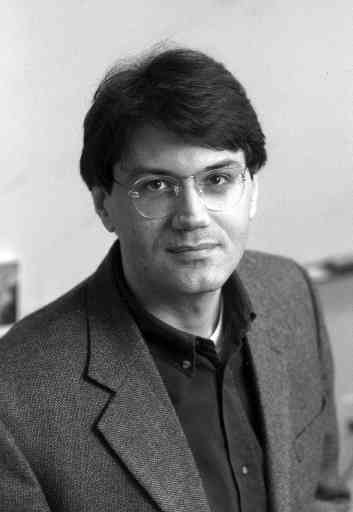 E. C. Katsavounidis合作论文数Department of Physics, Kavli Institute for Astrophysics and Space Research, Massachusetts Institute of Technology;Laser Interferometer Gravitational-wave Observatory, Massachusetts Institute of Technology84
 David H. Shoemaker合作论文数Kavli Institute for Astrophysics and Space Research, Massachusetts Institute of Technology84
 Jesper Munch合作论文数The University of Adelaide84Steffen Grunewald合作论文数Max Planck Institute for Gravitational Physics84S. H. Huttner合作论文数84
 Richard O Shaughnessy合作论文数School of Mathematics and Statistics, College of Science, Rochester Institute of Technology84
 Gregory Harry合作论文数Department of Physics, College of Arts & Sciences, American University84
 Guenakh Mitselmakher合作论文数Institute for High Enery Physics and Astrophysics, Department of Physics, College of Liberal Arts and Sciences, University of Florida84
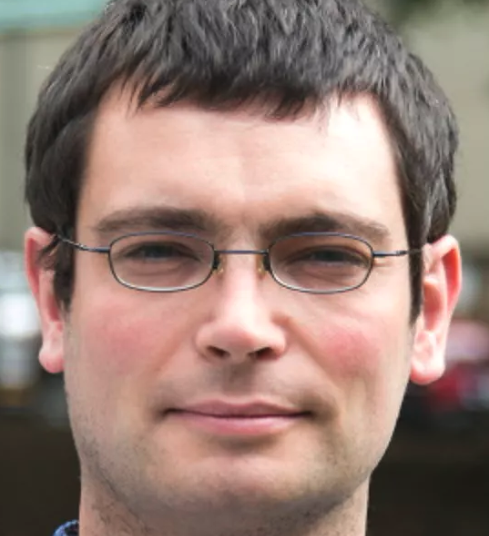 Iain Martin合作论文数Institute for Gravitational Research, School of Physics and Astronomy, University of Glasgow84B. O’Reilly合作论文数Christopher Newport University84
 Vicky Kalogera合作论文数Department of Physics and Astronomy, Weinberg College of Arts & Sciences, Northwestern University;Center for Interdisciplinary Exploration and Research in Astrophysics, Northwestern University.84Sydney Meshkov合作论文数California Institute of Technology84Robert A Mercer合作论文数Department of Physics, University of Wisconsin–Milwaukee84C. Hanna合作论文数83
 Volker Quetschke合作论文数South Texas Space Science Institute, The University of Texas Rio Grande Valley83
 Sheila Rowan合作论文数School of Physics and Astronomy, University of Glasgow;Institute for Gravitational Research, University of Glasgow83




