Stable isotope ratios of H, C, and O are powerful indicators of a wide variety of planetary geophysical processes, and for Mars they reveal the record of loss of its atmosphere and subsequent interactions with its surface such as carbonate formation. We report in situ measurements of the isotopic ratios of D/H and (18)O/(16)O in water and (13)C/(12)C, (18)O/(16)O, (17)O/(16)O, and (13)C(18)O/(12)C(16)O in carbon dioxide, made in the martian atmosphere at Gale Crater from the Curiosity rover using the Sample Analysis at Mars (SAM)'s tunable laser spectrometer (TLS). Comparison between our measurements in the modern atmosphere and those of martian meteorites such as ALH 84001 implies that the martian reservoirs of CO2 and H2O were largely established ~4 billion years ago, but that atmospheric loss or surface interaction may be still ongoing.
The Sample Analysis at Mars (SAM) investigation of the Mars Science Laboratory (MSL) addresses the chemical and isotopic composition of the atmosphere and volatiles extracted from solid samples. The SAM investigation is designed to contribute substantially to the mission goal of quantitatively assessing the habitability of Mars as an essential step in the search for past or present life on Mars. SAM is a 40 kg instrument suite located in the interior of MSL’s Curiosity rover. The SAM instruments are a quadrupole mass spectrometer, a tunable laser spectrometer, and a 6-column gas chromatograph all coupled through solid and gas processing systems to provide complementary information on the same samples. The SAM suite is able to measure a suite of light isotopes and to analyze volatiles directly from the atmosphere or thermally released from solid samples. In addition to measurements of simple inorganic compounds and noble gases SAM will conduct a sensitive search for organic compounds with either thermal or chemical extraction from sieved samples delivered by the sample processing system on the Curiosity rover’s robotic arm.
The Mars Exploration Rover Spirit has identified five distinct rock types in the Columbia Hills of Gusev crater. Clovis Class rock is a poorly sorted clastic rock that has undergone substantial aqueous alteration. We interpret it to be aqueously altered ejecta deposits formed by impacts into basaltic materials. Wishstone Class rock is also a poorly sorted clastic rock that has a distinctive chemical composition that is high in Ti and P and low in Cr. Wishstone Class rock may be pyroclastic or impact in origin. Peace Class rock is a sedimentary material composed of ultramafic sand grains cemented by significant quantities of Mg‐ and Ca‐sulfates. Peace Class rock may have formed when water briefly saturated the ultramafic sands and evaporated to allow precipitation of the sulfates. Watchtower Class rocks are similar chemically to Wishstone Class rocks and have undergone widely varying degrees of near‐isochemical aqueous alteration. They may also be ejecta deposits, formed by impacts into Wishstone‐rich materials and altered by small amounts of water. Backstay Class rocks are basalt/trachybasalt lavas that were emplaced in the Columbia Hills after the other rock classes were, either as impact ejecta or by localized volcanic activity. The geologic record preserved in the rocks of the Columbia Hills reveals a period very early in Martian history in which volcanic materials were widespread, impact was a dominant process, and water was commonly present.
Introduction: Rock Abrasion Tool (RAT) [1, 2] are a part of the Instrument Deployment Device (IDD) in strumentation on the Mars Exploration Rovers (MERs), Spirit and Opportunity. The RAT can brush and grind selected rocks on the martian surface and thereby remove dust and the outer, weathered rind of the rocks. The grinding tool can remove up to about 5 mm of a rock and the grinding process produces dust, which may for a while be locally suspended in the at mosphere. In this study we have grinded the two Brazilian hematite-rich rocks with a RAT simulator in order to learn more about the dust collected by RAT magnets. By Mossbauer measurements it is possible to compare the dust collected by the magnets with the bulk compo sition of the rock being investigated. The RAT magnets: There are four magnets inte grated into the RAT housing and these magnets sponta neously attract some of the magnetic particles that are liberated by the grinding process. The main purpose of the RAT magnet experiment is to provide information about magnetic material in the rocks and thereby give information about the rock composition that will be supplementary to information gathered by the APXand the Mossbauer spectrome ters of the IDD. There are three different RAT magnets; two of the four magnets (#1) are identical and very strong. These mag nets are designed to attract all magnetic particles from the grinding process that happen to come close to these magnets. The two other RAT magnets (#2 and #3) are different. They are less strong and are designed so they have a lower ability to attract and hold magnetic mate rial. This leads to a preferential attraction of only the more strongly magnetic particles that are liberated dur ing the grinding process. Less magnetic particles will be loosely bound on these weaker magnets and easier fall off if the RAT is moved – or if other particles ar rive at the surface of that particular magnet. Essentially we have seen reddish rock dust on the Op portunity landing site and more dark or grayish dust collected on Spirits RAT magnets. Examples are shown in fig. 2. Fig 1: Location of the magnets on the bottom of the RAT. The two identical strong magnets are labeled #1, the less strong magnets (of different strength) are la beled #2 and #3, respectively. Brush and grinding wheel are removed for clarity.
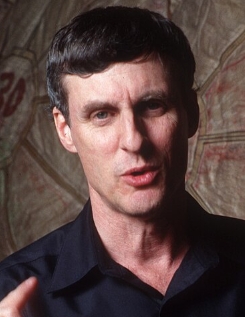 Steven W Squyres合作论文数Blue Origin11
 s rafeek合作论文数8Myrick T合作论文数7
 Tibor S. Balint合作论文数Propulsion Laboratory;Califomia Institute of Technology;State University;Califomia Institute of Technology, State University7
 David Harry Grinspoon合作论文数Denver Museum Nat & Sci7
 tibor kremic合作论文数6
 Allan Treiman合作论文数Lunar and Planetary Institute6
 Douglas Ming合作论文数Johnson Space Center, National Aeronautics and Space Administration6Eric Chassefière合作论文数6
 Lori S. Glaze合作论文数NASA Goddard Space Flight Center6
 Gale Paulsen合作论文数6
 James A. Cutts合作论文数6Kin Yuen Kong合作论文数6
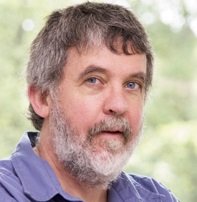 Paul R Mahaffy合作论文数Solar System Exploration Division, NASA Goddard Space Flight Center6nicholas l johnson合作论文数5e kolawa合作论文数5
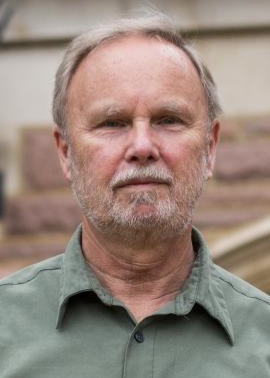 Raymond E. Arvidson合作论文数Department of Earth, Environmental, and Planetary Sciences, College of Arts & Sciences, Washington University in St. Louis;NASA5
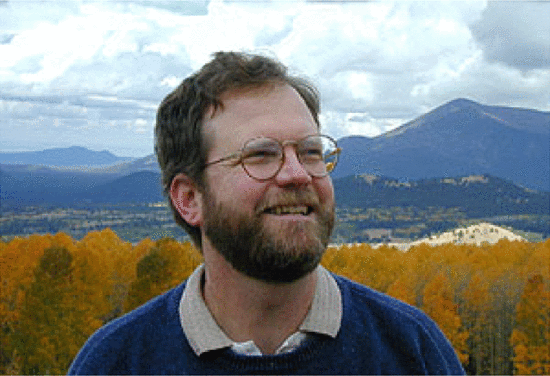 Kenneth E. Herkenhoff合作论文数5
 Sanjay Limaye合作论文数Space Science and Engineering Center, University of Wisconsin-Madison5
 Kris Zacny合作论文数Honeybee Robotics Spacecraft Mechanisms Corporation5
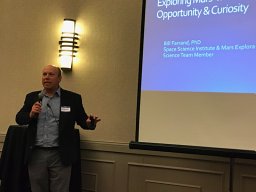 William Farrand合作论文数Space Science Institute5Ralf Gellert合作论文数Department of Physics, University of Guelph5David A. Senske合作论文数5
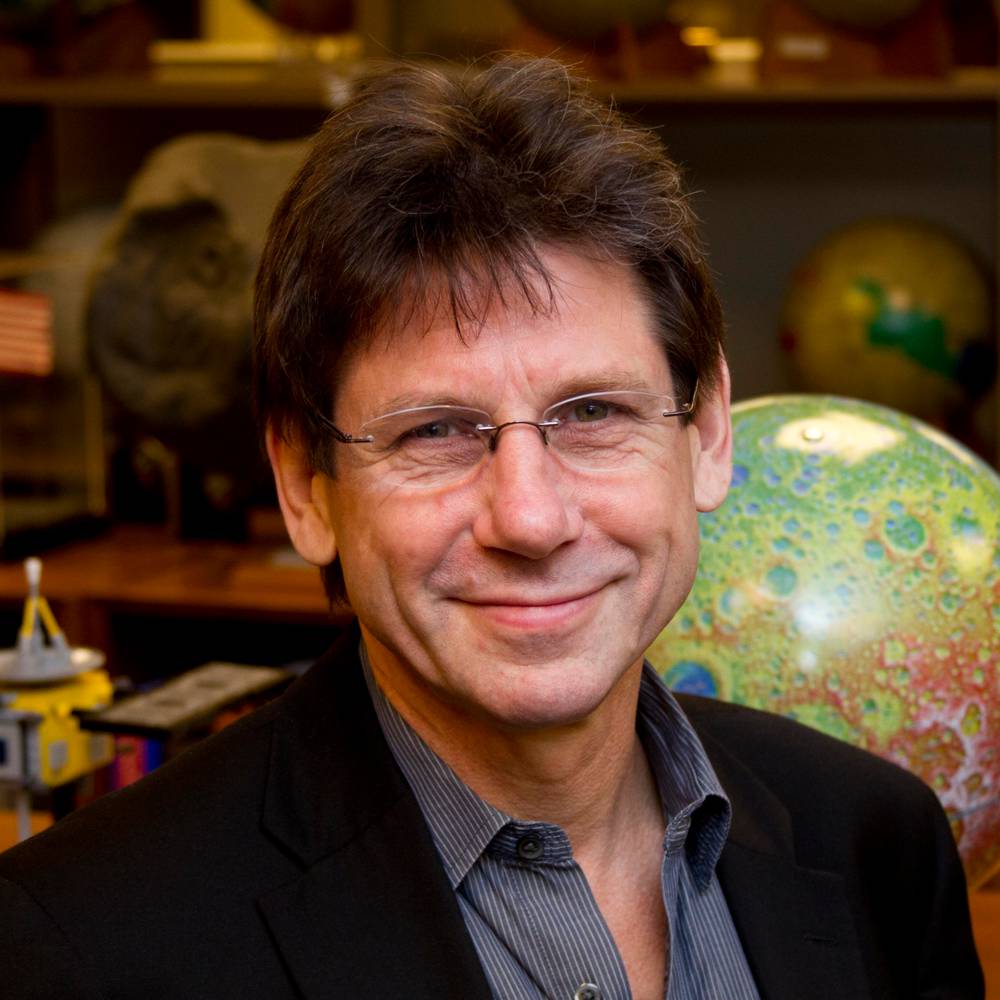 Stephen Mackwell合作论文数Department of Geology, University of Maryland5peter l bartlett合作论文数4
 Jim Bell合作论文数School Of Earth and Space Exploration, Arizona State University;MILO Space Science Institute;Department of Astronomy, Cornell University4
 Bruce Allan Campbell合作论文数Center for Earth and Planetary Studies, Smithsonian National Air and Space Museum4
 John F Wilson合作论文数University of Kentucky4
 Richard V. Morris合作论文数NASA Johnson Space Center4
 Philip Christensen合作论文数School of Earth and Space Exploration, Arizona State University4
 James W Head合作论文数Department of Earth, Environmental and Planetary Sciences, Brown University4
 Dmitrij V. Titov合作论文数School of Atmospheric Sciences, Sun Yat-Sen University4Alastair Kusack合作论文数4
 Hakan Svedhem合作论文数TU Delft4
 M. B. Madsen合作论文数Laboratory of Applied Physics, Technical University of Denmark4
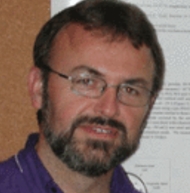 Göstar Klingelhöfer合作论文数Institut für Anorganische und Analytische Chemie, Johannes Gutenberg Universität Mainz4
 Kiel Davis合作论文数4
 Diana L. Blaney合作论文数4
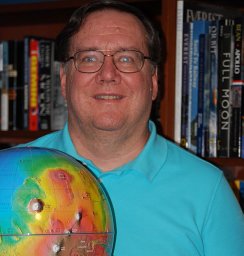 Walter S. Kiefer合作论文数Division of Geological and Planetary Sciences, California Institute of Technology4
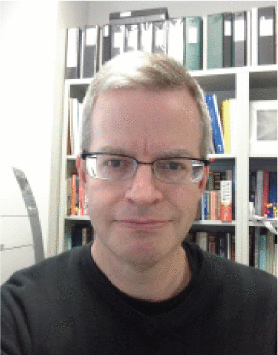 William B Brinckerhoff合作论文数NASA Goddard Space Flight Center4d yucht合作论文数3RV Morris合作论文数3
 Sushil K. Atreya合作论文数Department of Climate and Space Sciences and Engineering, College of Engineering, University of Michigan-Ann Arbor3
 Bullock Mark A合作论文数Department of Space Studies, Southwest Research Institute3
 Carle M Pieters合作论文数Department of Earth, Environmental, and Planetary Sciences, Brown University3John H. Jones合作论文数Lunar and Planetary Laboratory, University of Arizona3D Britt合作论文数3
 Tobias C. Owen合作论文数Institute for Astronomy, University of Hawaii3Rudolf Rieder合作论文数3




