We propose a method for inferring entropy production (EP) in high-dimensional stochastic systems, including many-body systems and non-Markovian systems with long memory. Standard techniques for estimating EP become intractable in such systems due to computational and statistical limitations. We infer trajectory-level EP and lower bounds on average EP by exploiting a nonequilibrium analogue of the Maximum Entropy principle, along with convex duality. Our approach uses only samples of trajectory observables, such as spatiotemporal correlations. It does not require reconstruction of high-dimensional probability distributions or rate matrices, nor impose any special assumptions such as discrete states or multipartite dynamics. In addition, it may be used to compute a hierarchical decomposition of EP, reflecting contributions from different interaction orders, and it has an intuitive physical interpretation as a "thermodynamic uncertainty relation." We demonstrate its numerical performance on a disordered nonequilibrium spin model with 1000 spins and a large neural spike-train dataset.
In genuine nonequilibrium systems under continuous driving, thermodynamic forces are nonconservative and cannot be described by any free energy potential. Nonetheless, we show that such systems can be associated with a generalized free energy derived from a large-deviation variational principle. This variational principle yields a decomposition of fluxes, forces, and entropy production into a conservative excess part and a nonconservative housekeeping part, exemplifying an information-geometric Pythagorean theorem. The decomposition is broadly applicable—including to stochastic master equations as well as closed and open deterministic chemical reaction networks—and accessible to thermodynamic inference from short-time trajectory data. We also show that the excess entropy production obeys a thermodynamic speed limit bounding the rate of state evolution and external fluxes. We illustrate the framework on driven Markov jump processes, nonlinear chemical oscillators, and real-world metabolic networks, where we obtain tight dissipation bounds and identify futile metabolic cycles. Connections are drawn to large deviations, Onsager theory, and previous excess/housekeeping decompositions.
We propose a method for inferring entropy production (EP) in high-dimensional stochastic systems, including many-body systems and non-Markovian systems with long memory. Standard techniques for estimating EP become intractable in such systems due to computational and statistical limitations. We infer trajectory-level EP and lower bounds on average EP by exploiting a nonequilibrium analogue of the maximum entropy principle, along with convex duality. Our approach uses only samples of trajectory observables, such as spatiotemporal correlations. It does not require reconstruction of high-dimensional probability distributions or rate matrices, nor impose any special assumptions such as discrete states or multipartite dynamics. In addition, it may be used to compute a hierarchical decomposition of EP, reflecting contributions from different interaction orders, and it has an intuitive physical interpretation as a "thermodynamic uncertainty relation." We demonstrate its numerical performance on a disordered nonequilibrium spin model with 1000 spins and a large neural spike-train dataset.
We provide a decomposition of the steady-state entropy production rate associated with an Ornstein-Uhlenbeck process into two contributions: one associated with oscillatory behavior and one associated with nonnormality. We also show that each contribution is associated with a different fundamental trade-off. The oscillatory contribution leads to the dissipation-coherence trade-off for noise-induced oscillations, which bounds the entropy production per oscillatory period by the number of oscillations within one correlation time. Notably, the trade-off is twice as strict as those conjectured or derived for other systems. The nonnormal contribution leads to a trade-off between entropy production and acceleration of relaxation. We also demonstrate the decomposition using a simple bead-spring model.
We propose a decomposition of information flow into housekeeping and excess components for autonomous bipartite systems described by Markov jump processes. We introduce this decomposition using the geometric structure of probability currents and the conjugate thermodynamic forces. The housekeeping component arises from cyclic modes caused by violations of detailed balance and maintains the correlations between the two subsystems. In contrast, the excess component arises from conservative forces and alters the mutual information between the two subsystems. With this decomposition, we generalize previous results, such as the second law of information thermodynamics, the cyclic decomposition, and the information-thermodynamic extensions of thermodynamic trade-off relations.
The complex eigenvalues of Markov generators govern oscillatory properties of relaxation, autocorrelation, and linear response. Here we show that these eigenvalues are localized by nonequilibrium cycles of the generator, thus revealing a fundamental tradeoff between thermodynamic driving, oscillation, and decay of eigenmodes. Specifically, we prove that each complex eigenvalue is confined to a region determined by the cycle affinity and the eigenvector “winding number” of some nonequilibrium cycle. In unicyclic systems, we also demonstrate that the winding number coincides with the ordered eigenvalue index, yielding new thermodynamic bounds on the slowest and fastest relaxation modes. In multicyclic systems, our approach unifies and extends several previous inequalities and proves the Uhl–Seifert ellipse conjecture.
A central challenge in cellular signal processing is understanding how biochemical networks perform reliably despite molecular noise. Traditionally, mutual information has been widely used to quantify signaling fidelity, capturing how well outputs discriminate distinct input states. However, it fails to capture whether the output also faithfully mirrors the statistical structure of the input, a property crucial in processes like morphogen patterning, dose-dependent signaling, and cellular communication. To address this gap, we introduce the 2-Wasserstein distance from optimal transport theory, which provides a geometric basis for comparing input and output distributions. In our proposed framework, we define mutual information as informational fidelity and the inverse of the 2-Wasserstein distance as geometric fidelity. Applying this dual-fidelity framework to canonical regulatory motifs under Gaussian channel approximation reveals a topology-dependent trade-off: coherent feed-forward loops can achieve high performance in both dimensions, whereas feedback architectures typically sacrifice informational fidelity to enhance geometric fidelity. We demonstrate that theoretical predictions of feedback regulation are well supported by experimental data from tumor necrosis factor signaling. Our results demonstrate that maximizing information alone is not always advantageous and that reliable signaling arises from balancing information transmission with the geometric aspects of signaling. Thus, our analysis establishes geometric fidelity as a fundamental, yet previously unrecognized, dimension of signaling fidelity. It also provides a quantitative, experimentally accessible framework for dissecting natural networks and designing task-specific synthetic circuits.
Nonlinear oscillations are commonly observed in complex systems far from equilibrium, such as living organisms. These oscillations are essential for sustaining vital processes, like neuronal firing, circadian rhythms, and heartbeats. In such systems, thermodynamic dissipation is necessary to maintain oscillations against noise. However, due to their nonlinear dynamics, it has been challenging to determine how the characteristics of oscillations, such as frequency, amplitude, and coherent patterns across elements, influence dissipation. To resolve this issue, we employ Koopman mode decomposition, which recasts nonlinear dynamics as a linear evolution in a function space. This linearization allows the dynamics to be decomposed into temporal oscillatory modes coherent across elements, with the Koopman eigenvalues determining their frequencies. Using this method, we decompose thermodynamic dissipation caused by nonconservative forces into contributions from oscillatory modes in overdamped nonlinear Langevin dynamics. We show that the dissipation from each mode is proportional to its frequency squared and its intensity, providing an interpretable, mode-by-mode picture. In the noisy FitzHugh-Nagumo model, we demonstrate the effectiveness of this framework in quantifying the impact of oscillatory modes on dissipation during nonlinear phenomena like coherent resonance and bifurcation. For instance, our analysis of coherent resonance reveals that the greatest dissipation at the optimal noise intensity is supported by a broad spectrum of frequencies, whereas at nonoptimal noise levels, dissipation is dominated by specific frequency modes. Our work offers a general approach to connecting oscillations to dissipation in noisy environments and improves our understanding of diverse oscillation phenomena from a nonequilibrium thermodynamic perspective.
One of the fundamental questions in population dynamics is how biological populations respond to environmental perturbations. In population dynamics, the mean fitness and the fraction of a trait in the steady state are important because they indicate how well the trait and the population adapt to the environment. In this study, we examine the parallel mutation-reproduction model, which is one of the simplest models of an evolvable population. As an extension of the Markov chain tree theorem, we derive diagrammatic expressions for the static responses of mean fitness and the steady-state distribution of the population. For the parallel mutation-reproduction model, we consider self-loops, which represent trait reproduction and are excluded from the Markov chain tree theorem for the linear master equation. To generalize the theorem, we introduce the concept of rooted 0/1 loop forests, which generalize spanning trees with loops. We demonstrate that the weights of rooted 0/1 loop forests yield the static responses of mean fitness and the steady-state distribution. Our results provide exact expressions for the static responses and the steady-state distribution. Additionally, we discuss approximations of these expressions in cases where reproduction or mutation is dominant. We provide numerical examples to illustrate these approximations and exact expressions.
We propose an information-geometric signature of nonconservative driving that detects violations of detailed balance using the Kullback–Leibler divergence and the Fisher information. For Markov jump processes satisfying detailed balance, we show that, near equilibrium, the acceleration of the Kullback–Leibler divergence relative to the equilibrium state is given by twice the Fisher information with respect to time. In contrast, for relaxation toward a nonequilibrium steady state, this relation is generally violated even near the steady state. We refer to the resulting discrepancy as the relaxation gap and derive a lower bound on the steady-state entropy production rate in terms of this gap. We demonstrate that this bound is particularly tight for networks with simple cyclic topologies. Finally, we show that analogous relations and bounds hold for Fokker–Planck dynamics.
We derive two fundamental trade-offs for general stochastic limit cycles in the weak-noise limit. The first is the dissipation-coherence trade-off, which was numerically conjectured and partially proved by Santolin and Falasco [Phys. Rev. Lett. 135, 057101 (2025)]. This trade-off bounds the entropy production required for one oscillatory period using the number of oscillations that occur before steady-state correlations are disrupted. The second is the thermodynamic speed limit, which bounds the entropy production with the Euclidean length of the limit cycle. These trade-offs are obtained by substituting mutually dual observables, derived from the stability of the limit cycle, into the thermodynamic uncertainty relation. This fact allows us to regard the dissipation-coherence trade-off as the dual of the thermodynamic speed limit. We numerically demonstrate these trade-offs using the noisy Rössler model. We also apply the trade-offs to stochastic chemical systems, where the diffusion coefficient matrix may contain zero eigenvalues.
Thermodynamic irreversibility is a fundamental concept in statistical physics, yet its experimental measurement remains challenging, especially for complex systems. At the same time, imprecise readout is ubiquitous in experiments, but its effect on thermodynamic irreversibility has not been formulated in a general way. We introduce a novel random coarse-graining framework that incorporates a probabilistic mapping from fine-grained to coarse-grained states, and we use it both to model imprecise measurements and to identify model-free measures of irreversibility in complex many-body systems. These measures are constructed from the asymmetry of cross-correlation functions between suitably chosen observables, providing rigorous lower bounds on the entropy production. For many-particle systems, we propose a particularly practical implementation that divides real space into virtual boxes and monitors particle number densities within them, requiring only simple counting from video microscopy, without single-particle tracking, trajectory reconstruction, or prior knowledge of interactions. Owing to its generality and limited data requirements, the random coarse-graining framework offers broad applicability across diverse nonequilibrium systems.
Activity, which represents the kinetic property of dynamics, plays a central role in obtaining thermodynamic speed limits (TSLs). In this paper, we discuss a unified framework that provides the existing TSLs based on different activities such as dynamical activity and dynamical state mobility. This unification is based on generalized means that include standard means such as the arithmetic, logarithmic, and geometric means, the first two of which respectively correspond to the dynamical activity and the dynamical state mobility. We also derive an infinite variety of TSLs for Markov jump processes and deterministic chemical reaction networks using different activities. The lower bound on the entropy production given by each TSL provides the minimum dissipation achievable by a conservative force. We numerically and analytically discuss the tightness of the lower bounds on the entropy production rate in the various TSLs.
We discuss a connection between a generative model, called the diffusion model, and nonequilibrium thermodynamics for the Fokker-Planck equation, called stochastic thermodynamics. Using techniques from stochastic thermodynamics, we derive the speed-accuracy relations for diffusion models, which are inequalities that relate the accuracy of data generation to the entropy production rate. These relations can be interpreted as the relations between accuracy and the speed of the diffusion dynamics in the absence of the nonconservative force. From a stochastic thermodynamic perspective, our results provide quantitative insight into how best to generate data in diffusion models. The optimal learning protocol is introduced by the geodesic of space of the 2-Wasserstein distance in optimal transport theory. We numerically illustrate the validity of the speed-accuracy relations for diffusion models with different noise schedules and different data. We numerically discuss our results for optimal and suboptimal learning protocols. We also demonstrate the applicability of our results to data generation from the real-world image datasets.
Thermodynamic force and irreversible current are the foundational concepts of classical nonequilibrium thermodynamics. Entropy production rate is provided by their product in classical systems, ranging from mesoscopic to macroscopic systems. However, there is no complete quantum extension of such a structure that respects quantum mechanics. In this paper, we propose anti-Hermitian operators that represent currents and forces accompanied by a gradient structure in open quantum systems described by the quantum master equation. We prove that the entropy production rate is given by the product of the force and current operators, which extends the canonical expression of the entropy production rate in the classical systems. The framework constitutes a comprehensive analogy with the nonequilibrium thermodynamics of discrete classical systems. We also show that the structure leads to the extensions of some results in stochastic thermodynamics: the geometric housekeeping-excess decomposition of entropy production and thermodynamic trade-off relations such as the thermodynamic uncertainty relation and the dissipation-time uncertainty relation. In discussing the trade-off relations, we will introduce a measure of fluctuation, which we term the quantum diffusivity.
The spectrum of Markov generators encodes physical information beyond simple decay and oscillation, which reflects irreversibility and governs the structure of correlation functions. In this Letter, we prove an ellipse theorem that provides a universal thermodynamic geometric constraint on the spectrum of Markov rate matrices. The theorem states that all eigenvalues lie within a specific ellipse in the complex plane. In particular, the imaginary parts of the spectrum, which indicate oscillatory modes, are bounded by the maximum thermodynamic force associated with individual transitions. This spectral bound further constrains the initial short-time behavior of correlation functions between two arbitrary observables. Finally, we compare our result with a previously proposed conjecture, which remains an open problem and warrants further investigation.
We establish universal relations between pattern formation and dissipation with a geometric approach to nonequilibrium thermodynamics of deterministic reaction-diffusion systems. We first provide a way to systematically decompose the entropy production rate (EPR) based on the orthogonality of thermodynamic forces, in this way identifying the amount of dissipation caused by each factor. This enables us to extract the excess EPR that genuinely contributes to the time evolution of patterns. We also show that a similar geometric method further decomposes the EPR into detailed contributions, e.g., the dissipation from each point in real or wavenumber space. Second, we relate the excess EPR to the details of the change in patterns through two types of thermodynamic trade-off relations for reaction-diffusion systems: thermodynamic speed limits and thermodynamic uncertainty relations. The former relates dissipation and the speed of pattern formation, and the latter bounds the excess EPR with partial information on patterns, such as specific Fourier components of concentration distributions. In connection with the derivation of the thermodynamic speed limits, we also extend optimal transport theory to reaction-diffusion systems, which enables us to measure the speed of the time evolution. This extension of optimal transport also solves the minimization problem of the dissipation associated with the transition between two patterns, and it constructs energetically efficient protocols for pattern formation. We numerically demonstrate our results using chemical traveling waves in the Fisher-Kolmogorov-Petrovsky-Piskunov equation and changes in symmetry in the Brusselator model. Our results apply to general reaction-diffusion systems and contribute to understanding the relations between pattern formation and unavoidable dissipation.
Optimal transport theory, originally developed in the 18th century for civil engineering, has since become a powerful optimization framework across disciplines, from generative AI to cell biology. In physics, it has recently been shown to set fundamental bounds on thermodynamic dissipation in finite-time processes. This extends beyond the conventional second law, which guarantees zero dissipation only in the quasi-static limit and cannot characterize the inevitable dissipation in finite-time processes. Here, we experimentally realize thermodynamically optimal transport using optically trapped microparticles, achieving minimal dissipation within a finite time. As an application to information processing, we implement the optimal finite-time protocol for information erasure, confirming that the excess dissipation beyond the Landauer bound is exactly determined by the Wasserstein distance - a fundamental geometric quantity in optimal transport theory. Furthermore, our experiment achieves the bound governing the trade-off between speed, dissipation, and accuracy in information erasure. To enable precise control of microparticles, we develop scanning optical tweezers capable of generating arbitrary potential profiles. These results provide guiding principles for information processing with saturating the trade-off.
We investigate the consequences of information exchange between a system and a measurement-feedback apparatus that cools the system below the environmental temperature. A quantitative relationship between entropy pumping and information acquired about the system is derived, showing that, independent of the concrete realization of the feedback, the latter exceeds the former by a positive amount of excess information flow. This excess information flow satisfies a trade-off relation with the precision of the feedback force, which places strong constraints on both the information-theoretic cost of feedback cooling and the required magnitude of the feedback force. From these constraints, a fundamental lower bound on the energetic cost of optical feedback cooling is derived. Finally, the results are demonstrated for feedback cooling by coherent light scattering. We show that measurement precision is the major factor determining the attainable temperature. Precise measurements can also be leveraged to reduce the required feedback force, leading to significantly more energy-efficient cooling close to the fundamental bound for realistic parameter values.
Information flow between subsystems is a central concept in information thermodynamics, which provides the second-law-like inequalities for subsystems. This paper discusses the geometric decomposition of information flow, which was introduced for Markov jump systems [Y Maekawa, R Nagayama, K Yoshimura and S Ito, arXiv:2509.21985 (2025)], and applies it to overdamped Langevin systems. For overdamped Langevin systems, the geometric decomposition of information flow into excess and housekeeping contributions is related to the conventional definition of the 2-Wasserstein distance between marginal distributions in optimal transport theory. This formulation offers an optimal-transport interpretation of subsystem dynamics, and this optimal-transport formulation is simpler for overdamped Langevin systems than for general Markov jump systems. It is also possible to handle features that are specific to overdamped Langevin systems, such as representations based on the Koopman mode decomposition, as well as their relationship with the Fisher information matrix. As with the results for Markov jump systems, we generalize the second law of information thermodynamics using housekeeping and excess information flow, leading to the concept of excess and housekeeping demons. We also derive a thermodynamic uncertainty relation and an information-thermodynamic speed limit incorporating excess information flow. These results are illustrated for the Gaussian case, and we discuss the conditions under which the excess and housekeeping demons emerge.
 Kohei Yoshimura合作论文数Dept Phys, Univ Tokyo15
 Artemy Kolchinsky合作论文数Indiana University14
 Naruo Ohga合作论文数13
 Andreas Dechant合作论文数Department of Physics, University of Augsburg11takahiro sagawa合作论文数10Ryuna Nagayama合作论文数4
 Masafumi Oizumi合作论文数The University of Tokyo3Naoto Shiraishi合作论文数Dept Phys, Gakushuin Univ2Kentaro Komori合作论文数Dept Phys, Univ Tokyo2
 Shin-Ichi Sasa合作论文数Department of Pure;Applied Sciences;University of Tokyo;Department of Pure, University of Tokyo2
 Yoichi Aso合作论文数National Astronomical Observatory of Japan;Institute for Cosmic Ray Research, The University of Tokyo2
 Miguel Aguilera合作论文数Concordia University2
 Yuta Michimura合作论文数2
 Nobuyuki Matsumoto合作论文数Department of Anesthesiology, Saitama Medical School2A. Takayama合作论文数1
 Daisuke Okanohara合作论文数1H. Namatame合作论文数1M. Taniguchi合作论文数1Shun Otsubo合作论文数1Daiki Sekizawa合作论文数1Takuya Kamijima合作论文数1
 Yuma Fujimoto (藤本悠雅)合作论文数AI Lab, CyberAgent1
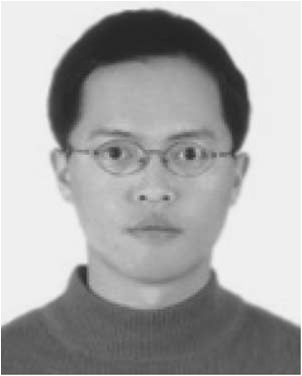 weichuan chen合作论文数HFC Semicond Corp1Satoshi Yoshida合作论文数1Keita Ashida合作论文数Keio University1Jumpei F Yamagishi合作论文数The University of Tokyo1
 Yasushi Okada合作论文数Univ Tokyo, Grad Sch Med, Dept Cell Biol & Anat, Tokyo 1130033, Japan1
 Kyogo Kawaguchi合作论文数Graduate School of Science, The University of Tokyo1
 Masahiro Hoshino合作论文数Department of Earth and Planetary Environmental Science, School of Science, The University of Tokyo1Kazuhiro Aoki合作论文数Complex Carbohydrate Research Center, The University of Georgia1
 Fumio Komori (小森文夫)合作论文数Institute of Industrial Science, University of Tokyo;Institute for Solid State Physics, University of Tokyo1
 Masaki Sano (佐野雅己)合作论文数Institute of Natural Sciences, Shanghai Jiao Tong University;The University of Tokyo1
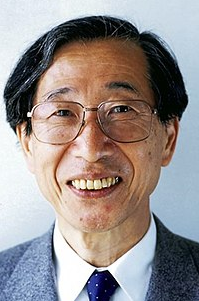 Shun-ichi Amari (甘利俊一)合作论文数ARAYA Research;Teikyo University1
 Iwao Matsuda (松田巌)合作论文数Synchrotron Radiation Laboratory, Laser and Synchrotron Research Center, Institute for Solid State Physics, The University of Tokyo1
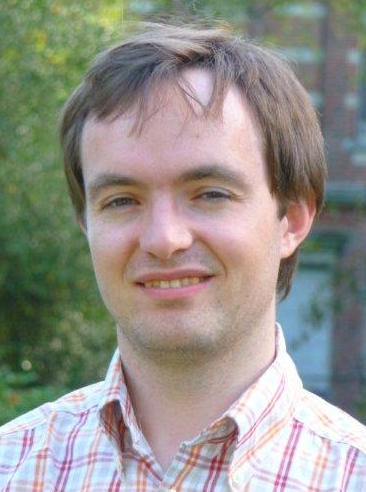 Jean-Charles Delvenne合作论文数Center for Operations Research and Econometrics, Institute of Information and Communication Technologies, Electronics and Applied Mathematics, Université Catholique de Louvain;Namur Center for Complex Systems, Institute of Information and Communication Technologies, Electronics and Applied Mathematics, Université Catholique de Louvain;Ecole Polytechnique de Louvain, Université Catholique de Louvain1
 Cheng-Maw Cheng合作论文数1Takushi Iimori合作论文数1
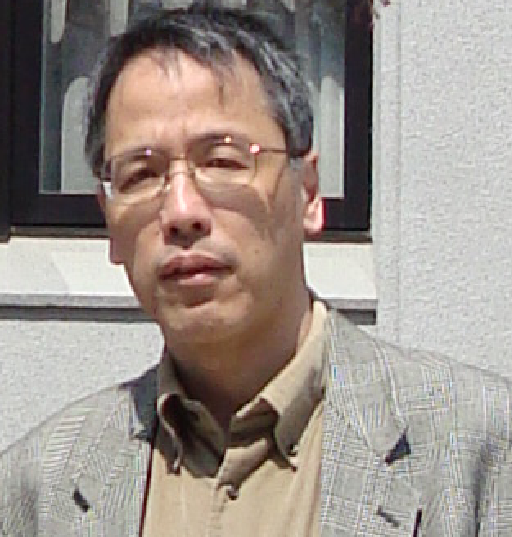 Hisao Hayakawa合作论文数Yukawa Institute for Theoretical Physics, Kyoto University1Eiro Muneyuki (宗行英朗)合作论文数Faculty of Science and Engineering, Chuo University1
 Maria Jose Arita合作论文数1Shoichi Toyabe合作论文数1
 S-J Tang合作论文数Department of Physics and Astronomy, The University of Tennessee1
 Takao Someya (染谷隆夫)合作论文数Electronic Skin Lab, Department of Electric and Electronic Engineering, School of Engineering, The University of Tokyo1
 Bao-Jie Feng (冯宝杰)合作论文数State Key Laboratory for Surface Physics, Institute of Physics, Chinese Academy of Sciences1




