Utility theory, in one form or another, has provided the guiding principle for prescribing and describing gambling decisions since the 18th century. The expected utility principle asserts that given a choice among gambles, the decision maker will select the one with the highest expected utility.
Behavioral decision theory can contribute in many ways to the management and regulation of risk. In recent years, empirical and theoretical research on decision making under risk has produced a body of knowledge that should be of value to those who seek to understand and improve societal decisions. This paper describes several components of this research, which is guided by the assumption that all those involved with high-risk technologies as promoters, regulators, politicians, or citizens need to understand how they and the others think about risk. Without such understanding, well-intended policies may be ineffective, perhaps even counterproductive.
How much information should be provided to patients about prescription drug side effects? What determines the perceived seriousness of a drug side effect and how does seriousness relate to the need to inform patients about that effect? This study explored these questions in a survey of laypersons, physicians, and pharmacists. The results indicated that pain, effect on one's ability to carry out everyday activities, and threat to life were the key determinants of a side-effect's seriousness. Laypeople tended to judge most side effects as more serious than did pharmacists and physicians. Whereas the health professionals tended to want minor side effects listed only if they occur quite frequently, laypeople tended to want all potential effects listed, no matter how rarely they occur or how minor they are. The practical and political implications of these findings are discussed.
A number of proposals have been put forth regarding the proper way to model the societal impact of fatal accidents. Most of these proposals are based on some form of utility function asserting that the social cost or disutility of N lives lost in a single accident is a function of N α . A common view is that a single large accident is more serious than many small accidents producing the same number of fatalities, hence α > 1. Drawing upon a number of empirical studies, we argue that there is insufficient justification for using any function of N fatalities to model societal impacts. The inadequacy of such models is attributed, in part, to the fact that accidents are signals of future trouble. The societal impact of an accident is determined to an important degree by what it signifies or portends. An accident that causes little direct harm may have immense consequences if it increases the judged probability and seriousness of future accidents. We propose that models based solely on functions of N be abandoned in favor of models that elaborate in detail the significant events and consequences likely to result from an accident.
No abstract available for this article.
Public perceptions of risk are a focal point of many debates about the management of hazardous technologies. Different views about what the public knows and wants often lead to quite different beliefs about what policies should be adopted and even about how society's policy-making processes should be structured. Often these views about the public are based on speculation or anecdotal observation. In the interests of having better informed debates, the present paper reviews existing empirical evidence about public risk perceptions. In doing so, it reaches a number of interim conclusions and draws forth their implications for the respective roles of technical experts and lay people in technology management.
The understanding and management of risk has received much attention in recent years, and it has been suggested that risk is the primary issue of concern that occupies our modern societies.1 Debates about risk embody tensions between expert assessments of risk on the one hand, and public perceptions of risk on the other. Technological, health and environmental issues span scientific, economic and political interests and concerns, and encompass a multitude of conflicting interests and values. Many risks involve an interplay between expert assessments, public perceptions and risk management priorities. It has been argued that understanding how members of the public perceive risk is fundamental if risks are to be managed effectively – particularly in the case of risks to human health, which may create situations where there is a requirement for public compliance with risk management policies, often taking the form of behavioural change (to prevent the spread of infectious disease, for example).
Subjective judgements, whether by experts or lay people, are a major component in any risk assessment. If such judgements are faulty, risk management efforts are likely to be misdirected. This paper begins with an analysis of biases exhibited by lay people and experts when they make judgements about risk. Next, the similarities and differences between lay and expert evaluations are examined in the context of a specific set of hazardous activities and technologies. Finally, insights from this research are applied to the problems of informing people about risk and forecasting public response towards nuclear power.
Previous studies have suggested that the general public misinterprets probability of precipitation (PoP) forecasts, leading some meteorologists to argue that probabilities should not be included in public weather forecasts. Upon closer examination, however, these studies prove to be ambiguous with regard to the nature of the misunderstanding. Is the public confused about the meaning of the probabilities or about the definition of the event to which the probabilities refer? If event misinterpretation is the source of the confusion, then elimination of the probabilities would not reduce the level of misunderstanding. The present paper summarizes a study of 79 residents of Eugene, Oreg., who completed a questionnaire designed to investigate their understanding of and attitude toward precipitation probability forecasts. Results indicate that the event in question frequently is misunderstood, with both traditional precipitation forecasts and PoP forecasts producing similar levels of event misinterpretation. On the other hand, the probabilities themselves are well understood. Moreover, most respondents revealed a preference for the use of probabilities to express the uncertainty inherent in precipitation forecasts. Although the sample size was limited, the results of this study strongly support the inclusion of probabilities in public forecasts of precipitation occurrence. The paper concludes with a brief discussion of some implications of these results for operational weather forecasting.
Two experiments attempted to improve the quality of people's probability assessments through intensive training. The first involved 11 sessions of 200 assessments each followed by comprehensive feedback. It produced considerable learning, almost all of which was accomplished after receipt of the first feedback. There was modest generalization to several related probability assessment tasks, but no generalization at all to two others. The second experiment reduced the training to three sessions. It revealed the same pattern of learning and limited generalization. About one-third of all subjects appeared to use probabilities quite appropriately on some tasks before training began. Further research is needed to understand why the training worked as well as it did, why that training did not always generalize, and why some individuals seemed to need no training at all.
Previous studies have concluded that when making inferences, people tend to ignore various kinds of normatively important information (e.g., sample size, base rates). The basis for such conclusions has typically been the similarity of responses across groups presented with widely discrepant values of that information. The experiments reported here convert earlier, between-subject designs to within-subject formats. Each subject made several judgments as one kind of information varied across a range of possible values. When information regarding base rates or predictive validity was varied, roughly two-thirds of the subjects changed their judgments in directions dictated by normative considerations, although the magnitudes of these changes were too small. There were no appreciable shifts in response to changes in sample size information. Apparently, people know (or can figure out) somewhat more than what they have been given credit for in the past. Of course, modest sensitivity in these somewhat artificial conditions is not inconsistent with completely ignoring such information when, as is usually the case, the world presents but one set of values.
 Paul Slovic合作论文数Department of Psychology, University of Oregon;Decision Research25
 Baruch Fischhoff合作论文数Department of Engineering & Public Policy, Carnegie Mellon University;Carnegie Mellon Institute for Strategy and Technology, Carnegie Mellon University23
 M Layman合作论文数2B COMBS合作论文数2
 Robert L. Winkler合作论文数Department of Statistical Science, Duke University;Fuqua School of Business, Duke University2B. Fischoff合作论文数2B CORRIGAN合作论文数1Jx Kasperson合作论文数1AH MURPHY合作论文数1
 Asher Koriat合作论文数Department of Psychology, University of Haifa/Institute of Information Processing and Decision Making, University of Haifa1Allan H. Murphy合作论文数1Christoph Hohenemser合作论文数1Charles Keown合作论文数1
 Ralph L. Keeney合作论文数Fuqua School of Business, Duke University1Timothy C. Earle合作论文数Western Washington University1Robert W Kates合作论文数1
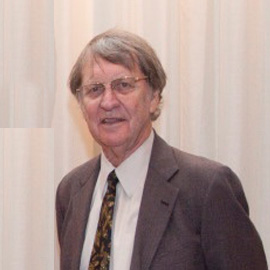 Roger E. Kasperson (Roger Kasperson)合作论文数George Perkins Marsh Institute, Clark University1Robert Goble合作论文数1




