The US Advanced Limiter-divertor Plasma-facing Systems (ALPS) program is developing the science of liquid metal surface divertors for near and long term tokamaks. These systems may help solve the demanding heat removal, particle removal, and erosion issues of fusion plasma/surface interactions. ALPS combines tokamak experiments, lab experiments, and modeling. We are designing both static and flowing liquid lithium divertors for the National Spherical Torus Experiment (NSTX) at Princeton. We are also studying tin, gallium, and tin-lithium systems. Results to date are extensive and generally encouraging, e.g., showing: 1) good tokamak performance with a liquid Li limiter, 2) high D pumping in Li and non-zero He/Li pumping, 3) well-characterized temperature-dependent liquid metal surface composition and sputter yield data, 4) predicted stable low-recycle improved-plasma NSTX-Li performance, 5) high temperature capability Sn or Ga potential with reduced ELM & disruption response concerns. In the MHD area, analysis predicts good NSTX static Li performance, with dynamic systems being evaluated.
Part of the development of liquid metals as a first wall or divertor for reactor applications must involve the investigation of plasma–liquid metal interactions in a functioning tokamak. Most of the interest in liquid metal walls has focused on lithium. Experiments with lithium limiters have now been conducted in the Current Drive Experiment-Upgrade (CDX-U) device at the Princeton Plasma Physics Laboratory. Initial experiments used a liquid lithium rail limiter (L3) built by the University of California at San Diego. Spectroscopic measurements showed some reduction of impurities in CDX-U plasmas with the L3, compared to discharges with a boron carbide limiter. While no reduction in recycling was observed with the L3, which had a plasma-wet area of approximately 40 cm2, subsequent experiments with a larger area fully toroidal lithium limiter demonstrated significant reductions in both recycling and in impurity levels. Two series of experiments with the toroidal limiter have now been performed. In each series, the area of exposed, clean lithium was increased, until in the latest experiments, the liquid lithium plasma-facing area was increased to 2000 cm2. Under these conditions, the reduction in recycling required a factor of eight increase in gas fueling in order to maintain the plasma density. The loop voltage required to sustain the plasma current was reduced from 2 V to 0.5 V. This paper summarizes the technical preparations for lithium experiments and the conditioning required to prepare the lithium surface for plasma operations. The mechanical response of the liquid metal to induced currents, especially through contact with the plasma, is discussed. The effect of the lithium-filled toroidal limiter on plasma performance is also briefly described.
Use of a large-area liquid lithium surface as a limiter has significantly improved the plasma performance in the Current Drive Experiment-Upgrade (CDX-U) at the Princeton Plasma Physics Laboratory. Previous CDX-U experiments with a partially-covered toroidal lithium limiter tray have shown a decrease in impurities and the recycling of hydrogenic species. Improvements in loading techniques have permitted nearly full coverage of the tray surface with liquid lithium. Under these conditions, there was a large drop in the loop voltage needed to sustain the plasma current. The data are consistent with simulations that indicate more stable plasmas having broader current profiles, higher temperatures, and lowered impurities with liquid lithium walls. As further evidence for reduced recycling with a liquid lithium limiter, the gas puffing had to be increased by up to a factor of eight for the same plasma density achieved with an empty toroidal tray limiter.
The injection of carborane (C2B10H12) on the PISCES-B linear plasma device has been used to produce boron containing films on various target species. Film growth rates achieved are extremely high (up to 30 nm/s) compared to those typically found for glow discharges (∼0.01 nm/s). For low-Z target materials (C and Al) the film production is highly efficient, with the boron film growth rate comparable to the incident ion flux and the injection rate of boron atoms. The boron to carbon ratio is 3.0–3.6 for these films. Similarly high growth rates (∼10 nm/s) are obtained with high-Z target (W), but with lower deposition efficiency and higher B/C film ratio. The high film growth rate/efficiency are apparently linked to the high degree of carborane ionization and dissociation caused by the ∼40 eV PISCES-B plasma, compared with T<1 eV plasmas of glow discharges. This technique opens the possibility of continuously producing protective B films in thermonuclear devices where net erosion rates approach 10 nm/s.
Research on the spherical torus (or spherical tokamak) (ST) is being pursued to explore the scientific benefits of modifying the field line structure from that in more moderate aspect ratio devices, such as the conventional tokamak. The ST experiments are being conducted in various US research facilities including the MA-class National Spherical Torus Experiment (NSTX) at Princeton, and three medium sized ST research facilities: PEGASUS at University of Wisconsin, HIT-II at University of Washington, and CDX-U at Princeton. In the context of the fusion energy development path being formulated in the US, an ST-based Component Test Facility (CTF) and, ultimately a Demo device, are being discussed. For these, it is essential to develop high performance, steady-state operational scenarios. The relevant scientific issues are energy confinement, MHD stability at high beta (β), non-inductive sustainment, Ohmic-solenoid-free start-up, and power and particle handling. In the confinement area, the NSTX experiments have shown that the confinement can be up to 50% better than the ITER-98-pby2 H-mode scaling, consistent with the requirements for an ST-based CTF and Demo. In NSTX, CTF-relevant average toroidal beta values βT of up to 35% with a near unity central βT have been obtained. NSTX will be exploring advanced regimes where βT up to 40% can be sustained through active stabilization of resistive wall modes. To date, the most successful technique for non-inductive sustainment in NSTX is the high beta poloidal regime, where discharges with a high non-inductive fraction (∼60% bootstrap current+NBI current drive) were sustained over the resistive skin time. Research on radio-frequency (RF) based heating and current drive utilizing high harmonic fast wave and electron Bernstein wave is also pursued on NSTX, PEGASUS, and CDX-U. For non-inductive start-up, the coaxial helicity injection, developed in HIT/HIT-II, has been adopted on NSTX to test the method up to Ip ∼ 500 kA. In parallel, start-up using a RF current drive and only external poloidal field coils are being developed on NSTX. The area of power and particle handling is expected to be challenging because of the higher power density expected in the ST relative to that in conventional aspect-ratio tokamaks. Due to its promise for power and particle handling, liquid lithium is being studied in CDX-U as a potential plasma-facing surface for a fusion reactor.
The use of flowing liquid lithium as a first wall for a reactor has potentially attractive physics and engineering features. The current drive experiment-upgrade (CDX-U) at the Princeton Plasma Physics Laboratory has begun experiments with a fully toroidal liquid lithium limiter. CDX-U is a compact (R = 34 cm, a = 22 cm, B-toroidal = 2 kG, I-p = 100 kA, T-e(0) similar to 100 eV, n(e)(0) similar to 5 x 10(19) m(-3)) short-pulse ( < 25 ms) spherical tokamak with extensive diagnostics. The limiter, which consists of a shallow circular stainless steel tray of radius 34 cin and width 10 cm, can be filled with lithium to a depth of a few millimeters, and forms the lower limiting surface for the discharge. Heating elements beneath the tray are used to liquefy the lithium prior to the experiment. The total area of the tray is approximately 2000 cm The tokamak edge plasma, when operated in contact with the lithium-filled tray, shows evidence of reduced impurities and recycling. The reduction in recycling and impurities is largest when the lithium is liquefied by heating to 250 degreesC. Discharges which are limited by the liquid lithium tray show evidence of performance enhancement. Radiated power is reduced and there is spectroscopic evidence for increases in the core electron temperature. Furthermore, the use of a liquid lithium limiter reduces the need for conditioning discharges prior to high current operation. The future development path for liquid lithium limiter systems in CDX-U is also discussed. (C) 2003 Elsevier Science B.V. All rights reserved.
The current drive experiment-upgrade (CDX-U) at the Princeton Plasma Physics Laboratory has begun experiments with a fully toroidal liquid lithium limiter. CDX-U is a compact (R=34 cm, a=22 cm, Btoroidal=2 kG, IP=100 kA, Te(0)∼100 eV, ne(0)∼5×10¹⁹ m−3) short-pulse (<25 ms) spherical torus with extensive diagnostics. The limiter, which consists of a shallow circular stainless steel tray of radius 34 cm and width 10 cm, can be filled with lithium to a depth of a few millimeters, and forms the lower limiting surface for the discharge. Heating elements beneath the tray are used to liquefy the lithium prior to the experiment. Surface coatings are evident on part of the lithium. Despite the surface coatings, tokamak discharges operated in contact with the lithium-filled tray show evidence of reduced impurities and recycling. The reduction in recycling is largest when the lithium is liquefied.
Liquid metals such as gallium, tin and lithium are potential plasma-facing materials that may be used to withstand the high heat and particle fluxes in a fusion plasma environment. The interaction of plasma with liquid gallium surfaces has been examined experimentally because of the liquid's wide temperature range (303-2478 K) and relatively low chemical reactivity. The deuterium retention in liquid gallium samples following plasma exposure in the PISCES experimental plasma device is measured using thermal desorption spectroscopy and is found to be independent of exposure temperature. The retention level saturates at a value of roughly 3×10²³ D m-3 (or about 5 ppm) for sample exposure temperatures ranging from 333 to 800 K and incident ion fluences up to 1.5×1026 D m-2. Results from the analyses of the surface after plasma exposure using Auger electron spectroscopy is reported. Micropitting is observed in scanning electron microscope pictures taken after plasma exposure and after resolidification of the gallium surface. Calculations based on the observed retained concentration of deuterium in gallium show that the pumping capabilities of a flowing gallium surface will be small. In addition, measurements of the erosion yield of deuterium-bombarded gallium are presented and compare favourably with results from sputtering yield calculations.
The current drive experiment-upgrade (CDX-U) device at the Princeton Plasma Physics Laboratory (PPPL) is a spherical torus (ST) dedicated to the exploration of liquid lithium as a potential solution to reactor first-wall problems such as heat load and erosion, neutron damage and activation, and tritium inventory and breeding. Initial lithium limiter experiments were conducted with a toroidally-local liquid lithium rail limiter (L3) from the University of California at San Diego (UCSD). Spectroscopic measurements showed a clear reduction of impurities in plasmas with the L3, compared to discharges with a boron carbide limiter. The evidence for a reduction in recycling was less apparent, however. This may be attributable to the relatively small area in contact with the plasma, and the presence of high-recycling surfaces elsewhere in the vacuum chamber. This conclusion was tested in subsequent experiments with a fully toroidal lithium limiter that was installed above the floor of the vacuum vessel. The new limiter covered over ten times the area of the L3 facing the plasma. Experiments with the toroidal lithium limiter have recently begun. This paper describes the conditioning required to prepare the lithium surface for plasma operations, and effect of the toroidal liquid lithium limiter on discharge performance.
A flowing liquid lithium first wall or divertor target could virtually eliminate the concerns with power density and erosion, tritium retention, and cooling associated with solid walls in fusion reactors. To investigate the interaction of a spherical torus plasma with liquid lithium limiters, large area divertor targets, and walls, discharges will be established in the Current Drive Experiment-Upgrade (CDX-U) where the plasma–wall interactions are dominated by liquid lithium surfaces. Among the unique CDX-U lithium diagnostics is a multilayer mirror (MLM) array, which will monitor the 13.5 nm LiIII line for core lithium concentrations. Additional spectroscopic diagnostics include a grazing incidence extreme ultraviolet (XUV) spectrometer (STRS) and a filterscope system to monitor Dα and various impurity lines local to the lithium limiter. Profile data will be obtained with a multichannel tangential bolometer and a multipoint Thomson scattering system configured to give enhanced edge resolution. Coupons on the inner wall of the CDX-U vacuum vessel will be used for surface analysis. A 10 000 frame per second fast visible camera and an IR camera will also be available.
Summary form only given. The new Helimac plasma device will produce a plasma that lends itself to the study of plasma turbulence. The configuration is accessible to straightforward theory of drift wave turbulence. The device is toroidal and has vertical and toroidal magnetic fields. Though it shares some features with a tokamak, it is substantially colder, lower density, and has a simpler magnetic configuration than do typical tokamaks. These properties make it easier to diagnose. The Helimac approximates an infinite cylinder with an MHD equilibrium that depends on a single radial variable. The magnetic field lines are helices of tight pitch. The configuration is intrinsically one dimensional with both magnetic curvature and shear. Flow shear can be externally applied and controlled. With an average radius of 1 m and height of 2 m, the size is very large compared with all scale lengths at the field of 0.1 T, temperatures of 10 eV, and densities of 10/sup 17/ m/sup -3/. The device to be built will feature continuous operation. The diagnostics will consist of full electrostatic probe diagnostics for complete characterization of the turbulence and of spectroscopic measurements of the induced flow field. The experimental design and plans for turbulence measurement and flow-shear suppression will be presented along with the conceptual design for the major diagnostics.
Localized measurements of internal magnetohydrodynamic (MHD) activity in the Princeton Beta Experiment-Modification (PBX-M) have been made using a heterodyne radiometer. The radiometer measures third harmonic optically gray electron cyclotron emission (ECE) from the center to the outer edge of the plasma on eight radially localized frequency channels from 112–128 GHz. The radiometer uses a focusing Gaussian optics system, which provides a vertical resolution of approximately 6 cm throughout the plasma. The radial resolution of the diagnostics is limited by the relativistic broadening to approximately 2–3 cm. Long wavelength (k<0.5 cm−1) temperature and density fluctuations can therefore be detected using this diagnostic. A MHD mode’s characteristics such as pressure fluctuations and mode amplitude can be derived from the coherent fluctuations it causes in the ECE signal using an analytical theory developed by Luckhardt et al. (MIT Plasma Fusion Center Report No. PFC-JA/91-16, 1991). Using this analysis, pressure fluctuations (δP/P) have been calculated for high n-number MHD modes in high-βp PBX-M plasmas.
 R. Kaita合作论文数29Russell C Doerner合作论文数21W Kugel Henry合作论文数21
 Robert W. Conn合作论文数Kavli Foundation20R. Seraydarian合作论文数20
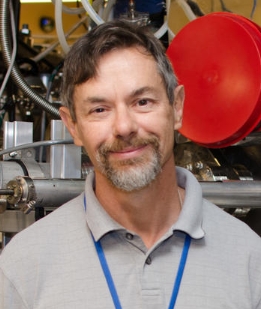 Richard P. Majeski合作论文数Princeton Plasma Physics Laboratory, Princeton University19
 Ghassan Antar合作论文数19
 Russell Doerner合作论文数Center for Energy Research, University of California, San Diego18
 Dan Stutman合作论文数Johns Hopkins University16
 Vlad Soukhanovskii合作论文数Lawrence Livermore National Laboratory16Michael Finkenthal合作论文数16
 Rajesh Maingi合作论文数Tokamak Experimental Science Department, Princeton Plasma Physics Laboratory, Princeton University16D.G. Whyte合作论文数15John R. Timberlake合作论文数15
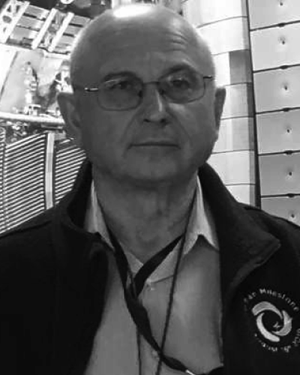 leonid e zakharov合作论文数13Tobin Munsat合作论文数Princeton Plasma Physics Laboratory13J. Spaleta合作论文数13
 Philip C. Efthimion合作论文数Princeton Plasma Physics Laboratory, Princeton University12Sze, F.C.合作论文数12
 Jay Kesner合作论文数Plasma Science and Fusion Center;Massachusetts Institute of Technology;Plasma Science and Fusion Center, Massachusetts Institute of Technology11D. Hoffman合作论文数10A.G. Kellman合作论文数9
 Stephen C. Jardin合作论文数Theory Department, Princeton Plasma Physics Laboratory9Bernabei, S.合作论文数8
 Federico Paoletti合作论文数Istituto Nazionale di Fisica Nucleare;European Gravitational Observatory8Michio Okabayashi合作论文数Princeton Plasma Physics Laboratory, Princeton University8m ulrickson合作论文数7M. Boaz合作论文数7S Jones合作论文数7B. Jones合作论文数7
 Todd E. Evans合作论文数General Atomics7
 David Humphreys合作论文数General Atomics7Lothar Schmitz合作论文数Department of Physics and Astronomy, University of California Los Angeles7Robert D Woolley合作论文数7Timothy J Gray合作论文数Princeton Plasma Physics Laboratory7
 Eric Hollmann合作论文数Center for Energy Research, University of California, San Diego7S VONGOELER合作论文数6d ignat合作论文数6A Postzwicker合作论文数6R. L. Lee合作论文数6Jw Cuthbertson合作论文数6
 George Tynan合作论文数Center for Energy Research, Jacobs School of Engineering, University of California San Diego;Department of Mechanical and Aerospace Engineering, Jacobs School of Engineering, University of California6a grossman合作论文数6R. E. Bell合作论文数Princeton Plasma Physics Laboratory;Princeton University;Princeton Plasma Physics Laboratory, Princeton University6
 Jonathan Menard合作论文数Princeton Plasma Physics Laboratory, Princeton University6Philip L Taylor合作论文数6M. J. Schaffer合作论文数6
 Hiroyuki Takahashi合作论文数6A. Liebscher合作论文数5




