Calculating meteoroid masses from photometric observations relies on prior knowledge of the luminous efficiency, a parameter that is not well characterized; reported values vary by several orders of magnitude. We present results from an experimental campaign to determine the luminous efficiency as a function of mass, velocity, and composition. Using a linear electrostatic dust accelerator, iron and aluminum microparticles were accelerated to v > 10 km/s and ablated, and the light production measured. The luminous efficiency of each event was calculated and functional forms fit for each species. For both materials, the luminous efficiency is lowest at low velocities, rises sharply, then falls as velocity increases. However, the exact shape and magnitude of the curve is not consistent between the materials. The difference between the luminous efficiencies for iron and aluminum, particularly at high velocities, indicates that it is not sufficient to use the same luminous efficiency for all compositions and velocities.
<p>In this laboratory study we present investigation of the angular distribution of expanding ions produced by hypervelocity dust impacts. Spacecraft operated by electric field antennas can characterize interplanetary and interstellar dust populations within our solar system from dust impacts. The recorded dust impact waveforms are diverse and their shape depends on the antenna mode of operation (dipole vs. monopole), impact location with respect to the antennas, spacecraft potential or dust particles properties. A unique experimental setup with delay line detector (DLD) is developed for measuring characteristics of the ion cloud expanding from the impact generated plasma. Dust particles of micron and sub-micron size are accelerated to velocities 1&#8212;80 km/s using the electrostatic dust accelerator operated at the University of Colorado. The ions produced after impact of accelerated particles on tungsten target plate are detected using the DLD that provides the position of their detection and time-of-flight. The angular distribution of ions with respect to target normal is calculated from these positions. The preliminary results indicate that the impact-generated ions expand in the form of a narrow cone and the cone angle increases with increasing dust speed.</p>
Impact ionization time of flight mass spectrometry (TOF-MS) instruments study molecular composition of space-borne dust grains by impacting them at several km/s. The kinetic energy of the impact ionizes molecules from the dust grain, allowing them to be characterized with TOF-MS. The ability of these instruments to assess the inventory and distribution of organics throughout the solar system is important for understanding habitability across planetary bodies and the origins of terrestrial life. In particular, it would be beneficial to know whether this type of instrument can successfully detect amino acids, or other organics necessary for life that may be found on potentially habitable ocean worlds such as Europa. However, there have been questions about whether the fast impact ionization processes can shatter complex organic molecules before they can be studied, and if there is some critical flyby velocity below which fragmentation can be mitigated. Here we describe a set of experiments using a novel airbrushing technique for ice creation at the Colorado Dust Accelerator at the Institute for Modeling Plasmas, Atmospheres, and Cosmic Dust (IMPACT). Experiment 1 used a surface of pure histidine-monohydrochloride, and Experiment 2 used an identical histidine sample, except with a 60 nm water ice layer vapor deposited on top. These surfaces were kept at similar to 80 Kelvin and impacted by < 2 mu m-diameter iron dust particles at velocities > 3 km/s. The resulting impact plumes were studied using TOF-MS, and the ion yields of fragmentation products relative to the parent molecule were measured. Direct comparison of the breakup products for each experiment show that water ice layers significantly reduce fragmentation rates, both in absolute terms and as functions of velocity. We find that for the bare amino acid, the fragmentation rate rises significantly beyond 6.1 km/s, while the ice-shielded amino acid shows significant increases beyond 8.5 km/s. Furthermore, observed fragmentation species correlate with those produced by published results from electron ionization experiments. In particular, we observe characteristic breakup products for histidine at masses 81-83 and 110 AMU, the dominant breakup products associated with histidine in the existing literature.
This white paper summarizes major scientific challenges and opportunities in understanding magnetic reconnection and related explosive phenomena as a fundamental plasma process.
Magnetic anomalies on the surface of the Moon interact with the solar wind plasma flow, resulting in both magnetic and electrostatic deflection/reflection of charged particles. Consequently, surface charging in these regions differs from regions without magnetic fields. Using the Colorado Solar Wind Experiment facility, this interaction is investigated with high‐energy flowing plasmas (100–800 eV beam ions) that are incident upon a magnetic dipole embedded beneath an insulating surface. The dipole moment is perpendicular to the surface. The plasma potential distribution is measured above the surface using an emissive probe. In the dipole lobe regions the surface is charged to significantly higher positive potentials by the un‐magnetized ion beam impinging on the surface while the electrons remain excluded by the magnetic field. At low ion beam energies the results agree with these expectations as the surface potential follows the ion beam energy. However, at high beam energies, the surface potentials in the electron‐shielded lobe regions remain significantly lower than the expected magnitude. Surprisingly, electrons are detected in the shielded regions by a Langmuir probe. A test particle simulation indicates that secondary electrons induced by the high energy ion beams impinging on the surface can enter the shielded regions, thus lowering the surface potential.
Introduction: Water ice is prevalent in the solar system, and there have been numerous studies of the effects of radiation and charged particle bombardment of water ice in laboratory settings [1-6]. However, many questions yet remain concerning the effect of interplanetary dust particle (IDP) bombardment on icy surfaces and bodies, as IDP impacts into ice have not been heavily investigated. This is despite the fact that IDP impacts are expected to be at least as important as radiation and charged particle bombardment [7]. Since liquid water is regarded as a prerequisite for life, icy ocean worlds such as Europa and Enceladus are the focus of several planned NASA and ESA fly-by missions [8-9]. Water plumes erupting from Enceladus's surface have been observed [10], and analysis of the plume using impact ionization time of flight (TOF) mass spectrometry from the Cosmic Dust Analyzer (CDA) on the Cassini spacecraft strongly indicate that the plume originated from the subsurface ocean [11]. There have also been observations of what appear to be similar water plumes on Europa [12-14]. These observations indicate that the environment around these bodies is rich with dust from both the ice surface and the subsurface oceans, and that fly-by spacecraft with TOF spectrometers will be able to study surface and subsurface chemistry in situ without landing. Isotopic ratios have been used as metrics for solar system formation and evolution models, and the deuterium-hydrogen (D-H) ratio is of particular importance in studying the formation of planetary bodies. Temperature-dependent chemical processes result in deuterium-enrichment of water ice relative to hydrogen at low-temperatures [15]. Such enrichment processes enable measurements of D-H ratios in outer solar system bodies to be used to constrain the time and location that planetary bodies formed in the solar system as well as other geophysical phenomena [16-18]. While laboratory work has been performed to match CDA flight spectra, these studies have used laser ablation of flowing liquid sources rather than actual dust impact into actual ice surfaces [19]. However, the University of Colorado dust accelerator at the Institute for Modeling Plasma, Atmospheres, and Cosmic Dust (IMPACT, impact.colorado.edu), paired with a cryogenic target capable of creating H2O ice mixtures, allows for unique and tightly controlled experiments to study hypervelocity dust impact into ice. Such experiments will answer significant questions about the long term chemical evolution of icy bodies under dust bombardment as well as the survivability and detectability of certain types of chemistry in icy dust grains, be they isotopic ratios or complex organics, studied by impact ionization TOF instruments on flyby spacecraft. Experimental Setup: The IMPACT dust accelerator at the University of Colorado uses a 3 MV linear electrostatic potential to launch micron-sized dust particles at velocities up to 100km/s [20]. The accelerator features non-destructive inline beam detectors that record particle mass, velocity, charge, and radius. Active particle down-selection is provided by an FPGAcontrolled particle selection unit. This unit prevents impact of particles outside of a user-defined mass, velocity, radius, or radius parameter space. Selected particles are impacted onto the ice target, shown in Fig. 1.
The Lunar Laser Ranging Retro-reflectors (LRR) allow for the precise measurement of the travel time of laser pulses from the Earth to the lunar surface and back. Dust accumulation on the LRRs scatters the reflected light used for laser interferometry measurements leading to a reduction in the return signal amplitude by a factor of ≃10. We report on a series of experiments utilizing a method of an iterative application and removal of an acrylic adhesive kapton tape to remove lunar dust simulant from a glass substrate. The effectiveness of adhesive tape was determined by measuring the transmission of an expanded laser beam through a glass substrate with a dusted surface. Calibration data was obtained before the glass was exposed to any dust, and light transmission was measured after each iteration of adhesive removal using a power meter. The procedure was repeated using heavy gloves while keeping the glass substrate at 120°C to simulate the temperature conditions of a lunar day on the surface. A third test was conducted at room temperature in high-vacuum to ensure functionality in the lunar environment. These experiments show that glass substrates can be restored to 98 ± 2 % of their original transmission using the adhesive tape method. Therefore the light that travels into and out of the quartz surface of the LLRs can be restored up to 96 ± 4 % of their initial transmission.
Interplanetary and interstellar dust as windows into solar system origins and evolution.1We can explore in situ the building blocks of the planets by measuring the trajectories and compositions of thousands of dust particles from comets and our interstellar neighborhood, a f e f d .
Charge sensitive amplifiers (CSAs) are electronic integrating circuits frequently used for detecting quick charge pulses such as those produced in semiconductor detector devices and electron multipliers. One of the limitations of highly sensitive CSA circuits is the accuracy with which they can be calibrated due to the necessity of using injection capacitors on the order of a few pF, which are difficult to calibrate and to disentangle from other stray capacitance in calibration circuits. This paper presents an alternate method for calibrating the electronics for CSAs with conductive detectors, referred to as the “external conductor” method, using the detector itself to form the injection circuit. The external conductor method is compared to the traditional injection capacitor method for an example detector. The new method results in an increase to the calibration factor of up to 70% over the value derived from a traditional injection capacitor, with an uncertainty in the new value of 2%. Finally, the results from the external conductor method are compared to a third, independent approach, which uses reference charged particles as calibration sources in the Colorado dust accelerator. The results of the charged particle approach corroborate the external conductor calibration to within the stated uncertainty.
When micrometeoroids enter a planetary atmosphere, they heat up and lose mass through evaporation. The ablated mass is ionized through collisions with gas molecules, producing a plasma around the meteoroid which is visible to radar systems as a head echo. Radar observations of meteor head echoes play an important role in constraining the total mass of cosmic dust that is entering Earth's atmosphere. The nature of meteor head echoes is heavily influenced by the processes of ionization, heating, and drag that occur in meteor entry. To investigate these aspects of meteor ablation, experiments have been undertaken using the University of Colorado's 3 MV hypervelocity dust accelerator facility. U sing the accelerator, dust particles were shot at speeds of 1 - 70 km/s into an air chamber containing various gases held at pressures of 0.01 - 0.2 Torr to create simulated meteors. The air chamber contained multiple charge collectors to observe the charge production by the particles as they interacted with gas molecules and ablated. Experiments with iron and aluminum particles have determined the probability that an atom ablated from a meteor will produce an ion-electron pair, which is a steep function of velocity. Spatial observations of the charge production of iron and aluminum have been used to study the heating and ablation that meteors undergo when they enter an atmosphere. Further experiments with aluminum have investigated the drag that meteors experience, which is essential to understand in order to predict the amount of ionization that a meteor will produce. Observations of drag also act to constrain the total heating that meteors experience, and lend insight into the microphysical processes that occur during micrometeoroid entry into the atmosphere. Differential ablation has also been investigated, in which complex olivine and magnesite particles were observed to ablate more volatile elements before less volatile elements. These experiments enhance our understanding of meteor ablation with a variety of implications in atmospheric and space science, including improving our understanding of the chemistry of Earth's upper atmosphere and constraining the nature of Earth's dust environment.
The Dust Coordinate Sensor (DCS) is a dual detector instrument located on the beamline of the 3 MV hypervelocity dust accelerator at the University of Colorado Institute for Modeling Plasma, Atmospheres and Cosmic Dust (IMPACT). This instrument non-destructively measures the three-dimensional trajectories of charged, hypervelocity (3-8 km/s), micron-sized dust particles in flight by utilizing the image charge induced on grids of wire electrodes. Where previous peak detection was typically limited to dust particles carrying charges >similar to 100 fC, new signal processing techniques developed for DCS allow for effective trajectory measurements on particles carrying charges as small as 6 fC. The new signal processing also effectively eliminates false signal detections completely. The position measurements are matched by timestamp to the charge and velocity for each launched dust particle. Verification of the system was performed with independent impact location measurements on a target placed in the beamline. These measurements agree to within 1 mm(2) of the predicted locations using DCS trajectories. This study demonstrates the capability of the instrument including new processing methods. Precise trajectory measurement along the beamline enables new options for instrument calibration, scientific experiments, and improvement of the accelerator performance.
The ionization efficiency of aluminum was measured in the laboratory over an extended velocity range of 10.8-73.4 km/s and compared to available models. The measurements were made by shooting submicron-sized aluminum dust particles into an air chamber using the University of Colorado's dust accelerator facility. The ionization efficiency, beta, is calculated from the total charge generated in the chamber during the complete ablation of particles of known mass. An array of photomultiplier tubes observed the light production by a subset of particles in the chamber to confirm that a moderate deceleration of the ablating particles occurred at low velocities. This information allows the interpretation of the beta measurements to be extended to velocities <20 km/s, with the understanding that the low-velocity beta measurements are lower limits. Updated beta measurements for iron particles are also reported over an extended velocity range compared to previously published data: 10.5-87.3 km/s. The measurements are fit to functions for the ionization efficiency across the entire velocity range, and a semi empirical function is presented which matches the shape of the measured beta curves for aluminum and iron at both high and low velocities.
A facility has been developed to simulate the ablation of micrometeoroids in laboratory conditions. An electrostatic dust accelerator is used to generate iron particles with velocities of 10-70 km/s. The particles are then introduced into a chamber pressurized with a target gas, where the pressure is adjustable between 0.01 and 0.5 Torr, and the particle partially or completely ablates over a short distance. An array of biased electrodes above and below the ablation path is used to collect the generated ions/electrons with a spatial resolution of 2.6 cm along the ablating particles' path, thus allowing the study of the spatiotemporal evolution of the process. For completely ablated particles, the total collected charge directly yields the ionization coefficient of a given dust material-target gas combination. The first results of this facility measured the ionization coefficient of iron atoms with N2, air, CO2, and He target gases for impact velocities >20 km/s, and are reported by Thomas et al. [Geophys. Res. Lett. 43, 3645 (2016)]. The ablation chamber is also equipped with four optical ports that allow for the detection of the light emitted by the ablating particle. A multichannel photomultiplier tube system is used to observe the ablation process with a spatial and temporal resolution of 0.64 cm and 90 ns. The preliminary results indicate that it is possible to calculate the velocity of the ablating particle from the optical observations, and in conjunction with the spatially resolved charge measurements allow for experimental validation of ablation models in future studies.
 Cw Domier合作论文数65R. Kaita合作论文数62
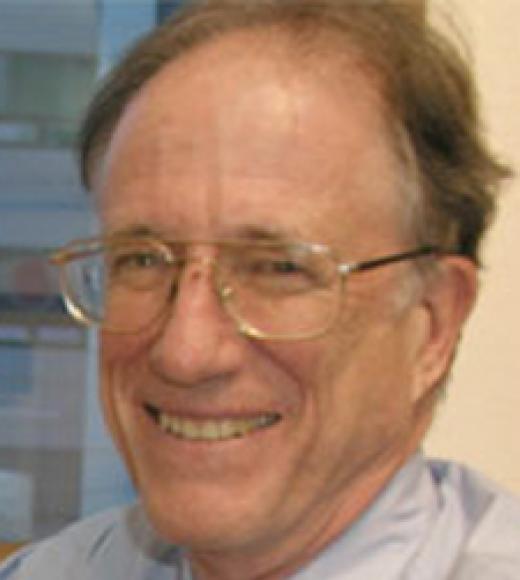 Neville C.Luhmann合作论文数Department of Electrical and Computer Engineering, University of California, Davis61Edoardo Mazzucato合作论文数Princeton Plasma Physics Laboratory53
 Anthony J. H. Donné合作论文数EUROfusion53
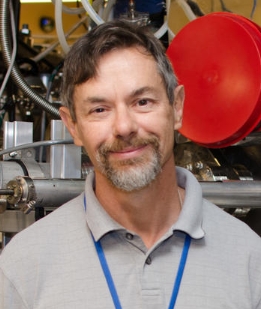 Richard P. Majeski合作论文数Princeton Plasma Physics Laboratory, Princeton University51
 Dan Stutman合作论文数Johns Hopkins University47
 Zoltan Sternovsky合作论文数Department of Physics;University of Colorado;Department of Physics, University of Colorado43Van de Pol, M.J.合作论文数42
 Vlad Soukhanovskii合作论文数Lawrence Livermore National Laboratory38
 Jonathan Menard合作论文数Princeton Plasma Physics Laboratory, Princeton University35
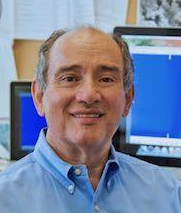 Philip C. Efthimion合作论文数Princeton Plasma Physics Laboratory, Princeton University34
 Mihaly Horanyi合作论文数Laboratory for Atmospheric and Space Physics, Department of Physics, University of Colorado Boulder33Michael Finkenthal合作论文数33I. G. J. Classen合作论文数32
 Rajesh Maingi合作论文数Tokamak Experimental Science Department, Princeton Plasma Physics Laboratory, Princeton University32
 Hyeon K. Park合作论文数Ulsan National Institute of Science and Technology31W Kugel Henry合作论文数31
 Stewart J. Zweben合作论文数Princeton Plasma Physics Laboratory, Princeton University29J. Spaleta合作论文数23B. H. Deng合作论文数University of California , Los Angeles22H. Park合作论文数21Benjamin Tobias合作论文数Los Alamos National Laboratory21
 Yancey Sechrest合作论文数Los Alamos Natl Lab20G. Taylor合作论文数18B. Jones合作论文数18John R. Timberlake合作论文数18
 Daren P Stotler合作论文数18
 Sascha Kempf合作论文数Department of Physics, College of Arts and Sciences, University of Colorado Boulder;Laboratory for Atmospheric and Space Physics, University of Colorado Boulder18R.J. Maqueda合作论文数14
 Jc Hosea合作论文数14
 Zach Ulibarri合作论文数Institute for Modeling Plasma, Atmospheres, and Cosmic Dust, 3400 Marine Street, UCB 446, Boulder, 80304, CO, USA14Z. G. Xia合作论文数14
 leonid e zakharov合作论文数13S. Luckhardt合作论文数13
 Ghassan Antar合作论文数13R. E. Bell合作论文数Princeton Plasma Physics Laboratory;Princeton University;Princeton Plasma Physics Laboratory, Princeton University12S. Kubota合作论文数12j r luhmann合作论文数11m ono合作论文数11bradley jones合作论文数11Shu Anthony合作论文数11James Myra合作论文数Lodestar Res Corp11D. Hoffman合作论文数11Z Xia合作论文数10
 Ck Phillips合作论文数10
 j r wilson合作论文数10e gruen合作论文数10
 Neal A. Crocker合作论文数Department of Physics and Astronomy, University of California, Los Angeles10




